
 Film credits
The next ingredient begins before the extract.
A proposed programme connecting biological side streams with authenticated fractions, useful formulation behaviour and a qualification decision.
Proposed VARUNÉ Bio development direction. The studies cited are external research; programme capacity, deliverables and commercial terms would be agreed for a defined project.
A side stream with a job
Which ingredient task justifies the source?
A peel, pomace or processing residue becomes commercially interesting when a particular fraction performs a particular task. A supplier might need a reproducible thickener, an interfacial stabiliser, a colour-compatible aromatic fraction or a film-forming polymer. Each requires a different separation and specification.
We propose starting with that job and tracing backwards to the preparation that could deliver it. This turns circular bioingredients into a development question a formulator can assess. It also prevents a large catalogue of extracts from substituting for the harder work of identifying where one ingredient could earn a place.
Examine the development decision
The next ingredient begins before the extract.
Open the sequence to examine what a development decision needs.
Identify the exact preparation, its source, and the properties a second laboratory must be able to reproduce.
Explanatory geometry · no simulated or measured performance
The preparation is the candidate
What exactly would the customer receive?
The biological source is one part of identity. Harvest history, drying, milling, extraction medium, temperature, reaction time and isolation can alter the fraction that reaches a formulation. Kabawa et al. (2026) examined ultrasound and enzyme treatment sequences in pectin-containing matrices; their experimental design makes sequence a testable variable.
Our proposed preparation record would therefore retain process order alongside source and lot. A candidate is a defined material made by a defined route, rather than a botanical name detached from manufacture. That record would travel with each application comparison and every interpretation of the result.
A cascade only matters if its fractions matter
Does each additional fraction have a credible use?
One feedstock can present several recovery opportunities, but multiplying outputs can multiply purification, handling and qualification costs. Dzhambazova et al. (2026) studied a staged olive-pomace fractionation approach with differently behaving solvent systems.
The lesson for a proposed Bio project is to evaluate the next fraction independently: does recovering it preserve the intended quality of the remaining stream, and can a buyer use the resulting material? We would compare a focused single-output route with a cascade before assigning value to either. Unsold secondary fractions remain handling obligations until a credible application and specification exist.
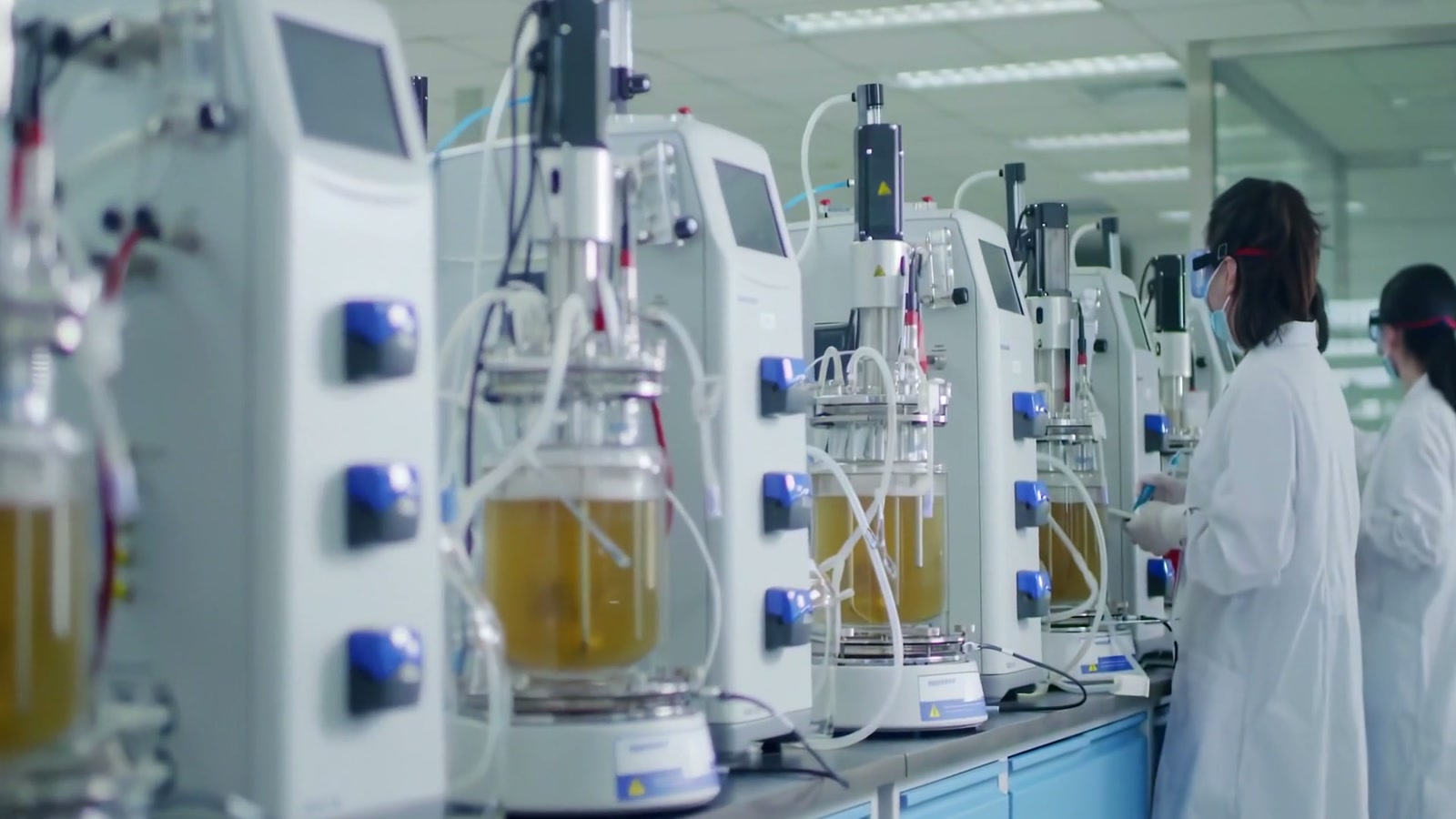
Recover a fraction someone has a use for.
Bring feedstock identity, recovery and formulation relevance into the same ingredient-development question.
The path through the mass into the specification
How much recovered material would qualify?
A useful programme must connect kilograms entering the process with kilograms meeting the application requirement. The displayed accounting relationship separates dry-feed quantity, isolated-fraction yield and the portion that actually qualifies. It is a planning model for proposing measurements; it has no fitted Bio values.
This distinction makes an extraction result commercially legible. A high gross yield can be less attractive than a smaller reproducible fraction requiring less downstream correction. Moisture, retained solvent and the analytical basis must remain visible. The same arithmetic can then support a costed quotation once measured inputs and qualified delivery arrangements exist.
A material-flow planning relationship: gross recovery becomes useful output only when the fraction meets the chosen specification.
- Mass meeting the application specificationkg
- Dry feed masskg
- Isolated dry-fraction yieldkg fraction per kg dry feed
- Fraction of isolated material qualifyingdimensionless
Model conditions. All quantities share a stated dry basis; specification is defined in advance; this is accounting, not a fitted process forecast.
(Kabawa et al, 2026)(Dzhambazova et al, 2026)(Diaz-Ramirez et al, 2023)
Change the conditions · examine the reference
Which kilogram are we discussing?
Follow target material from feed to accepted output. Change two retentions and see why recovered mass alone does not settle the proposition.
The data, equations and controls remain available below if 3D cannot load.
Defined model · illustrative conditions
Initial target 3 kg in 20 kg dry matter. Extraction, purification and qualification use different retained-mass boundaries.
Identify the recovery or qualification uncertainty that could change usable output before discussing process economics.
The defined comparison
Illustrative accounting: 100 kg wet feed, dry fraction 20%, target fraction in dry feed 15%, purification retention 80%; extraction and qualification retentions are selected. Qualification retention means the fraction of target mass meeting a stated criterion, not a probability of regulatory approval. Bar lengths use one common target-mass scale; losses are the differences between stages. Wet feed, dry feed and target mass are distinct denominators. No Bio yield, process price, environmental benefit or scale-up result is implied.
Inspect the calculated values
Calculation grid, not measured observations. Inputs and assumptions are stated above.
| Extraction retention / % | Extracted target | Accepted target |
|---|
Performance belongs inside an application
Which application result would change the decision?
A radical-scavenging assay, droplet image or isolated polymer spectrum answers a limited question. It becomes relevant to formulation when the candidate is compared at an appropriate concentration, in a relevant matrix, against an existing ingredient or control. Diaz-Ramirez et al. (2023) investigated grape-derived cellulose and phenolic fractions in defined emulsion systems.
We would retain the distinction between those external preparations and a future buyer formulation. Proposed endpoints include processing tolerance, droplet stability, colour change, rheology and analytical retention. Consumer benefit, product safety and market claims need their own evidence and assessment rather than being inferred from a material assay.
A decision package before a large programme
What belongs in the first paid brief?
The first proposed commercial output is a narrow development package: authenticated source description, evidence ledger, plausible preparation routes, comparator rationale, testable hypothesis and a list of missing measurements. A supplier can use it to decide whether to commission laboratory work; a formulation team can use it to identify a candidate worth evaluating.
The package would explicitly distinguish measured literature results from proposed experiments and buyer-provided information. That makes the next conversation concrete. It also allows an early stop where the proposed fraction has no meaningful advantage over a readily available qualified ingredient.
A route towards an original study
What does an original study require?
A qualified academic or laboratory collaboration could convert a defensible question into an original formulation or process study. The programme would need an agreed scope, authenticated materials, method capability, repeat design, interpretation plan and commercial rights before starting.
These are requirements for a proposed collaboration, rather than announcements of funded work or existing access. We would favour the smallest comparison that can change the buyer decision, then expand only when the result warrants it. A useful negative result would remain part of the development record, because it can prevent resources being committed to an unsuitable preparation.
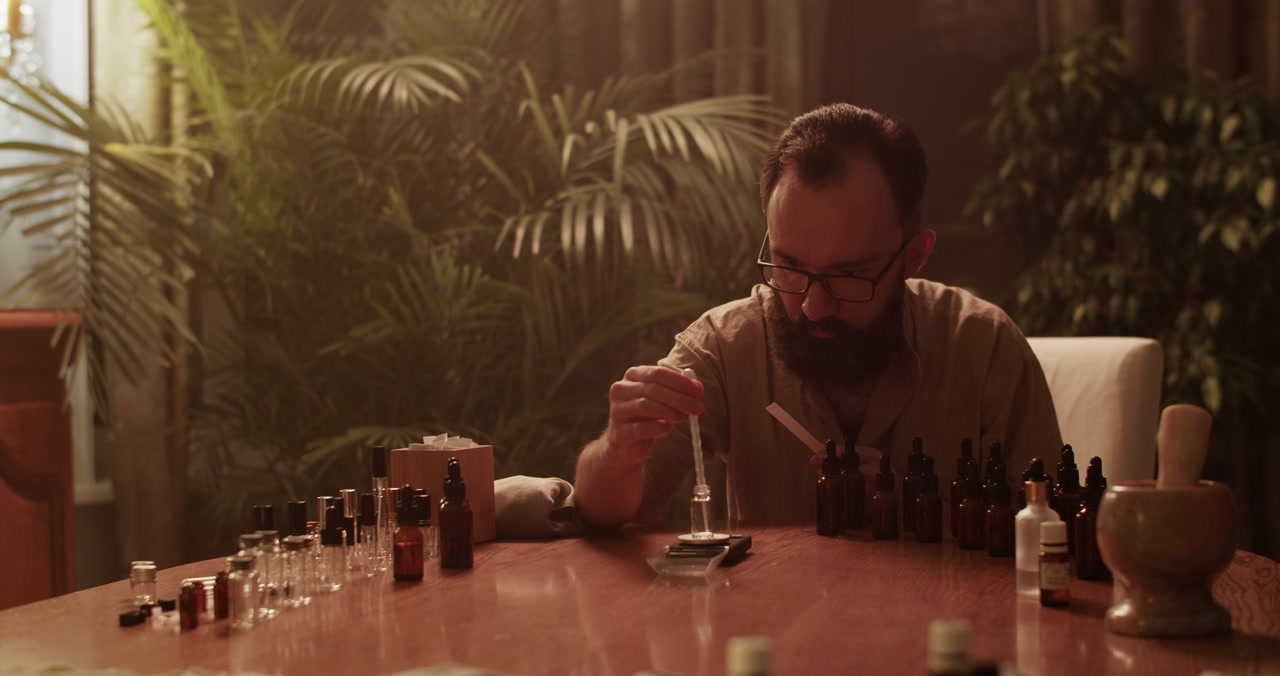
The next proposed comparison.
Preparation map, application-specific specification and staged experimental proposal
What would make this worth developing
What should a potential customer bring?
The strongest enquiry names the current formulation problem, the existing comparator, the intended market and the acceptable deliverable. We can then explore whether a circular fraction addresses that problem or merely adds an appealing origin story.
Programme success would mean a reproducible candidate with application evidence, an agreed qualification route and a buyer willing to discuss the next defined step. Potential commercial routes include a paid evidence brief, a qualified study, an evaluation agreement or a later licence where rights genuinely exist. No saleable ingredient, patent position or manufacturing capability is implied by this proposed programme.
Circular bioingredients · Proposed development discussion
A development path
for this research.
Which side-stream fraction merits a qualified formulation comparison?
The people this could serve.Ingredient suppliers, formulation teams and research partners.
The decision behind the project.
Your intended application, present alternative and the constraint behind “Circular bioingredients”. A useful starting point is the change that would justify another development step.
A proposed scope centred on preparation map, application-specific specification and staged experimental proposal.
Agree the comparison, acceptance basis and responsible expertise before discussing a paid package.
Specialist methods and a defined contribution.
Bring relevant analytical or experimental expertise, a comparator suggestion, and the conditions under which your method could resolve this question.
A jointly scoped proposal could connect your contribution with preparation map, application-specific specification and staged experimental proposal.
Define contributions, required access, independent preparations and permitted outputs before work or protected information is shared.
The commercial purpose of the next milestone.
Bring the application or asset thesis, the buyer you expect to value it, and the scientific or commercial uncertainty that must be resolved before another commitment.
The proposed decision record would connect the buyer question with preparation map, application-specific specification and staged experimental proposal. It would identify what a subsequent comparison needs to demonstrate.
Demand, development cost, resources, rights and a decision-changing milestone would need examination. No financing terms or investment outcome are represented here.
What a useful comparison
would record.
- Record mass meeting the application specification (kg) with the preparation, method and conditions needed to interpret it.
- Record dry feed mass (kg) with the preparation, method and conditions needed to interpret it.
- Record isolated dry-fraction yield (kg fraction per kg dry feed) with the preparation, method and conditions needed to interpret it.
What the proposed
brief could leave behind.
- Preparation map, application-specific specification and staged experimental proposal
- A preparation, comparator and endpoint record tied to this question.
- A source-linked account of the evidence gaps, study assumptions and next review point.
The proposed discussion brief
A brief you
can take away.
Use non-confidential notes to connect this topic with your own decision. Entries stay in this browser tab; saving creates a text file on your device. Nothing is submitted.
Commissioned decision brief followed by separately scoped qualified comparison
Notes are optional. The brief includes this page’s proposed question and public source links.
Proposed scope; resources, methods, rights and delivery terms would be agreed before work. Begin with non-confidential information.
Sources and reading notes.
External work is identified below. Access notes describe the material inspected for this page; company research questions and proposed work are not presented as findings from these sources.
Kabawa et al, 2026Kabawa et al. (2026). Unveiling synergy in ultrasound-assisted enzymatic extraction: Role of treatment sequence and biomass complexity. DOI: 10.1016/j.ultsonch.2026.107749.
The authors’ preparation, process conditions and reported measurements; application-specific limitations are discussed in the text.
Scope and limitations: This is an open access article under the CC BY license (http://creativecommons.org/licenses/by/4.0/). Article access is not material supply, process permission or patent clearance. Figures and raw data are not reproduced here.
Open original sourceDzhambazova et al, 2026Dzhambazova et al. (2026). Tunable Natural Deep Eutectic Solvents‐Driven Fractionation of Olive Pomace in an Integrated Biorefinery: Linking Lignin Structural Tailoring to Carbohydrate Valorization and Biopolymer Production. DOI: 10.1002/cssc.70835.
The authors’ preparation, process conditions and reported measurements; application-specific limitations are discussed in the text.
Scope and limitations: This is an open access article under the terms of the http://creativecommons.org/licenses/by/4.0/ License, which permits use, distribution and reproduction in any medium, provided the original work is properly cited. Article access is not material supply, process permission or patent clearance. Figures and raw data are not reproduced here.
Open original sourceDiaz-Ramirez et al, 2023Diaz-Ramirez et al. (2023). Integral Valorization of Grape Pomace for Antioxidant Pickering Emulsions. DOI: 10.3390/antiox12051064.
The authors’ preparation, process conditions and reported measurements; application-specific limitations are discussed in the text.
Scope and limitations: Licensee MDPI, Basel, Switzerland. This article is an open access article distributed under the terms and conditions of the Creative Commons Attribution (CC BY) license (https://creativecommons.org/licenses/by/4.0/). Article access is not material supply, process permission or patent clearance. Figures and raw data are not reproduced here.
Open original source
