Scripps Pier, La Jolla
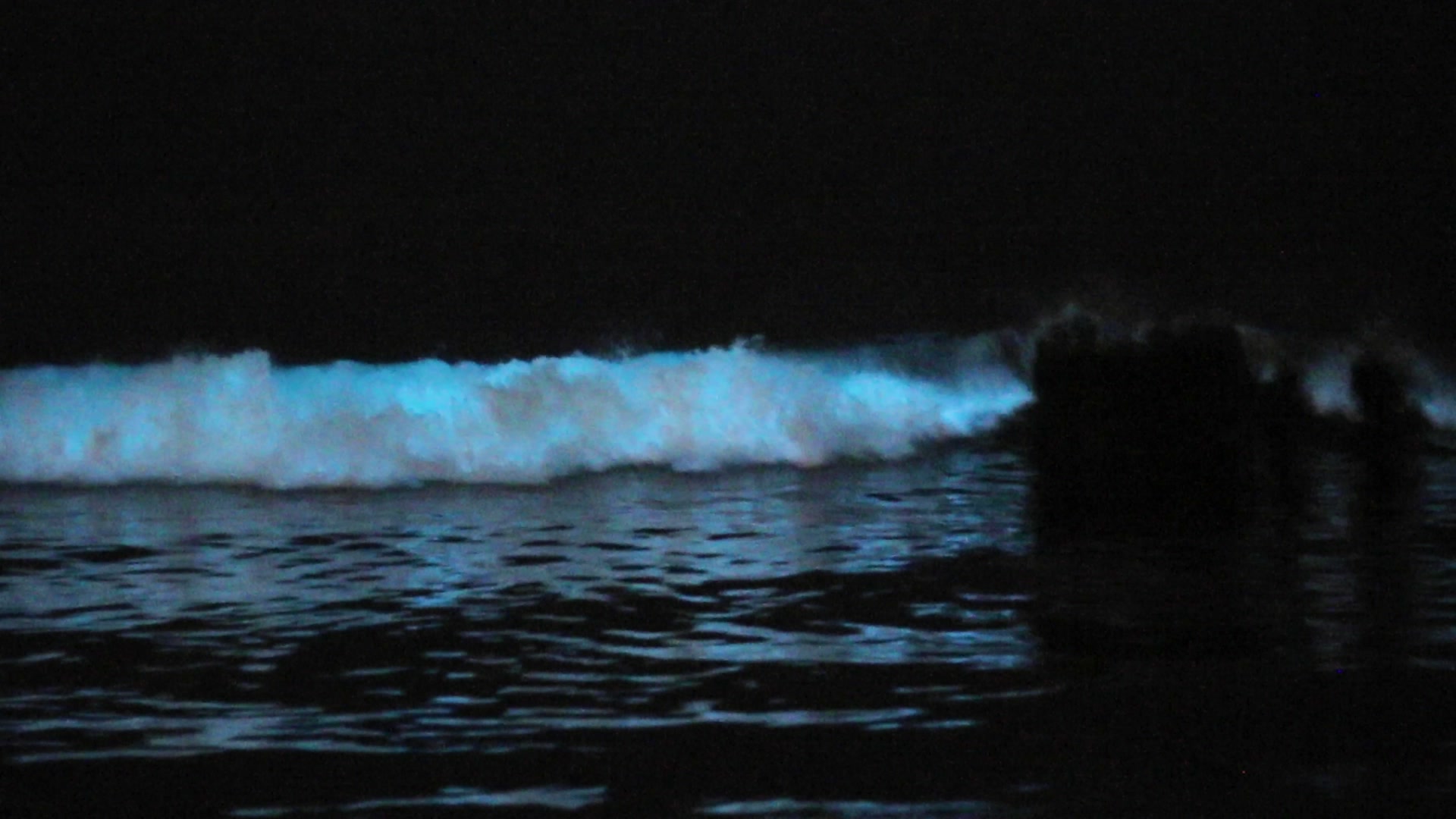
Michael Latz’s film, linked by Scripps, records luminous surf during a Southern California bloom. It shows a natural event; it is separate from the licensed hero footage.
Geographic source
Coastal flashes, deep-ocean signals and luminous fungi reveal different light-producing systems. Their strongest formulation connection may be how we measure biology.
The research questionsLicensed shoreline context · BlackBoxGuild | EnvatoLocation and organism unverified · separate from the geographic records below · Media details
The environment
A flashing dinoflagellate, an engineered shrimp-derived reporter and a luminous fungus do not share one interchangeable mechanism. Each needs its own chemistry, conditions and interpretation.
Michael Latz’s film, linked by Scripps, records luminous surf during a Southern California bloom. It shows a natural event; it is separate from the licensed hero footage.
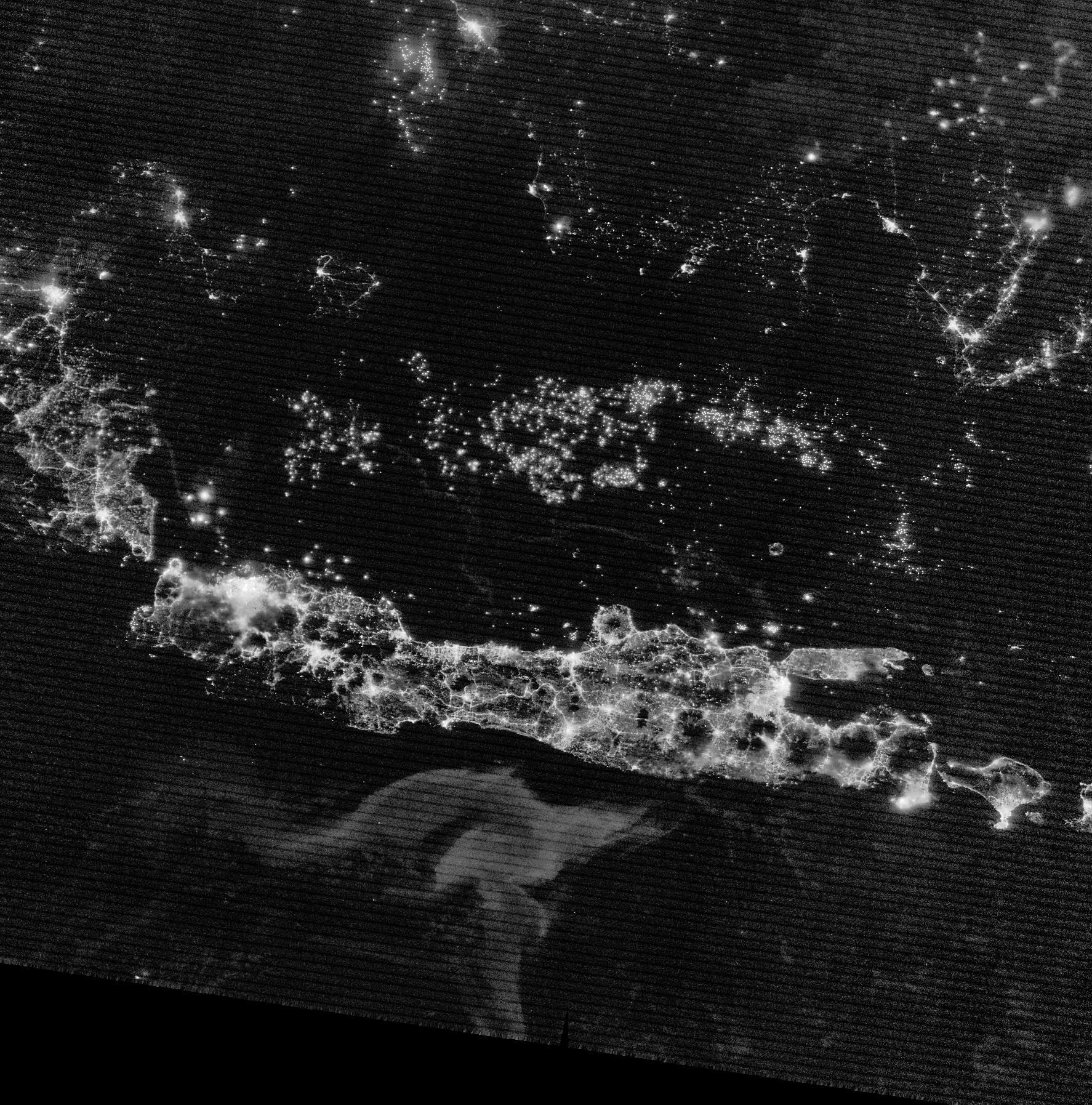
Geographic sourceA processed VIIRS night-time image records a milky-sea signal. Satellite detection opens a different biological question from short flashes in breaking surf.
Geographic sourceThese are geographic references from independent sources, not VARUNÉ field sites. Material origin is specified separately for each cited study.
Biology, in context
Marine light can contribute to defence, predation and communication. A spectacular bloom is not necessarily a healthy ecosystem: the 2020 Southern California event also coincided with deteriorating water quality and organism mortality. Observation needs ecological context.
A complete source film
NOAA Ocean Today introduces the natural phenomenon. The complete film retains its narration, credits and English captions; it is a source reference for the biology discussed here.
NOAA Ocean Today · original film and transcript · Reuse and source details
Coastal flashes
Mechanical stimulation and specialised cellular structures are part of the flashing response. A living-cell mechanism, distinct from a prepared reporter reagent.
Mechanism sourceResearch reporters
Firefly and engineered shrimp-derived systems each have particular reaction requirements. Their signal can become a measurement when controls establish what it means.
Reporter sourceLuminous fungi
Fungal pathways connect a series of biochemical reactions. Published engineering work opens reporting questions while retaining the need for cellular resources.
Pathway sourceTHE RESEARCH LIBRARY
Each candidate dossier contains ten expanded chapters, from material identity to a buyer’s next decision. These are proposed research paths. Scientific leads, access, resources and terms must be agreed before a study becomes active.
VB-LUM-01 · Proposed path
A bright initial flash can be useless if the timing of reagent addition dominates the result.
VB-LUM-02 · Proposed path
A formulation may suppress light optically or inhibit the chemistry. Those failure modes require different decisions.
VB-LUM-03 · Proposed path
High reporter brightness does not establish compatibility with a material, a cosmetic or a commercial licence.
VB-LUM-04 · Proposed path
A trigger-dependent signal must be distinguished from an uncontrolled change in the surrounding formulation.
VB-LUM-05 · Proposed path
Living-cell brightness does not prove a cell-free material can sustain a useful reaction. Cofactor supply is part of the product question.
The catalogue references are working identifiers, not available products or cleared commercial names. Published results belong to their investigators. Literature informs the starting point; the proposed work and commercial questions are VARUNÉ’s interpretation.
The scientific connection
The connection to beauty becomes specific when a biological idea leads to a comparison. The diagram connects each environment to a proposed development comparison.
Conceptual illustrations | Research logic, not experimental results. Each proposed comparison needs a defined material, appropriate controls and an agreed decision.
The proposed question
Which conditions preserve a useful, reproducible light signal in a defined research matrix?
What conditions let a light-producing reaction give a clear, repeatable research signal?
Ingredient-screening and formulation-analysis tools, where the light signal answers a specific laboratory question.
The proposed question
Can an inert carrier preserve a reliable signal without unacceptable leakage or loss of output?
Could a material hold a light-producing system in place while keeping its signal useful?
A possible scientific measurement surface or demonstration material, subject to a separately defined customer need.
The proposed question
How does a gel, emulsion, pigment or packaging film alter the signal being measured?
How much does a cream, colourant, or packaging layer change the light that a measurement can detect?
Better interpretation of laboratory measurements in optically difficult formulation systems. This is the most direct beauty-development question in this world.
Proposed research · scoping stage
Published evidence establishes the starting point. The programmes below are VARUNÉ proposals for further qualification, with a beauty application and a decision to resolve.
A specified recombinant light-producing enzyme and its substrate.
Engineered NanoLuc and firefly systems have been studied as research reporters. Signal depends on the particular enzyme, substrate and measurement conditions. Natural blue surf does not identify either reporter system.
Which conditions preserve a useful, reproducible light signal in a defined research matrix?
What conditions let a light-producing reaction give a clear, repeatable research signal?
Bioluminescent reporters can investigate cell biology. A future biomedical assay would have separate scientific ownership and validation; reporter performance does not demonstrate a therapeutic effect.
A named enzyme system associated with a defined inert carrier.
A firefly reagent study compared carriers and stabilisers, reporting both useful behaviour and failed or weaker preparations. Immobilisation is a trade-off to test, not an automatic improvement.
Can an inert carrier preserve a reliable signal without unacceptable leakage or loss of output?
Could a material hold a light-producing system in place while keeping its signal useful?
Fungal light pathways offer a different route for biological reporting. Their cellular resource requirements and engineered-host context remain distinct from an enzyme immobilised on an inert surface.
A known light reference, a defined matrix and a specified detector.
Published reporter research shows why signal chemistry and measurement conditions matter. The matrix-comparison design below is a VARUNÉ proposal informed by that literature.
How does a gel, emulsion, pigment or packaging film alter the signal being measured?
How much does a cream, colourant, or packaging layer change the light that a measurement can detect?
Published NanoBRET work supports research into target engagement inside cells. A licensed reporter feasibility study could be considered separately, under an appropriate assay lead, without positioning VARUNÉ as a medicines developer.
The development route
Applications, source rights, scientific ownership, delivery capacity, and funding must be agreed before a proposed study becomes an active programme.
Sources & boundaries
Sources were checked on 20 October 2026. Published findings belong to the original investigators. A material-level or laboratory observation does not establish efficacy, safety, or sustainability of a finished cosmetic.
Engineered NanoLuc/furimazine system, assay stability and spectral behaviour. Supplier-authored system characterisation; no finished cosmetic, inert-film or clinical validation.
Signal kinetics and enzyme activity depend on reaction and cellular context. Reporter behaviour is not a direct readout of every biological effect.
Comparison of gelatin/starch carriers and stabilisers for firefly reagents; matrix and immobilisation trade-offs. Specific reagent study; no generic promise of stability, sterility, cosmetic safety or skin benefit.
Lingulodinium polyedrum scintillon proton-channel mechanism. Does not make dinoflagellate systems interchangeable with NanoLuc.
Fungal luciferin biosynthesis from a caffeic-acid-related pathway. Engineering research; no human-use, habitat-provenance or environmental-release claim.
Improved fungal-pathway performance in studied hosts and imaging contexts. No inference of safety, practical commercial lighting or a VARUNÉ result.
NanoLuc fusion and fluorescent-tracer approach to cellular target engagement. A measurement route; not proof that a candidate is therapeutic or clinically useful.
Mortality and water-quality changes during the 2020 bloom. A spectacular luminous bloom must not be equated with a healthy ecosystem.