Lahaul, Ladakh and Spiti
A primary study compared the pulp oils of three sea-buckthorn species collected across these regions. Plant identity and the part of the berry matter: pulp oil and seed oil are different materials.
Geographic source
Sea-buckthorn oils, cultivated aromatics and microbial polymers. Following mountain biology into precise questions about ingredient identity, processing, and cosmetic formulation.
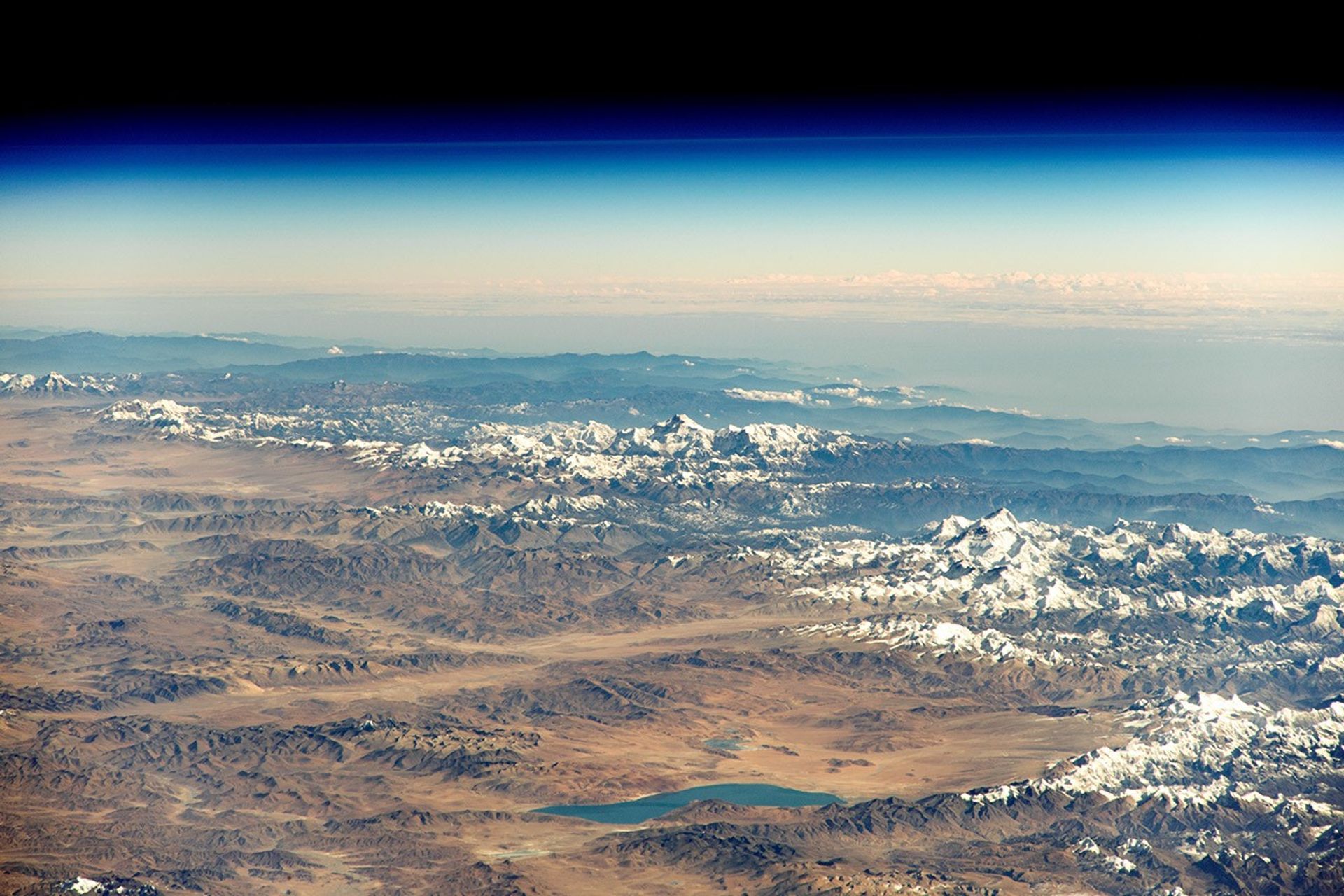
The research questionsGreat Himalaya Range · NASA | ISS Expedition 53, 2017Documentary mountain-range photograph · geographic context · Media details
The environment
The Himalayan region includes cultivated foothills, high valleys and cold-desert environments. Each study below has its own material and origin. The orbital imagery introduces the landscape; it does not identify a collection site or a VARUNÉ expedition.
A primary study compared the pulp oils of three sea-buckthorn species collected across these regions. Plant identity and the part of the berry matter: pulp oil and seed oil are different materials.
Geographic sourceField experiments at CSIR-IHBT examined how harvesting and flower storage affected rose-oil composition. This is a cultivated crop and processing story, with a documented location.
Geographic sourceA 2021 study characterised a polymer from a Chlorella isolate. Its accessible abstract identifies the regional habitat but not the exact lake or strain; those details must be resolved before a material study begins.
Geographic sourceThese are geographic references from independent sources, not VARUNÉ field sites. Material origin is specified separately for each cited study.
Biology, in context
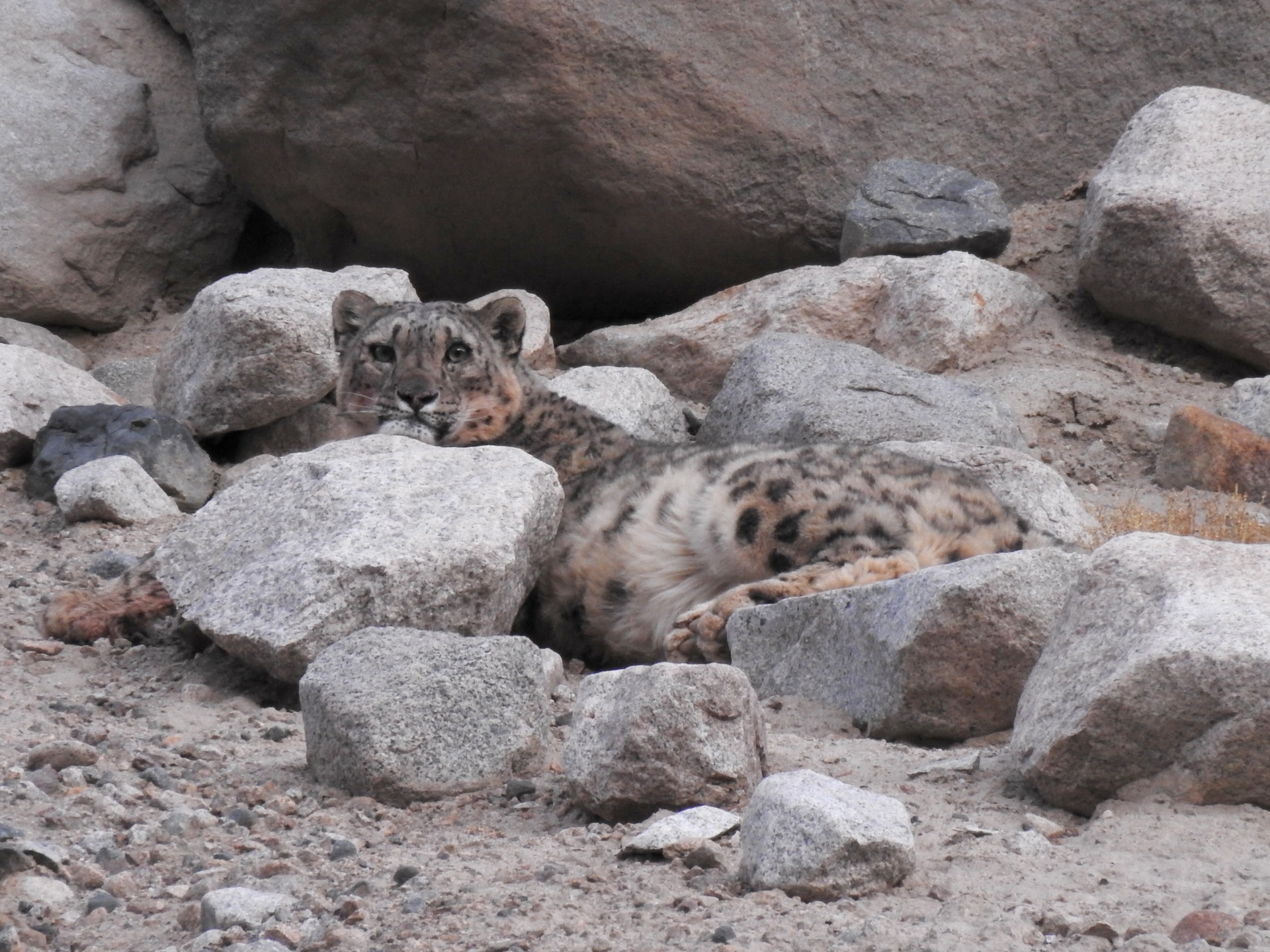
Snow leopards belong within this mountain world. In Ladakh and Spiti, conservation organisations work with communities on livestock protection, coexistence, and research. Our proposed contribution would begin with a bounded, locally informed conservation project and transparent reporting. Wildlife is part of the habitat to protect; no animal material is proposed for these ingredient studies.
Snow leopards and mountain lifeTHE RESEARCH LIBRARY
Each candidate dossier contains ten expanded chapters, from material identity to a buyer’s next decision. These are proposed research paths. Scientific leads, access, resources and terms must be agreed before a study becomes active.
VB-HIM-01 · Proposed path
A regional story must not hide cultivar, plant-part or handling differences in the actual supplied oil.
VB-HIM-02 · Proposed path
A coloured pulp oil needs a defined contribution in a base, with oxidation and staining considered together.
VB-HIM-03 · Proposed path
A fragrant ingredient can vary with plant material and handling, creating a procurement and formulation problem.
VB-HIM-04 · Proposed path
An aromatic material needs identity, conservation and safety scrutiny before a luxury fragrance story is justified.
VB-HIM-05 · Proposed path
A polymer lead cannot become a material programme until identity, access and the full experimental record are available.
The catalogue references are working identifiers, not available products or cleared commercial names. Published results belong to their investigators. Literature informs the starting point; the proposed work and commercial questions are VARUNÉ’s interpretation.
The scientific connection
The connection to beauty becomes specific when a biological idea leads to a comparison. The diagram connects each environment to a proposed development comparison.
Conceptual illustrations | Research logic, not experimental results. Each proposed comparison needs a defined material, appropriate controls and an agreed decision.
The proposed question
Which composition and processing choices produce a consistent oil that works in a defined cosmetic base?
Which sea-buckthorn oil and processing choices give a consistent ingredient that behaves well in a cosmetic base?
Oxidative stability, colour, odour, and compatibility in an emulsion or anhydrous formulation.
The proposed question
Can a tighter source and processing specification make a fragrance ingredient more consistent?
Could clearer rules for growing, harvesting, and processing rose oil make its fragrance more consistent?
Aroma profile and compatibility in an agreed cosmetic or fragrance base.
The proposed question
Could a qualified polymer offer a useful texture or stability profile in a defined formulation?
Could a purified material made by microalgae give a cosmetic a useful texture or help it stay stable?
Flow, recovery, tack and compatibility of an isolated material in a model cosmetic base.
Proposed research · scoping stage
Published evidence establishes the starting point. The programmes below are VARUNÉ proposals for further qualification, with a beauty application and a decision to resolve.
Traceable sea-buckthorn pulp oils, with species, plant part and processing route recorded.
Ranjith and colleagues compared fatty acids, tocols and carotenoids in pulp oils from three sea-buckthorn species collected in the Indian Himalayas. Their profiles differed; a regional name alone is an incomplete ingredient specification.
Which composition and processing choices produce a consistent oil that works in a defined cosmetic base?
Which sea-buckthorn oil and processing choices give a consistent ingredient that behaves well in a cosmetic base?
Plant lipid composition offers a separate route into adaptation and metabolism research. This comparison does not establish altitude as the cause of an oil profile, or demonstrate skin repair, SPF or a medicinal effect.
Cultivated Rosa damascena oil, starting from documented harvest, storage and distillation histories.
A field study at Palampur found that harvest timing and flower-storage conditions changed damask-rose oil yield and composition. The useful question is how to control a recognised material through its supply chain.
Can a tighter source and processing specification make a fragrance ingredient more consistent?
Could clearer rules for growing, harvesting, and processing rose oil make its fragrance more consistent?
Volatile metabolism and post-harvest biology are separate research questions. An aromatic ingredient is not automatically hypoallergenic, a preservative or evidence of a therapeutic effect.
Purified microalgal exopolysaccharide, using a documented Himalayan Chlorella preparation as a literature reference.
Jakhu and colleagues characterised an exopolysaccharide from a high-altitude brackish-water isolate and reported shear-thinning behaviour. A cosmetic formulation comparison remains to be performed.
Could a qualified polymer offer a useful texture or stability profile in a defined formulation?
Could a purified material made by microalgae give a cosmetic a useful texture or help it stay stable?
The paper also studied polymer-capped gold nanoparticles. That is a separate colloid-science result: nanoparticle stability does not establish emulsion stability, skin efficacy or a medicine application.
The development route
Applications, source rights, scientific ownership, delivery capacity, and funding must be agreed before a proposed study becomes an active programme.
Sources & boundaries
Sources were checked on 20 October 2026. Published findings belong to the original investigators. A material-level or laboratory observation does not establish efficacy, safety, or sustainability of a finished cosmetic.
Primary comparison of three species and pulp-oil composition. It does not establish cosmetic performance or an altitude-driven mechanism.
Primary field evidence for handling-dependent changes in oil yield and composition. Formulation suitability requires a separate comparison.
Characterisation and rheology of one preparation. The accessible abstract establishes a regional habitat, not a verified exact collection site or available strain.
Documented conservation work in Ladakh and Spiti. The organisation is an independent reference, with no VARUNÉ partnership implied.