Svalbard, Arctic
A yeast isolated from Tvillingvatnet, near Ny-Ålesund, provided the ice-binding protein studied by Lee and colleagues. Its Arctic origin is distinct from the Antarctic proteins used in later comparisons.
Geographic source
Microbial polymers, ice-binding proteins and cold-active enzymes. A journey from polar environments to precise questions about formulation stability and processing.
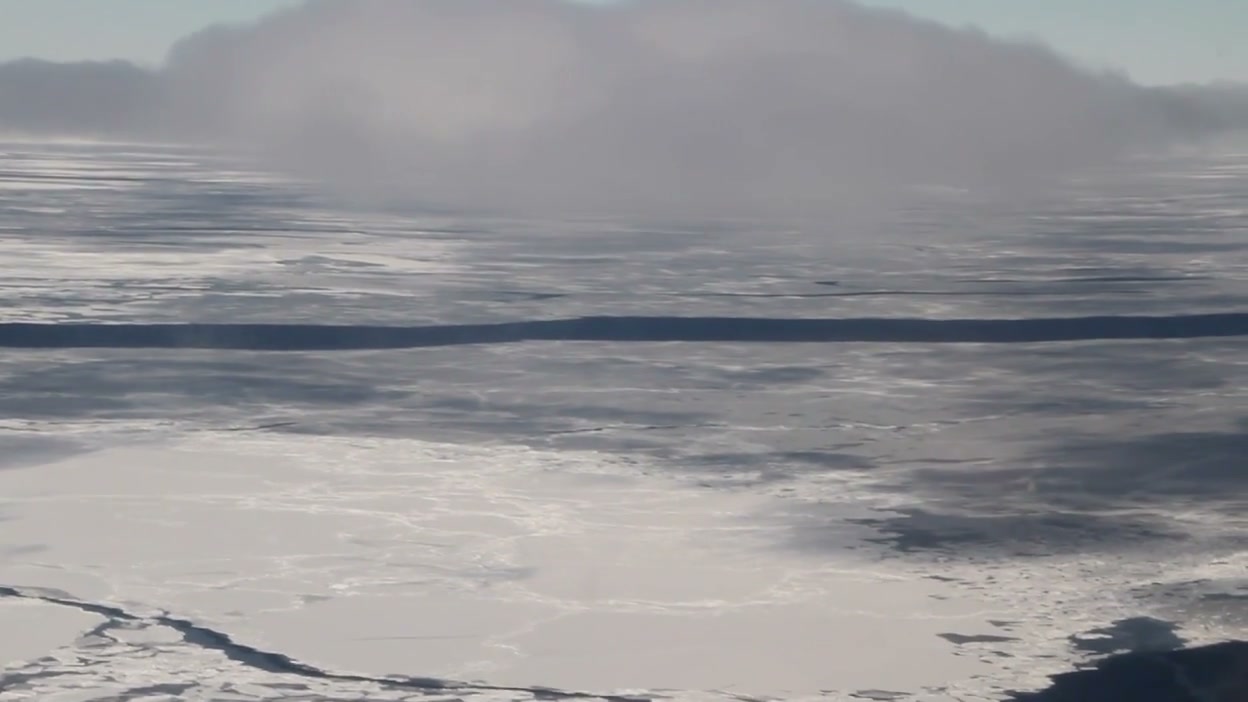
The research questionsRoss Sea, Antarctica · NASA Goddard | Operation IceBridge, 2013Documentary landscape excerpt · independent observation · Media details
The environment
The Arctic and Antarctica offer different histories, ecosystems and biological adaptations. The papers below identify the actual origins of the materials they studied; the landscape film is a separate geographic record.
A yeast isolated from Tvillingvatnet, near Ny-Ålesund, provided the ice-binding protein studied by Lee and colleagues. Its Arctic origin is distinct from the Antarctic proteins used in later comparisons.
Geographic sourcePublished studies trace different microbial polymers and enzymes to these separate locations. These are literature origins, not interchangeable sources or VARUNÉ collection sites.
Geographic sourceThese are geographic references from independent sources, not VARUNÉ field sites. Material origin is specified separately for each cited study.
Biology, in context
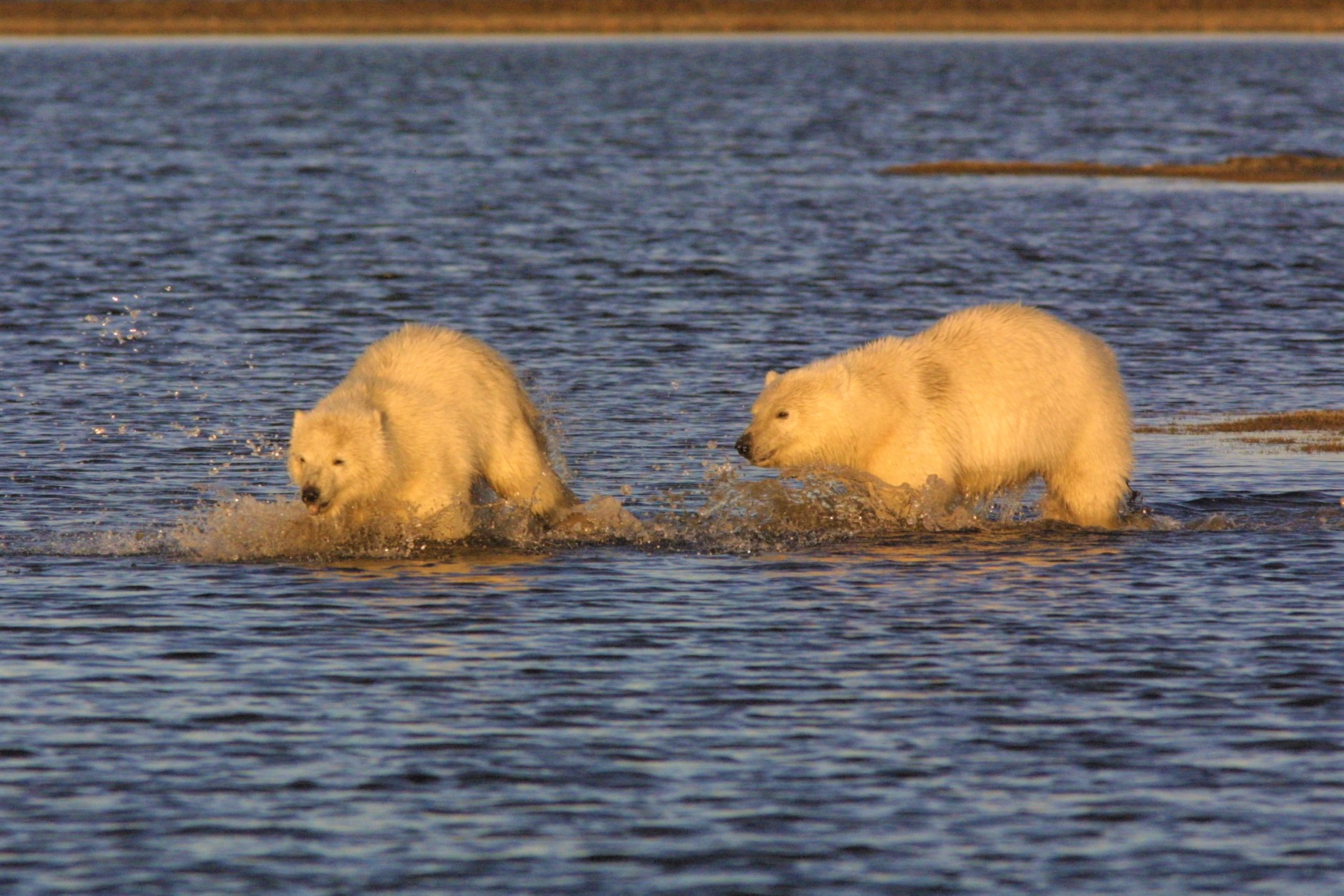
Polar bears depend on the Arctic sea-ice environment. They do not live in Antarctica, whose wildlife and Southern Ocean ecosystems need their own conservation focus. Our proposed polar agenda connects public education, future giving and responsible research choices.
Polar bears and a changing ArcticTHE RESEARCH LIBRARY
Each candidate dossier contains ten expanded chapters, from material identity to a buyer’s next decision. These are proposed research paths. Scientific leads, access, resources and terms must be agreed before a study becomes active.
VB-POL-01 · Proposed path
An emulsion can look stable because its continuous phase is simply thicker. A useful polymer must earn its role against a viscosity-matched benchmark.
VB-POL-02 · Proposed path
A salt-tolerant material idea needs an application-specific comparison. Salt response alone is not proof of a better cosmetic.
VB-POL-03 · Proposed path
Freeze damage and a useful cosmetic storage claim are separate questions. The first decision is whether a defined research preparation changes an inert test system.
VB-POL-04 · Proposed path
A different ice-binding protein should be treated as a separate material, not an interchangeable member of a polar story.
VB-POL-05 · Proposed path
Mechanistic differences are useful only if they help choose a measurable material behaviour. An unusual structure is not a product benefit.
The catalogue references are working identifiers, not available products or cleared commercial names. Published results belong to their investigators. Literature informs the starting point; the proposed work and commercial questions are VARUNÉ’s interpretation.
The scientific connection
The connection to beauty becomes specific when a biological idea leads to a comparison. The diagram connects each environment to a proposed development comparison.
Conceptual illustrations | Research logic, not experimental results. Each proposed comparison needs a defined material, appropriate controls and an agreed decision.
The proposed question
Can a qualified microbial polymer improve emulsion stability and recovery after stress?
Could a natural polymer help a cream stay evenly mixed and recover its texture after stress?
Viscosity, emulsion structure and film behaviour in a defined cosmetic base.
The proposed question
Can an ice-binding protein preserve a sensitive ingredient through a relevant cold-chain challenge?
Could a protein that interacts with ice help protect a sensitive ingredient during a realistic freezing challenge?
Cold-storage robustness of a qualified protein or enzyme ingredient. This is an ingredient-stability question.
The proposed question
Could a documented enzyme improve a specific cosmetic-lipid conversion at a milder temperature?
Could an enzyme help make a cosmetic oil ingredient at a gentler temperature?
Selective lipid modification or a defined ester-production question agreed with an ingredient developer.
Proposed research · scoping stage
Published evidence establishes the starting point. The programmes below are VARUNÉ proposals for further qualification, with a beauty application and a decision to resolve.
Microbial exopolysaccharides, beginning with documented Antarctic preparations.
A polymer from Pseudomonas sp. ID1, isolated from South Shetland marine sediment, showed shear-thinning and emulsifying behaviour in published tests, including with a cosmetic oil. That preparation provides a formulation question to investigate.
Can a qualified microbial polymer improve emulsion stability and recovery after stress?
Could a natural polymer help a cream stay evenly mixed and recover its texture after stress?
A separate Ross Sea polymer study investigated freezing protection in cell storage. This is a possible cryobiology connection, not evidence of a topical skin benefit. Different polymers require separate evidence and rights review.
Ice-binding proteins, including the Arctic LeIBP reference.
Comparisons of ice-binding proteins found that their ability to alter ice behaviour did not translate into the same ranking for preserving a model enzyme through freezing. The useful property depends on the system.
Can an ice-binding protein preserve a sensitive ingredient through a relevant cold-chain challenge?
Could a protein that interacts with ice help protect a sensitive ingredient during a realistic freezing challenge?
Cryopreservation is a separate scientific field. Any biomedical study would require its own qualified lead, materials, permissions and validation; a model-enzyme result does not establish a clinical use.
Cold-active lipases, with LSK25 as a published Antarctic reference.
A lipase from a Signy Island isolate was characterised for activity and stability, with an assay optimum around 30°C. Hydrolysis characterisation does not establish a useful cosmetic ester-synthesis process.
Could a documented enzyme improve a specific cosmetic-lipid conversion at a milder temperature?
Could an enzyme help make a cosmetic oil ingredient at a gentler temperature?
Cold-active enzymes also inform adaptation biology and analytical methods. Those connections do not imply direct application to human skin or a medicine programme.
The development route
Applications, source rights, scientific ownership, delivery capacity, and funding must be agreed before a proposed study becomes an active programme.
Sources & boundaries
Sources were checked on 20 October 2026. Published findings belong to the original investigators. A material-level or laboratory observation does not establish efficacy, safety, or sustainability of a finished cosmetic.
Source for ID1 provenance, rheology and emulsifying tests. It does not establish performance of a VARUNÉ formulation.
Source for the Svalbard yeast and its ice-binding protein.
A model-enzyme comparison demonstrating why ice activity and useful preservation must be assessed separately.
Characterisation of an enzyme associated with Signy Island. A manufacturing route remains to be established.
A separate preparation and freezing-storage study; it cannot be generalised to the ID1 polymer or to skin efficacy.