
 Film credits
The pathway is only part of the proposition.
Evaluate conversion of a defined biological precursor into an aromatic material with a complete recovery and qualification route.
Proposed VARUNÉ Bio development direction. The studies cited are external research; programme capacity, deliverables and commercial terms would be agreed for a defined project.
An aromatic route needs a reason to exist
Why should this route exist alongside a sourced material?
Producing an aromatic compound from a biological precursor can be scientifically interesting without being commercially compelling. The buyer needs a reason to choose the route over an available material: a relevant specification, source constraint, process opportunity or application requirement. We propose evaluating the complete route before presenting a bioconversion as a product.
That includes precursor identity, conversion, competing products, isolation and qualification. A scientific pathway gives the project a mechanism; a defined customer task gives it a purpose. The first proposed output would identify whether a focused feasibility comparison is worth commissioning.
Examine the development decision
The pathway is only part of the proposition.
Open the sequence to examine what a development decision needs.
Identify the exact preparation, its source, and the properties a second laboratory must be able to reproduce.
Explanatory geometry · no simulated or measured performance
Defining the precursor that reaches the catalyst
What precursor actually reaches the catalyst?
A purified reference precursor and a side-stream-derived mixture are different substrates. Co-components, concentration, solvent and pretreatment can influence conversion and downstream isolation. The proposed evidence ledger would retain precursor source and analytical basis before comparing studies.
Yang et al. (2013) characterised enzymes involved in ferulic-acid conversion to vanillin. Their biochemical preparation informs a pathway question, not a claim that any biomass containing related chemistry can be fed directly into a manufacturing process. A Bio proposal would examine how the actual precursor could be authenticated and prepared before a qualified conversion test.
The conversion system deliberately
Which conversion system fits the output?
An isolated enzyme, resting cells and a growing culture bring different operating and qualification questions. Barghini et al. (2007) investigated an engineered resting-cell route under their conditions; Yan et al. (2016) studied an immobilised bacterial system. These are distinct external preparations, not interchangeable recipes.
The proposed brief would compare the roles of catalyst supply, cofactor requirements, competing metabolism and reuse. It would also identify the need for qualified biological resources and rights. The choice should follow the intended output and process constraints rather than a preference for whichever system appears most technologically impressive.
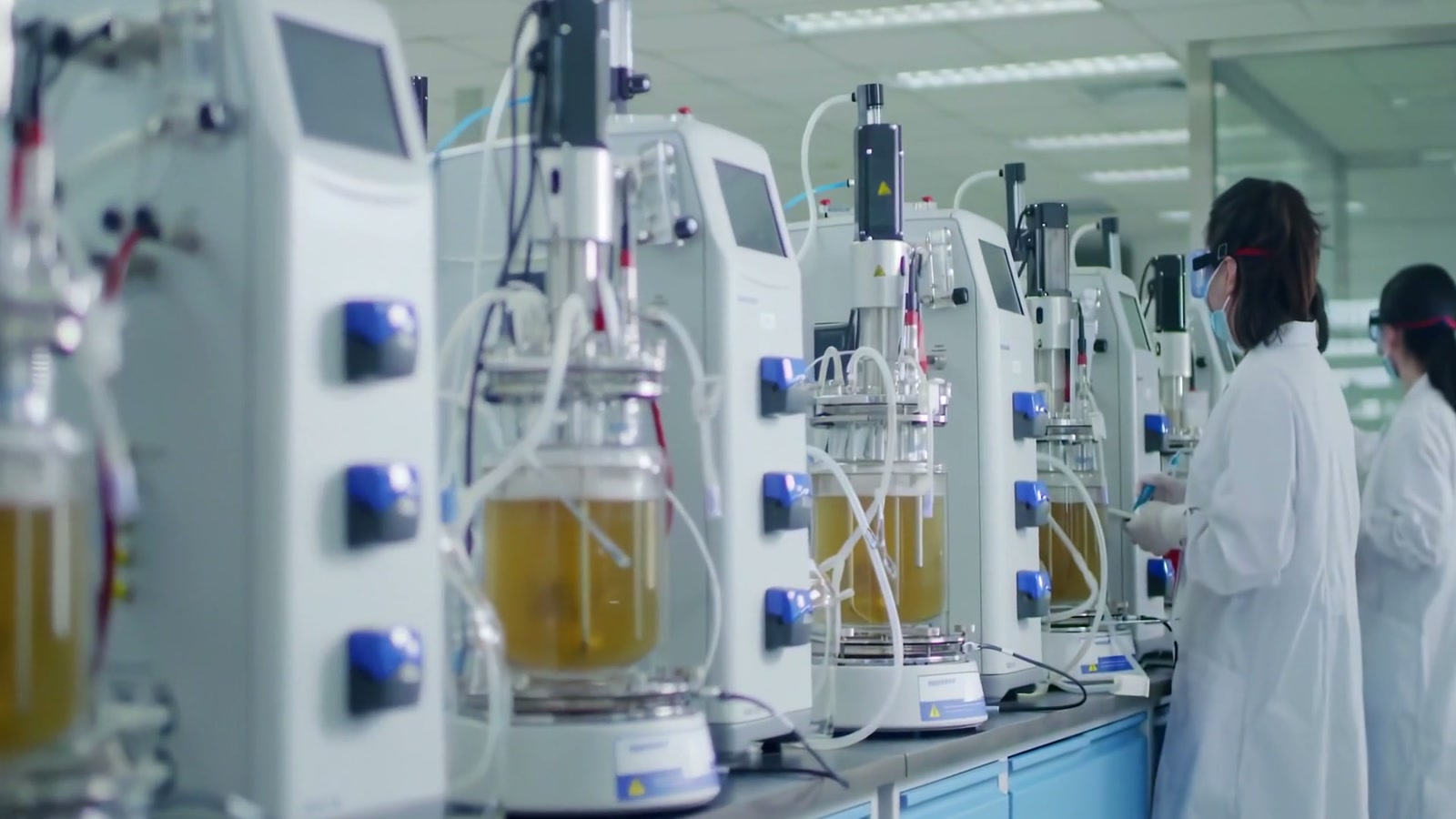
Recover a fraction someone has a use for.
Bring feedstock identity, recovery and formulation relevance into the same ingredient-development question.
Report molar conversion on a defined balance
Does the molar balance retain competing products?
The product-to-consumed-substrate molar yield makes the stoichiometric comparison explicit. Feed and consumed substrate are different denominators, and apparent yield can be misleading where the analytical balance is incomplete. The displayed relationship would retain product identity, sampling and any loss or competing product.
It does not represent a measured Bio performance. A future study would distinguish liquid concentration, total recovered product and isolated qualified output. This accounting discipline allows a buyer to compare a route with an existing source without mistaking a favourable conversion fraction for a production titre, productivity or saleable material yield.
Distinguish molar yield from concentration, productivity and isolated ingredient output.
- Molar product yieldmol product per mol substrate consumed
- Net target-product amount formedmol
- Substrate amount consumedmol
Model conditions. Chemically defined substrate/product; mass balance and sampling assessed; competing products retained; no Bio yield assigned.
The product can limit its own route
Could the product limit its own formation?
An aromatic product can interact with a catalyst or be transformed further. The proposed feasibility analysis would inspect whether the chosen system accumulates the target or consumes it, and whether removal or process control could change that behaviour. External pathway and reactor studies would be retained with their preparation context.
The practical question is what measurement can resolve the limiting step for the proposed precursor. A short qualified study might examine concentration dependence or product balance. It would not assume that a literature strain, enzyme or reactor is available to VARUNÉ Bio or cleared for commercial use.
Isolation belongs in the first proposal
Can the measured target become an isolated ingredient?
A target measured in a culture or reaction mixture is not yet a fragrance ingredient. Recovery, purification, residual composition, odour evaluation and intended-use assessment can determine feasibility. The proposed route map would trace the target through these steps and compare the expected qualification burden with a sourced reference.
A higher apparent conversion may be unattractive if isolation is difficult or the product contains unacceptable co-components. The first package should therefore specify which analytical and recovery questions need experimental resolution. It would avoid promising a natural-origin label or commercial status without the relevant source and regulatory basis.
A study that earns a development decision
Which study would earn further development?
The proposed experiment would begin only after authenticated precursor, qualified catalyst access, methods and rights are established. Its primary purpose would be to determine whether the route produces and recovers the target sufficiently to justify further work. Controls would distinguish conversion from analytical interference or precursor contamination.
Individual observations and unresolved balances would remain in the report. A useful result could be a stop or redirection to another precursor. The commercial route would grow from that evidence into an evaluation or co-development discussion, rather than announce a proprietary fermentation platform before its first qualified comparison.
The next proposed comparison.
Pathway, precursor and recovery decision package
A concrete aromatic development enquiry
What target and current alternative should the buyer identify?
An informative discussion names the target aromatic, existing supply or specification problem, precursor opportunity and intended use. We could then scope a proposed pathway-and-recovery brief and identify the smallest study that changes the decision. Potential value lies in a route a buyer can evaluate against a real alternative.
Budget, laboratory capacity, biological rights and delivery terms would be agreed for that project. No saleable aromatic product, engineered strain ownership, manufacturing access or validated yield is claimed. The proposition is an evidence-led development route towards an original comparison with a clear commercial reason.
Circular bioingredients · Proposed development discussion
A development path
for this research.
Does a precursor-conversion route merit a qualified feasibility study relative to a sourced aromatic comparator?
The people this could serve.Fragrance biotechnology developers and ingredient research investors.
The decision behind the project.
Your intended application, present alternative and the constraint behind “Aromatic bioconversion”. A useful starting point is the change that would justify another development step.
A proposed scope centred on pathway, precursor and recovery decision package.
Agree the comparison, acceptance basis and responsible expertise before discussing a paid package.
Specialist methods and a defined contribution.
Bring relevant analytical or experimental expertise, a comparator suggestion, and the conditions under which your method could resolve this question.
A jointly scoped proposal could connect your contribution with pathway, precursor and recovery decision package.
Define contributions, required access, independent preparations and permitted outputs before work or protected information is shared.
The commercial purpose of the next milestone.
Bring the application or asset thesis, the buyer you expect to value it, and the scientific or commercial uncertainty that must be resolved before another commitment.
The proposed decision record would connect the buyer question with pathway, precursor and recovery decision package. It would identify what a subsequent comparison needs to demonstrate.
Demand, development cost, resources, rights and a decision-changing milestone would need examination. No financing terms or investment outcome are represented here.
What a useful comparison
would record.
- Define the record needed for “An aromatic route needs a reason to exist” and identify what is currently missing.
- Check the evidence behind “Defining the precursor that reaches the catalyst” against the proposed buyer decision.
- Retain the applicable source links, versions, method limits and the exact evidence needed before another commitment.
What the proposed
brief could leave behind.
- Pathway, precursor and recovery decision package
- A preparation, comparator and endpoint record tied to this question.
- A source-linked account of the evidence gaps, study assumptions and next review point.
The proposed discussion brief
A brief you
can take away.
Use non-confidential notes to connect this topic with your own decision. Entries stay in this browser tab; saving creates a text file on your device. Nothing is submitted.
Paid feasibility brief with partner-scoped study and potential later evaluation route
Notes are optional. The brief includes this page’s proposed question and public source links.
Proposed scope; resources, methods, rights and delivery terms would be agreed before work. Begin with non-confidential information.
Sources and reading notes.
External work is identified below. Access notes describe the material inspected for this page; company research questions and proposed work are not presented as findings from these sources.
Yang et al, 2013Yang et al. (2013). Characterization of Two Streptomyces Enzymes That Convert Ferulic Acid to Vanillin. DOI: 10.1371/journal.pone.0067339.
The authors’ preparation, process conditions and reported measurements; application-specific limitations are discussed in the text.
Scope and limitations: This is an open-access article distributed under the terms of the Creative Commons Attribution License, which permits unrestricted use, distribution, and reproduction in any medium, provided the original author and source are properly credited. Article access is not material supply, process permission or patent clearance. Figures and raw data are not reproduced here.
Open original sourceBarghini et al, 2007Barghini et al. (2007). Vanillin production using metabolically engineered Escherichia coli under non-growing conditions. DOI: 10.1186/1475-2859-6-13.
The authors’ preparation, process conditions and reported measurements; application-specific limitations are discussed in the text.
Scope and limitations: https://creativecommons.org/licenses/by/2.0/This is an Open Access article distributed under the terms of the Creative Commons Attribution License (), which permits unrestricted use, distribution, and reproduction in any medium, provided the original work is properly cited. Article access is not material supply, process permission or patent clearance. Figures and raw data are not reproduced here.
Open original sourceYan et al, 2016Yan et al. (2016). Biotransformation of ferulic acid to vanillin in the packed bed-stirred fermentors. DOI: 10.1038/srep34644.
The authors’ preparation, process conditions and reported measurements; application-specific limitations are discussed in the text.
Scope and limitations: https://creativecommons.org/licenses/by/4.0/This work is licensed under a Creative Commons Attribution 4.0 International License. The images or other third party material in this article are included in the article’s Creative Commons license, unless indicated otherwise in the credit line; if the material is not included under the Creative Commons license, users will need to obtain permission from the license holder to reproduce the material. To view a copy of this license, visit http://creativecommons.org/licenses/by/4.0/ Article access is not material supply, process permission or patent clearance. Figures and raw data are not reproduced here.
Open original source