
 Film credits
A power setting is not a process dose.
Evaluate ultrasound through delivered energy, matrix behaviour and the quality of the recovered fraction.
Proposed VARUNÉ Bio development direction. The studies cited are external research; programme capacity, deliverables and commercial terms would be agreed for a defined project.
The tempting shortcut in method comparison
What did the apparatus actually deliver?
A device power setting and treatment duration can look like a complete ultrasound method. They leave out how much energy reaches the sample, the suspension concentration, the vessel geometry and the temperature trajectory.
A supplier comparing two literature procedures needs those distinctions before choosing equipment or a laboratory trial. We propose a dose-centred assessment that asks what changed in the material for the energy and preparation burden incurred. This avoids treating ultrasound as intrinsically superior and makes a proposed treatment comparable with mixing, heating or a simpler extraction route.
Examine the development decision
A power setting is not a process dose.
Open the sequence to examine what a development decision needs.
Identify the exact preparation, its source, and the properties a second laboratory must be able to reproduce.
Explanatory geometry · no simulated or measured performance
Measure the treatment the sample receives
Which energy quantity was measured?
Kabawa et al. (2026) reported probe geometry, duty cycle, controlled temperature and monitored output energy in their treatment comparison. These are relevant variables to retain in an evidence ledger. Nominal electrical consumption, reported sonotrode output and calorimetrically estimated sample input are different quantities.
A future study should name which was measured and how it was calculated. The energy record would sit beside solids loading and sample volume, allowing a reviewer to understand the basis of the dose. It would also reveal when different studies cannot be quantitatively combined.
The matrix can change the response
How does the matrix alter the comparison?
A suspended side stream has a different physical and chemical environment from a purified polymer solution. Viscosity, particles and accessible target distribution can influence treatment and subsequent separation.
Diaz-Ramirez et al. (2023) used an ultrasound-assisted extraction in a grape-pomace valorisation study; their preparation identity should remain attached to the resulting phenolic fraction. We would use such studies to select testable variables, not to predict a new feedstock automatically. The proposed screen would keep matrix concentration and particle conditioning controlled while investigating whether the candidate treatment improves a relevant recovery or composition endpoint.
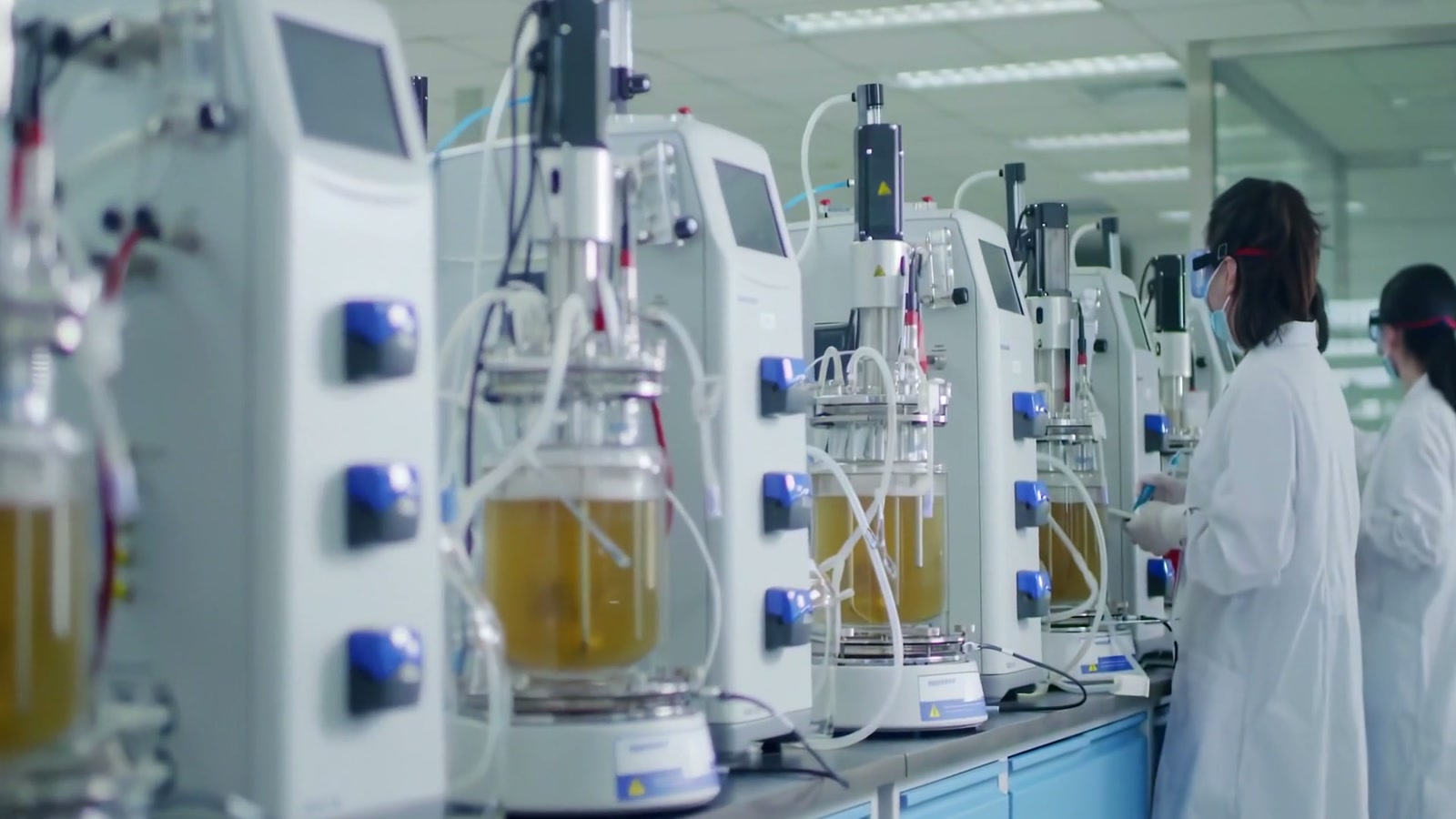
Recover a fraction someone has a use for.
Bring feedstock identity, recovery and formulation relevance into the same ingredient-development question.
Placing energy on a declared basis
What is the specific-energy denominator?
Specific energy can be reported per kilogram of dry feed so that suspension dilution does not silently change the denominator. This arithmetic describes the chosen energy measure and material basis, rather than the efficiency of every physical event in the vessel. A qualified comparison would report both the numerator measurement and dry-feed determination.
If the objective is a usable ingredient, energy per qualifying kilogram may also be useful after qualification data exist. Neither metric should be filled with nominal values taken from an unrelated apparatus. They are tools for making an actual process comparison transparent.
Normalise the explicitly measured sample or output energy to dry feed; do not conflate it with total facility consumption.
- Specific energy on dry-feed basisJ kg^{-1}
- Named measured energy input or device outputJ
- Dry feed mass subjected to treatmentkg
Model conditions. Energy measurement method stated; moisture basis documented; scale-dependent losses and cooling are separate.
(Kabawa et al, 2026)(Diaz-Ramirez et al, 2023)(Cabrera, L., Xavier, L. and Zecchi, B, 2024)
An extraction gain can carry a quality cost
Did recovery improve at a quality cost?
The proposed evaluation would inspect whether greater recovery is accompanied by altered molecular size, colour, composition or oxidation behaviour. Cabrera et al. (2024) studied extraction conditions and analytical responses for olive-pomace phenolics, demonstrating why a target response needs a named preparation and method.
For an ultrasound comparison, target-marker analysis and a practical formulation endpoint could reveal whether the extracted fraction remains attractive. A broad assay increase alone may reflect a changed mixture rather than better recovery of the component the buyer needs. The study must define what counts as useful improvement before optimisation.
Temperature is part of the experiment
Can heat explain the apparent advantage?
An ultrasound treatment can introduce heating. If temperature is not controlled or recorded, a comparison may confuse thermal extraction with the intended physical contribution. The proposed design would retain measured temperature histories and consider a matched thermal control where that resolves the question.
Cooling energy and handling should enter a later process appraisal rather than being omitted from the story. A short laboratory treatment can provide evidence of mechanism or feasibility; it does not provide a complete manufacturing energy inventory. Those boundaries should remain visible when a buyer evaluates the opportunity.
A comparison a process team can use
Which comparison could a process partner use?
The proposed output would map apparatus, energy basis, feed preparation, treatment conditions, separation steps and fraction-quality endpoints. It could include an experimental design to compare a small set of dose levels against a relevant conventional route.
A process partner would determine equipment suitability and practical operating limits. The aim is to identify a defensible next trial, not to select a production unit from literature alone. If an apparent benefit disappears after energy normalisation or application testing, that finding can save an ingredient team from scaling the wrong process.

The next proposed comparison.
Energy-normalised extraction comparison and test brief
The commercial question is the extra step
Does the additional step solve a real constraint?
A useful enquiry asks whether ultrasound solves an identified extraction or material-quality problem that the current route cannot economically address. The next discussion should establish the comparator, dry-feed basis, target fraction and acceptable quality difference.
A paid method appraisal could be followed by a qualified laboratory comparison if the evidence supports it. Its deliverable would include the unresolved scale and energy questions rather than a promise of lower cost or impact. The opportunity becomes interesting when a treatment creates a fraction a buyer can use and qualify with an understandable process burden.
Circular bioingredients · Proposed development discussion
A development path
for this research.
Does a defined ultrasound treatment improve qualified recovery enough to justify its energy and process burden?
The people this could serve.Process engineers and ingredient development teams.
The decision behind the project.
Your intended application, present alternative and the constraint behind “Ultrasound extraction dose”. A useful starting point is the change that would justify another development step.
A proposed scope centred on energy-normalised extraction comparison and test brief.
Agree the comparison, acceptance basis and responsible expertise before discussing a paid package.
Specialist methods and a defined contribution.
Bring relevant analytical or experimental expertise, a comparator suggestion, and the conditions under which your method could resolve this question.
A jointly scoped proposal could connect your contribution with energy-normalised extraction comparison and test brief.
Define contributions, required access, independent preparations and permitted outputs before work or protected information is shared.
The commercial purpose of the next milestone.
Bring the application or asset thesis, the buyer you expect to value it, and the scientific or commercial uncertainty that must be resolved before another commitment.
The proposed decision record would connect the buyer question with energy-normalised extraction comparison and test brief. It would identify what a subsequent comparison needs to demonstrate.
Demand, development cost, resources, rights and a decision-changing milestone would need examination. No financing terms or investment outcome are represented here.
What a useful comparison
would record.
- Record source identity, treatment order, temperature and the declared process-energy basis.
- Account for recovered fractions and any change in preparation identity.
- Compare structure and the intended application endpoint under matched loading and conditions.
What the proposed
brief could leave behind.
- Energy-normalised extraction comparison and test brief
- A preparation, comparator and endpoint record tied to this question.
- A source-linked account of the evidence gaps, study assumptions and next review point.
The proposed discussion brief
A brief you
can take away.
Use non-confidential notes to connect this topic with your own decision. Entries stay in this browser tab; saving creates a text file on your device. Nothing is submitted.
Commissioned extraction-method appraisal followed by qualified experimental work
Notes are optional. The brief includes this page’s proposed question and public source links.
Proposed scope; resources, methods, rights and delivery terms would be agreed before work. Begin with non-confidential information.
Sources and reading notes.
External work is identified below. Access notes describe the material inspected for this page; company research questions and proposed work are not presented as findings from these sources.
Kabawa et al, 2026Kabawa et al. (2026). Unveiling synergy in ultrasound-assisted enzymatic extraction: Role of treatment sequence and biomass complexity. DOI: 10.1016/j.ultsonch.2026.107749.
The authors’ preparation, process conditions and reported measurements; application-specific limitations are discussed in the text.
Scope and limitations: This is an open access article under the CC BY license (http://creativecommons.org/licenses/by/4.0/). Article access is not material supply, process permission or patent clearance. Figures and raw data are not reproduced here.
Open original sourceDiaz-Ramirez et al, 2023Diaz-Ramirez et al. (2023). Integral Valorization of Grape Pomace for Antioxidant Pickering Emulsions. DOI: 10.3390/antiox12051064.
The authors’ preparation, process conditions and reported measurements; application-specific limitations are discussed in the text.
Scope and limitations: Licensee MDPI, Basel, Switzerland. This article is an open access article distributed under the terms and conditions of the Creative Commons Attribution (CC BY) license (https://creativecommons.org/licenses/by/4.0/). Article access is not material supply, process permission or patent clearance. Figures and raw data are not reproduced here.
Open original sourceCabrera, L., Xavier, L. and Zecchi, B, 2024Cabrera, L., Xavier, L. and Zecchi, B. (2024). Extraction of phenolic compounds with antioxidant activity from olive pomace using natural deep eutectic solvents: modelling and optimization by response surface methodology. Discover Food 4, 29. DOI: 10.1007/s44187-024-00100-z.
Solvent screening, preparation conditions, response-surface design and HPLC marker analysis.
Scope and limitations: External laboratory extraction, not a formulation efficacy or safety result. No publisher figures copied.
Open original source