
 Film credits
Water changes the material too.
Assess pressurised-water extraction around polymer structure, downstream separation and the ingredient task.
Proposed VARUNÉ Bio development direction. The studies cited are external research; programme capacity, deliverables and commercial terms would be agreed for a defined project.
Water is a process choice
What does the water route change downstream?
A water-based extraction can remove the need for one organic solvent while introducing pressure, heating and separation demands. The useful question is whether those conditions generate a fraction that meets the intended application.
We propose assessing subcritical-water routes alongside an appropriate conventional extraction, with material structure and downstream recovery kept visible. This approach allows an ingredient supplier to examine a genuinely different process mechanism without treating the word water as an environmental conclusion. Equipment suitability, heat recovery and the handling of a dilute extract belong in the development argument from the start.
Examine the development decision
Water changes the material too.
Open the sequence to examine what a development decision needs.
Identify the exact preparation, its source, and the properties a second laboratory must be able to reproduce.
Explanatory geometry · no simulated or measured performance
Extraction and hydrolysis can occur together
Is the polymer recovered or transformed?
A polymer may be solubilised while its chain structure changes. Cui et al. (2022) studied pectin recovered from persimmon peel using subcritical water. Chen et al. (2020) examined structural changes in treated citrus pectin.
These different preparations support asking separately what is recovered and what has been altered. For a gelling application, molecular-size distribution and esterification can matter alongside yield. For a lower-size ingredient proposal, controlled change may be desirable. The intended material specification should therefore guide condition selection rather than follow whichever treatment produces the largest soluble fraction.
Keeping the residence-time story
Which exposure interval is being compared?
A nominal extraction time does not necessarily describe heating, cooling and exposure within a pressure vessel. The proposed preparation record would retain the temperature trajectory and define when the stated treatment interval begins. Sampling and reaction termination should also be specified.
These details help a laboratory distinguish material changes caused during the intended extraction from changes during warm-up or cooling. A future manufacturing route would add residence-time distribution and heat-transfer questions. The first feasibility comparison should therefore preserve enough process detail to remain useful when the programme moves beyond a small experimental vessel.
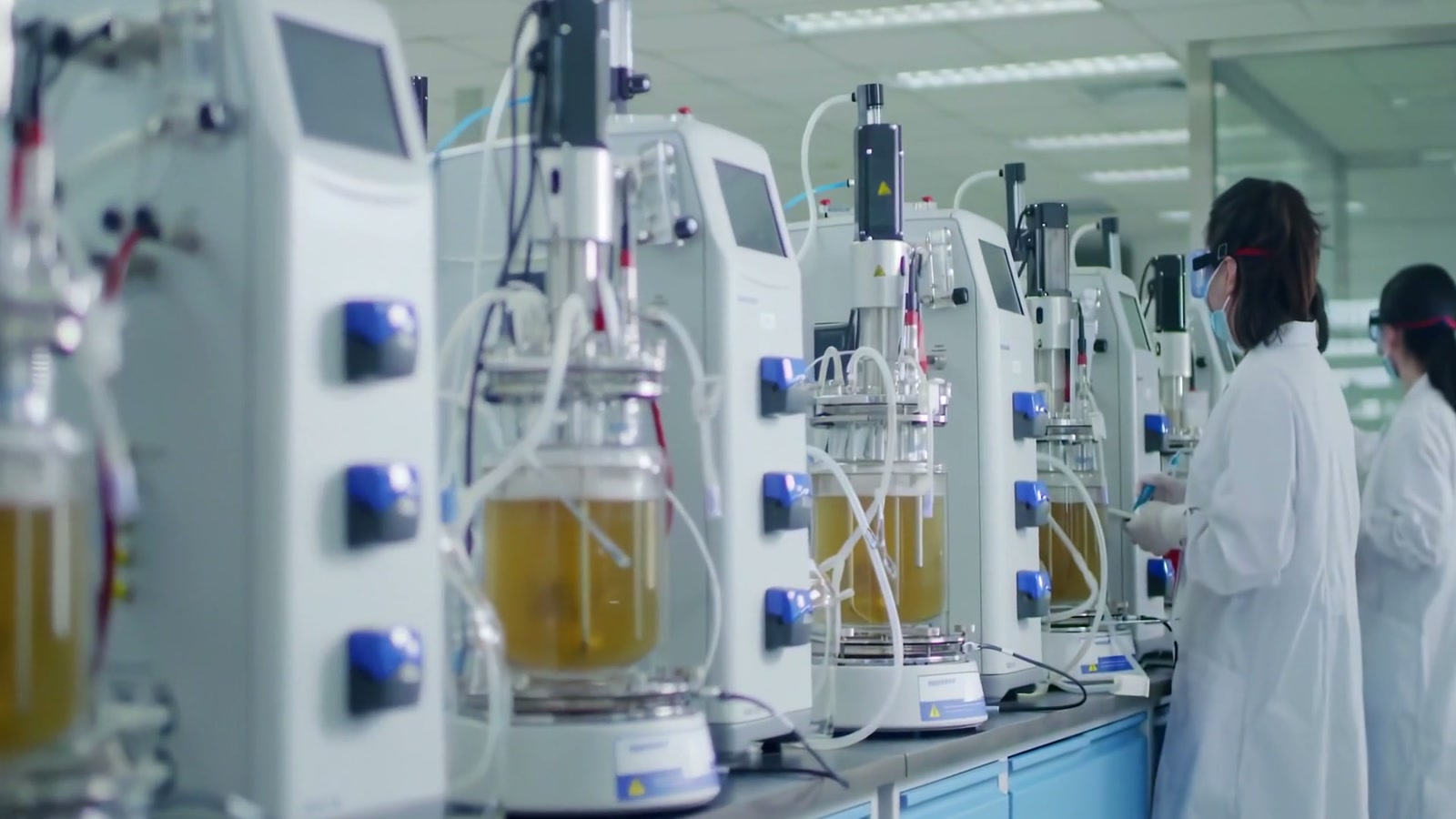
Recover a fraction someone has a use for.
Bring feedstock identity, recovery and formulation relevance into the same ingredient-development question.
A severity model is a comparison aid
What can an illustrative severity index explain?
The displayed thermal-severity relationship is an explicitly simplified comparison model. It combines exposure time with temperature through a chosen empirical sensitivity constant. That constant must be justified for the system or used only for a sensitivity illustration; it is not a fitted Bio parameter.
Equal severity values do not establish equal polymer chemistry, because pH, matrix, pressure and cooling can differ. We would present the original conditions beside any calculated severity. A buyer gains a compact way to compare candidate exposures while retaining the reasons that apparently similar treatments may yield different fractions.
Simplified empirical exposure index for comparing proposed conditions, with no fitted Bio constant.
- Thermal exposure index on declared reference basismin
- Exposure time at stated temperaturemin
- Treatment temperaturedegree C
- Chosen reference temperaturedegree C
- Empirical temperature-sensitivity constantdegree C
Model conditions. Isothermal approximation; chosen sensitivity explicitly stated; pH and matrix effects excluded; use as planning sensitivity, not validated kinetics.
A fraction needs more than a size average
Does an average hide a changed distribution?
A single mean molecular mass can conceal a broad or multimodal distribution. A proposed pectin comparison would examine distribution, analytical calibration, soluble composition and an application endpoint.
Chen et al. (2020) reported molecular-mass changes in their citrus preparation; the biological experiments in that paper would not be transferred into a cosmetic or ingredient efficacy claim. Duggal et al. (2024) connected a defined pectin extraction with characterisation and a process assessment. The practical use is to select measurements appropriate to the proposed fraction and disclose when methods prevent direct comparison between studies.
Downstream recovery can decide feasibility
Can the extracted material be isolated usefully?
A dilute water extract may require concentration, precipitation, washing or drying before it becomes a formulation ingredient. Those operations can alter purity, structure and process cost. The proposed brief would trace the target through them instead of stopping at the extraction yield.
It would record whether yield refers to soluble solids, crude precipitate or purified dry fraction. A route that creates an attractive extract but an impractical isolation burden may need a different application or process configuration. That is a useful early result for a supplier deciding whether to fund a qualified study.
The smallest informative process study
Which trial would resolve the route decision?
A staged comparison could begin with authenticated source material and a small number of justified exposures, then examine recovery, structure and a buyer-relevant function. The conventional comparator would use a declared basis and complete preparation record. A qualified process partner would assess pressure equipment and analytical capability before commitments.
The report would identify whether a benefit survives downstream recovery and where uncertainty remains. Further optimisation would follow only if the candidate creates a meaningful application advantage. This protects development resources from being consumed by process novelty without a material customer reason.

The next proposed comparison.
Condition–structure comparison and qualified process proposal
A proposal around the required polymer
What polymer requirement drives this proposal?
An informative enquiry names the polymer task, current ingredient, intended fraction specification and process constraint. We could then examine whether a subcritical-water route is worth a method brief and a separately resourced comparison. Potential value could lie in controlling structure, reducing a particular separation problem or accessing a useful fraction.
Each requires measurements rather than an assumed advantage. The proposed commercial output is a defensible route-selection package and test plan. It is not an announcement of a pressure-processing facility, validated manufacturing process or environmentally superior ingredient.
Circular bioingredients · Proposed development discussion
A development path
for this research.
Can a water-based route recover the required fraction without unacceptable structural change?
The people this could serve.Polysaccharide suppliers and process research partners.
The decision behind the project.
Your intended application, present alternative and the constraint behind “Subcritical-water fractionation”. A useful starting point is the change that would justify another development step.
A proposed scope centred on condition–structure comparison and qualified process proposal.
Agree the comparison, acceptance basis and responsible expertise before discussing a paid package.
Specialist methods and a defined contribution.
Bring relevant analytical or experimental expertise, a comparator suggestion, and the conditions under which your method could resolve this question.
A jointly scoped proposal could connect your contribution with condition–structure comparison and qualified process proposal.
Define contributions, required access, independent preparations and permitted outputs before work or protected information is shared.
The commercial purpose of the next milestone.
Bring the application or asset thesis, the buyer you expect to value it, and the scientific or commercial uncertainty that must be resolved before another commitment.
The proposed decision record would connect the buyer question with condition–structure comparison and qualified process proposal. It would identify what a subsequent comparison needs to demonstrate.
Demand, development cost, resources, rights and a decision-changing milestone would need examination. No financing terms or investment outcome are represented here.
What a useful comparison
would record.
- Record source identity, treatment order, temperature and the declared process-energy basis.
- Account for recovered fractions and any change in preparation identity.
- Compare structure and the intended application endpoint under matched loading and conditions.
What the proposed
brief could leave behind.
- Condition–structure comparison and qualified process proposal
- A preparation, comparator and endpoint record tied to this question.
- A source-linked account of the evidence gaps, study assumptions and next review point.
The proposed discussion brief
A brief you
can take away.
Use non-confidential notes to connect this topic with your own decision. Entries stay in this browser tab; saving creates a text file on your device. Nothing is submitted.
Process-feasibility brief with separately costed partner-led evaluation
Notes are optional. The brief includes this page’s proposed question and public source links.
Proposed scope; resources, methods, rights and delivery terms would be agreed before work. Begin with non-confidential information.
Sources and reading notes.
External work is identified below. Access notes describe the material inspected for this page; company research questions and proposed work are not presented as findings from these sources.
Cui et al, 2022Cui et al. (2022). Extraction optimization and characterization of persimmon peel pectin extracted by subcritical water. DOI: 10.1016/j.fochx.2022.100486.
The authors’ preparation, process conditions and reported measurements; application-specific limitations are discussed in the text.
Scope and limitations: This is an open access article under the CC BY-NC-ND license (http://creativecommons.org/licenses/by-nc-nd/4.0/). Article access is not material supply, process permission or patent clearance. Figures and raw data are not reproduced here.
Open original sourceChen et al, 2020Chen et al. (2020). Treatment with Subcritical Water-Hydrolyzed Citrus Pectin Ameliorated Cyclophosphamide-Induced Immunosuppression and Modulated Gut Microbiota Composition in ICR Mice. DOI: 10.3390/molecules25061302.
The authors’ preparation, process conditions and reported measurements; application-specific limitations are discussed in the text.
Scope and limitations: Licensee MDPI, Basel, Switzerland. This article is an open access article distributed under the terms and conditions of the Creative Commons Attribution (CC BY) license (http://creativecommons.org/licenses/by/4.0/). Article access is not material supply, process permission or patent clearance. Figures and raw data are not reproduced here.
Open original sourceDuggal et al, 2024Duggal et al. (2024). Microwave-assisted acid extraction of high-methoxyl kinnow (Citrus reticulata) peels pectin: Process, techno-functionality, characterization and life cycle assessment. DOI: 10.1016/j.fochms.2024.100213.
The authors’ preparation, process conditions and reported measurements; application-specific limitations are discussed in the text.
Scope and limitations: https://creativecommons.org/licenses/by-nc-nd/4.0/This is an open access article under the CC BY-NC-ND license (http://creativecommons.org/licenses/by-nc-nd/4.0/). Article access is not material supply, process permission or patent clearance. Figures and raw data are not reproduced here.
Open original source