
 Film credits
The second lot is the real test.
Design a comparison that separates material-lot variation from extraction and formulation variation.
Proposed VARUNÉ Bio development direction. The studies cited are external research; programme capacity, deliverables and commercial terms would be agreed for a defined project.
A single impressive sample leaves a question
Which repeat tests the proposed supply?
An ingredient candidate has to survive more than one attractive laboratory preparation. The practical question is whether a future lot can meet the same functional requirement without changing the formulation. We propose a repeat design that separates source lot, preparation run and measurement variation.
These are different contributors to uncertainty and should not be collapsed into a single set of technical repeats. The buyer gains a clearer view of where control is needed. A stable measurement on one vial establishes measurement repeatability; it cannot establish the reliability of a side-stream supply.
Examine the development decision
The second lot is the real test.
Open the sequence to examine what a development decision needs.
Identify the exact preparation, its source, and the properties a second laboratory must be able to reproduce.
Explanatory geometry · no simulated or measured performance
Variation that represents the supply
Does sampling represent the intended source population?
Source lots should represent plausible changes in the material the buyer could receive, such as processing days, collection intervals or distinct suppliers within the proposed specification. A qualification study that selects only the most uniform lot can underestimate the development burden.
Conversely, mixing fundamentally different preparations creates variation that a sensible sourcing specification could have prevented. We would define the intended population before selecting samples. That allows the study to test the commercial source proposition rather than an arbitrary assortment of biomass, and makes any eventual acceptance range easier to explain.
Preparation runs need their own identity
Can source and process variation be separated?
A split lot can be extracted independently to test sensitivity to preparation. Different lots can then be processed using the same defined method. This nested structure distinguishes source-associated differences from process-associated differences.
The record would retain operator, equipment, conditioning, actual temperature history, filtration and drying rather than only nominal settings. Lee et al. (2020) compared differently prepared lignin materials, illustrating why process identity belongs with performance. Our proposed study would use that principle to avoid blaming a supplier for variation introduced by the laboratory or overlooking a source effect hidden by pooling.
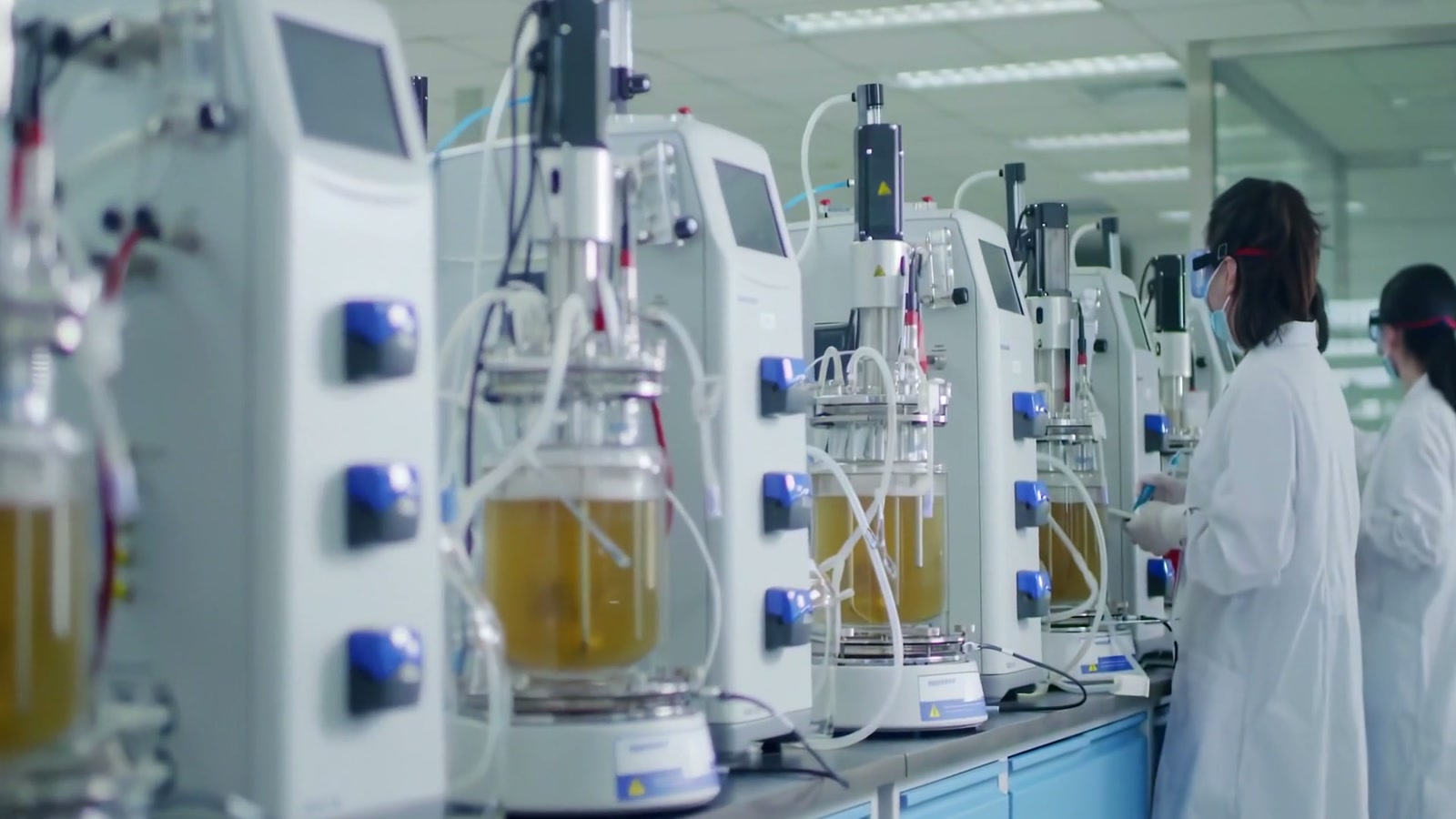
Recover a fraction someone has a use for.
Bring feedstock identity, recovery and formulation relevance into the same ingredient-development question.
Variation needs a useful scale
Is relative dispersion meaningful for this endpoint?
The coefficient of variation can describe dispersion relative to the mean for a positive, meaningful ratio-scale measurement. It is not automatically suitable for values near zero, censored results or quantities with arbitrary zero points. We would use it only where the endpoint supports it and retain the underlying observations.
A large variation in an irrelevant assay may matter less than a small variation near a formulation tolerance. The equation therefore supports interpretation rather than replacing the acceptance criterion. Buyer requirements should determine which variation is consequential and which deserves a separate sensitivity analysis.
Describe variability only for appropriate positive ratio-scale endpoints; retain the underlying lot and preparation hierarchy.
- Sample standard deviationsame unit as endpoint
- Sample meansame unit as endpoint
- Coefficient of variationdimensionless
Model conditions. Positive non-zero mean; meaningful ratio scale; independence and sampling hierarchy explicitly assessed.
Change the conditions · examine the reference
More readings—or more evidence?
Change the independent preparations and repeat readings. See which source of variation the next measurement can actually reduce.
The data, equations and controls remain available below if 3D cannot load.
Defined model · illustrative conditions
Points are discrete design calculations, joined for comparison. No experimental observations or confidence intervals are shown.
Fund the preparation or repeat that addresses the uncertainty relevant to the development decision.
The defined comparison
Balanced random-intercept scenario with between-preparation SD 10 response AU and within-preparation SD 6 response AU. Preparations are independent; residual readings are independent with common variance. The naive estimate treats all BR readings as independent and ignores clustering. The 3D groups depict a design count, not measured sample values. No confidence interval, power or precision guarantee is calculated. Drift, pairing, operators, serial correlation and unequal group sizes need additional structure.
Inspect the calculated values
Calculation grid, not measured observations. Inputs and assumptions are stated above.
| Independent preparations / count | Hierarchical design | All readings treated as independent |
|---|
Do not transfer an empirical model blindly
Where does an empirical prediction stop being valid?
Keivaninahr et al. (2021) developed emulsion relationships within their studied protein preparations and condition ranges. A model fitted to those data is useful context for selecting variables; it is not a universal predictor for a new circular ingredient.
We would first test whether the same variables are measurable and relevant in the proposed matrix. Liu et al. (2019) likewise tied aromatic composition to a specific preparation. Together these records support keeping source, process and application contexts attached when comparing lots, rather than treating a shared ingredient category as proof of equivalent behaviour.
Defining a meaningful acceptance window
What difference would matter to the customer?
A formulation team may care about process viscosity, colour drift, odour profile, droplet stability or material compatibility. The proposed acceptance window should be expressed in those terms and agreed before the comparison.
Analytical equivalence alone may be insufficient if a small compositional change creates an obvious sensory or processing difference. The reverse can also occur: compositional variation may have little practical consequence within the chosen application. We would connect each incoming marker with an application endpoint, then identify which markers could reasonably become part of a supplier specification after qualified validation.
Design the cheapest repeat that resolves the doubt
Which repeat resolves the largest uncertainty?
The first design should target the largest unresolved source of uncertainty. If lot variation is the concern, additional source lots are more informative than many repeated instrument readings from the same extract. If preparation consistency is unclear, independently repeating the extraction may be the better investment.
A staged design can begin with an economical screen and then expand around a confirmed difference. This preserves the flagship development budget while generating evidence a buyer can use. Sample numbers and analytical work would be scoped with a qualified partner and informed by the required precision.

The next proposed comparison.
Nested sampling and repeat-comparison design
The commercial output is a qualification argument
Can the resulting design support qualification?
The proposed deliverable is a documented comparison design, endpoint rationale, lot and preparation map, and decision rule for advancing a candidate. If testing is subsequently commissioned, the report would retain individual results and uncertainty, including lots that underperform.
A supplier could use it to refine the source specification; a formulator could use it to judge whether a trial is worth pursuing. The enquiry should name the actual variability problem and current acceptance requirement. That anchors the work in a commercial decision rather than a generic claim that biological materials are inconsistent.
Circular bioingredients · Proposed development discussion
A development path
for this research.
Does observed functionality survive repeat source lots and preparation runs?
The people this could serve.Ingredient quality teams and formulation development leads.
The decision behind the project.
Your intended application, present alternative and the constraint behind “Lot variability”. A useful starting point is the change that would justify another development step.
A proposed scope centred on nested sampling and repeat-comparison design.
Agree the comparison, acceptance basis and responsible expertise before discussing a paid package.
Specialist methods and a defined contribution.
Bring relevant analytical or experimental expertise, a comparator suggestion, and the conditions under which your method could resolve this question.
A jointly scoped proposal could connect your contribution with nested sampling and repeat-comparison design.
Define contributions, required access, independent preparations and permitted outputs before work or protected information is shared.
The commercial purpose of the next milestone.
Bring the application or asset thesis, the buyer you expect to value it, and the scientific or commercial uncertainty that must be resolved before another commitment.
The proposed decision record would connect the buyer question with nested sampling and repeat-comparison design. It would identify what a subsequent comparison needs to demonstrate.
Demand, development cost, resources, rights and a decision-changing milestone would need examination. No financing terms or investment outcome are represented here.
What a useful comparison
would record.
- Identify source lots, independently prepared specimens and repeated instrument readings separately.
- Record the chosen endpoint and method under matched comparison conditions.
- Locate variation at the lot, preparation and reading levels before setting a repeat-study scope.
What the proposed
brief could leave behind.
- Nested sampling and repeat-comparison design
- A preparation, comparator and endpoint record tied to this question.
- A source-linked account of the evidence gaps, study assumptions and next review point.
The proposed discussion brief
A brief you
can take away.
Use non-confidential notes to connect this topic with your own decision. Entries stay in this browser tab; saving creates a text file on your device. Nothing is submitted.
Commissioned qualification design and subsequent qualified testing
Notes are optional. The brief includes this page’s proposed question and public source links.
Proposed scope; resources, methods, rights and delivery terms would be agreed before work. Begin with non-confidential information.
Sources and reading notes.
External work is identified below. Access notes describe the material inspected for this page; company research questions and proposed work are not presented as findings from these sources.
Keivaninahr et al, 2021Keivaninahr et al. (2021). Prediction of emulsification behaviour of pea and faba bean protein concentrates and isolates from structure–functionality analysis. DOI: 10.1039/d0ra09302e.
The authors’ preparation, process conditions and reported measurements; application-specific limitations are discussed in the text.
Scope and limitations: Not found; inspect publisher record Article access is not material supply, process permission or patent clearance. Figures and raw data are not reproduced here.
Open original sourceLee et al, 2020Lee et al. (2020). Preparation and Application of Light-Colored Lignin Nanoparticles for Broad-Spectrum Sunscreens. DOI: 10.3390/polym12030699.
The authors’ preparation, process conditions and reported measurements; application-specific limitations are discussed in the text.
Scope and limitations: Licensee MDPI, Basel, Switzerland. This article is an open access article distributed under the terms and conditions of the Creative Commons Attribution (CC BY) license (http://creativecommons.org/licenses/by/4.0/). Article access is not material supply, process permission or patent clearance. Figures and raw data are not reproduced here.
Open original sourceLiu et al, 2019Liu et al. (2019). Extraction of ‘Gannanzao’ Orange Peel Essential Oil by Response Surface Methodology and its Effect on Cancer Cell Proliferation and Migration. DOI: 10.3390/molecules24030499.
The authors’ preparation, process conditions and reported measurements; application-specific limitations are discussed in the text.
Scope and limitations: https://creativecommons.org/licenses/by/4.0/Licensee MDPI, Basel, Switzerland. This article is an open access article distributed under the terms and conditions of the Creative Commons Attribution (CC BY) license (http://creativecommons.org/licenses/by/4.0/). Article access is not material supply, process permission or patent clearance. Figures and raw data are not reproduced here.
Open original source