
 Film credits
Making the new ingredient face the current one.
Compare circular interfacial candidates against the formulation requirement, not a convenient demonstration.
Proposed VARUNÉ Bio development direction. The studies cited are external research; programme capacity, deliverables and commercial terms would be agreed for a defined project.
A demonstration is not a replacement argument
Does the candidate beat a relevant comparator?
An ingredient can form an emulsion in a simple laboratory system without being useful in a customer formulation. The buyer needs to know whether it offers a meaningful advantage over the material already used under relevant conditions.
We propose a comparator-led design for recovered proteins, cellulose or combined fractions. The study would identify the actual failure mode before selecting the candidate and endpoints. This shifts the proposition from a broad claim of stabilisation to a question about processing, separation, texture or another measurable requirement that can justify a formulation trial.
Examine the development decision
Making the new ingredient face the current one.
Open the sequence to examine what a development decision needs.
Identify the exact preparation, its source, and the properties a second laboratory must be able to reproduce.
Explanatory geometry · no simulated or measured performance
Using a concentration basis that the buyer understands
What concentration basis is meaningful?
Comparing candidates at equal gross mass can conceal differences in active fraction, total solids or accompanying extraction components. Comparing at a selected marker concentration can introduce other composition differences.
The proposed design would state why its basis is appropriate and retain both gross and defined-component quantities. Keivaninahr et al. (2021) compared protein preparations under specified conditions, reinforcing the need to preserve preparation and environment. A customer should be able to understand what would actually be added to the product, not only the normalised quantity used to make a research comparison look simple.
The control must resolve the mechanism
Which ambiguity does each control resolve?
A formulation without the candidate can reveal whether the preparation contributes a useful effect. A carrier-only or extraction-medium control may be needed where another component could explain the response. Diaz-Ramirez et al. (2023) examined combined cellulose and phenolic preparations; Shi et al. (2022) studied charged cellulose interfaces.
These different mechanisms suggest different controls. The proposed brief would state the ambiguity each control resolves rather than add a standard list without purpose. This helps a buyer see whether the intended ingredient action has actually been tested or whether the observed stability could arise from another part of the preparation.
Recover a fraction someone has a use for.
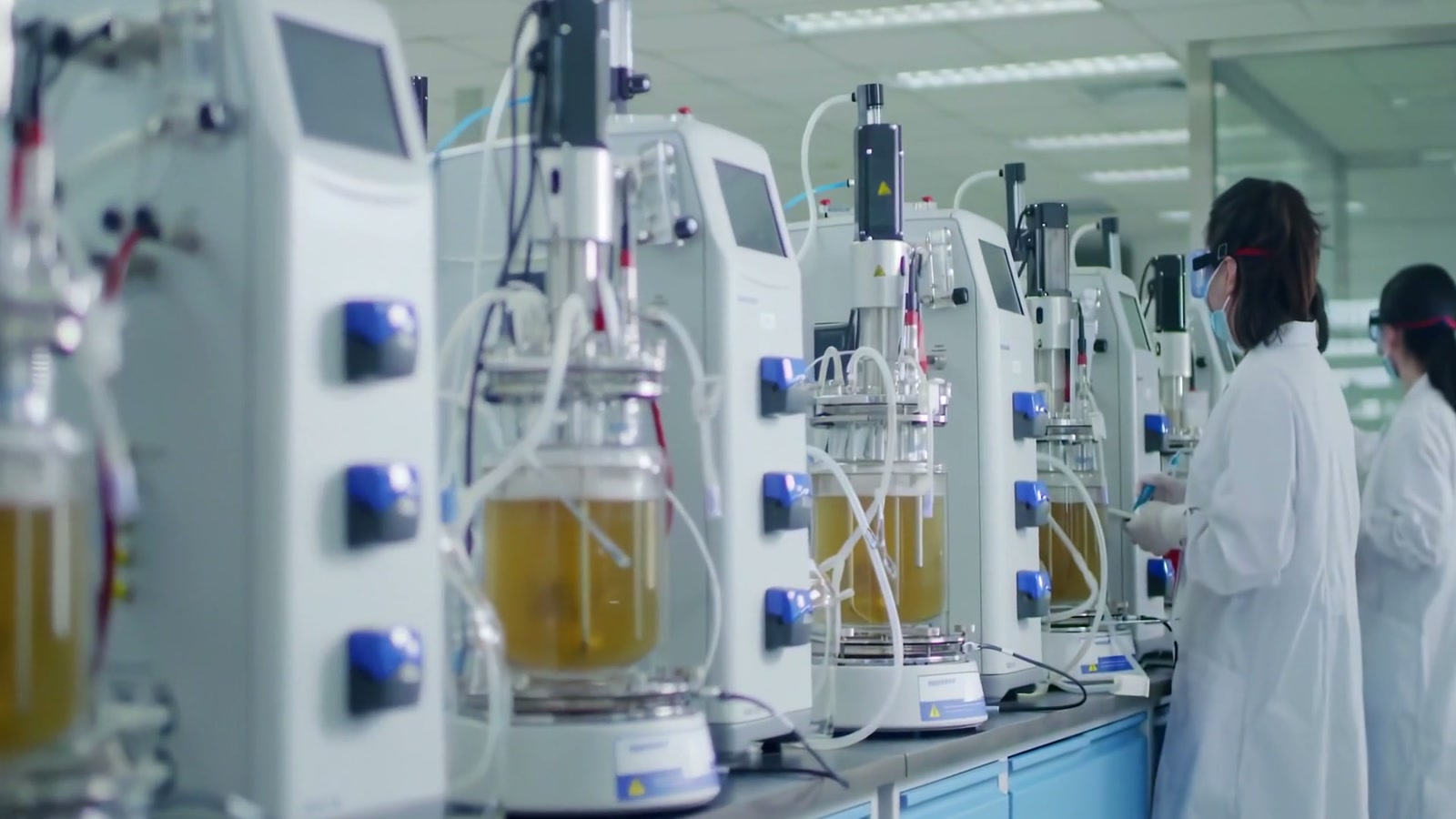
Bring feedstock identity, recovery and formulation relevance into the same ingredient-development question.
A settling model frames one failure pathway
Is ideal separation the actual failure mechanism?
Stokes’ velocity relationship describes an isolated sphere moving through a Newtonian continuous phase under creeping-flow assumptions. It can illustrate why size, density contrast and viscosity matter, but it does not predict a concentrated, interacting, deformable or gelled emulsion automatically.
The displayed model is a hypothesis aid with no fitted Bio values. A qualified study would determine whether the observed failure is creaming, sedimentation, flocculation, coalescence or another process. The correct interpretation matters commercially: reducing one pathway may leave another dominant, so an attractive viscosity change can fail to solve the buyer’s actual stability problem.
Illustrative single-sphere separation model; identify the actual emulsion failure mechanism before applying it.
- Terminal separation velocitym s^{-1}
- Density contrastkg m^{-3}
- Gravitational accelerationm s^{-2}
- Sphere radiusm
- Continuous-phase dynamic viscosityPa s
Model conditions. Dilute non-interacting rigid spheres; Newtonian phase; creeping flow; not a fitted model of concentrated formulations.
(Keivaninahr et al, 2021)(Diaz-Ramirez et al, 2023)(Shi et al, 2022)
Separate size distribution from visible separation
Do size and visible separation tell the same story?
A formulation can retain a similar mean droplet size while becoming spatially separated, or appear uniform while droplets grow. The proposed comparison would choose measurements that distinguish relevant changes, with sample location and preparation recorded.
Microscopy or size analysis should use a method appropriate to the material; aggressive dilution can change the state being measured. Visual separation, rheology and a targeted analytical endpoint can complement one another. The buyer does not need every possible measurement, but needs enough to know whether the candidate addresses the named failure mode under the intended processing and storage conditions.
Processing history belongs in the result
Can the processing route represent customer use?
Mixing intensity, temperature, addition order and time can strongly influence an emulsion comparison. A proposed candidate that requires an impractical preparation route may have little value to the customer even if it performs well in a bespoke laboratory sample. We would retain the actual processing history and compare a route that could plausibly be used in the intended setting.
A qualified partner would assess equipment and reproducibility. This makes the result relevant to ingredient selection rather than an isolated laboratory demonstration. It also identifies whether the material needs process development before a larger formulation trial is sensible.
A trial with a decision at the end
Which result would justify a wider trial?
The proposed package would state the current comparator, candidate identity, formulation conditions, primary endpoint and acceptable difference. A qualified repeat design would be agreed before testing. The outcome could support advancement, a change in concentration or preparation, or rejection.
Negative and mixed results would remain in the report. A subsequent robustness study could then investigate lot variation and practical processing only if the initial comparison warrants it. The commercial value is a defensible choice about what to try next, with resources directed towards a candidate that solves an application problem.

The next proposed comparison.
Matrix-matched comparator design and stability evidence brief
The enquiry should describe the failure
What failure needs to be solved?
A formulator or supplier can begin by naming the dispersed phase, current stabiliser, processing route and unwanted change. We could then assess whether a circular candidate merits an evidence brief and a scoped comparison.
Potential outputs include a useful experimental proposal, an interpretable original study or a supplier evaluation package. They do not imply a ready emulsion technology, certified ingredient or guaranteed shelf-life gain. Any later co-development or licence route would need application-specific evidence, practical delivery arrangements and rights that genuinely belong to the parties involved.
Circular bioingredients · Proposed development discussion
A development path
for this research.
Does the candidate improve a specified stability or processing task compared with the current material?
The people this could serve.Emulsion development teams and ingredient suppliers.
The decision behind the project.
Your intended application, present alternative and the constraint behind “Emulsion comparator design”. A useful starting point is the change that would justify another development step.
A proposed scope centred on matrix-matched comparator design and stability evidence brief.
Agree the comparison, acceptance basis and responsible expertise before discussing a paid package.
Specialist methods and a defined contribution.
Bring relevant analytical or experimental expertise, a comparator suggestion, and the conditions under which your method could resolve this question.
A jointly scoped proposal could connect your contribution with matrix-matched comparator design and stability evidence brief.
Define contributions, required access, independent preparations and permitted outputs before work or protected information is shared.
The commercial purpose of the next milestone.
Bring the application or asset thesis, the buyer you expect to value it, and the scientific or commercial uncertainty that must be resolved before another commitment.
The proposed decision record would connect the buyer question with matrix-matched comparator design and stability evidence brief. It would identify what a subsequent comparison needs to demonstrate.
Demand, development cost, resources, rights and a decision-changing milestone would need examination. No financing terms or investment outcome are represented here.
What a useful comparison
would record.
- Record terminal separation velocity (m s^{-1}) with the preparation, method and conditions needed to interpret it.
- Record density contrast (kg m^{-3}) with the preparation, method and conditions needed to interpret it.
- Record gravitational acceleration (m s^{-2}) with the preparation, method and conditions needed to interpret it.
What the proposed
brief could leave behind.
- Matrix-matched comparator design and stability evidence brief
- A preparation, comparator and endpoint record tied to this question.
- A source-linked account of the evidence gaps, study assumptions and next review point.
The proposed discussion brief
A brief you
can take away.
Use non-confidential notes to connect this topic with your own decision. Entries stay in this browser tab; saving creates a text file on your device. Nothing is submitted.
Paid application-design brief and separately scoped qualified comparison
Notes are optional. The brief includes this page’s proposed question and public source links.
Proposed scope; resources, methods, rights and delivery terms would be agreed before work. Begin with non-confidential information.
Sources and reading notes.
External work is identified below. Access notes describe the material inspected for this page; company research questions and proposed work are not presented as findings from these sources.
Keivaninahr et al, 2021Keivaninahr et al. (2021). Prediction of emulsification behaviour of pea and faba bean protein concentrates and isolates from structure–functionality analysis. DOI: 10.1039/d0ra09302e.
The authors’ preparation, process conditions and reported measurements; application-specific limitations are discussed in the text.
Scope and limitations: Not found; inspect publisher record Article access is not material supply, process permission or patent clearance. Figures and raw data are not reproduced here.
Open original sourceDiaz-Ramirez et al, 2023Diaz-Ramirez et al. (2023). Integral Valorization of Grape Pomace for Antioxidant Pickering Emulsions. DOI: 10.3390/antiox12051064.
The authors’ preparation, process conditions and reported measurements; application-specific limitations are discussed in the text.
Scope and limitations: Licensee MDPI, Basel, Switzerland. This article is an open access article distributed under the terms and conditions of the Creative Commons Attribution (CC BY) license (https://creativecommons.org/licenses/by/4.0/). Article access is not material supply, process permission or patent clearance. Figures and raw data are not reproduced here.
Open original sourceShi et al, 2022Shi et al. (2022). Stable Cellulose Nanofibril Microcapsules from Pickering Emulsion Templates. DOI: 10.1021/acs.langmuir.1c03025.
The authors’ preparation, process conditions and reported measurements; application-specific limitations are discussed in the text.
Scope and limitations: https://creativecommons.org/licenses/by/4.0/Permits the broadest form of re-use including for commercial purposes, provided that author attribution and integrity are maintained (https://creativecommons.org/licenses/by/4.0/). Article access is not material supply, process permission or patent clearance. Figures and raw data are not reproduced here.
Open original source