
 Film credits
Removal needs a method. Safety needs more.
Plan residual-protein measurement and source-specific qualification without converting processing into an unsupported safety claim.
Proposed VARUNÉ Bio development direction. The studies cited are external research; programme capacity, deliverables and commercial terms would be agreed for a defined project.
A cleaner fraction can still carry a question
Which residual remains in the supplied fraction?
An extract described as a polysaccharide or phenolic fraction may retain protein or other source components. The relevant qualification question is what remains in the actual preparation and whether the measurement method can detect it meaningfully.
We propose building that record before a product team relies on a purification story. A reduction in total protein does not establish absence of relevant proteins, and a processing step does not establish safety. The proposed programme would connect source identity, intended exposure and analytical capability with questions for a qualified assessor, rather than turn an extraction result into a consumer reassurance.
Examine the development decision
Removal needs a method. Safety needs more.
Open the sequence to examine what a development decision needs.
Identify the exact preparation, its source, and the properties a second laboratory must be able to reproduce.
Explanatory geometry · no simulated or measured performance
The assay has to work in the matrix
Can the analytical method answer the matrix question?
A residual-protein method can be affected by extraction components, low concentration, incomplete recovery or interference. The proposed brief would identify the method’s target, calibration, sample preparation and applicable detection range. Spike recovery and matrix controls may be necessary to show that a low result is interpretable.
A measurement below a reporting limit should remain a censored observation rather than become zero. The buyer needs a method that can answer the specific residual question in the fraction being supplied. This is more useful than choosing an assay simply because it is familiar or inexpensive in a different matrix.
Processing changes recognition as well as quantity
Did processing change quantity or assay recognition?
Calcinai et al. (2022) examined enzyme-dependent immunoreactivity in legume by-products. Teodorowicz et al. (2026) showed that changes in binding measurements and functional responses need not be interchangeable in processed pea proteins. These external studies guide the choice of qualification questions; they do not establish a new ingredient’s safety.
A proposed Bio dossier would distinguish total-protein measurement, target-protein identity and assay recognition. Where processing changes the material or the antibody response, an apparent loss of signal may have more than one explanation. A qualified specialist would determine which evidence is appropriate for the intended application.
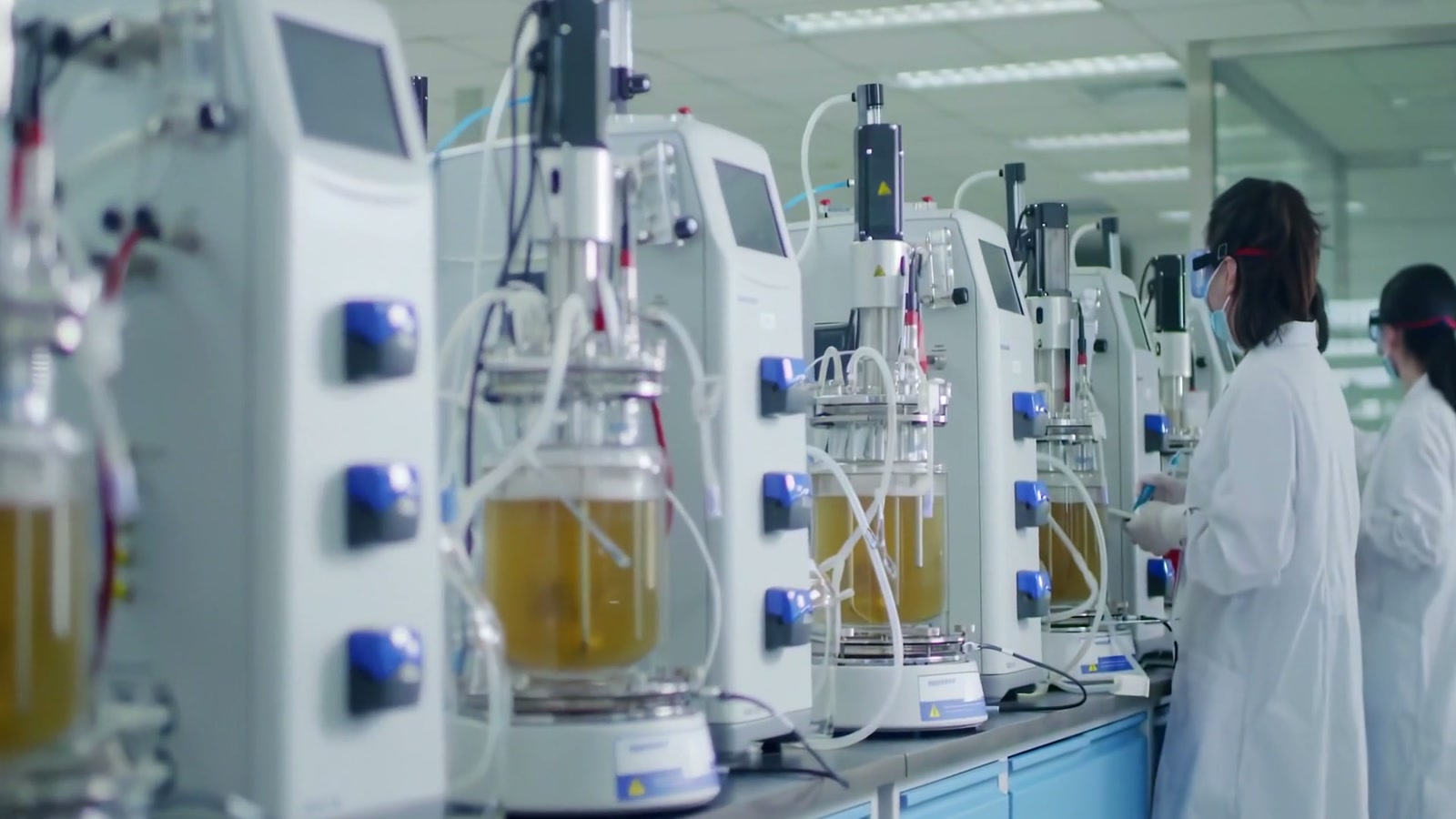
Recover a fraction someone has a use for.
Bring feedstock identity, recovery and formulation relevance into the same ingredient-development question.
Recovery makes the reported concentration interpretable
What does spike recovery establish?
The spike-recovery relationship compares the measured increase after adding a known amount with the added amount. It can identify some matrix or preparation problems, but does not by itself validate every aspect of a method. The spike should be representative of the measurement question, and recovery can depend on concentration and sample treatment.
We would retain unspiked and spiked results, uncertainty and the reporting basis. The equation is an analytical quality check, not an allergen-risk model. It helps a buyer understand whether a residual result is trustworthy enough to inform the next qualification discussion.
Check whether a known addition is recovered in the candidate matrix; this is method information, not a safety probability.
- Spike recovery fractiondimensionless
- Measured spiked-sample concentrationdeclared concentration unit
- Measured unspiked concentrationsame concentration unit
- Known added concentrationsame concentration unit
Model conditions. Representative spike and dilution basis; method linearity assessed; recovery does not establish all target proteins or safety.
(Calcinai et al, 2022)(Teodorowicz et al, 2026)(Olivares-Martínez, A.L. et al, 2026)
A comparable preparation is essential
Are the compared preparations equivalent?
Olivares-Martínez et al. (2026) developed characterised legume preparations for allergen-related research. The relevance here is methodological: preparation identity affects what can be compared across assays and studies. A future Bio fraction would need its own source, process and composition record.
Food-allergen research cannot be transferred automatically into cosmetic exposure or another product category. The proposed brief would map those limits and identify where specialist evidence is missing. This preserves the value of scientific context while preventing a literature finding from carrying a safety claim that the original experiment did not test.
Qualification should follow the actual use
Which intended exposure determines assessment needs?
A product category, exposure route, concentration and population can change the assessment needed. The programme would ask for the intended application before proposing residual limits or testing. Those limits should not be invented from a paper, nor should a laboratory functionality study be marketed as certification.
A qualified assessor and analytical partner would determine the relevant route for the actual material. The first decision package can still be useful by organising source-specific questions, method feasibility and missing records. It gives the buyer a clearer next step while preserving the boundary between material development and formal product assessment.
The deliverable is an evidence gap that can be closed
Which evidence gap can the next study close?
The proposed output would include a preparation map, likely residual components, candidate analytical methods, interference questions, reporting rules and a specialist-assessment brief. Where testing is commissioned, the report would retain detection limits and unresolved signals. This can support supplier qualification or guide a process change, such as a different separation or more targeted purification.
It should not imply an available testing laboratory or a guaranteed absence result. The smallest informative step may be a method-feasibility study rather than a broad test panel. That decision would be agreed around the actual qualification barrier and resources.

The next proposed comparison.
Preparation-specific residual-method and qualification question map
An enquiry grounded in the residual concern
What source-specific concern blocks qualification?
A useful discussion names the biological source, preparation steps, intended product and the residual component that the buyer needs to understand. We could then scope a proposed analytical decision brief and identify the appropriate qualified route.
Potential value lies in credible measurement and a clear assessment handover, especially when an attractive material is stalled by incomplete composition records. No hypoallergenic, allergen-free or safety-approved claim is implied. A subsequent commercial or evaluation proposition would depend on source-specific evidence, agreed delivery capability and the requirements of the actual application.
Circular bioingredients · Proposed development discussion
A development path
for this research.
What residual protein information is needed before this preparation can enter an application assessment?
The people this could serve.Ingredient quality teams and qualified safety assessors.
The decision behind the project.
Your intended application, present alternative and the constraint behind “Residual protein and qualification”. A useful starting point is the change that would justify another development step.
A proposed scope centred on preparation-specific residual-method and qualification question map.
Agree the comparison, acceptance basis and responsible expertise before discussing a paid package.
Specialist methods and a defined contribution.
Bring relevant analytical or experimental expertise, a comparator suggestion, and the conditions under which your method could resolve this question.
A jointly scoped proposal could connect your contribution with preparation-specific residual-method and qualification question map.
Define contributions, required access, independent preparations and permitted outputs before work or protected information is shared.
The commercial purpose of the next milestone.
Bring the application or asset thesis, the buyer you expect to value it, and the scientific or commercial uncertainty that must be resolved before another commitment.
The proposed decision record would connect the buyer question with preparation-specific residual-method and qualification question map. It would identify what a subsequent comparison needs to demonstrate.
Demand, development cost, resources, rights and a decision-changing milestone would need examination. No financing terms or investment outcome are represented here.
What a useful comparison
would record.
- Record spike recovery fraction (dimensionless) with the preparation, method and conditions needed to interpret it.
- Record measured spiked-sample concentration (declared concentration unit) with the preparation, method and conditions needed to interpret it.
- Record measured unspiked concentration (same concentration unit) with the preparation, method and conditions needed to interpret it.
What the proposed
brief could leave behind.
- Preparation-specific residual-method and qualification question map
- A preparation, comparator and endpoint record tied to this question.
- A source-linked account of the evidence gaps, study assumptions and next review point.
The proposed discussion brief
A brief you
can take away.
Use non-confidential notes to connect this topic with your own decision. Entries stay in this browser tab; saving creates a text file on your device. Nothing is submitted.
Paid analytical qualification brief with specialist assessment route
Notes are optional. The brief includes this page’s proposed question and public source links.
Proposed scope; resources, methods, rights and delivery terms would be agreed before work. Begin with non-confidential information.
Sources and reading notes.
External work is identified below. Access notes describe the material inspected for this page; company research questions and proposed work are not presented as findings from these sources.
Calcinai et al, 2022Calcinai et al. (2022). Effectiveness of enzymatic hydrolysis for reducing the allergenic potential of legume by-products. DOI: 10.1038/s41598-022-21296-z.
The authors’ preparation, process conditions and reported measurements; application-specific limitations are discussed in the text.
Scope and limitations: https://creativecommons.org/licenses/by/4.0/Open Access This article is licensed under a Creative Commons Attribution 4.0 International License, which permits use, sharing, adaptation, distribution and reproduction in any medium or format, as long as you give appropriate credit to the original author(s) and the source, provide a link to the Creative Commons licence, and indicate if changes were made. The images or other third party material in this article are included in the article's Creative Commons licence, unless indicated otherwise in a credit line to the material. If material is not included in the article's Creative Commons licence and your intended use is not permitted by statutory regulation or exceeds the permitted use, you will need to obtain permission directly from the copyright holder. To view a copy of this licence, visit http://creativecommons.org/licenses/by/4.0/. Article access is not material supply, process permission or patent clearance. Figures and raw data are not reproduced here.
Open original sourceTeodorowicz et al, 2026Teodorowicz et al. (2026). Heat Processing Reduces IgE Binding but Not Basophil Sensitivity to Pea Proteins in Pea-Allergic Children. DOI: 10.3390/nu18101612.
The authors’ preparation, process conditions and reported measurements; application-specific limitations are discussed in the text.
Scope and limitations: https://creativecommons.org/licenses/by/4.0/Licensee MDPI, Basel, Switzerland. This article is an open access article distributed under the terms and conditions of the Creative Commons Attribution (CC BY) license. Article access is not material supply, process permission or patent clearance. Figures and raw data are not reproduced here.
Open original sourceOlivares-Martínez, A.L. et al, 2026Olivares-Martínez, A.L. et al. (2026). The ALLPreT panel of legume allergen preparations: characterization of optimized protein extracts for allergen composition, IgE-binding and IgE-crosslinking properties. Frontiers in Allergy 7. DOI: 10.3389/falgy.2026.1938923.
Preparation-dependent protein composition and assay comparability in the authors’ legume allergen preparations.
Scope and limitations: Food-allergen preparations and laboratory assays; not a cosmetic safety conclusion. No source figures or raw data reproduced.
Open original source