
 Film credits
The solvent must earn its place.
Compare eutectic extraction media through target recovery, material compatibility and downstream qualification.
Proposed VARUNÉ Bio development direction. The studies cited are external research; programme capacity, deliverables and commercial terms would be agreed for a defined project.
A promising medium can become a formulation burden
What does the medium leave in the ingredient?
A deep eutectic solvent is an extraction choice with consequences after recovery. Components, water content, acidity, viscosity and retained medium can affect the material and its eventual application.
We propose selecting a solvent around the target fraction and the downstream qualification route. A solvent that extracts strongly may be unattractive if separation is difficult or the retained components are unsuitable for the intended product. This makes the development question practical: which medium gives a buyer a usable candidate rather than simply the highest response in one extraction assay?
Examine the development decision
The solvent must earn its place.
Open the sequence to examine what a development decision needs.
Identify the exact preparation, its source, and the properties a second laboratory must be able to reproduce.
Explanatory geometry · no simulated or measured performance
Composition belongs in the solvent name
Is the complete solvent composition retained?
The hydrogen-bond donor and acceptor, molar ratio and water fraction should remain attached to every extraction record. A generic label such as natural eutectic solvent is insufficient for reproducibility. Cabrera et al. (2024) screened defined media for olive-pomace phenolics and examined extraction conditions.
The proposed evidence ledger would retain those identities and avoid combining chemically different systems under one result. It would also distinguish a mixture described by its authors as eutectic from independently demonstrated phase behaviour. A process proposal should not use attractive terminology to conceal an incomplete material description.
Cabrera et al. (2024) reported this optimised preparation with assay-specific responses and a separately quantified hydroxytyrosol marker. Total phenolic equivalents, FRAP and DPPH are distinct measurements; they should not be combined into recovered compound mass or a skin-benefit score. The numerical register preserves their units and preparation context.
Examine the comparison
| Preparation and medium | Temperature | Water | Dry-solid/liquid ratio |
|---|---|---|---|
| Uruguayan olive pomace; lactic acid–glucose medium | 80 °C | 68% w/w | 0.014 g/mL |
Transport and chemistry interact
Which transport and chemical changes interact?
Water addition can change viscosity, extraction behaviour and the molecular environment. Acidic or alkaline components can also change a biological fraction during processing. Dzhambazova et al. (2026) compared differently constituted media in olive-pomace fractionation, with distinct consequences for recovered streams.
The proposed solvent appraisal would separate target solubilisation from chemical transformation. A practical comparison might hold feed and exposure constant while screening a small number of justified media, followed by structure and application measurements. The point is to understand why a candidate behaves differently, not to rank mixtures by a single aggregate response.
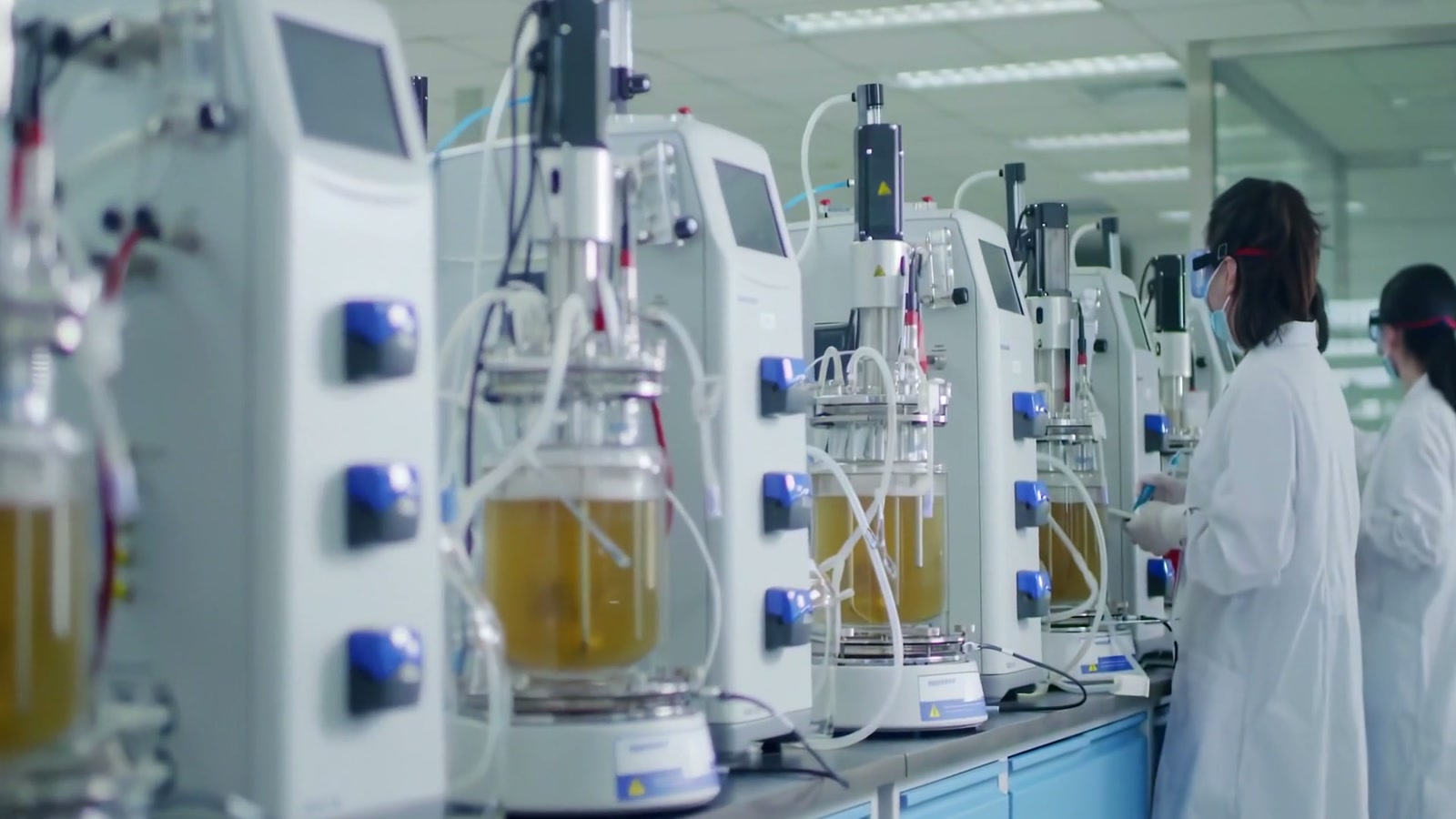
Recover a fraction someone has a use for.
Bring feedstock identity, recovery and formulation relevance into the same ingredient-development question.
Selectivity needs both sides of the balance
Does selectivity reduce the purification burden?
An extraction selectivity ratio compares the recovered target with the recovered non-target material on the same declared basis. It is an accounting measure, not a guarantee of purity or application performance. The target must be chemically defined and the non-target pool meaningfully measured.
A high ratio could still produce too little target for practical use, so recovery and selectivity should be shown separately. We would use this relationship to frame a comparison that asks whether downstream purification becomes easier or harder. No coefficient or selectivity value is attributed to an untested Bio preparation.
Compare recovered target and non-target masses alongside total recovery and downstream purity requirements.
- Selectivity ratio on declared analytical basisdimensionless
- Recovered chemically defined target masskg
- Recovered non-target masskg
Model conditions. Target definition and mass methods consistent; non-target denominator non-zero; solvent residues accounted for separately.
(Cabrera, L., Xavier, L. and Zecchi, B, 2024)(Dzhambazova et al, 2026)(Kabawa et al, 2026)
An assay can respond to the medium
Could the medium affect the assay?
An extraction component can contribute to a broad assay or interfere with measurement. Proposed solvent controls should therefore accompany the analytical method, including matrix blanks and appropriate calibration checks. Kabawa et al. (2026) designed controls around treatment effects in complex matrices; the broader design principle is to test the ambiguity that could explain the observed response.
For a phenolic route, marker-specific chromatography can complement total-response assays. A stronger colour or higher reducing signal should not be treated automatically as more target compound or better skin performance. The buyer needs a chemically interpretable fraction.
Separation changes the selection
How would the target leave the extraction mixture?
A conventional volatile solvent may have a different recovery route from a low-volatility extraction mixture. The proposed brief would examine whether the fraction is isolated, exchanged into another medium or intentionally carried into an application. Each route requires its own composition, residual and compatibility questions.
The extraction study would not establish that all solvent components are acceptable in every product category. A qualified safety and regulatory assessment would use the actual composition and intended exposure. This downstream view can reverse a solvent ranking that initially appears attractive when judged only by recovery.
A bounded first comparison
Which candidate set is worth testing?
The proposed first deliverable would map a small candidate set against a named conventional comparator, target-marker method, separation options and application requirement. It would identify missing information and propose the minimum experiments needed to resolve selection. A qualified partner would assess material handling and method capability.
Further optimisation would follow only if the candidate has an interpretable benefit and a plausible isolation route. This keeps the brief useful to a supplier who must decide where to spend development effort. It also exposes cases where a familiar qualified medium remains the strongest choice.

The next proposed comparison.
Solvent-selection ledger and condition-specific comparison proposal
A supplier enquiry that can become a project
What gives this selection commercial purpose?
The most useful discussion supplies the target fraction, source preparation, current extraction constraint and intended ingredient use. We could then scope a solvent-selection package and evaluate the case for a qualified study. Potential commercial value might come from a more selective preparation, easier downstream processing or a useful application-compatible extract.
Those remain hypotheses until tested. The programme would not claim a proprietary solvent system or a ready ingredient. Any later evaluation or licence route would require demonstrated performance, cleared rights and terms appropriate to the actual development output.
Circular bioingredients · Proposed development discussion
A development path
for this research.
Which extraction medium produces a useful, separable and appropriately qualified fraction?
The people this could serve.Ingredient-process developers and formulation research leads.
The decision behind the project.
Your intended application, present alternative and the constraint behind “Eutectic-solvent selection”. A useful starting point is the change that would justify another development step.
A proposed scope centred on solvent-selection ledger and condition-specific comparison proposal.
Agree the comparison, acceptance basis and responsible expertise before discussing a paid package.
Specialist methods and a defined contribution.
Bring relevant analytical or experimental expertise, a comparator suggestion, and the conditions under which your method could resolve this question.
A jointly scoped proposal could connect your contribution with solvent-selection ledger and condition-specific comparison proposal.
Define contributions, required access, independent preparations and permitted outputs before work or protected information is shared.
The commercial purpose of the next milestone.
Bring the application or asset thesis, the buyer you expect to value it, and the scientific or commercial uncertainty that must be resolved before another commitment.
The proposed decision record would connect the buyer question with solvent-selection ledger and condition-specific comparison proposal. It would identify what a subsequent comparison needs to demonstrate.
Demand, development cost, resources, rights and a decision-changing milestone would need examination. No financing terms or investment outcome are represented here.
What a useful comparison
would record.
- Record selectivity ratio on declared analytical basis (dimensionless) with the preparation, method and conditions needed to interpret it.
- Record recovered chemically defined target mass (kg) with the preparation, method and conditions needed to interpret it.
- Record recovered non-target mass (kg) with the preparation, method and conditions needed to interpret it.
What the proposed
brief could leave behind.
- Solvent-selection ledger and condition-specific comparison proposal
- A preparation, comparator and endpoint record tied to this question.
- A source-linked account of the evidence gaps, study assumptions and next review point.
The proposed discussion brief
A brief you
can take away.
Use non-confidential notes to connect this topic with your own decision. Entries stay in this browser tab; saving creates a text file on your device. Nothing is submitted.
Paid selection brief with supplier and laboratory scoping
Notes are optional. The brief includes this page’s proposed question and public source links.
Proposed scope; resources, methods, rights and delivery terms would be agreed before work. Begin with non-confidential information.
Sources and reading notes.
External work is identified below. Access notes describe the material inspected for this page; company research questions and proposed work are not presented as findings from these sources.
Cabrera, L., Xavier, L. and Zecchi, B, 2024Cabrera, L., Xavier, L. and Zecchi, B. (2024). Extraction of phenolic compounds with antioxidant activity from olive pomace using natural deep eutectic solvents: modelling and optimization by response surface methodology. Discover Food 4, 29. DOI: 10.1007/s44187-024-00100-z.
Solvent screening, preparation conditions, response-surface design and HPLC marker analysis.
Scope and limitations: External laboratory extraction, not a formulation efficacy or safety result. No publisher figures copied.
Open original sourceDzhambazova et al, 2026Dzhambazova et al. (2026). Tunable Natural Deep Eutectic Solvents‐Driven Fractionation of Olive Pomace in an Integrated Biorefinery: Linking Lignin Structural Tailoring to Carbohydrate Valorization and Biopolymer Production. DOI: 10.1002/cssc.70835.
The authors’ preparation, process conditions and reported measurements; application-specific limitations are discussed in the text.
Scope and limitations: This is an open access article under the terms of the http://creativecommons.org/licenses/by/4.0/ License, which permits use, distribution and reproduction in any medium, provided the original work is properly cited. Article access is not material supply, process permission or patent clearance. Figures and raw data are not reproduced here.
Open original sourceKabawa et al, 2026Kabawa et al. (2026). Unveiling synergy in ultrasound-assisted enzymatic extraction: Role of treatment sequence and biomass complexity. DOI: 10.1016/j.ultsonch.2026.107749.
The authors’ preparation, process conditions and reported measurements; application-specific limitations are discussed in the text.
Scope and limitations: This is an open access article under the CC BY license (http://creativecommons.org/licenses/by/4.0/). Article access is not material supply, process permission or patent clearance. Figures and raw data are not reproduced here.
Open original source