
 Film credits
An ingredient has to survive the kilogram.
Connect a proposed fraction with qualifying yield, process effort and a buyer’s alternative before larger development spend.
Proposed VARUNÉ Bio development direction. The studies cited are external research; programme capacity, deliverables and commercial terms would be agreed for a defined project.
A scientific result needs a commercial denominator
What costs attach to a qualifying kilogram?
An interesting material response does not reveal the cost of a kilogram that meets the application specification. A buyer or investor needs the route, qualifying yield and delivery burden before judging a development opportunity. We propose a transparent early feasibility model that identifies cost drivers and measurements rather than presenting unverified commercial forecasts.
The route can remain scientifically promising while the economic question is unresolved. That distinction protects resources and reputation. The first output would explain what must become true for the candidate to justify further work, and which inexpensive check could expose a fundamental problem.
Examine the development decision
An ingredient has to survive the kilogram.
Open the sequence to examine what a development decision needs.
Identify the exact preparation, its source, and the properties a second laboratory must be able to reproduce.
Explanatory geometry · no simulated or measured performance
The comparator is a real alternative
What real alternative does the buyer have?
A new ingredient route should be compared with an available material or a credible alternative development approach. The proposed brief would identify the customer task, existing specification and reason for considering the candidate. A higher preparation cost may be acceptable only if the application value and willingness to discuss it are credible.
That value should not be invented from a novelty story. A supplier can help define the current process burden and qualification requirements; a formulator can identify the performance gap. The model would then ask whether the proposed route plausibly addresses that gap and what evidence is missing.
Include the operations after extraction
Are downstream operations inside the model?
Heating, separation, washing, concentration, drying, handling and testing can dominate a route that initially appears attractive. Duggal et al. (2024) examined a defined extraction alongside process assessment; Dzhambazova et al. (2026) studied a multiproduct fractionation approach. Their contexts reinforce the need to retain the actual boundary.
A proposed Bio model would include downstream operations and state where costs are estimates or unknown. It would not import another laboratory’s figures as a manufacturing forecast. Qualified process input and real quotations would be needed before making a delivery or investment commitment.
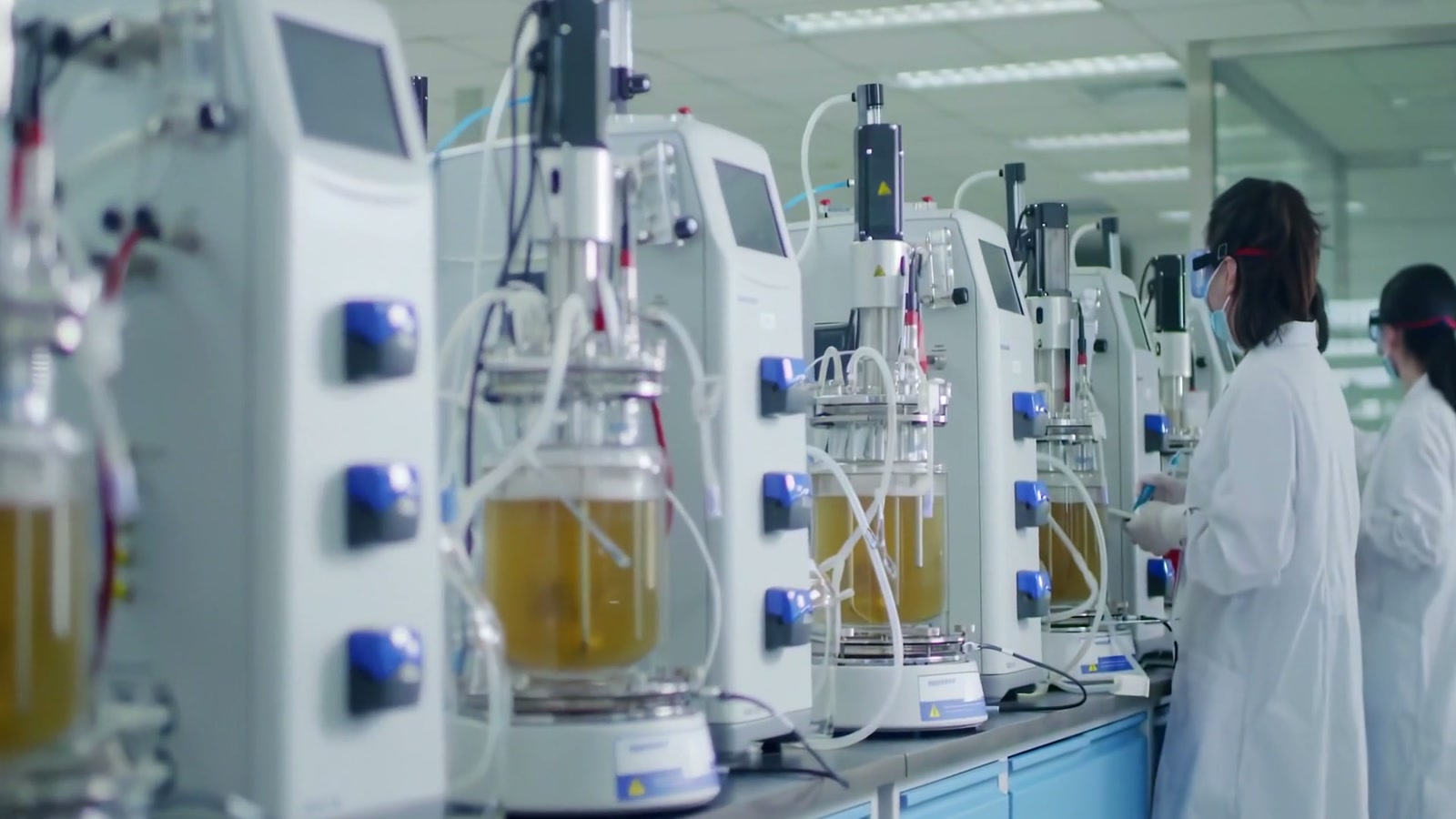
Recover a fraction someone has a use for.
Bring feedstock identity, recovery and formulation relevance into the same ingredient-development question.
Using qualifying output as the cost basis
Which assumptions dominate qualification-basis cost?
The planning unit-cost relationship divides relevant batch cost by the mass that meets the defined specification. It does not include a profit margin, prove market price or represent a Bio quotation. The numerator should state its boundary and distinguish variable, allocated and excluded costs.
The denominator must be measured or explicitly hypothetical. A sensitivity view can then show which missing variable matters most, without pretending that a single assumed value is the expected result. This makes the model useful for deciding whether to fund a process comparison, improve a specification or stop the proposed route.
Planning cost per kilogram meeting the declared specification; not a price or delivery quotation.
- Modelled qualification-basis costcurrency kg^{-1}
- Relevant batch cost within stated boundarycurrency
- Qualifying output masskg
Model conditions. Costs and output explicitly measured or hypothetical; boundary declared; no market-price, margin or scale guarantee.
(Duggal et al, 2024)(Ruhl et al, 2025)(Dzhambazova et al, 2026)
Change the conditions · examine the reference
Which kilogram are we discussing?
Follow target material from feed to accepted output. Change two retentions and see why recovered mass alone does not settle the proposition.
The data, equations and controls remain available below if 3D cannot load.
Defined model · illustrative conditions
Initial target 3 kg in 20 kg dry matter. Extraction, purification and qualification use different retained-mass boundaries.
Identify the recovery or qualification uncertainty that could change usable output before discussing process economics.
The defined comparison
Illustrative accounting: 100 kg wet feed, dry fraction 20%, target fraction in dry feed 15%, purification retention 80%; extraction and qualification retentions are selected. Qualification retention means the fraction of target mass meeting a stated criterion, not a probability of regulatory approval. Bar lengths use one common target-mass scale; losses are the differences between stages. Wet feed, dry feed and target mass are distinct denominators. No Bio yield, process price, environmental benefit or scale-up result is implied.
Inspect the calculated values
Calculation grid, not measured observations. Inputs and assumptions are stated above.
| Extraction retention / % | Extracted target | Accepted target |
|---|
Recovery and productivity can mislead on their own
Does recovery alter the productivity story?
Ruhl et al. (2025) investigated product capture in a microbial aromatic route. Such a preparation can change both apparent titre and recovery needs. The proposed economic appraisal would distinguish conversion performance, isolated qualifying yield and process duration.
A high broth concentration may still leave an expensive purification, while a lower concentration may have a simpler route. The buyer needs the complete system before comparing costs. The report would retain uncertainty and avoid presenting literature productivity or a plotted scenario as evidence that VARUNÉ Bio can manufacture at that performance or price.
A multiproduct route needs qualified customers
Are secondary fractions genuinely qualified outputs?
Assigning revenue to every secondary fraction can make a weak process look attractive. The proposed model would treat secondary outputs conservatively until their specification, qualification burden and plausible buyer discussion are defined. Unqualified residue would carry a handling assumption rather than an invented premium price.
Different allocation choices could be shown as scenarios, with their rationale visible. This keeps the first business case anchored to the primary ingredient task. If a second fraction genuinely merits development, it should earn its own evidence and customer proposition instead of functioning as an accounting rescue for the first.
Spend on the uncertainty that changes the decision
Which inexpensive check could stop a weak route?
The proposed package would rank missing variables by their influence on feasibility and the cost of resolving them. A simple moisture or qualifying-yield measurement may be more informative than a large optimisation campaign. A customer comparator discussion may reveal that the supposed performance advantage is commercially irrelevant.
Qualified testing would be scoped only after these questions are examined. The objective is to preserve flagship resources while developing credible opportunities. The model would state stop or redirect conditions and remain a planning tool until measured inputs, partner capability and commercial evidence justify stronger conclusions.
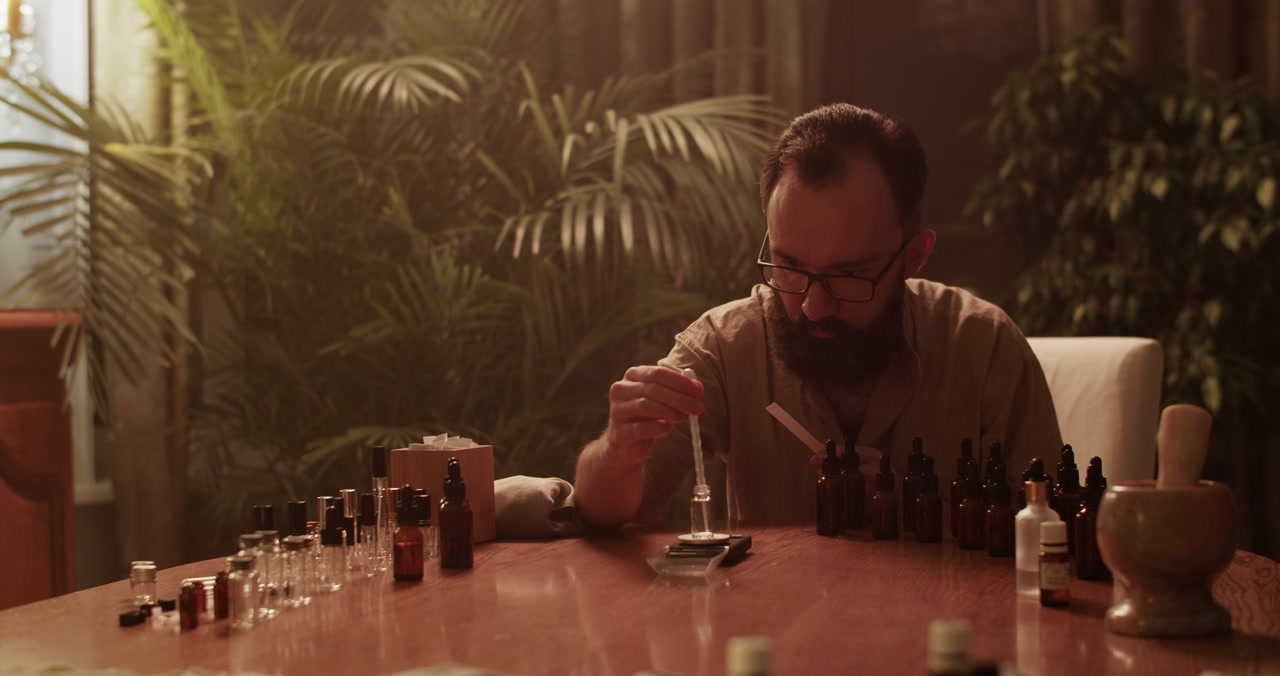
The next proposed comparison.
Transparent cost-driver model and staged measurement priorities
A proposal an investor or supplier can interrogate
Can a supplier interrogate the development case?
An informative enquiry identifies the candidate ingredient, current alternative, application requirement and the cost or supply barrier being addressed. We could then prepare a proposed feasibility decision package with a clear measurement plan. Potential commercial routes include a paid brief, qualified study or later evaluation agreement; none is an announced production service or financing round.
The value is a case that can be challenged and improved using evidence. No guaranteed savings, market demand, operating margin or saleable output is claimed. A defensible development decision is more useful than an attractive projection unsupported by the actual route.
Circular bioingredients · Proposed development discussion
A development path
for this research.
Which measured variables could make this proposed route commercially viable or unattractive?
The people this could serve.Ingredient business leads and research investors.
The decision behind the project.
Your intended application, present alternative and the constraint behind “Ingredient feasibility economics”. A useful starting point is the change that would justify another development step.
A proposed scope centred on transparent cost-driver model and staged measurement priorities.
Agree the comparison, acceptance basis and responsible expertise before discussing a paid package.
Specialist methods and a defined contribution.
Bring relevant analytical or experimental expertise, a comparator suggestion, and the conditions under which your method could resolve this question.
A jointly scoped proposal could connect your contribution with transparent cost-driver model and staged measurement priorities.
Define contributions, required access, independent preparations and permitted outputs before work or protected information is shared.
The commercial purpose of the next milestone.
Bring the application or asset thesis, the buyer you expect to value it, and the scientific or commercial uncertainty that must be resolved before another commitment.
The proposed decision record would connect the buyer question with transparent cost-driver model and staged measurement priorities. It would identify what a subsequent comparison needs to demonstrate.
Demand, development cost, resources, rights and a decision-changing milestone would need examination. No financing terms or investment outcome are represented here.
What a useful comparison
would record.
- Record qualifying output mass (kg) with the preparation, method and conditions needed to interpret it.
- Identify the source lot, conditioning and incoming-material sampling basis.
- Track recovery and composition through the stated extraction or fractionation sequence.
What the proposed
brief could leave behind.
- Transparent cost-driver model and staged measurement priorities
- A preparation, comparator and endpoint record tied to this question.
- A source-linked account of the evidence gaps, study assumptions and next review point.
The proposed discussion brief
A brief you
can take away.
Use non-confidential notes to connect this topic with your own decision. Entries stay in this browser tab; saving creates a text file on your device. Nothing is submitted.
Paid feasibility decision package before laboratory or process commitments
Notes are optional. The brief includes this page’s proposed question and public source links.
Proposed scope; resources, methods, rights and delivery terms would be agreed before work. Begin with non-confidential information.
Sources and reading notes.
External work is identified below. Access notes describe the material inspected for this page; company research questions and proposed work are not presented as findings from these sources.
Duggal et al, 2024Duggal et al. (2024). Microwave-assisted acid extraction of high-methoxyl kinnow (Citrus reticulata) peels pectin: Process, techno-functionality, characterization and life cycle assessment. DOI: 10.1016/j.fochms.2024.100213.
The authors’ preparation, process conditions and reported measurements; application-specific limitations are discussed in the text.
Scope and limitations: https://creativecommons.org/licenses/by-nc-nd/4.0/This is an open access article under the CC BY-NC-ND license (http://creativecommons.org/licenses/by-nc-nd/4.0/). Article access is not material supply, process permission or patent clearance. Figures and raw data are not reproduced here.
Open original sourceRuhl et al, 2025Ruhl et al. (2025). Production of Vanillin From Ferulic Acid by Pseudomonas putida KT2440 Using Metabolic Engineering and In Situ Product Recovery. DOI: 10.1111/1751-7915.70152.
The authors’ preparation, process conditions and reported measurements; application-specific limitations are discussed in the text.
Scope and limitations: https://creativecommons.org/licenses/by-nc-nd/4.0/This is an open access article under the terms of the http://creativecommons.org/licenses/by-nc-nd/4.0/ License, which permits use and distribution in any medium, provided the original work is properly cited, the use is non‐commercial and no modifications or adaptations are made. Article access is not material supply, process permission or patent clearance. Figures and raw data are not reproduced here.
Open original sourceDzhambazova et al, 2026Dzhambazova et al. (2026). Tunable Natural Deep Eutectic Solvents‐Driven Fractionation of Olive Pomace in an Integrated Biorefinery: Linking Lignin Structural Tailoring to Carbohydrate Valorization and Biopolymer Production. DOI: 10.1002/cssc.70835.
The authors’ preparation, process conditions and reported measurements; application-specific limitations are discussed in the text.
Scope and limitations: This is an open access article under the terms of the http://creativecommons.org/licenses/by/4.0/ License, which permits use, distribution and reproduction in any medium, provided the original work is properly cited. Article access is not material supply, process permission or patent clearance. Figures and raw data are not reproduced here.
Open original source