
 Film credits
The average does not describe the chain population.
Connect recovered polysaccharide distributions with a reproducible formulation comparison.
Proposed VARUNÉ Bio development direction. The studies cited are external research; programme capacity, deliverables and commercial terms would be agreed for a defined project.
A molecular-weight headline leaves out the material
What does the chain population contain?
A recovered polysaccharide is often a distribution of chain sizes and structures rather than one molecular species. Reporting a single mean can hide a small-size fraction, broad dispersity or changes introduced during extraction. We propose describing the population in the context of the intended task: gel formation, viscosity, deposited film or controlled release.
The buyer decision is which features need measurement before committing to formulation work. This makes analytical complexity useful. It also prevents a chain-size number measured by one method from being treated as directly equivalent to a result produced with different calibration or preparation.
Examine the development decision
The average does not describe the chain population.
Open the sequence to examine what a development decision needs.
Identify the exact preparation, its source, and the properties a second laboratory must be able to reproduce.
Explanatory geometry · no simulated or measured performance
The measurement method creates a comparison boundary
Are the mass estimates method-compatible?
Size-exclusion measurements depend on sample solubility, column interaction, calibration and detector assumptions. A proposed evidence record would retain those details and distinguish relative-calibration estimates from methods that support a different mass determination.
Cui et al. (2022) characterised a defined recovered pectin; Chen et al. (2020) reported size changes in treated citrus pectin. Their values belong to their methods and preparations. We would use them to frame a hypothesis and method-selection discussion, not to assign a molecular-weight specification to an untested side-stream fraction or claim equivalent behaviour from numerical similarity alone.
Extraction can reshape the distribution
Did extraction select or alter the population?
A process can release intact chains, cleave chains or preferentially recover a subset. The proposed preparation comparison would therefore connect extraction conditions with the chromatographic profile, mass recovery and insoluble fraction. A shift in the soluble distribution could reflect selective loss as well as chemical change.
Matched feed and process controls can help distinguish those possibilities. This is important commercially because a supplier needs to reproduce the fraction that gives useful behaviour, rather than merely reproduce the same mean value. The report would preserve distribution features and method limits alongside the proposed application endpoint.
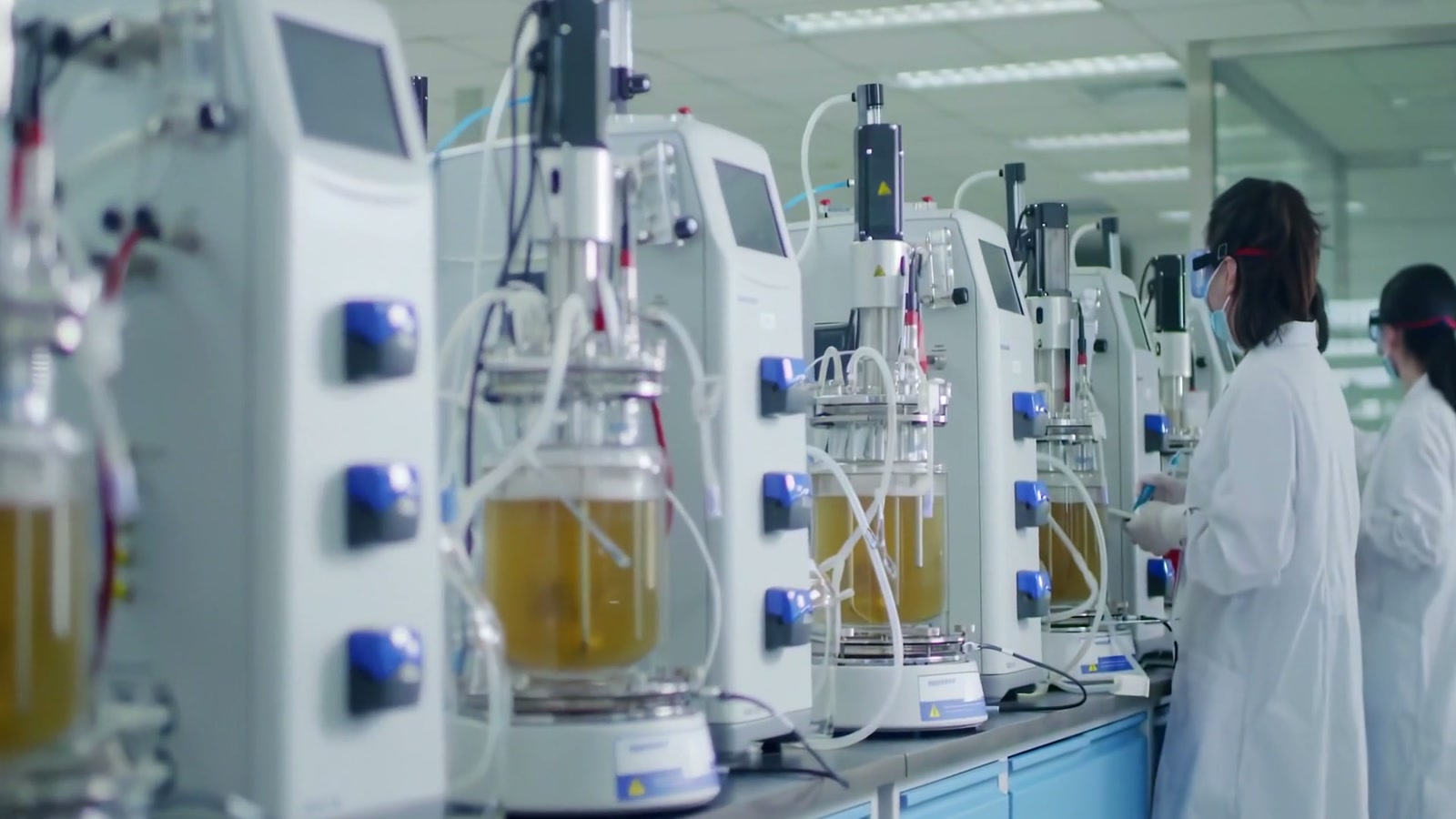
Recover a fraction someone has a use for.
Bring feedstock identity, recovery and formulation relevance into the same ingredient-development question.
Dispersity describes a defined ratio
What does the dispersity ratio leave out?
The weight-average to number-average mass ratio describes dispersity where both estimates are meaningful and consistently determined. It does not identify branching, substitution or aggregation, and should not be presented as a complete polymer specification. The displayed equation would accompany the underlying distribution and method.
A buyer can then ask whether a change in breadth relates to a functional difference or is simply an analytical effect. No Bio distribution or dispersity value is claimed. A proposed qualified study would determine whether the available analytical method is sufficiently informative for the chosen formulation decision.
Report the breadth descriptor only with the underlying distribution and analytical method.
- Dispersitydimensionless
- Weight-average molar massg mol^{-1}
- Number-average molar massg mol^{-1}
Model conditions. Both means obtained on compatible bases; sample conditioning and calibration retained; aggregation artefacts assessed.
Size matters together with chemistry
Which chemical features accompany size?
Pectin gel behaviour depends on more than chain mass. Tran Vo et al. (2022) investigated calcium and pH in a defined pectin system. This provides context for retaining ionic conditions and chemical character when connecting a size profile to rheology.
A future Bio comparison might combine molecular-size distribution with esterification, charge-related measurements and a relevant formulation test. Which measurements are necessary depends on the task. A larger analytical panel is justified only when it resolves a plausible mechanism or qualification barrier. Otherwise it can obscure the simple question of whether the candidate performs better than the current comparator.
Prepare samples without inventing a new fraction
Does sample conditioning change the test material?
Dissolution, filtration and centrifugation can remove material or alter which fraction reaches an analytical instrument. The proposed method record would state those steps, the recovered mass and any visible insoluble component.
A clean chromatogram obtained by discarding a problematic portion is not necessarily representative of the ingredient that a formulation team would receive. Where sample conditioning changes the test material, the report should describe the tested fraction explicitly. This makes method transfer more credible across supplier and laboratory teams, and can reveal an upstream preparation issue before it becomes an unexplained formulation failure.
A test designed to change the specification
Which descriptor could improve a specification?
The first proposed output would identify method comparability, candidate distribution descriptors and the functional comparison needed to judge their relevance. A qualified partner could then test a small number of authenticated preparations.
The study would aim to determine which descriptor actually helps select or control the material, with individual observations retained. If size variation does not explain performance, the work should redirect rather than force a convenient correlation. This staged approach can support a supplier specification grounded in the application, while protecting resources from a broad analytical programme without a buyer decision.

The next proposed comparison.
Size-method comparison, preparation map and functional test proposal
A useful enquiry includes the present discrepancy
What discrepancy blocks the next decision?
An informative discussion describes the current polymer fraction, measurement method, intended function and the discrepancy that prevents qualification. We could then assess whether a size-method brief, preparation comparison or application test would resolve it.
Potential commercial outputs include a defensible analytical specification and a scoped original study with a qualified partner. The proposition is to make a material comparison reproducible and useful to a customer. It is not a claim that VARUNÉ Bio owns a new polymer, provides analytical certification or can predict all formulation behaviour from a chain-size distribution.
Circular bioingredients · Proposed development discussion
A development path
for this research.
Which size features are relevant to the intended function and can be measured consistently?
The people this could serve.Polysaccharide suppliers and analytical development teams.
The decision behind the project.
Your intended application, present alternative and the constraint behind “Polysaccharide size distribution”. A useful starting point is the change that would justify another development step.
A proposed scope centred on size-method comparison, preparation map and functional test proposal.
Agree the comparison, acceptance basis and responsible expertise before discussing a paid package.
Specialist methods and a defined contribution.
Bring relevant analytical or experimental expertise, a comparator suggestion, and the conditions under which your method could resolve this question.
A jointly scoped proposal could connect your contribution with size-method comparison, preparation map and functional test proposal.
Define contributions, required access, independent preparations and permitted outputs before work or protected information is shared.
The commercial purpose of the next milestone.
Bring the application or asset thesis, the buyer you expect to value it, and the scientific or commercial uncertainty that must be resolved before another commitment.
The proposed decision record would connect the buyer question with size-method comparison, preparation map and functional test proposal. It would identify what a subsequent comparison needs to demonstrate.
Demand, development cost, resources, rights and a decision-changing milestone would need examination. No financing terms or investment outcome are represented here.
What a useful comparison
would record.
- Record dispersity (dimensionless) with the preparation, method and conditions needed to interpret it.
- Record weight-average molar mass (g mol^{-1}) with the preparation, method and conditions needed to interpret it.
- Record number-average molar mass (g mol^{-1}) with the preparation, method and conditions needed to interpret it.
What the proposed
brief could leave behind.
- Size-method comparison, preparation map and functional test proposal
- A preparation, comparator and endpoint record tied to this question.
- A source-linked account of the evidence gaps, study assumptions and next review point.
The proposed discussion brief
A brief you
can take away.
Use non-confidential notes to connect this topic with your own decision. Entries stay in this browser tab; saving creates a text file on your device. Nothing is submitted.
Commissioned analytical decision package with qualified study scoping
Notes are optional. The brief includes this page’s proposed question and public source links.
Proposed scope; resources, methods, rights and delivery terms would be agreed before work. Begin with non-confidential information.
Sources and reading notes.
External work is identified below. Access notes describe the material inspected for this page; company research questions and proposed work are not presented as findings from these sources.
Cui et al, 2022Cui et al. (2022). Extraction optimization and characterization of persimmon peel pectin extracted by subcritical water. DOI: 10.1016/j.fochx.2022.100486.
The authors’ preparation, process conditions and reported measurements; application-specific limitations are discussed in the text.
Scope and limitations: This is an open access article under the CC BY-NC-ND license (http://creativecommons.org/licenses/by-nc-nd/4.0/). Article access is not material supply, process permission or patent clearance. Figures and raw data are not reproduced here.
Open original sourceChen et al, 2020Chen et al. (2020). Treatment with Subcritical Water-Hydrolyzed Citrus Pectin Ameliorated Cyclophosphamide-Induced Immunosuppression and Modulated Gut Microbiota Composition in ICR Mice. DOI: 10.3390/molecules25061302.
The authors’ preparation, process conditions and reported measurements; application-specific limitations are discussed in the text.
Scope and limitations: Licensee MDPI, Basel, Switzerland. This article is an open access article distributed under the terms and conditions of the Creative Commons Attribution (CC BY) license (http://creativecommons.org/licenses/by/4.0/). Article access is not material supply, process permission or patent clearance. Figures and raw data are not reproduced here.
Open original sourceTran Vo et al, 2022Tran Vo et al. (2022). Viscoelastic Analysis of Pectin Hydrogels Regenerated from Citrus Pomelo Waste by Gelling Effects of Calcium Ion Crosslinking at Different pHs. DOI: 10.3390/gels8120814.
The authors’ preparation, process conditions and reported measurements; application-specific limitations are discussed in the text.
Scope and limitations: Licensee MDPI, Basel, Switzerland. This article is an open access article distributed under the terms and conditions of the Creative Commons Attribution (CC BY) license (https://creativecommons.org/licenses/by/4.0/). Article access is not material supply, process permission or patent clearance. Figures and raw data are not reproduced here.
Open original source