
 Film credits
Giving the next ingredient a customer question.
Build a scoped material-development proposal with identity, comparator, evidence and a decision a buyer can act on.
Proposed VARUNÉ Bio development direction. The studies cited are external research; programme capacity, deliverables and commercial terms would be agreed for a defined project.
A source opportunity needs a buyer decision
What customer decision gives the source a purpose?
An ingredient supplier may have a promising side stream but no clear route into a formulation conversation. A beauty team may have a performance gap but no authenticated candidate worth testing. We propose bringing those two questions together through a scoped development brief.
The task is to identify what the customer needs to decide, what material could plausibly address it and which evidence would justify the next step. This gives a prospective collaboration a purpose beyond an unusual source story. It also prevents a broad ingredient-development ambition from becoming an expensive programme without a defined user or deliverable.
Examine the development decision
Giving the next ingredient a customer question.
Open the sequence to examine what a development decision needs.
Identify the exact preparation, its source, and the properties a second laboratory must be able to reproduce.
Explanatory geometry · no simulated or measured performance
The existing formulation compromise
What compromise does the current material leave?
The buyer might face a processing limit, colour constraint, stability problem, source variability or a qualification gap. Each creates a different research proposition. The proposed brief would document the existing comparator and acceptance requirement before choosing an extraction or material route.
This helps avoid an audience-swapped pitch in which every customer is offered the same fraction regardless of the problem. The supplier’s source and process records would then be assessed against that task. A useful first decision can be to choose a more suitable application or stop the candidate if the current ingredient already solves the problem adequately.
Using literature to build a testable argument
Which external observation supports a testable hypothesis?
Keivaninahr et al. (2021) studied preparation-dependent protein functionality; Calcinai et al. (2022) examined processing and immunoreactivity; Liu et al. (2019) characterised a defined aromatic extraction. These records illustrate different evidence needs, not a shared proof of a future ingredient.
A buyer-specific dossier would identify the relevant preparation, mechanism and limitation for each cited result. It would distinguish external observations, supplier-provided facts and proposed experiments. The value of the scientific review is to locate an informative comparison and missing evidence, rather than assemble citations that make an unsupported product proposition appear established.
(Keivaninahr et al, 2021) | (Calcinai et al, 2022) | (Liu et al, 2019)
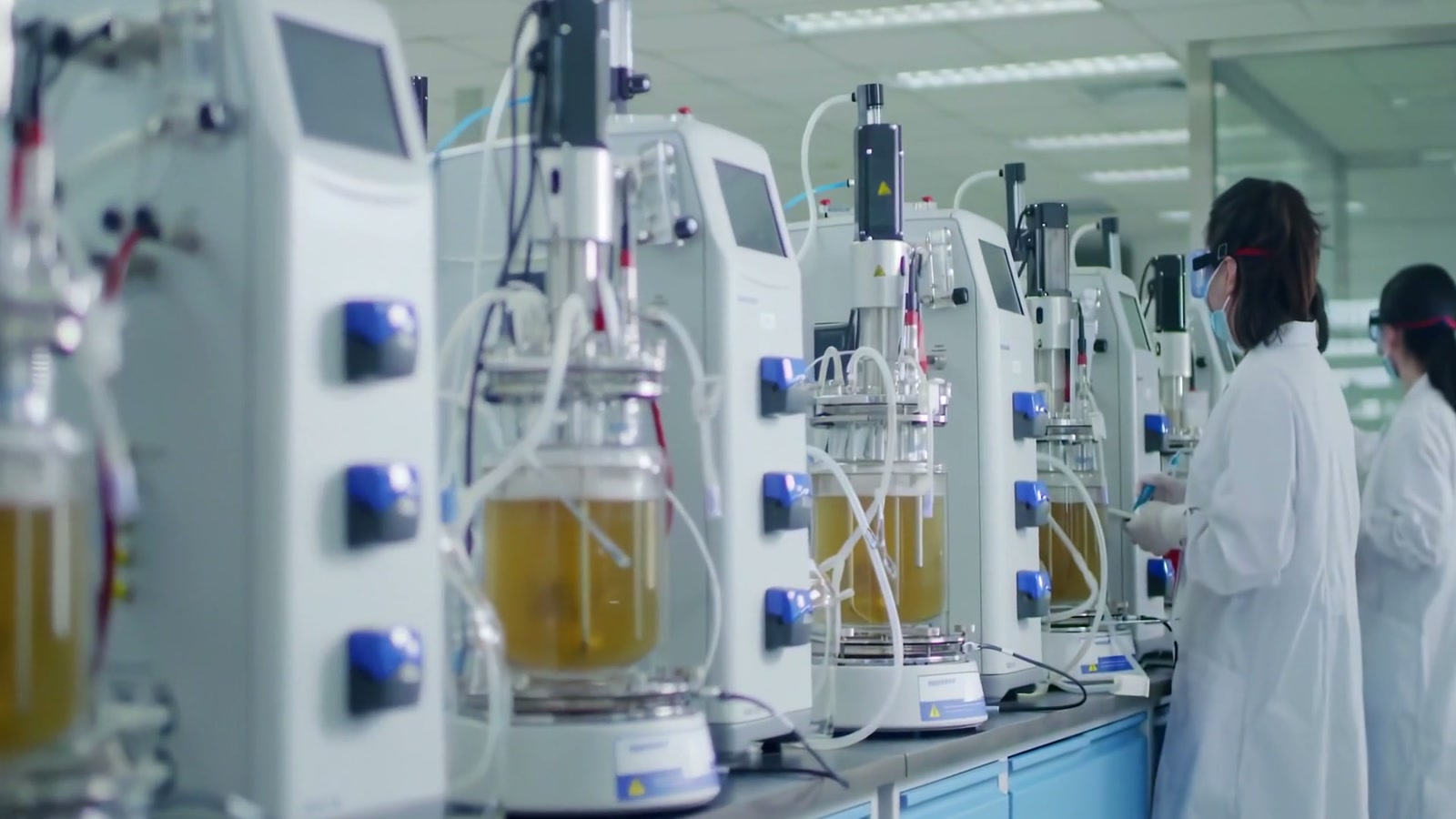
Recover a fraction someone has a use for.
Bring feedstock identity, recovery and formulation relevance into the same ingredient-development question.
A milestone needs an observable deliverable
What observable output would count as a milestone?
The proposed planning ratio compares completed accepted outputs with agreed outputs for a particular stage. It is a project-accounting aid, not a prediction of scientific success or investment value. Outputs should be observable, such as an authenticated preparation record, validated method feasibility or an interpretable comparator report.
A completed task that fails its acceptance criterion should not count as a successful milestone. The model would retain that distinction and any revised scope. This gives a buyer a practical way to discuss progress and subsequent funding without treating activity, polished pages or a laboratory booking as evidence that the ingredient works.
Project-accounting relationship for explicitly scoped and accepted deliverables; not a measure of scientific efficacy.
- Accepted-output completion fractiondimensionless
- Outputs meeting agreed acceptance criteriacount
- Outputs scoped for the stagecount
Model conditions. Non-zero defined stage scope; acceptance criteria agreed; failed and revised outputs recorded; no success or valuation prediction.
(Keivaninahr et al, 2021)(Calcinai et al, 2022)(Liu et al, 2019)
The first package should be small enough to challenge
Can the buyer challenge the first scope?
The proposed decision brief would include one application question, candidate identity, inspected evidence, comparator, missing measurements and an initial study design. It would also identify qualified partner needs and resources. A supplier and customer should be able to disagree with the mechanism or acceptance requirement before testing begins.
That makes the brief useful rather than merely persuasive. If a critical source or rights question is unresolved, the programme can address it first. The next commercial commitment would follow a concrete, reviewable scope, with no implied laboratory access or promised result from the website proposition.
Keeping commercial and scientific rights visible
Which rights belong to each part of the proposal?
Source material rights, study data ownership, background methods and any new invention are separate questions. An evaluation or licence discussion should be based on rights that the parties actually control. The proposed dossier would identify what is public literature and what information may need confidential exchange.
It would guide the next discussion through the existing enquiry route and an appropriately agreed process rather than publish product architecture or private supplier information. No patent, exclusivity or legal transfer is claimed. These boundaries protect a useful scientific collaboration and make a later commercial proposal more credible to a buyer.
Advance when the next evidence earns it
Does the next evidence justify the next expense?
A qualified study could follow once materials, methods, comparator and rights are established. Its result might support a formulation trial, preparation refinement, specification work or rejection. The proposed report would retain contradictory observations and uncertainty because those determine the next useful expense.
A larger supplier programme or luxury research collaboration would need a separately resourced scope and credible application value. This keeps new opportunities from consuming the flagship budget simply because they are novel. It also creates an evidence route towards an original study and buyer evaluation that can support a stronger commercial conversation.
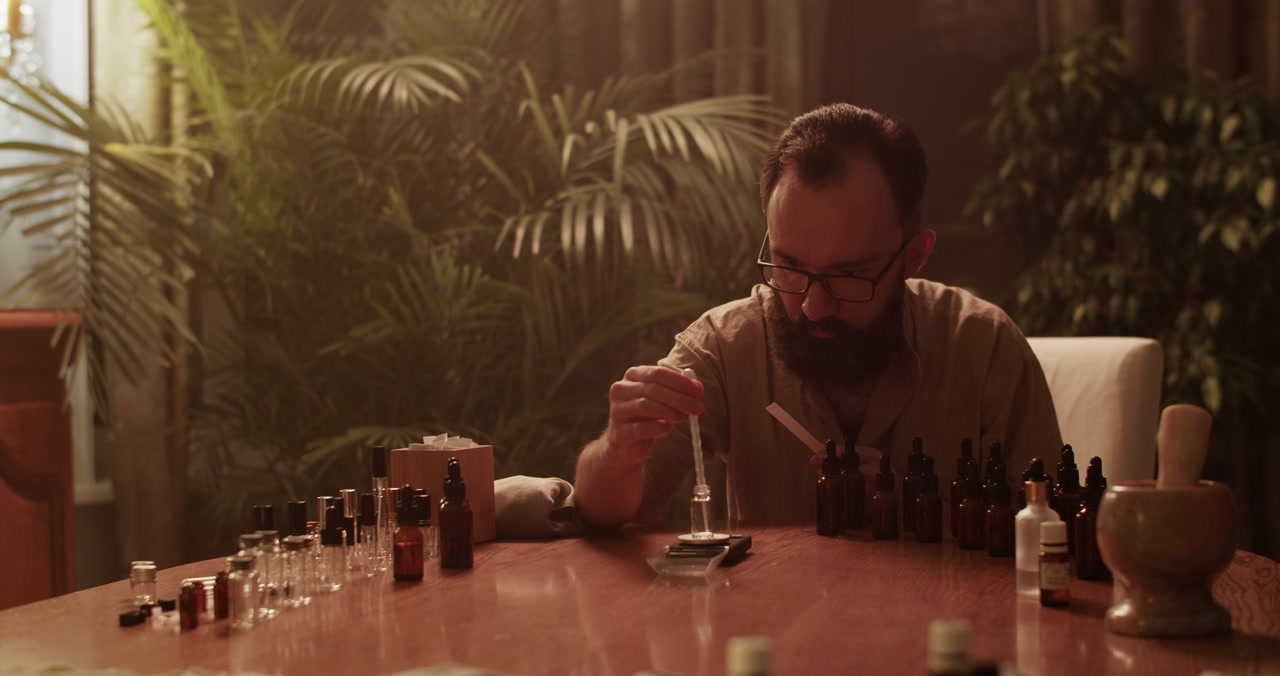
The next proposed comparison.
Buyer-specific research brief, evidence ledger and staged development proposal
A proposal people can get in touch about
What concrete question should a reader bring?
A useful enquiry names the company’s material or formulation problem, current alternative, available source and the decision needed next. We could then explore a proposed paid brief, qualified study or evaluation route. A future licensing proposition would depend on original evidence and cleared rights, not on the existence of a candidate page.
The programme aims to create commercial streams that readers can interrogate and help develop. Its value comes from a scoped task, a defensible scientific argument and a meaningful next measurement. It does not announce customers, funded collaborations, available products or guaranteed development success.
Circular bioingredients · Proposed development discussion
A development path
for this research.
Is there a defined customer problem and feasible qualified study that merits co-development?
The people this could serve.Ingredient suppliers, beauty R&D teams and prospective research partners.
The decision behind the project.
Your intended application, present alternative and the constraint behind “Supplier co-development”. A useful starting point is the change that would justify another development step.
A proposed scope centred on buyer-specific research brief, evidence ledger and staged development proposal.
Agree the comparison, acceptance basis and responsible expertise before discussing a paid package.
Specialist methods and a defined contribution.
Bring relevant analytical or experimental expertise, a comparator suggestion, and the conditions under which your method could resolve this question.
A jointly scoped proposal could connect your contribution with buyer-specific research brief, evidence ledger and staged development proposal.
Define contributions, required access, independent preparations and permitted outputs before work or protected information is shared.
The commercial purpose of the next milestone.
Bring the application or asset thesis, the buyer you expect to value it, and the scientific or commercial uncertainty that must be resolved before another commitment.
The proposed decision record would connect the buyer question with buyer-specific research brief, evidence ledger and staged development proposal. It would identify what a subsequent comparison needs to demonstrate.
Demand, development cost, resources, rights and a decision-changing milestone would need examination. No financing terms or investment outcome are represented here.
What a useful comparison
would record.
- Record accepted-output completion fraction (dimensionless) with the preparation, method and conditions needed to interpret it.
- Record outputs meeting agreed acceptance criteria (count) with the preparation, method and conditions needed to interpret it.
- Record outputs scoped for the stage (count) with the preparation, method and conditions needed to interpret it.
What the proposed
brief could leave behind.
- Buyer-specific research brief, evidence ledger and staged development proposal
- A preparation, comparator and endpoint record tied to this question.
- A source-linked account of the evidence gaps, study assumptions and next review point.
The proposed discussion brief
A brief you
can take away.
Use non-confidential notes to connect this topic with your own decision. Entries stay in this browser tab; saving creates a text file on your device. Nothing is submitted.
Paid decision brief, agreed study, potential evaluation and later rights-dependent licensing
Notes are optional. The brief includes this page’s proposed question and public source links.
Proposed scope; resources, methods, rights and delivery terms would be agreed before work. Begin with non-confidential information.
Sources and reading notes.
External work is identified below. Access notes describe the material inspected for this page; company research questions and proposed work are not presented as findings from these sources.
Keivaninahr et al, 2021Keivaninahr et al. (2021). Prediction of emulsification behaviour of pea and faba bean protein concentrates and isolates from structure–functionality analysis. DOI: 10.1039/d0ra09302e.
The authors’ preparation, process conditions and reported measurements; application-specific limitations are discussed in the text.
Scope and limitations: Not found; inspect publisher record Article access is not material supply, process permission or patent clearance. Figures and raw data are not reproduced here.
Open original sourceCalcinai et al, 2022Calcinai et al. (2022). Effectiveness of enzymatic hydrolysis for reducing the allergenic potential of legume by-products. DOI: 10.1038/s41598-022-21296-z.
The authors’ preparation, process conditions and reported measurements; application-specific limitations are discussed in the text.
Scope and limitations: https://creativecommons.org/licenses/by/4.0/Open Access This article is licensed under a Creative Commons Attribution 4.0 International License, which permits use, sharing, adaptation, distribution and reproduction in any medium or format, as long as you give appropriate credit to the original author(s) and the source, provide a link to the Creative Commons licence, and indicate if changes were made. The images or other third party material in this article are included in the article's Creative Commons licence, unless indicated otherwise in a credit line to the material. If material is not included in the article's Creative Commons licence and your intended use is not permitted by statutory regulation or exceeds the permitted use, you will need to obtain permission directly from the copyright holder. To view a copy of this licence, visit http://creativecommons.org/licenses/by/4.0/. Article access is not material supply, process permission or patent clearance. Figures and raw data are not reproduced here.
Open original sourceLiu et al, 2019Liu et al. (2019). Extraction of ‘Gannanzao’ Orange Peel Essential Oil by Response Surface Methodology and its Effect on Cancer Cell Proliferation and Migration. DOI: 10.3390/molecules24030499.
The authors’ preparation, process conditions and reported measurements; application-specific limitations are discussed in the text.
Scope and limitations: https://creativecommons.org/licenses/by/4.0/Licensee MDPI, Basel, Switzerland. This article is an open access article distributed under the terms and conditions of the Creative Commons Attribution (CC BY) license (http://creativecommons.org/licenses/by/4.0/). Article access is not material supply, process permission or patent clearance. Figures and raw data are not reproduced here.
Open original source