
 Film credits
A fresh analysis is not the final material.
Connect aromatic handling, oxidation measurements and intended exposure with a qualified development route.
Proposed VARUNÉ Bio development direction. The studies cited are external research; programme capacity, deliverables and commercial terms would be agreed for a defined project.
Quality changes after the first bottle
What happens between extraction and use?
An aromatic fraction may be chemically defined at extraction and change during transfer, storage or formulation. The customer therefore needs a preparation and handling record, not only a fresh chromatogram. We propose an oxidation-quality brief that identifies the compounds of interest, plausible changes and the measurements needed to follow them.
This creates practical value for a fragrance or beauty team evaluating a source. It also avoids a misleading natural-material story in which botanical origin is treated as proof of enduring quality or safety. The intended application and qualified assessment requirements would guide the development route.
Examine the development decision
A fresh analysis is not the final material.
Open the sequence to examine what a development decision needs.
Identify the exact preparation, its source, and the properties a second laboratory must be able to reproduce.
Explanatory geometry · no simulated or measured performance
Keeping oxidation products distinct from the parent
Are oxidation products measured separately?
Dittmar and Schuttelaar (2019) studied terpene hydroperoxide reactions in a referred dermatitis population. Their clinical context supports distinguishing the parent aromatic from its oxidation products; it does not quantify the risk of a proposed Bio ingredient.
A dossier should retain what was measured, in which preparation and by which method. A total parent-compound result may not describe relevant oxidation products. The proposed study would therefore identify whether the available analytical approach can answer the actual quality question, rather than assuming that a familiar chromatographic profile provides all the evidence needed for product assessment.
Do not turn clinical percentages into product statistics
What population does the clinical evidence describe?
Botvid et al. (2026) investigated patch-test patterns in their clinical registry. Such data belong to the tested population, preparations and reading methods. They are not a market prevalence estimate or a concentration limit for a new fragrance.
We would use the research to explain why qualification questions are scientifically justified while keeping its boundaries explicit. This matters commercially because a credible quality proposal should inform the buyer without using alarming or reassuring numbers outside their context. The next step remains source-specific analytical work and qualified assessment of the actual intended exposure.
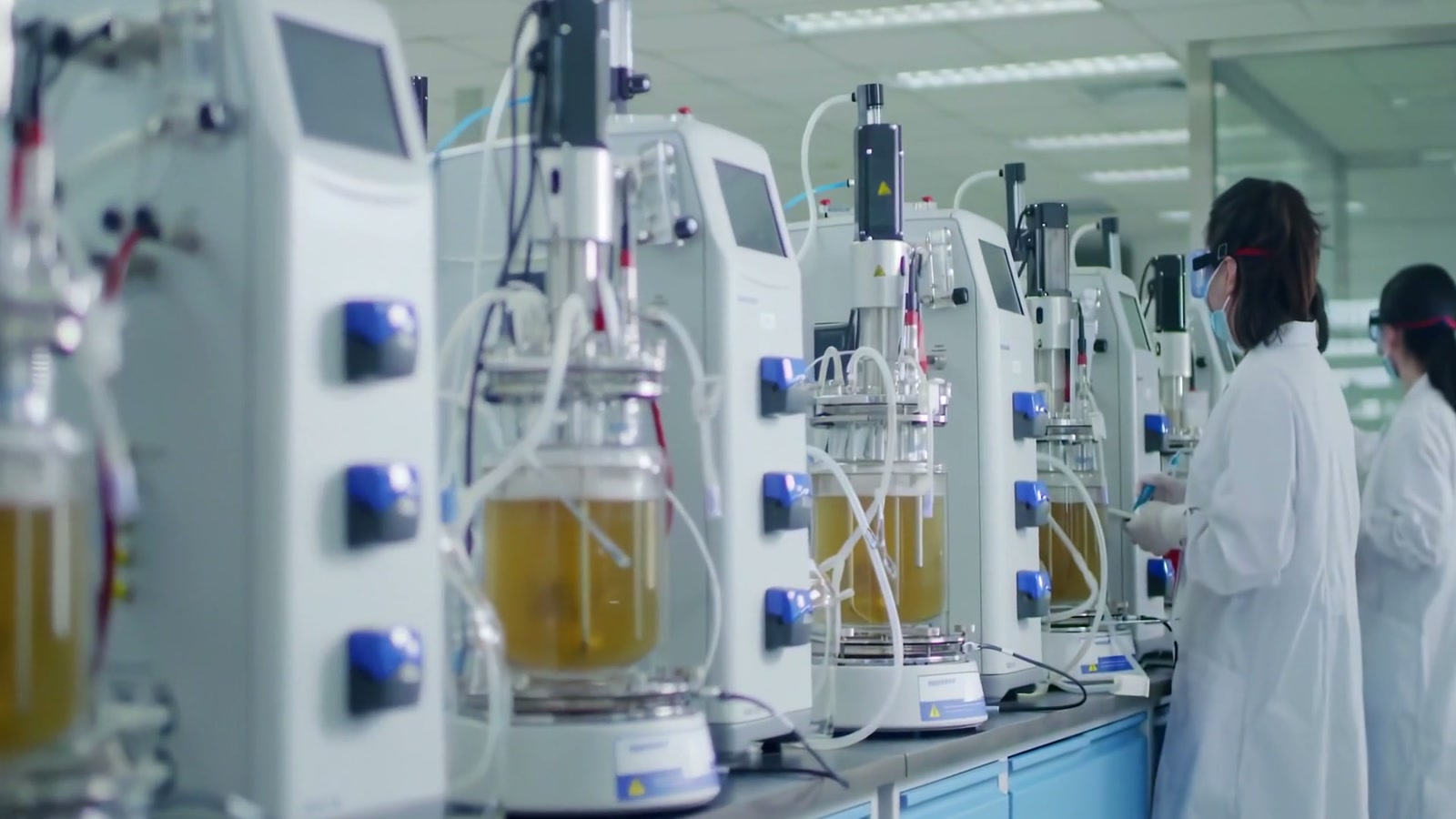
Recover a fraction someone has a use for.
Bring feedstock identity, recovery and formulation relevance into the same ingredient-development question.
An apparent rate needs controlled conditions
Do controlled observations support a rate model?
A first-order oxidation or disappearance model may be useful only if the measured profile supports it. The displayed relationship is a candidate comparison model for a named marker, with no Bio rate constant supplied. Oxygen availability, temperature, light, packaging and secondary reactions can make actual behaviour more complex.
The proposed protocol would retain those conditions and the original time observations. It would avoid extrapolating an accelerated test into a shelf-life or safety promise. The purpose of modelling is to identify differences between defined handling conditions and the next measurement that could change a formulation or sourcing decision.
An apparent-rate model to evaluate against a controlled marker time series; not a universal oxidation or risk model.
- Measured selected marker at time tdeclared concentration unit
- Initial selected marker concentrationsame unit
- Fitted apparent rate constant under stated conditionstime^{-1}
- Exposure timedeclared time unit
Model conditions. First-order fit supported; oxygen, packaging and exposure stated; secondary chemistry and analytical limitations retained.
(Dittmar, D. and Schuttelaar, M.L.A, 2019)(Clancy et al, 2026)(Botvid et al, 2026)
Change the conditions · examine the reference
Temperature changes more than one process.
Compare two assumed temperature dependencies. Ask which experiments would distinguish useful reaction from loss.
The data, equations and controls remain available below if 3D cannot load.
Defined model · illustrative conditions
Move a control to compare the selected condition with the defined reference curve.
Design a temperature comparison that measures both useful output and the process that limits it.
The defined comparison
Relative Arrhenius sensitivities referenced to 25 °C. The productive process has assumed apparent activation energy 40 kJ mol⁻¹; the loss process is selected. R = 8.31446261815324 J mol⁻¹ K⁻¹; temperatures are converted to kelvin. Constant mechanisms and parameters are assumed over 5–45 °C. No freezing, phase transition, denaturation, viscosity, oxygen solubility or transport model. Relative rate selectivity is a ratio, not a measured yield, lifetime, cold suitability or optimum. Geometry represents relative rate magnitudes only.
Inspect the calculated values
Calculation grid, not measured observations. Inputs and assumptions are stated above.
| Temperature / °C | Productive-process reference | Loss-process reference |
|---|
The test preparation must represent the question
Does the studied exposure match the application?
Clancy et al. (2026) examined ex-vivo skin exposure to specified patch-test preparations using an imaging method. That is distinct from a finished cosmetic, perfume or extracted ingredient. The proposed Bio evidence map would retain this distinction and avoid treating laboratory exposure studies as direct performance or safety proof for a new application.
For a material-quality project, the relevant preparation may instead be the supplier oil, dilution, storage container or formulation. A qualified specialist would determine whether additional exposure-related evidence is needed. The first brief would identify that requirement rather than imply it has already been satisfied.
Handling can be a development variable
Which handling variable deserves comparison?
Packaging headspace, transfer frequency and storage conditions can be investigated as process variables where they plausibly affect the selected markers. The proposed study would compare defined conditions with an appropriate reference, avoiding uncontrolled differences in initial material age. It would record sampling and analytical recovery so that a changing signal can be interpreted.
A result may support a handling specification, a different packaging study or a revised qualification plan. It would not demonstrate an indefinitely stable fraction. The buyer gains a practical quality question that can be tested rather than a broad assertion that careful storage solves all oxidation concerns.
A method-first qualification package
Can the proposed method close the quality gap?
The proposed output would describe the aromatic preparation, selected parent and oxidation markers, analytical feasibility, storage comparison and specialist-assessment needs. A qualified laboratory would assess methods and standards before testing. If the method cannot distinguish relevant products in the matrix, that limitation should remain visible and guide the next step.
The package can help a supplier decide whether to commission a study or revise handling. It is not a certification or a claim that VARUNÉ Bio provides clinical assessment. Its value lies in organising evidence that a product team and assessor can meaningfully use.
The next proposed comparison.
Handling–oxidation evidence map and method-feasibility proposal
The enquiry should identify the ageing concern
What ageing concern would change the decision?
A useful discussion describes the material, current handling, intended product and the quality change that the customer observes or needs to exclude. We could then scope a proposed oxidation-quality brief and identify an appropriate qualified route.
Potential commercial outcomes include a better-defined handling specification, a source-specific analytical study or a decision to select another fraction. A later product or supply discussion would require the actual assessment and evidence. This programme does not claim an allergen-free aromatic material, approved safety position or guaranteed stability; those conclusions cannot be manufactured from an appealing origin or a model curve.
Circular bioingredients · Proposed development discussion
A development path
for this research.
Which oxidation and storage questions must be resolved for this aromatic preparation?
The people this could serve.Fragrance quality teams and qualified product assessors.
The decision behind the project.
Your intended application, present alternative and the constraint behind “Fragrance oxidation quality”. A useful starting point is the change that would justify another development step.
A proposed scope centred on handling–oxidation evidence map and method-feasibility proposal.
Agree the comparison, acceptance basis and responsible expertise before discussing a paid package.
Specialist methods and a defined contribution.
Bring relevant analytical or experimental expertise, a comparator suggestion, and the conditions under which your method could resolve this question.
A jointly scoped proposal could connect your contribution with handling–oxidation evidence map and method-feasibility proposal.
Define contributions, required access, independent preparations and permitted outputs before work or protected information is shared.
The commercial purpose of the next milestone.
Bring the application or asset thesis, the buyer you expect to value it, and the scientific or commercial uncertainty that must be resolved before another commitment.
The proposed decision record would connect the buyer question with handling–oxidation evidence map and method-feasibility proposal. It would identify what a subsequent comparison needs to demonstrate.
Demand, development cost, resources, rights and a decision-changing milestone would need examination. No financing terms or investment outcome are represented here.
What a useful comparison
would record.
- Record measured selected marker at time t (declared concentration unit) with the preparation, method and conditions needed to interpret it.
- Record initial selected marker concentration (same unit) with the preparation, method and conditions needed to interpret it.
- Record exposure time (declared time unit) with the preparation, method and conditions needed to interpret it.
What the proposed
brief could leave behind.
- Handling–oxidation evidence map and method-feasibility proposal
- A preparation, comparator and endpoint record tied to this question.
- A source-linked account of the evidence gaps, study assumptions and next review point.
The proposed discussion brief
A brief you
can take away.
Use non-confidential notes to connect this topic with your own decision. Entries stay in this browser tab; saving creates a text file on your device. Nothing is submitted.
Paid quality-development brief followed by qualified analytical assessment
Notes are optional. The brief includes this page’s proposed question and public source links.
Proposed scope; resources, methods, rights and delivery terms would be agreed before work. Begin with non-confidential information.
Sources and reading notes.
External work is identified below. Access notes describe the material inspected for this page; company research questions and proposed work are not presented as findings from these sources.
Dittmar, D. and Schuttelaar, M.L.A, 2019Dittmar, D. and Schuttelaar, M.L.A. (2019). Contact sensitization to hydroperoxides of limonene and linalool: Results of consecutive patch testing and clinical relevance. DOI: 10.1111/cod.13137.
The authors’ preparation, process conditions and reported measurements; application-specific limitations are discussed in the text.
Scope and limitations: https://creativecommons.org/licenses/by/4.0/This is an open access article under the terms of the http://creativecommons.org/licenses/by/4.0/ License, which permits use, distribution and reproduction in any medium, provided the original work is properly cited. Article access is not material supply, process permission or patent clearance. Figures and raw data are not reproduced here.
Open original sourceClancy et al, 2026Clancy et al. (2026). Absorption and Effects of Patch Test Preparations of Hydroperoxides of Limonene and Hydroperoxides of Linalool in Human Ex Vivo Skin. DOI: 10.1111/cod.70157.
The authors’ preparation, process conditions and reported measurements; application-specific limitations are discussed in the text.
Scope and limitations: https://creativecommons.org/licenses/by-nc/4.0/This is an open access article under the terms of the http://creativecommons.org/licenses/by-nc/4.0/ License, which permits use, distribution and reproduction in any medium, provided the original work is properly cited and is not used for commercial purposes. Article access is not material supply, process permission or patent clearance. Figures and raw data are not reproduced here.
Open original sourceBotvid et al, 2026Botvid et al. (2026). Ten Years of Patch Testing to Hydroperoxides of Limonene and Linalool: Prevalence, Patterns and Clinical Insights. DOI: 10.1111/cod.70102.
The authors’ preparation, process conditions and reported measurements; application-specific limitations are discussed in the text.
Scope and limitations: This is an open access article under the terms of the http://creativecommons.org/licenses/by-nc-nd/4.0/ License, which permits use and distribution in any medium, provided the original work is properly cited, the use is non‐commercial and no modifications or adaptations are made. Article access is not material supply, process permission or patent clearance. Figures and raw data are not reproduced here.
Open original source