
 Film credits
The interface is a material too.
Investigate whether a recovered cellulose preparation can stabilise a useful interface or capsule structure.
Proposed VARUNÉ Bio development direction. The studies cited are external research; programme capacity, deliverables and commercial terms would be agreed for a defined project.
A small amount can change a large interface
What useful role could the interface provide?
Cellulose-derived particles or fibrils can present an opportunity when their structure and surface chemistry help stabilise a dispersed phase. The useful buyer question is whether a specific preparation provides a practical interfacial role in a defined formulation.
We propose connecting source recovery, particle identity and processing with that task. This avoids treating nanocellulose as a single ingredient whose performance is interchangeable across routes. A supplier needs to know whether the candidate can be dispersed, used at an appropriate concentration and qualified reproducibly before a formulation team commits to a wider application study.
Examine the development decision
The interface is a material too.
Open the sequence to examine what a development decision needs.
Identify the exact preparation, its source, and the properties a second laboratory must be able to reproduce.
Explanatory geometry · no simulated or measured performance
Identify the structure being supplied
Which cellulose structure is being supplied?
Fibrils, crystals, aggregates and modified surfaces are different material preparations. Their size description and surface chemistry should remain attached to every comparison. Diaz-Ramirez et al. (2023) studied a grape-derived cellulose and phenolic system; Dzhambazova et al. (2026) examined fractionation of a different biomass.
Those records illustrate why the recovered stream cannot be identified only by the word cellulose. A proposed dossier would trace source, fractionation, modification, dispersion and sample conditioning. The characterisation method must be capable of resolving the feature that the proposed interface mechanism depends on, rather than supplying a convenient average alone.
Adsorption and a network are different contributions
Is adsorption or a surrounding network responsible?
A particle may associate with an oil–water interface, while a fibril network can also influence the surrounding phase. These effects can create similar-looking stability outcomes through different mechanisms. Shi et al. (2022) investigated oppositely charged cellulose nanofibrils in microcapsule preparations.
The proposed Bio comparison would ask which structural contribution is plausible for the candidate and which control can distinguish it. Carrier-only material, continuous-phase rheology and droplet observations may all be relevant. An attractive microscopy image should not be treated as proof of complete interfacial coverage or controlled release without the appropriate measurements.
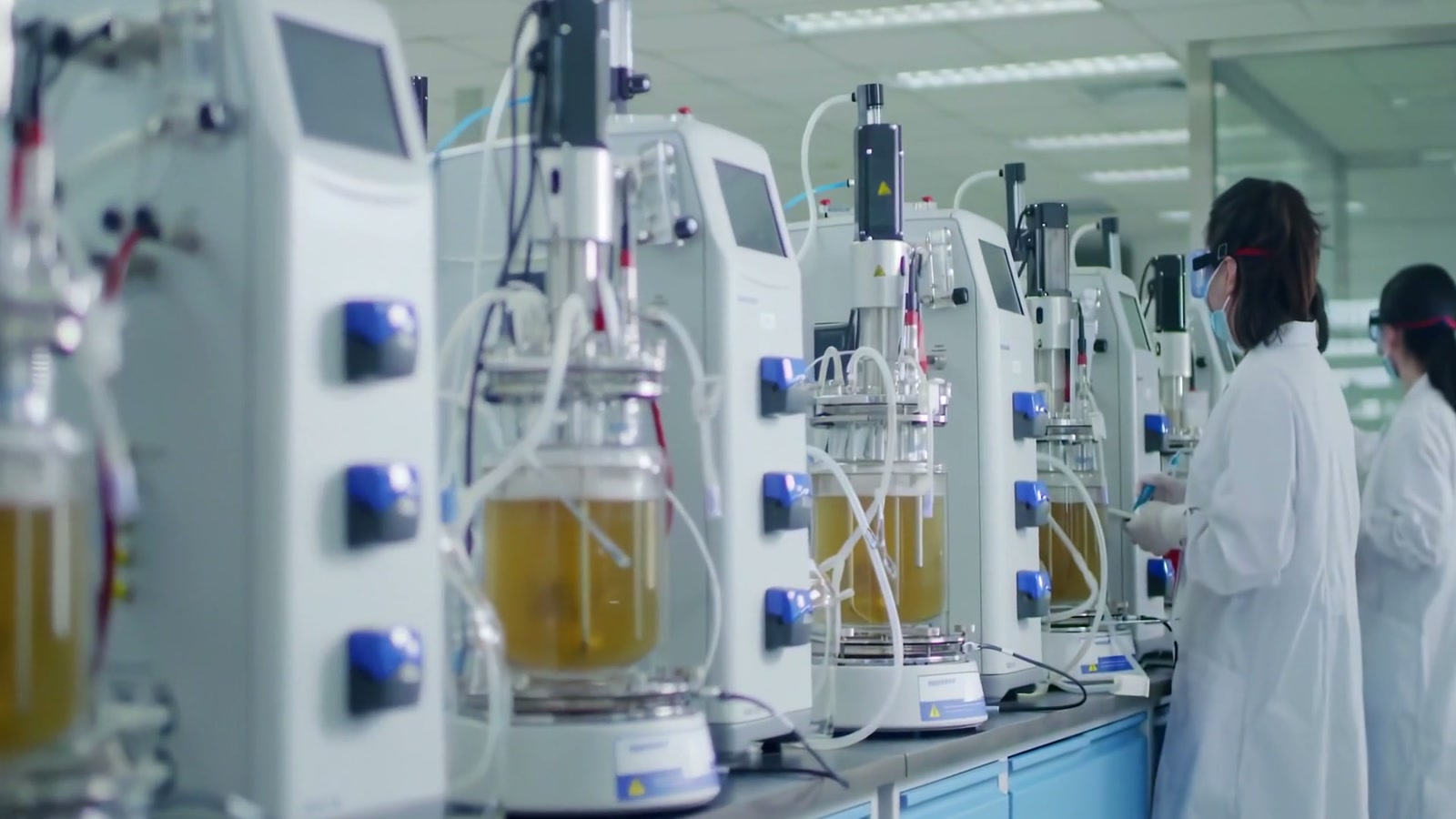
Recover a fraction someone has a use for.
Bring feedstock identity, recovery and formulation relevance into the same ingredient-development question.
A spherical model explains one mechanism
When does the spherical model apply?
The particle-detachment energy relationship describes an idealised spherical particle at a flat oil–water interface. It helps explain the importance of interfacial tension, particle radius and wettability. It should not be numerically applied to anisotropic fibrils or irregular aggregates without justification.
The displayed model is an educational hypothesis tool, with no measured Bio parameters. A qualified study would determine whether contact-angle or other wettability measurements are meaningful for the actual preparation. The buyer can then see which features might make a candidate worth testing, while the assumptions prevent an elegant equation becoming a false performance prediction.
Illustrative spherical-particle model; not a direct calculation for anisotropic cellulose fibrils.
- Ideal detachment energyJ
- Spherical particle radiusm
- Oil–water interfacial tensionN m^{-1}
- Contact angle at the interfaceradian
Model conditions. Ideal spherical particle and flat interface; equilibrium wettability; no aggregation; do not fit fibrils without a justified model.
(Shi et al, 2022)(Diaz-Ramirez et al, 2023)(Dzhambazova et al, 2026)
Release must be measured in its own context
Does the intended task actually require release?
A stabilised interface or capsule structure does not automatically imply useful release behaviour. Shi et al. (2022) examined dye release under their specified conditions; that result belongs to that cargo and preparation. A future application study would identify the actual component, receiving medium, time window and mechanical exposure.
Analytical recovery and controls would distinguish retention from loss or assay interference. If the desired task is simply physical emulsion stability, release testing may be unnecessary. The programme would choose endpoints according to the customer decision rather than add a delivery narrative to every cellulose preparation.
Processing decides whether the material can be used
Can the customer reproduce the preparation?
A fibril preparation can be difficult to disperse or change during drying and reconstitution. The proposed comparison would retain concentration, shear history, addition order and storage state. A formulation trial should use a preparation that represents what the supplier could actually deliver.
If a laboratory dispersion depends on handling unavailable to the customer, the result may have limited commercial relevance. We would therefore compare practical preparation routes and include the current formulation process. The goal is an interfacial role that can survive manufacturing and qualification, not a fragile effect visible only in one bespoke sample.
A discriminating study before a carrier platform
What study should precede a carrier-platform claim?
The proposed first output would identify particle or fibril features, interface hypothesis, necessary controls and a concise experimental plan. A qualified partner could test dispersion, droplet behaviour and any separately justified release endpoint.
The decision would be whether the candidate deserves a formulation study, further surface preparation or rejection. A general carrier platform would require far more evidence across cargos and matrices. By keeping the first task narrow, the programme can produce a useful original comparison without implying a finished encapsulation technology, available nanoparticle product or proprietary delivery architecture.

The next proposed comparison.
Particle/fibril identity and interfacial comparison proposal
The enquiry should name the interface problem
Which interfacial failure is being addressed?
A useful discussion describes the dispersed phase, existing stabiliser, processing conditions and failure mode. We could then examine whether a recovered cellulose preparation addresses that problem and what evidence would justify a trial. Potential value lies in a reproducible structural role, practical handling and a qualification route suited to the application.
A paid material-decision package could lead to a separately costed study or supplier evaluation. Rights, safety context and manufacturing access would be assessed for the actual material. The proposed programme does not claim that cellulose origin alone creates an improved or safer consumer product.
Circular bioingredients · Proposed development discussion
A development path
for this research.
Does the cellulose preparation provide useful interfacial structure under the intended processing conditions?
The people this could serve.Formulation material developers and ingredient-process partners.
The decision behind the project.
Your intended application, present alternative and the constraint behind “Cellulose interfacial networks”. A useful starting point is the change that would justify another development step.
A proposed scope centred on particle/fibril identity and interfacial comparison proposal.
Agree the comparison, acceptance basis and responsible expertise before discussing a paid package.
Specialist methods and a defined contribution.
Bring relevant analytical or experimental expertise, a comparator suggestion, and the conditions under which your method could resolve this question.
A jointly scoped proposal could connect your contribution with particle/fibril identity and interfacial comparison proposal.
Define contributions, required access, independent preparations and permitted outputs before work or protected information is shared.
The commercial purpose of the next milestone.
Bring the application or asset thesis, the buyer you expect to value it, and the scientific or commercial uncertainty that must be resolved before another commitment.
The proposed decision record would connect the buyer question with particle/fibril identity and interfacial comparison proposal. It would identify what a subsequent comparison needs to demonstrate.
Demand, development cost, resources, rights and a decision-changing milestone would need examination. No financing terms or investment outcome are represented here.
What a useful comparison
would record.
- Record ideal detachment energy (J) with the preparation, method and conditions needed to interpret it.
- Record spherical particle radius (m) with the preparation, method and conditions needed to interpret it.
- Record oil–water interfacial tension (N m^{-1}) with the preparation, method and conditions needed to interpret it.
What the proposed
brief could leave behind.
- Particle/fibril identity and interfacial comparison proposal
- A preparation, comparator and endpoint record tied to this question.
- A source-linked account of the evidence gaps, study assumptions and next review point.
The proposed discussion brief
A brief you
can take away.
Use non-confidential notes to connect this topic with your own decision. Entries stay in this browser tab; saving creates a text file on your device. Nothing is submitted.
Paid structure–function brief and qualified emulsion study
Notes are optional. The brief includes this page’s proposed question and public source links.
Proposed scope; resources, methods, rights and delivery terms would be agreed before work. Begin with non-confidential information.
Sources and reading notes.
External work is identified below. Access notes describe the material inspected for this page; company research questions and proposed work are not presented as findings from these sources.
Shi et al, 2022Shi et al. (2022). Stable Cellulose Nanofibril Microcapsules from Pickering Emulsion Templates. DOI: 10.1021/acs.langmuir.1c03025.
The authors’ preparation, process conditions and reported measurements; application-specific limitations are discussed in the text.
Scope and limitations: https://creativecommons.org/licenses/by/4.0/Permits the broadest form of re-use including for commercial purposes, provided that author attribution and integrity are maintained (https://creativecommons.org/licenses/by/4.0/). Article access is not material supply, process permission or patent clearance. Figures and raw data are not reproduced here.
Open original sourceDiaz-Ramirez et al, 2023Diaz-Ramirez et al. (2023). Integral Valorization of Grape Pomace for Antioxidant Pickering Emulsions. DOI: 10.3390/antiox12051064.
The authors’ preparation, process conditions and reported measurements; application-specific limitations are discussed in the text.
Scope and limitations: Licensee MDPI, Basel, Switzerland. This article is an open access article distributed under the terms and conditions of the Creative Commons Attribution (CC BY) license (https://creativecommons.org/licenses/by/4.0/). Article access is not material supply, process permission or patent clearance. Figures and raw data are not reproduced here.
Open original sourceDzhambazova et al, 2026Dzhambazova et al. (2026). Tunable Natural Deep Eutectic Solvents‐Driven Fractionation of Olive Pomace in an Integrated Biorefinery: Linking Lignin Structural Tailoring to Carbohydrate Valorization and Biopolymer Production. DOI: 10.1002/cssc.70835.
The authors’ preparation, process conditions and reported measurements; application-specific limitations are discussed in the text.
Scope and limitations: This is an open access article under the terms of the http://creativecommons.org/licenses/by/4.0/ License, which permits use, distribution and reproduction in any medium, provided the original work is properly cited. Article access is not material supply, process permission or patent clearance. Figures and raw data are not reproduced here.
Open original source