
 Film credits
Circular origin is a starting point.
Build an application-equivalent process comparison before making environmental claims about a proposed ingredient.
Proposed VARUNÉ Bio development direction. The studies cited are external research; programme capacity, deliverables and commercial terms would be agreed for a defined project.
A side stream can still need a demanding process
What processing does the side stream require?
Recovering a biological side stream can require drying, chemicals, heating, separation and transport. The source origin alone cannot establish a lower-impact ingredient. We propose an assessment-design brief that defines the functional output and process boundary before comparing alternatives.
This creates useful value for a supplier planning development or a formulation team evaluating a material story. The purpose is to identify what can be measured and which comparison would be defensible. It is not to attach a green claim to an untested fraction or assign environmental benefits because the feedstock was previously discarded.
Examine the development decision
Circular origin is a starting point.
Open the sequence to examine what a development decision needs.
Identify the exact preparation, its source, and the properties a second laboratory must be able to reproduce.
Explanatory geometry · no simulated or measured performance
Compare equivalent tasks where possible
Do the compared materials perform the same task?
One kilogram of a candidate and one kilogram of an existing ingredient may not provide the same formulation function. The proposed functional unit should reflect the task being compared, with concentration and performance requirements stated. If application equivalence is not established, a mass-based process comparison can still be useful but its limitation must remain explicit.
A material that requires substantially more concentration or correction may change the result. The first brief would identify what performance evidence is needed before a broader comparison. This prevents a technically neat inventory from supporting a commercial claim that the underlying formulation has not earned.
Retain the preparation and process boundary
Which operations belong inside the boundary?
Duggal et al. (2024) assessed a specified pectin-extraction route. Cabrera et al. (2024) studied defined extraction conditions, and Dzhambazova et al. (2026) examined a fractionation cascade. These primary records support identifying operations and preparation differences, not importing an environmental conclusion into a new Bio route.
The proposed inventory would include relevant drying, extraction, recovery and isolation, with transport and other stages added where the boundary requires them. Laboratory apparatus data would be labelled accordingly. A qualified assessment would need the actual scale, geography, energy sources and process assumptions before stronger claims are considered.
(Duggal et al, 2024) | (Cabrera, L., Xavier, L. and Zecchi, B, 2024) | (Dzhambazova et al, 2026)
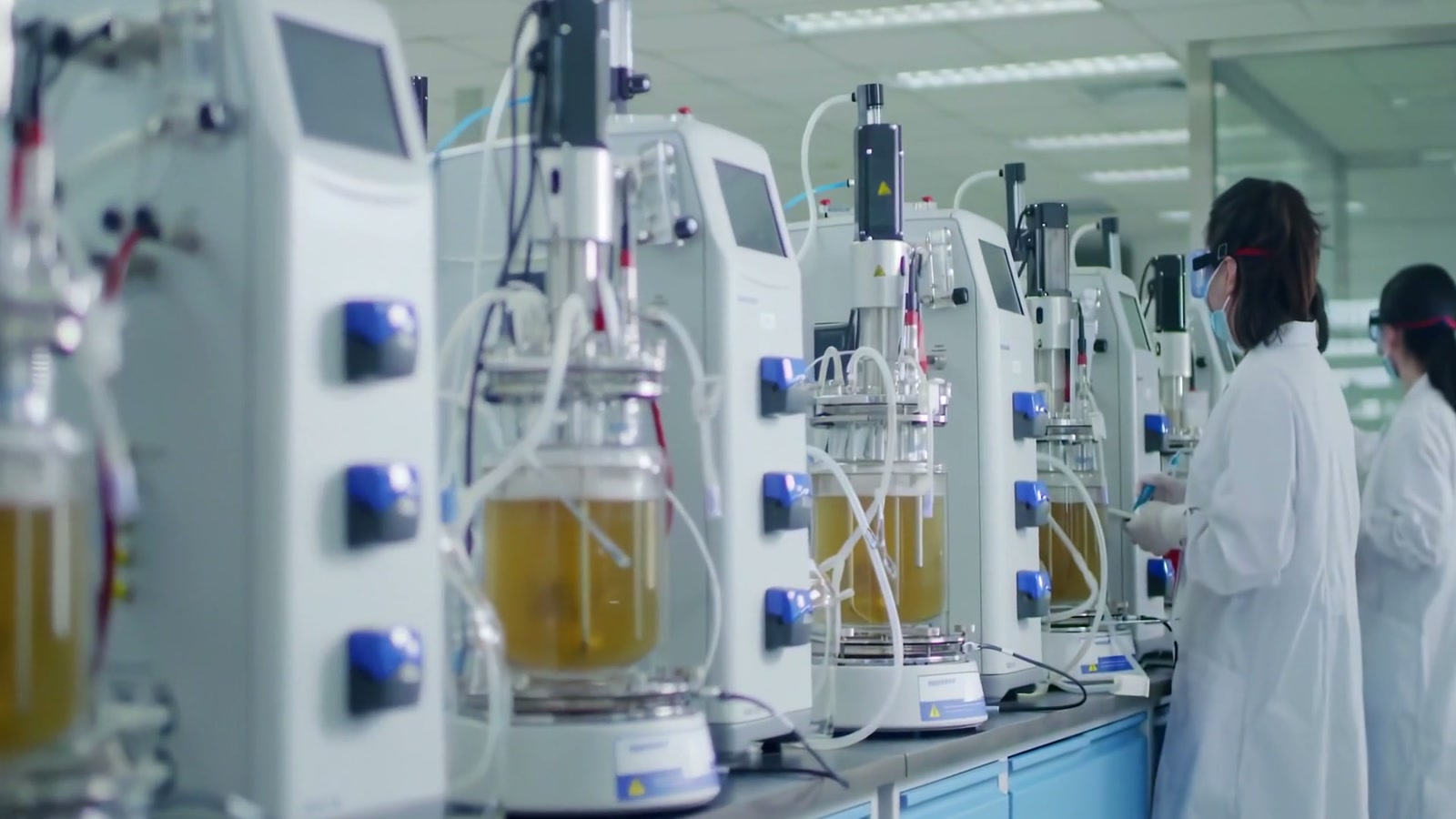
Recover a fraction someone has a use for.
Bring feedstock identity, recovery and formulation relevance into the same ingredient-development question.
An inventory model carries its data boundary
Are inventory factors compatible and licensed?
The displayed impact relationship sums activity quantities multiplied by compatible characterisation factors for a selected impact category. It is a calculation structure, not a Bio result. Factors must come from a suitable dataset with a documented version, geography and reuse licence.
The proposed comparison would retain the inventory observations and distinguish estimates from measurements. Different environmental categories should not be collapsed into one favourable number without a declared method. The buyer needs to know which conclusion is robust and which depends on assumptions. This also identifies when purchasing licensed process data could genuinely improve the assessment.
Calculation structure for impact category k using compatible, licensed and versioned inventory factors.
- Modelled impact in category kdeclared category unit
- Inventory activity jdeclared activity unit
- Characterisation factor for activity j and category kcategory unit per activity unit
Model conditions. Functional unit and boundary explicit; data geography/version/licence retained; uncertainty and allocation scenarios shown; no Bio impact result.
(Duggal et al, 2024)(Cabrera, L., Xavier, L. and Zecchi, B, 2024)(Dzhambazova et al, 2026)
Recovery and allocation can change the answer
How do recovery and allocation affect the model?
Solvent recovery, heat reuse and multiple output streams introduce allocation or system-expansion questions. The proposed brief would state the chosen treatment and test consequential assumptions rather than hide them in a headline. A secondary fraction without a qualified use should not automatically receive an environmental credit.
A recovered medium should be counted with its actual restoration and loss, not assumed to circulate indefinitely. These are measurements and modelling choices that a qualified assessor would review. Their practical purpose is to determine whether an apparent process advantage survives a complete and transparent comparison.
Avoid moving impacts outside the diagram
Could the route move an impact outside the diagram?
A route can reduce one operation while increasing another. More dilute extraction may change downstream energy; a different solvent may alter production and recovery burdens; a more selective fraction may improve qualifying yield. The proposed assessment would follow those consequences within its stated boundary.
It would also disclose important exclusions. This makes the work more credible to a buyer than a clean process illustration with missing streams. The initial deliverable can identify these questions without undertaking a complete LCA, and can determine whether a qualified assessment is worth commissioning for the specific ingredient proposition.
The smallest useful environmental study
Which evidence must precede a full assessment?
The proposed first package would define the task, comparator, process boundary, inventory priorities and missing performance evidence. A sensitivity analysis could identify which measurements most affect a later result. Qualified partners would assess the method and dataset requirements.
No environmental claim would follow merely from completing the brief. If a larger study is commissioned, its report should retain data quality, uncertainty and category trade-offs, including results that challenge the proposed route. This staged approach supports responsible supplier development and protects resources from a broad assessment whose functional comparison has not yet been established.

The next proposed comparison.
Functional-unit rationale, inventory map and evidence-gap brief
A buyer discussion with a defensible question
What environmental question can be fairly tested?
A useful enquiry describes the ingredient task, current alternative, preparation route and the environmental question being considered. We could then scope an assessment-design package and determine whether measured inventories or licensed data are needed.
Potential value lies in identifying a fair comparison and a practical process improvement, not in guaranteeing a lower footprint. This proposed Bio programme remains material- and formulation-focused; it does not adopt NEUVIOR’s programmes, results or commitments. Any subsequent assessment, public claim or delivery agreement would require evidence and approval for the actual Bio preparation and application.
Circular bioingredients · Proposed development discussion
A development path
for this research.
What boundary and inventory are needed to compare this ingredient route fairly with its alternative?
The people this could serve.Ingredient sustainability teams and process researchers.
The decision behind the project.
Your intended application, present alternative and the constraint behind “Process impact boundaries”. A useful starting point is the change that would justify another development step.
A proposed scope centred on functional-unit rationale, inventory map and evidence-gap brief.
Agree the comparison, acceptance basis and responsible expertise before discussing a paid package.
Specialist methods and a defined contribution.
Bring relevant analytical or experimental expertise, a comparator suggestion, and the conditions under which your method could resolve this question.
A jointly scoped proposal could connect your contribution with functional-unit rationale, inventory map and evidence-gap brief.
Define contributions, required access, independent preparations and permitted outputs before work or protected information is shared.
The commercial purpose of the next milestone.
Bring the application or asset thesis, the buyer you expect to value it, and the scientific or commercial uncertainty that must be resolved before another commitment.
The proposed decision record would connect the buyer question with functional-unit rationale, inventory map and evidence-gap brief. It would identify what a subsequent comparison needs to demonstrate.
Demand, development cost, resources, rights and a decision-changing milestone would need examination. No financing terms or investment outcome are represented here.
What a useful comparison
would record.
- Record modelled impact in category k (declared category unit) with the preparation, method and conditions needed to interpret it.
- Record inventory activity j (declared activity unit) with the preparation, method and conditions needed to interpret it.
- Record characterisation factor for activity j and category k (category unit per activity unit) with the preparation, method and conditions needed to interpret it.
What the proposed
brief could leave behind.
- Functional-unit rationale, inventory map and evidence-gap brief
- A preparation, comparator and endpoint record tied to this question.
- A source-linked account of the evidence gaps, study assumptions and next review point.
The proposed discussion brief
A brief you
can take away.
Use non-confidential notes to connect this topic with your own decision. Entries stay in this browser tab; saving creates a text file on your device. Nothing is submitted.
Paid process-assessment design brief with qualified LCA partner route
Notes are optional. The brief includes this page’s proposed question and public source links.
Proposed scope; resources, methods, rights and delivery terms would be agreed before work. Begin with non-confidential information.
Sources and reading notes.
External work is identified below. Access notes describe the material inspected for this page; company research questions and proposed work are not presented as findings from these sources.
Duggal et al, 2024Duggal et al. (2024). Microwave-assisted acid extraction of high-methoxyl kinnow (Citrus reticulata) peels pectin: Process, techno-functionality, characterization and life cycle assessment. DOI: 10.1016/j.fochms.2024.100213.
The authors’ preparation, process conditions and reported measurements; application-specific limitations are discussed in the text.
Scope and limitations: https://creativecommons.org/licenses/by-nc-nd/4.0/This is an open access article under the CC BY-NC-ND license (http://creativecommons.org/licenses/by-nc-nd/4.0/). Article access is not material supply, process permission or patent clearance. Figures and raw data are not reproduced here.
Open original sourceCabrera, L., Xavier, L. and Zecchi, B, 2024Cabrera, L., Xavier, L. and Zecchi, B. (2024). Extraction of phenolic compounds with antioxidant activity from olive pomace using natural deep eutectic solvents: modelling and optimization by response surface methodology. Discover Food 4, 29. DOI: 10.1007/s44187-024-00100-z.
Solvent screening, preparation conditions, response-surface design and HPLC marker analysis.
Scope and limitations: External laboratory extraction, not a formulation efficacy or safety result. No publisher figures copied.
Open original sourceDzhambazova et al, 2026Dzhambazova et al. (2026). Tunable Natural Deep Eutectic Solvents‐Driven Fractionation of Olive Pomace in an Integrated Biorefinery: Linking Lignin Structural Tailoring to Carbohydrate Valorization and Biopolymer Production. DOI: 10.1002/cssc.70835.
The authors’ preparation, process conditions and reported measurements; application-specific limitations are discussed in the text.
Scope and limitations: This is an open access article under the terms of the http://creativecommons.org/licenses/by/4.0/ License, which permits use, distribution and reproduction in any medium, provided the original work is properly cited. Article access is not material supply, process permission or patent clearance. Figures and raw data are not reproduced here.
Open original source