
 Film credits
Making the signal mean something.
Could a defined molecular measurement change a materials, ingredient or complex-matrix development decision?
Proposed research direction. External studies are attributed; no original VARUNÉ Bio analytical results or validated assay are claimed.
A measurement with a job
A measurement with a job.
An analytical result earns its place when it changes a decision. A formulator may need to distinguish a changed ingredient lot from an unchanged ingredient behaving differently in a cream. An assay developer may need to find out whether a dark extract conceals a target, or whether the recognition surface itself creates background. The proposed analytical programme starts with that practical question. Its deliverable would be a defensible comparison of a named marker, preparation and method, with an explicit reason to proceed, alter the experiment or stop before buying a more elaborate detection platform.
Examine the development decision
Making the signal mean something.
Open the sequence to examine what a development decision needs.
Identify the exact preparation, its source, and the properties a second laboratory must be able to reproduce.
Explanatory geometry · no simulated or measured performance
Defining the thing being measured
Define the thing being measured.
Milk, a particular milk protein, an accessible epitope and a peptide released after digestion are different measurands. So are total carbohydrate, a named polymer and an intact film on a surface. A result cannot move between these categories merely because it has a precise unit. Pilolli et al. (2023; issue 2024) make marker conversion part of their chocolate method. Striegel, Isenberg and Côté (2009) show why even the separation used to characterise a polymer can affect its apparent properties. Our first proposed output is therefore a measurand statement, including what the measurement excludes.
Signal and material are separate layers
Signal and material are separate layers.
The useful analytical chain has several layers: representative sampling, extraction or release, molecular recognition, transduction and calibrated interpretation. Improving the final detector cannot recover material lost earlier. A local response model can help plan calibration, but its slope is conditional on preparation and matrix. The reader should be able to trace a plotted point back through those layers. That is also the design brief for future interactive analysis: show where uncertainty enters and let a user compare evidence classes, rather than animate an unsupported sensitivity claim or display synthetic experimental success.
Local linear response model; residuals and back-calculated controls decide suitability, rather than correlation alone.
- Measured analytical responseresponse units
- Intercept including residual backgroundresponse units
- Response sloperesponse units/(µg/mL)
- Named marker concentration in measured solutionµg/mL
Model conditions. Only a verified local calibration range. Independent controls assess bias; linearity and constant variance are not presumed.
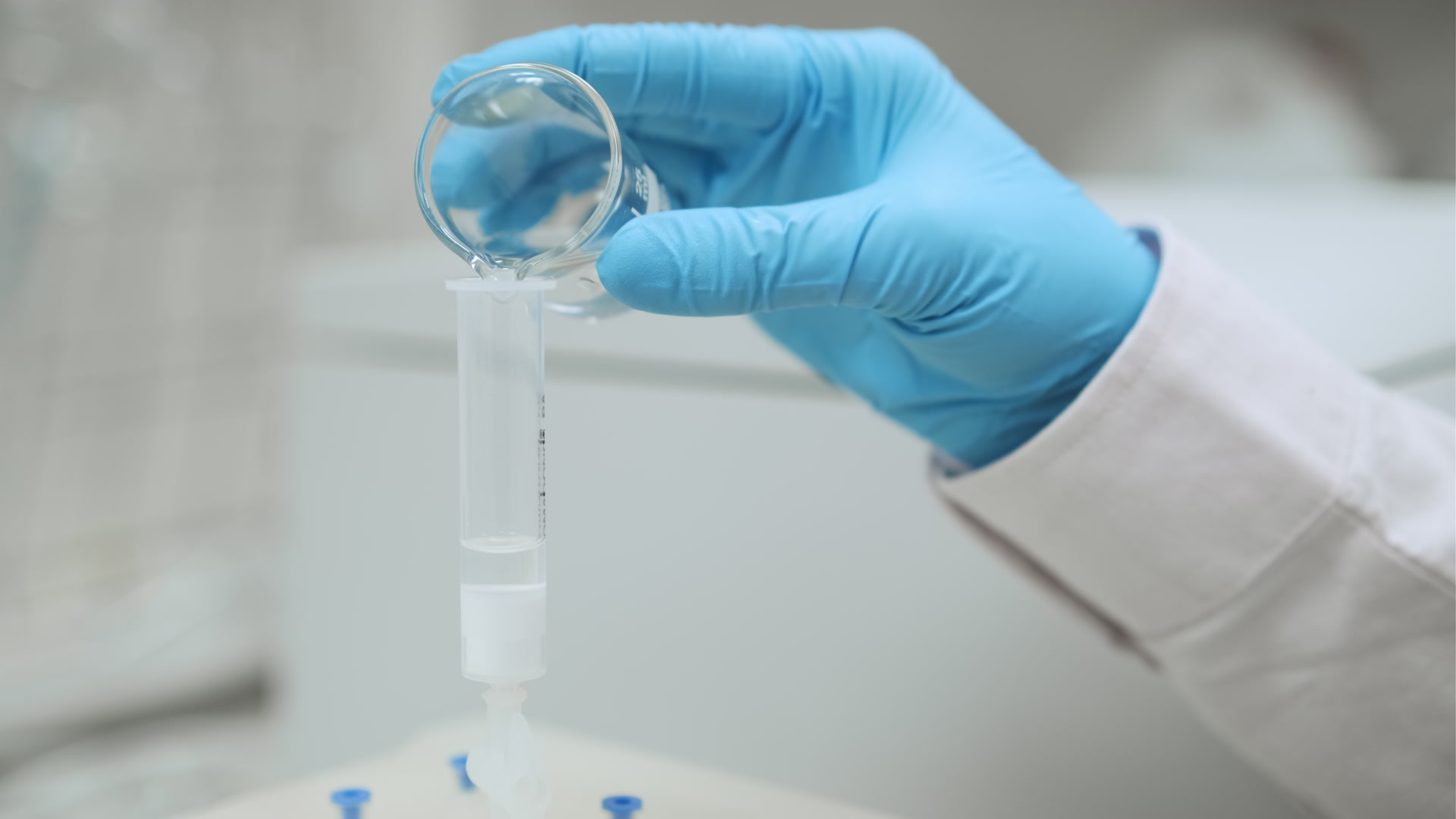
A signal that survives the question.
Define the marker, matrix and measurement that could change an ingredient or materials development decision.
Different mechanisms reveal different failures
Different mechanisms reveal different failures.
Published methods offer complementary ways to interrogate a question. Xie et al. (2024) examine epitope-dependent competitive immunoassay response; Svigelj et al. (2022) couple recognition to electrochemiluminescence; Çanak-Ipek et al. (2025) examine an aptamer-functionalised QCM-D interface. These examples establish distinct experimental approaches, not a ready-made Bio platform. A proposed comparison would ask whether disagreement follows extraction, target state, surface adsorption or reporting units. Choosing methods with different failure mechanisms is more informative than choosing three instruments that all repeat the same assumption about the material.
Examine the comparison
| Question | Observed quantity | What remains separate |
|---|---|---|
| Milk-marker recognition | Accessible target response in a specified preparation | Whole milk composition and food safety |
| Ingredient characterisation | Named composition or size endpoint | Formulation efficacy and skin benefit |
| Sensor interface | Physical response with matched controls | Molecular specificity without independent evidence |
(Xie et al, 2024) | (Svigelj et al, 2022) | (Çanak-Ipek et al, 2025)
Change the conditions · examine the reference
What disappeared before detection?
Compare a spiked result with its unspiked reference. Keep recovery, matrix response and an incurred marker as separate questions.
The data, equations and controls remain available below if 3D cannot load.
Defined model · illustrative conditions
Move a control to compare the selected condition with the defined reference curve.
Define where the spike enters, how dilution is accounted for and what a qualified recovery experiment could establish.
The defined comparison
Hypothetical concentration results on the same original-sample-equivalent and dilution basis, with 10 μg L⁻¹ added. Negative increments or recovery above 100% are retained to expose background, interference or uncertainty. A fresh spike need not behave like a processed, incurred or bound marker; pre- and post-extraction spikes test different effects. No automatic recovery correction, assay validation, allergen-safety conclusion or selected analyte is represented. Vessel heights are schematic; the graph is the quantitative comparison.
Inspect the calculated values
Calculation grid, not measured observations. Inputs and assumptions are stated above.
| Spiked result / μg L⁻¹ | Background-subtracted spike recovery | Added-concentration reference |
|---|
The dark-chocolate branch
The dark-chocolate branch.
One separately resourced candidate is milk-protein-marker feasibility in dark chocolate. The question is deliberately narrower than determining whether food is safe. Cocoa-rich matrices challenge preparation, molecular accessibility and signal interpretation, making them a useful analytical problem only if a qualified team, representative materials and a defined comparator are secured. The branch would begin with marker identity and recovery, then consider a suitable recognition approach. It would not consume the main materials programme by default, and its research results could not replace a food business’s established safety or release procedures.
Ingredient questions belong here too
Ingredient questions belong here too.
The same reasoning serves biological ingredient development without treating ingredients and chocolate as interchangeable matrices. A customer could ask whether a polysaccharide lot has a reproducibly different molar-mass distribution, whether a formulation extract contains an assay-equivalent amount, or whether a surface retains an identified chemical marker after a defined challenge. Each requires its own preparation controls. Analytical evidence can support a specification or a better next experiment; it cannot establish hydration, efficacy, sensory preference or intact film performance by itself. Those claims require the relevant separate comparison and endpoint.
An affordable sequence of evidence
An affordable sequence of evidence.
A sensible proposed sequence starts with available records and a small discriminating test. First identify the decision and the marker. Then confirm blank behaviour, a usable positive control and preparation compatibility. Only after those checks should a team optimise sensor architecture, expand matrices or compare lots. A failed early check can be commercially useful if it prevents a larger unsuitable study. The scope should record the independent experimental units, current quotations, resource owner, acceptance criterion and stop condition. None of these planned steps imply that laboratory capacity, funding or delivery dates are already secured.
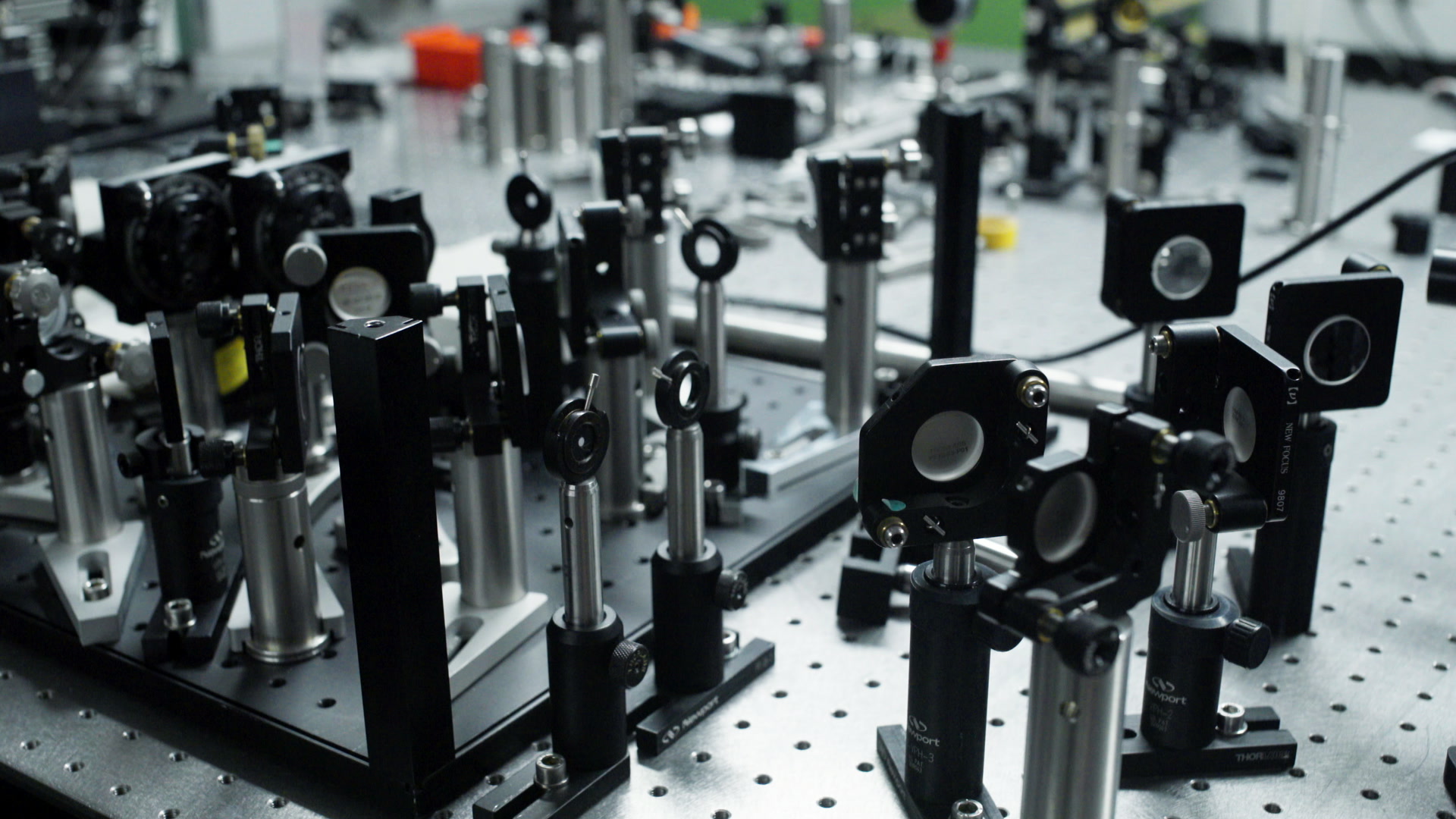
The next proposed comparison.
A versioned analytical decision record
A versioned analytical decision record
A versioned analytical decision record.
The proposed output is a compact evidence record linking the question, preparation, raw response, calibration version, comparator and interpretation. External papers remain external; proposed experiments remain proposed; later original measurements would require their own provenance and authorised release. For an ingredient business, that record could support a technical evaluation discussion. For a research partner, it could define a funded method-development scope. The next conversation should concern one matrix and one decision, with enough detail to choose the cheapest meaningful test, rather than promise universal detection or expose enabling unpublished methods.
Analytical detection · Proposed development discussion
A development path
for this research.
Could a defined molecular measurement change a materials, ingredient or complex-matrix development decision?
The people this could serve.Research and analytical development teams.
The decision behind the project.
Your intended application, present alternative and the constraint behind “Analytical detection”. A useful starting point is the change that would justify another development step.
A proposed scope centred on a versioned analytical decision record.
Agree the comparison, acceptance basis and responsible expertise before discussing a paid package.
Specialist methods and a defined contribution.
Bring relevant analytical or experimental expertise, a comparator suggestion, and the conditions under which your method could resolve this question.
A jointly scoped proposal could connect your contribution with a versioned analytical decision record.
Define contributions, required access, independent preparations and permitted outputs before work or protected information is shared.
The commercial purpose of the next milestone.
Bring the application or asset thesis, the buyer you expect to value it, and the scientific or commercial uncertainty that must be resolved before another commitment.
The proposed decision record would connect the buyer question with a versioned analytical decision record. It would identify what a subsequent comparison needs to demonstrate.
Demand, development cost, resources, rights and a decision-changing milestone would need examination. No financing terms or investment outcome are represented here.
What a useful comparison
would record.
- Record measured analytical response (response units) with the preparation, method and conditions needed to interpret it.
- Record intercept including residual background (response units) with the preparation, method and conditions needed to interpret it.
- Record response slope (response units/(µg/mL)) with the preparation, method and conditions needed to interpret it.
What the proposed
brief could leave behind.
- A versioned analytical decision record
- A preparation, comparator and endpoint record tied to this question.
- A source-linked account of the evidence gaps, study assumptions and next review point.
The proposed discussion brief
A brief you
can take away.
Use non-confidential notes to connect this topic with your own decision. Entries stay in this browser tab; saving creates a text file on your device. Nothing is submitted.
Potential scoped analytical feasibility or method-comparison discussion
Notes are optional. The brief includes this page’s proposed question and public source links.
Proposed scope; resources, methods, rights and delivery terms would be agreed before work. Begin with non-confidential information.
Sources and reading notes.
External work is identified below. Access notes describe the material inspected for this page; company research questions and proposed work are not presented as findings from these sources.
Pilolli et al, 2023Pilolli et al. (2023; issue 2024). In-house validation of an LC–MS method for the multiplexed quantitative determination of total allergenic food in chocolate
Chocolate preparation, marker conversion, matrix-matched calibration, independent preparation versus instrumental replicates.
Scope and limitations: External research in the authors’ stated preparations and conditions. No VARUNÉ Bio results, rights, laboratory capacity or analytical validation established. No figure or dataset is reproduced here.
Open original sourceXie et al, 2024Xie et al. (2024). Development of an Indirect Competitive ELISA Based on a Stable Epitope of β-Lactoglobulin for Its Detection in Hydrolyzed Formula Milk Powder
Epitope-dependent response, competitive assay, processed proteins, analytical comparator limitations.
Scope and limitations: External research in the authors’ stated preparations and conditions. No VARUNÉ Bio results, rights, laboratory capacity or analytical validation established. No figure or dataset is reproduced here.
Open original sourceSvigelj et al, 2022Svigelj et al. (2022). A portable electrochemiluminescence aptasensor for β-lactoglobulin detection
Aptamer immobilisation, blocking, ECL transduction and matrix-specific sample handling.
Scope and limitations: External research in the authors’ stated preparations and conditions. No VARUNÉ Bio results, rights, laboratory capacity or analytical validation established. No figure or dataset is reproduced here.
Open original sourceÇanak-Ipek et al, 2025Çanak-Ipek et al. (2025). Development of a QCM-D-Based Aptasensor for the Real-Time Detection of β-Lactoglobulin
Supported lipid interface, aptamer selection and QCM-D recognition; not chocolate feasibility.
Scope and limitations: External research in the authors’ stated preparations and conditions. No VARUNÉ Bio results, rights, laboratory capacity or analytical validation established. No figure or dataset is reproduced here.
Open original sourceStriegel, Isenberg and Côté, 2009Striegel, Isenberg and Côté (2009). An SEC/MALS study of alternan degradation during size-exclusion chromatographic analysis
Alternan flow-dependent molar mass and size; analytical alteration is material- and condition-specific.
Scope and limitations: External research in the authors’ stated preparations and conditions. No VARUNÉ Bio results, rights, laboratory capacity or analytical validation established. Only the inspected abstract/record is used; full protocol was not reviewed.
Open original source