
 Film credits
Recognition before amplification.
Which recognition reagent can address the intended marker state under the actual assay conditions?
Proposed research direction. External studies are attributed; no original VARUNÉ Bio analytical results or validated assay are claimed.
The reagent defines the question
The reagent defines the question.
A detector cannot rescue a recognition reagent that binds the wrong molecular state. Antibodies, aptamers and imprinted surfaces create different development questions, and a proposed selection should begin with the marker and matrix rather than a fashionable platform. The buyer’s decision is whether a candidate reagent merits a qualified comparison under the intended preparation conditions. That decision includes target accessibility, background interactions, reproducibility and lawful access to the reagent. It does not assume that VARUNÉ Bio possesses proprietary binders, has screened a library or can supply a ready-to-use detection product.
Examine the development decision
Recognition before amplification.
Open the sequence to examine what a development decision needs.
Identify the exact preparation, its source, and the properties a second laboratory must be able to reproduce.
Explanatory geometry · no simulated or measured performance
Compare experimentally supported recognition
Compare experimentally supported recognition.
Eissa and Zourob (2017) report aptamer selection against β-lactoglobulin variants A and B. Çanak-Ipek et al. (2025) examine aptamer recognition on a QCM-D interface, while Liu et al. (2024) describe a BLI-based aptasensor in milk. Xie et al. (2024) pursue an epitope-focused antibody approach. These studies provide separate recognition examples with different inspected access scopes. Their results do not establish interchangeability between binders, matrices or surface formats. A selection brief should compare what each experiment actually challenged, not treat every reported affinity as a platform-independent property.
(Eissa and Zourob, 2017) | (Xie et al, 2024) | (Çanak-Ipek et al, 2025) | (Liu et al, 2024)
Affinity is conditional
Affinity is conditional.
The equilibrium occupancy model illustrates why free target concentration and binding conditions matter. A dissociation constant measured in solution need not predict a surface assay with altered orientation, crowding or depletion. Zangi (2024) examines limitations of simple adsorption descriptions in small closed systems. The proposed model is therefore explanatory and restricted to equivalent independent sites at equilibrium. A candidate study would measure or control the relevant concentration and verify that its assumptions are plausible. No calculated occupancy curve should be presented as an experimental Bio response or proof of detection in a complex extract.
(Eissa and Zourob, 2017) | (Çanak-Ipek et al, 2025) | (Zangi, 2024)
A simple binding model helps distinguish affinity from readout. It is not a fitted VARUNÉ Bio assay curve.
- Fraction of equivalent occupied sitesdimensionless
- Free target concentration at equilibriummol/L
- Dissociation constant in the same conditionsmol/L
Model conditions. Identical independent sites, single occupancy and equilibrium. Free concentration is known; total concentration cannot replace it under meaningful depletion. No multivalent avidity, cooperative binding or matrix-induced site change.
(Eissa and Zourob, 2017)(Çanak-Ipek et al, 2025)(Zangi, 2024)
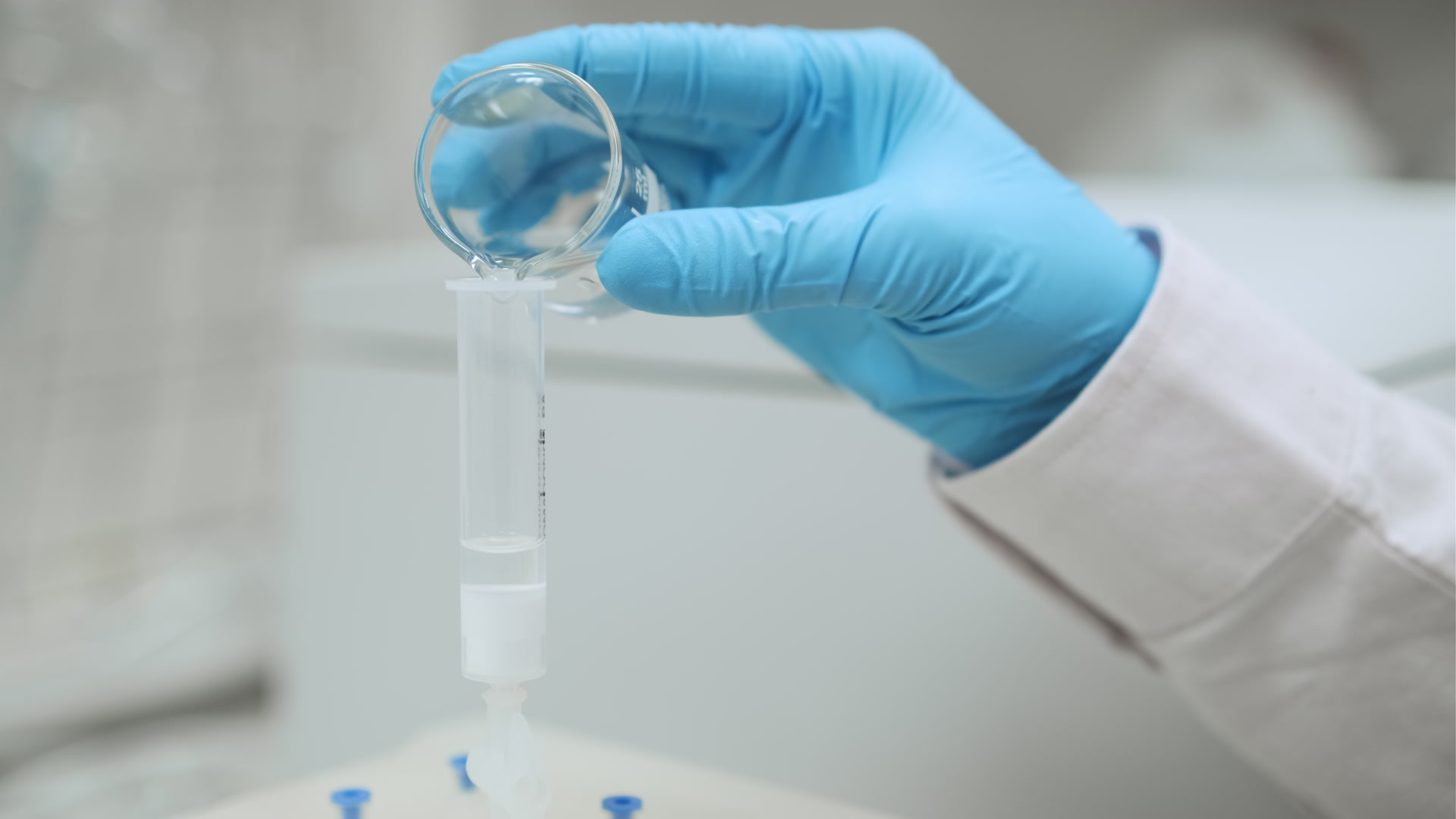
A signal that survives the question.
Define the marker, matrix and measurement that could change an ingredient or materials development decision.
Processing changes what is available
Processing changes what is available.
A reagent selected against a purified native protein may not recognise a processed, aggregated or hydrolysed preparation in the same way. The candidate matrix preparation can also alter the structure the reagent encounters. A proposed comparison should therefore include target states relevant to the actual question and avoid assuming that a stable signal means intact protein remains. Xie et al. (2024) make epitope behaviour central to their method. The lesson for this programme is to test recognition against the desired state, while preserving the distinction between an accessible marker and the abundance of all related protein material.
Recognition must survive immobilisation
Recognition must survive immobilisation.
Attaching a reagent to a surface changes local geometry and may reduce active-site access. Orientation, surface density and spacer chemistry can influence useful recognition independently of total loading. The proposed selection should compare solution behaviour with the intended immobilised state and include an appropriate non-recognition control. A higher surface mass does not establish more active sites. For an assay developer, this prevents buying a strong solution binder and assuming its affinity transfers directly to a sensor film. Any optimisation would be scoped to accessible lawful reagents and qualified laboratory resources, not enabling unpublished sequence designs.
Background can imitate selectivity
Background can imitate selectivity.
A candidate reagent may respond to related proteins, adsorb non-specifically to matrix components or change conformation as ionic strength varies. A proposed challenge panel should be selected from the intended matrix and likely interfering materials, with concentrations justified on the relevant sample basis. Testing a few convenient proteins at unequal concentrations cannot establish broad analytical specificity. The report would describe the tested panel and preserve untested cases. Single-domain antibodies could be considered only as a separately justified reagent route; this review does not establish a Bio nanobody library, target-specific sequence or access right.
An evidence-led selection gate
An evidence-led selection gate.
The first affordable gate might compare available recognition reagents in a defined buffer and one representative matrix preparation, before committing to signal amplification or a custom surface. The acceptance criterion should address the buyer’s decision interval, repeatability and control behaviour. Failure may support changing the target state rather than engineering a more elaborate reporter. Supplier access, patent and licensing questions remain distinct from scientific plausibility and must be resolved before development commitments. A published sequence or commercial availability does not itself establish freedom to operate for a proposed product or customer application.
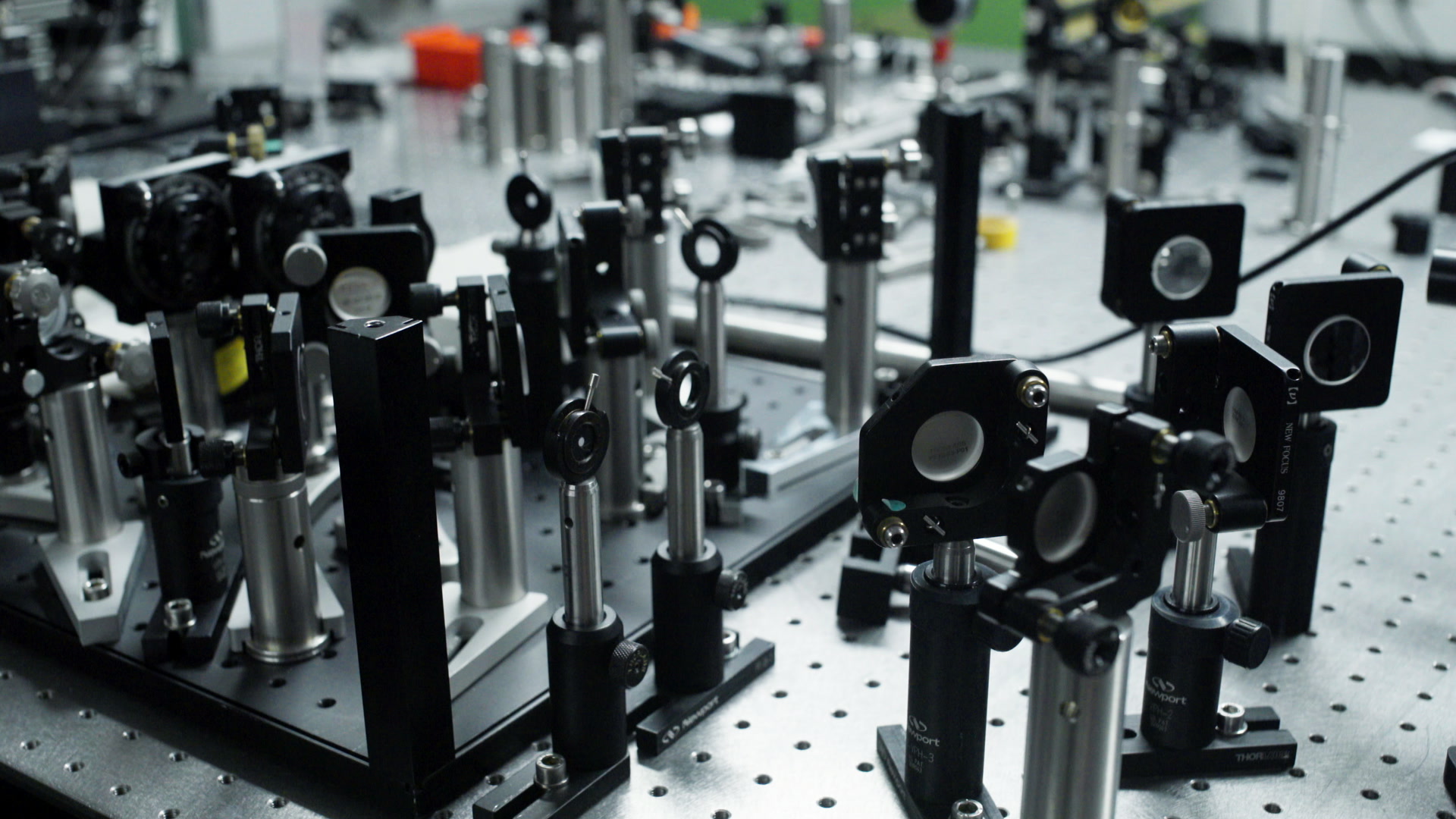
The next proposed comparison.
A reagent-selection record
A reagent-selection record
A reagent-selection record.
The proposed output is a comparison record naming the reagent source, target states, conditions, tested interferents and limitations of the chosen readout. It would identify the strongest candidate for the next funded surface or matrix experiment, or explain why none qualifies. Potential assay customers gain a concrete development choice rather than a promise of universal specificity. Research collaborators gain a bounded screening question with explicit resources and stop criteria. The programme remains proposed: recognition performance, reagent rights and commercial delivery would need their own current evidence before any supply, licensing or validation claim.
Analytical detection · Proposed development discussion
A development path
for this research.
Which recognition reagent can address the intended marker state under the actual assay conditions?
The people this could serve.Research and analytical development teams.
The decision behind the project.
Your intended application, present alternative and the constraint behind “Recognition-reagent selection”. A useful starting point is the change that would justify another development step.
A proposed scope centred on a reagent-selection record.
Agree the comparison, acceptance basis and responsible expertise before discussing a paid package.
Specialist methods and a defined contribution.
Bring relevant analytical or experimental expertise, a comparator suggestion, and the conditions under which your method could resolve this question.
A jointly scoped proposal could connect your contribution with a reagent-selection record.
Define contributions, required access, independent preparations and permitted outputs before work or protected information is shared.
The commercial purpose of the next milestone.
Bring the application or asset thesis, the buyer you expect to value it, and the scientific or commercial uncertainty that must be resolved before another commitment.
The proposed decision record would connect the buyer question with a reagent-selection record. It would identify what a subsequent comparison needs to demonstrate.
Demand, development cost, resources, rights and a decision-changing milestone would need examination. No financing terms or investment outcome are represented here.
What a useful comparison
would record.
- Record fraction of equivalent occupied sites (dimensionless) with the preparation, method and conditions needed to interpret it.
- Record free target concentration at equilibrium (mol/L) with the preparation, method and conditions needed to interpret it.
- Define the measurand, matrix and preparation before interpreting the signal.
What the proposed
brief could leave behind.
- A reagent-selection record
- A preparation, comparator and endpoint record tied to this question.
- A source-linked account of the evidence gaps, study assumptions and next review point.
The proposed discussion brief
A brief you
can take away.
Use non-confidential notes to connect this topic with your own decision. Entries stay in this browser tab; saving creates a text file on your device. Nothing is submitted.
Potential scoped analytical feasibility or method-comparison discussion
Notes are optional. The brief includes this page’s proposed question and public source links.
Proposed scope; resources, methods, rights and delivery terms would be agreed before work. Begin with non-confidential information.
Sources and reading notes.
External work is identified below. Access notes describe the material inspected for this page; company research questions and proposed work are not presented as findings from these sources.
Eissa and Zourob, 2017Eissa and Zourob (2017). In vitro selection of DNA aptamers targeting β-lactoglobulin and their integration in graphene-based biosensor
A/B variant selection, affinity characterisation and graphene-mediated electrochemical recognition; spiked extracts only within inspected scope.
Scope and limitations: External research in the authors’ stated preparations and conditions. No VARUNÉ Bio results, rights, laboratory capacity or analytical validation established. Only the inspected abstract/record is used; full protocol was not reviewed.
Open original sourceXie et al, 2024Xie et al. (2024). Development of an Indirect Competitive ELISA Based on a Stable Epitope of β-Lactoglobulin for Its Detection in Hydrolyzed Formula Milk Powder
Epitope-dependent response, competitive assay, processed proteins, analytical comparator limitations.
Scope and limitations: External research in the authors’ stated preparations and conditions. No VARUNÉ Bio results, rights, laboratory capacity or analytical validation established. No figure or dataset is reproduced here.
Open original sourceÇanak-Ipek et al, 2025Çanak-Ipek et al. (2025). Development of a QCM-D-Based Aptasensor for the Real-Time Detection of β-Lactoglobulin
Supported lipid interface, aptamer selection and QCM-D recognition; not chocolate feasibility.
Scope and limitations: External research in the authors’ stated preparations and conditions. No VARUNÉ Bio results, rights, laboratory capacity or analytical validation established. No figure or dataset is reproduced here.
Open original sourceLiu et al, 2024Liu et al. (2024). A rapid and sensitive aptamer-based biosensor for beta-lactoglobulin in milk
Magnetic-bead aptamer selection and BLI readout in milk; transfer to other matrices requires testing.
Scope and limitations: External research in the authors’ stated preparations and conditions. No VARUNÉ Bio results, rights, laboratory capacity or analytical validation established. Only the inspected abstract/record is used; full protocol was not reviewed.
Open original sourceZangi, 2024Zangi (2024). Breakdown of Langmuir Adsorption Isotherm in Small Closed Systems
Single-site equilibrium model and finite closed-system caveats; no sensor fit claimed.
Scope and limitations: External research in the authors’ stated preparations and conditions. No VARUNÉ Bio results, rights, laboratory capacity or analytical validation established. No figure or dataset is reproduced here.
Open original source