
 Film credits
More channels. More questions to resolve.
Does measuring several markers add decision value without creating unrecognised cross-channel interference?
Proposed research direction. External studies are attributed; no original VARUNÉ Bio analytical results or validated assay are claimed.
Multiplexing needs an analytical purpose
Multiplexing needs an analytical purpose.
Several measurement channels can broaden evidence, but they can also multiply ambiguities. The proposed question is whether adding markers resolves a defined development decision that one marker cannot answer. A buyer might need to distinguish marker states or identify which component changes across preparations. That is different from advertising a universal multi-allergen sensor. The first scope should justify each channel, its measurand and the decision it informs. If the additional channel shares the same blind spot or cannot be calibrated comparably, complexity may increase without adding useful information to the research or commercial evaluation.
Examine the development decision
More channels. More questions to resolve.
Open the sequence to examine what a development decision needs.
Identify the exact preparation, its source, and the properties a second laboratory must be able to reproduce.
Explanatory geometry · no simulated or measured performance
Using real external multiplex context
Use real external multiplex context.
Pilolli et al. (2023; issue 2024) examine several protein-derived markers in a chocolate-based LC–MS method. Monaci et al. (2020) investigate milk and egg measurements in cookies. These external methods supply a useful context for marker choice, unit conversion and preparation-dependent response. They do not establish a Bio multiplex platform or allow a result for one target to stand for every related molecule. Xie et al. (2024) provide a contrasting recognition example tied to a specific epitope. A proposed design should retain these different evidence bases rather than merge their conclusions into one product claim.
(Pilolli et al, 2023) | (Monaci et al, 2020) | (Xie et al, 2024)
A channel difference is descriptive
A channel difference is descriptive.
A paired response contrast can help compare target and control challenges within each channel. It cannot establish identity or eliminate interactions between channels. The proposed analysis would retain raw values, background and calibration separately for each marker. Shared preparation factors may induce correlated responses, while shared reporters can create competition or spectral overlap. A multichannel plot should therefore state which observations are independently measured and which arise from a common sample or transformation. Apparent agreement across channels is weaker evidence when every response inherits the same untested preparation assumption.
A measured difference must be interpreted against repeat variability and mechanism-specific controls.
- Paired analytical response differenceresponse units
- Test response at defined conditionsresponse units
- Matched reference responseresponse units
Model conditions. Equal exposure, instrument settings and sample basis. Difference alone does not establish molecular identity or clinical specificity.
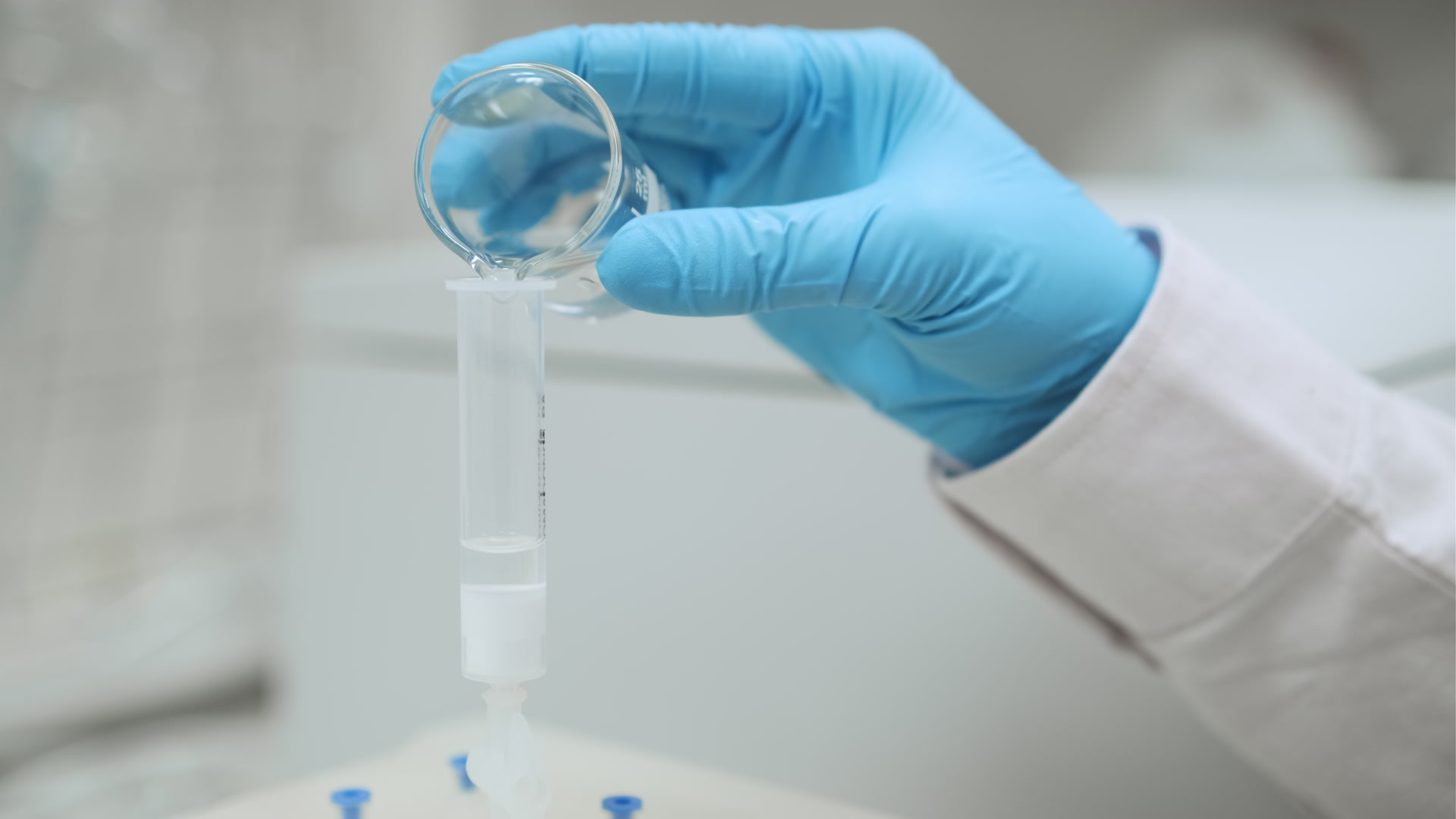
A signal that survives the question.
Define the marker, matrix and measurement that could change an ingredient or materials development decision.
Challenge recognition and readout separately
Challenge recognition and readout separately.
Cross-reactivity can occur at recognition, while interference can occur later in the readout. A related molecule may bind the reagent; an unrelated matrix component may change reporter activity or detector response without binding. The candidate study should distinguish those mechanisms with appropriate controls. Testing each target alone is not enough when the intended sample contains mixtures. A suitable panel would reflect plausible matrix composition and concentration ratios, and the report would name exactly what was tested. Broad specificity cannot be claimed from a convenient collection of negative controls chosen after the assay has already been optimised.
Mixtures can change performance
Mixtures can change performance.
One component may occupy binding sites, alter extraction or suppress another channel. A proposed comparison should include selected mixtures chosen to expose a relevant mechanism, rather than exhaustively enumerate targets without sufficient independent samples. The aim is to identify whether the added channel remains interpretable in the intended preparation. Svigelj et al. (2022) demonstrate a recognition-and-reporter chain for a specific marker; such a chain needs its own compatibility assessment before sharing reagents or exposure conditions with another assay. Combining separately successful tests does not automatically produce a successful multiplex measurement.
Reporting units must remain legible
Reporting units must remain legible.
Different channels may measure different molecular quantities. A peptide channel and an epitope channel should not be summed as if both were independent mass contributions to whole milk. Each needs its own justified reporting basis and uncertainty. A customer should be able to see whether a discrepancy arises from biology, processing, calibration or conversion. Where an aggregate quantity is proposed, its derivation must be explicit and independently supported. The site’s future interactive comparison should help the reader inspect those relationships rather than collapse all channels into a single apparently authoritative score or an unsupported product-readiness indicator.
A staged multichannel gate
A staged multichannel gate.
A sensible first scope checks each channel independently, then tests a small number of relevant mixtures and representative matrix preparations. Expansion should be triggered by an actual unresolved decision, not the desire to list more detection capabilities. Current standards, comparator access and qualified resources determine what is feasible. A channel that adds little information or destabilises the measurement may be dropped. This stop option is commercially useful: it can prevent a development team from committing to a complex architecture before proving that each component contributes evidence the buyer needs.
The next proposed comparison.
A channel-by-channel evidence matrix
A channel-by-channel evidence matrix
A channel-by-channel evidence matrix.
The proposed deliverable would show each measurand, preparation, recognition basis, readout, calibration, tested interferents and unresolved mixtures. It would separate a channel’s analytical evidence from any proposed combined interpretation. A potential assay developer could then decide whether a multiplex study is worth funding or whether a smaller panel better serves its decision. External research remains attributed and no Bio multichannel results are implied. The record would not support consumer safety, clinical interpretation or all-milk detection; its purpose is a qualified research comparison with clearly bounded scientific and commercial value.
Analytical detection · Proposed development discussion
A development path
for this research.
Does measuring several markers add decision value without creating unrecognised cross-channel interference?
The people this could serve.Research and analytical development teams.
The decision behind the project.
Your intended application, present alternative and the constraint behind “Multiplex measurements and cross-reactivity”. A useful starting point is the change that would justify another development step.
A proposed scope centred on a channel-by-channel evidence matrix.
Agree the comparison, acceptance basis and responsible expertise before discussing a paid package.
Specialist methods and a defined contribution.
Bring relevant analytical or experimental expertise, a comparator suggestion, and the conditions under which your method could resolve this question.
A jointly scoped proposal could connect your contribution with a channel-by-channel evidence matrix.
Define contributions, required access, independent preparations and permitted outputs before work or protected information is shared.
The commercial purpose of the next milestone.
Bring the application or asset thesis, the buyer you expect to value it, and the scientific or commercial uncertainty that must be resolved before another commitment.
The proposed decision record would connect the buyer question with a channel-by-channel evidence matrix. It would identify what a subsequent comparison needs to demonstrate.
Demand, development cost, resources, rights and a decision-changing milestone would need examination. No financing terms or investment outcome are represented here.
What a useful comparison
would record.
- Record paired analytical response difference (response units) with the preparation, method and conditions needed to interpret it.
- Record test response at defined conditions (response units) with the preparation, method and conditions needed to interpret it.
- Record matched reference response (response units) with the preparation, method and conditions needed to interpret it.
What the proposed
brief could leave behind.
- A channel-by-channel evidence matrix
- A preparation, comparator and endpoint record tied to this question.
- A source-linked account of the evidence gaps, study assumptions and next review point.
The proposed discussion brief
A brief you
can take away.
Use non-confidential notes to connect this topic with your own decision. Entries stay in this browser tab; saving creates a text file on your device. Nothing is submitted.
Potential scoped analytical feasibility or method-comparison discussion
Notes are optional. The brief includes this page’s proposed question and public source links.
Proposed scope; resources, methods, rights and delivery terms would be agreed before work. Begin with non-confidential information.
Sources and reading notes.
External work is identified below. Access notes describe the material inspected for this page; company research questions and proposed work are not presented as findings from these sources.
Pilolli et al, 2023Pilolli et al. (2023; issue 2024). In-house validation of an LC–MS method for the multiplexed quantitative determination of total allergenic food in chocolate
Chocolate preparation, marker conversion, matrix-matched calibration, independent preparation versus instrumental replicates.
Scope and limitations: External research in the authors’ stated preparations and conditions. No VARUNÉ Bio results, rights, laboratory capacity or analytical validation established. No figure or dataset is reproduced here.
Open original sourceMonaci et al, 2020Monaci et al. (2020). Validation of a MS Based Proteomics Method for Milk and Egg Quantification in Cookies at the Lowest VITAL Levels
Processing-dependent marker recovery and incurred versus post-extraction standards. Clinical/label-management conclusions are not adopted.
Scope and limitations: External research in the authors’ stated preparations and conditions. No VARUNÉ Bio results, rights, laboratory capacity or analytical validation established. No figure or dataset is reproduced here.
Open original sourceXie et al, 2024Xie et al. (2024). Development of an Indirect Competitive ELISA Based on a Stable Epitope of β-Lactoglobulin for Its Detection in Hydrolyzed Formula Milk Powder
Epitope-dependent response, competitive assay, processed proteins, analytical comparator limitations.
Scope and limitations: External research in the authors’ stated preparations and conditions. No VARUNÉ Bio results, rights, laboratory capacity or analytical validation established. No figure or dataset is reproduced here.
Open original sourceSvigelj et al, 2022Svigelj et al. (2022). A portable electrochemiluminescence aptasensor for β-lactoglobulin detection
Aptamer immobilisation, blocking, ECL transduction and matrix-specific sample handling.
Scope and limitations: External research in the authors’ stated preparations and conditions. No VARUNÉ Bio results, rights, laboratory capacity or analytical validation established. No figure or dataset is reproduced here.
Open original source