
 Film credits
Light can reveal. The matrix can conceal.
Can an optical response be separated from absorption, scattering and matrix-driven quenching?
Proposed research direction. External studies are attributed; no original VARUNÉ Bio analytical results or validated assay are claimed.
A light signal has several causes
A light signal has several causes.
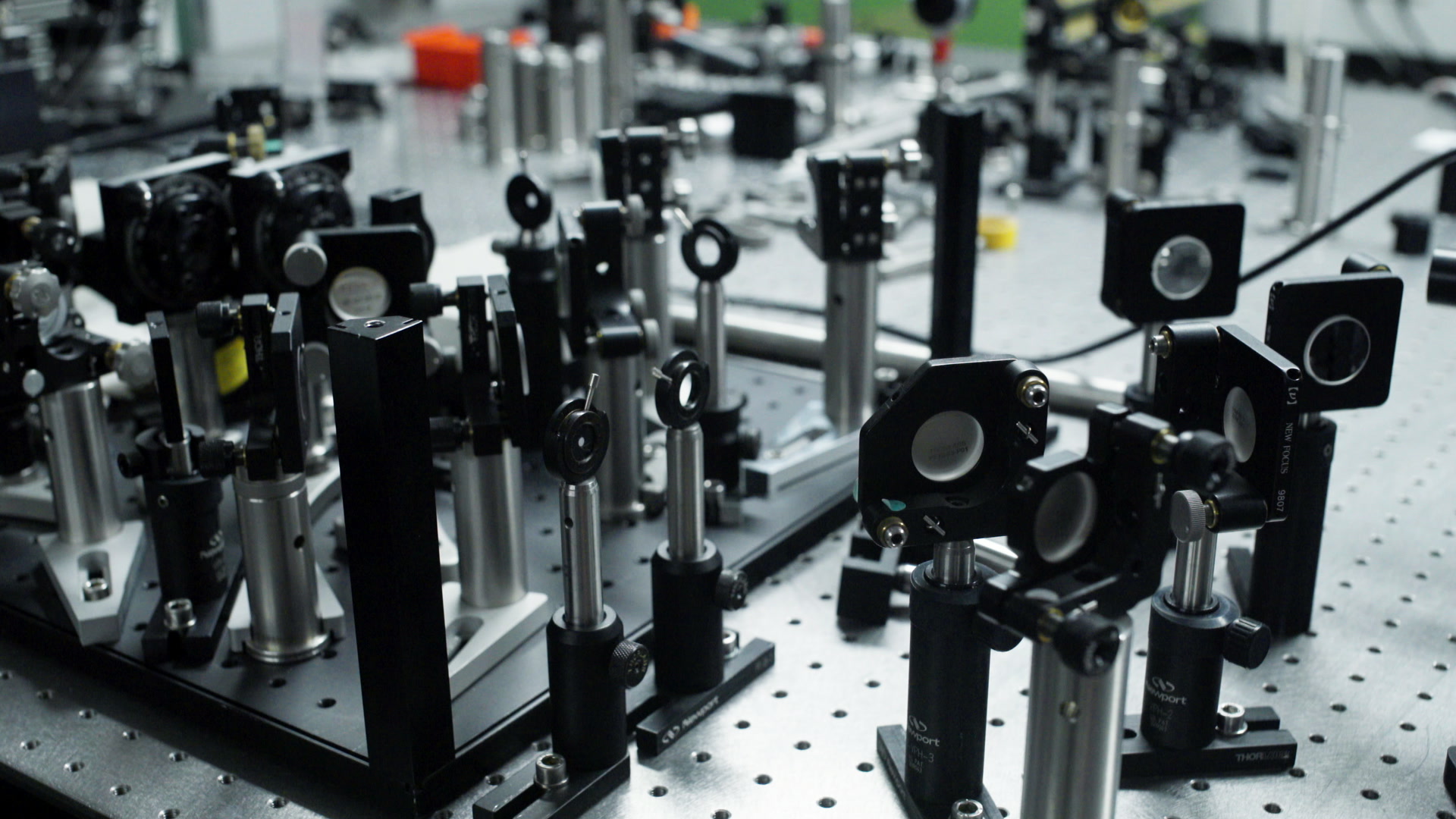
An optical assay can be visually compelling and experimentally ambiguous. More light may reflect target-dependent recognition, less quenching, a changed reporter environment or simply a different amount of absorbing matrix. The proposed question is whether a specified optical response can be separated from those alternatives in a representative extract. A developer deciding between a portable optical assay and another readout needs this evidence before designing hardware. The useful comparison concerns the whole optical pathway, including excitation where relevant, emission, sample geometry and background, rather than treating brightness as a direct count of target molecules.
Examine the development decision
Light can reveal. The matrix can conceal.
Open the sequence to examine what a development decision needs.
Identify the exact preparation, its source, and the properties a second laboratory must be able to reproduce.
Explanatory geometry · no simulated or measured performance
Keeping optical mechanisms distinct
Keep optical mechanisms distinct.
Hong et al. (2022) describe an aptamer/WS₂ fluorescence-quenching approach. Svigelj et al. (2022) generate electrochemiluminescence through a different recognition and reporting chain. Çanak-Ipek et al. (2025) use a QCM-D recognition interface, providing a non-fluorescent comparison mechanism. These are external methods with different inspected evidence scopes. Fluorescence, chemiluminescence and ECL should not be merged into a generic glowing sensor claim. A candidate study would identify exactly which event generates the measured photons and which matrix properties can alter their production or transmission without any change in marker concentration.
(Hong et al, 2022) | (Svigelj et al, 2022) | (Çanak-Ipek et al, 2025)
Preserve raw and background responses
Preserve raw and background responses.
A paired response difference can summarise target versus control exposure, but it should not hide either underlying measurement. Background may vary with matrix dilution, reporter concentration and optical geometry. The proposed record would retain raw signal, blank exposure and settings, then examine the contrast with repeat uncertainty. A brighter target preparation is not automatically more specific. Conversely, a weak response may reflect attenuation rather than absent recognition. If a matrix changes both reporter behaviour and target access, simple blank subtraction cannot be assumed to remove the interference; the interaction itself requires a discriminating experiment.
A measured difference must be interpreted against repeat variability and mechanism-specific controls.
- Paired analytical response differenceresponse units
- Test response at defined conditionsresponse units
- Matched reference responseresponse units
Model conditions. Equal exposure, instrument settings and sample basis. Difference alone does not establish molecular identity or clinical specificity.
A signal that survives the question.
Define the marker, matrix and measurement that could change an ingredient or materials development decision.
Separate attenuation from chemistry
Separate attenuation from chemistry.
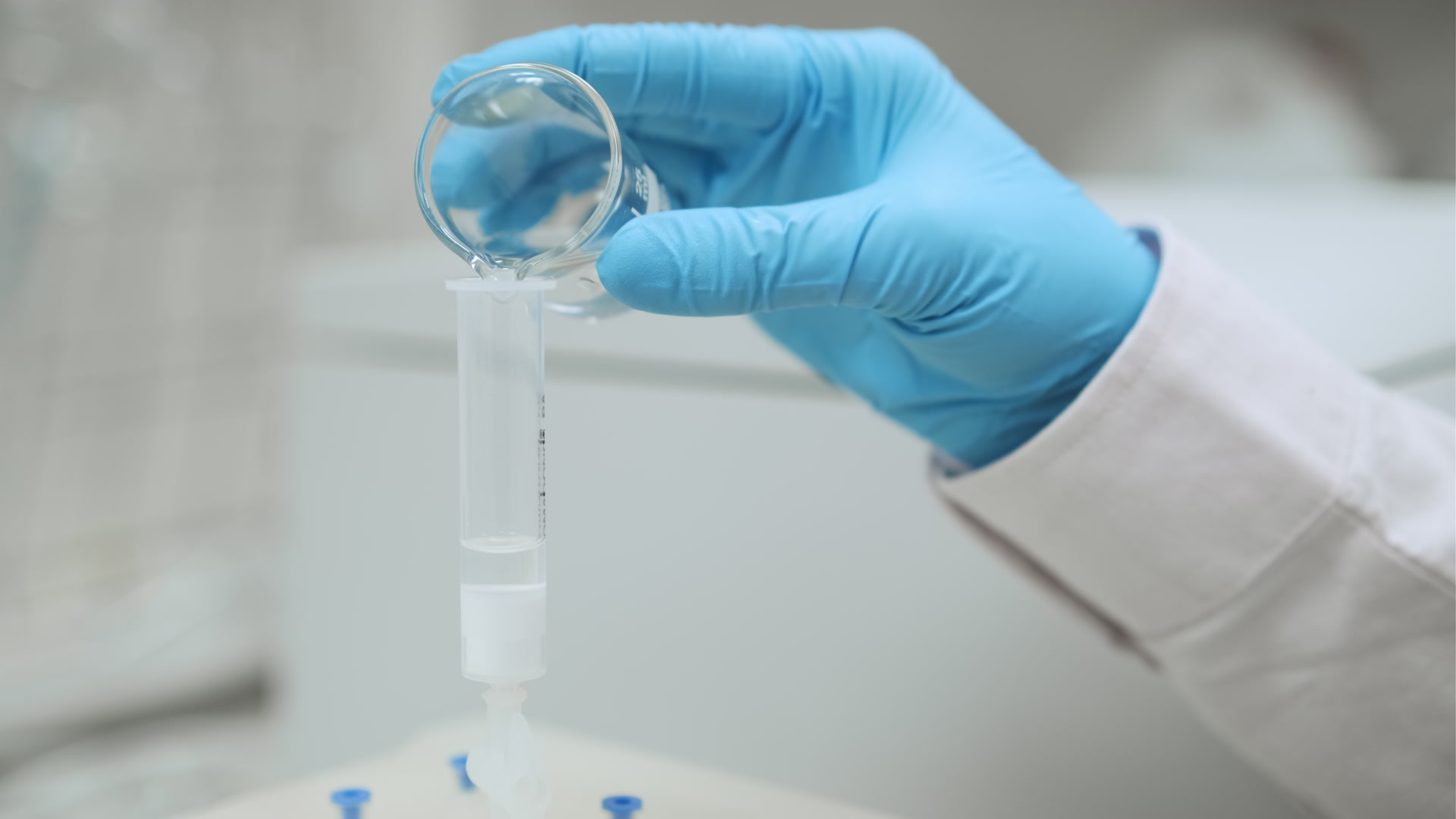
A coloured extract can reduce detected emission without changing recognition or photon generation. Particulates can scatter light, while matrix constituents may alter reporter chemistry or quench fluorescence. Those mechanisms require different controls. A proposed study could compare relevant blank-matrix exposures, reporter-only responses and target challenges under matched geometry, with a suitable independent marker observation. It should avoid applying an optical correction formula when its assumptions about uniformity, path length and absorption are unverified. A visually transparent diluted sample may still produce chemical interference, so appearance alone cannot establish analytical compatibility.
Examine the comparison
| Readout pathway | Matrix concern | Control question |
|---|---|---|
| Fluorescence | Excitation/emission attenuation or quenching | Does matrix alter reporter-only response? |
| ECL | Reporter chemistry and electrode environment | Does blank exposure alter photon generation? |
| Detected light | Geometry and spectral response | Are acquisition settings and sample basis comparable? |
Time is part of the readout
Time is part of the readout.
Reporter responses may rise, decay or drift during an exposure. Comparing samples at inconsistent times can create apparent concentration differences. A candidate scope would retain the acquisition window, integration basis and any kinetic information needed to interpret the measurement. Peak intensity and integrated emission are different quantities and should not be switched between calibrations and unknowns. This matters commercially because a reproducible instrument setting can be simpler than a new sensor chemistry. The first task is to define the useful time-dependent measurand, not to select the most dramatic frame from a glowing demonstration.
Geometry needs a controlled comparison
Geometry needs a controlled comparison.
Well volume, optical path, surface placement and instrument response can change the measured signal. A proposed comparison should use matched geometry or quantify the consequences of changing it. An inexpensive camera may offer useful qualitative documentation without providing calibrated photon flux. If calibrated output is required, detector calibration and relevant spectral response become part of the scope. The programme does not claim a Bio optical instrument or original photon measurements. For an assay buyer, the important question is whether the chosen measurement system can resolve the decision consistently with feasible resources and a stated uncertainty.
An optical feasibility gate
Choose an optical feasibility gate.
The first funded check might ask whether representative matrix blanks alter the reporter enough to invalidate a simple target-response interpretation. If they do, dilution, preparation or another transduction mechanism may be worth comparing. If they do not, a targeted calibration and independent preparation study may be justified. Hong et al. (2022) provide a recognition-dependent quenching example, not a dark-chocolate validation. The gate should identify accessible reagents, lawful use, qualified delivery and a stop criterion before expanding into custom optics. Decorative motion on the site would explain these mechanisms without simulating experimental success.
The next proposed comparison.
An optical-interference decision record
An optical-interference decision record
An optical-interference decision record.
The proposed output is a record of reporter mechanism, sample geometry, acquisition window, matrix controls and target response with uncertainty. It would distinguish attenuation, chemical interference and unresolved recognition effects where the evidence permits. A potential customer could use that record to decide whether to fund optical development, change preparation or choose another detector. The result would remain bounded to the studied marker and matrix. It would not demonstrate food safety, establish clinical performance or inherit the numerical detection limits of external papers; original analytical capability would need separate measurements and authorised interpretation.
Analytical detection · Proposed development discussion
A development path
for this research.
Can an optical response be separated from absorption, scattering and matrix-driven quenching?
The people this could serve.Research and analytical development teams.
The decision behind the project.
Your intended application, present alternative and the constraint behind “Optical readout and quenching”. A useful starting point is the change that would justify another development step.
A proposed scope centred on an optical-interference decision record.
Agree the comparison, acceptance basis and responsible expertise before discussing a paid package.
Specialist methods and a defined contribution.
Bring relevant analytical or experimental expertise, a comparator suggestion, and the conditions under which your method could resolve this question.
A jointly scoped proposal could connect your contribution with an optical-interference decision record.
Define contributions, required access, independent preparations and permitted outputs before work or protected information is shared.
The commercial purpose of the next milestone.
Bring the application or asset thesis, the buyer you expect to value it, and the scientific or commercial uncertainty that must be resolved before another commitment.
The proposed decision record would connect the buyer question with an optical-interference decision record. It would identify what a subsequent comparison needs to demonstrate.
Demand, development cost, resources, rights and a decision-changing milestone would need examination. No financing terms or investment outcome are represented here.
What a useful comparison
would record.
- Record paired analytical response difference (response units) with the preparation, method and conditions needed to interpret it.
- Record test response at defined conditions (response units) with the preparation, method and conditions needed to interpret it.
- Record matched reference response (response units) with the preparation, method and conditions needed to interpret it.
What the proposed
brief could leave behind.
- An optical-interference decision record
- A preparation, comparator and endpoint record tied to this question.
- A source-linked account of the evidence gaps, study assumptions and next review point.
The proposed discussion brief
A brief you
can take away.
Use non-confidential notes to connect this topic with your own decision. Entries stay in this browser tab; saving creates a text file on your device. Nothing is submitted.
Potential scoped analytical feasibility or method-comparison discussion
Notes are optional. The brief includes this page’s proposed question and public source links.
Proposed scope; resources, methods, rights and delivery terms would be agreed before work. Begin with non-confidential information.
Sources and reading notes.
External work is identified below. Access notes describe the material inspected for this page; company research questions and proposed work are not presented as findings from these sources.
Hong et al, 2022Hong et al. (2022). Fluorescence detection of milk allergen β-lactoglobulin based on aptamers and WS₂ nanosheets
Quenching and fluorescence recovery as a recognition-dependent signal; chocolate transfer unestablished.
Scope and limitations: External research in the authors’ stated preparations and conditions. No VARUNÉ Bio results, rights, laboratory capacity or analytical validation established. Only the inspected abstract/record is used; full protocol was not reviewed.
Open original sourceSvigelj et al, 2022Svigelj et al. (2022). A portable electrochemiluminescence aptasensor for β-lactoglobulin detection
Aptamer immobilisation, blocking, ECL transduction and matrix-specific sample handling.
Scope and limitations: External research in the authors’ stated preparations and conditions. No VARUNÉ Bio results, rights, laboratory capacity or analytical validation established. No figure or dataset is reproduced here.
Open original sourceÇanak-Ipek et al, 2025Çanak-Ipek et al. (2025). Development of a QCM-D-Based Aptasensor for the Real-Time Detection of β-Lactoglobulin
Supported lipid interface, aptamer selection and QCM-D recognition; not chocolate feasibility.
Scope and limitations: External research in the authors’ stated preparations and conditions. No VARUNÉ Bio results, rights, laboratory capacity or analytical validation established. No figure or dataset is reproduced here.
Open original source