
 Film credits
A tractable question. The right scientific resource.
Could a qualified research partner deliver a bounded analytical experiment without diverting the flagship programme?
Proposed research direction. External studies are attributed; no original VARUNÉ Bio analytical results or validated assay are claimed.
A collaboration begins with an answerable question
A collaboration begins with an answerable question.
A university or specialist analytical team should be approached with a scientific question that fits its methods and a credible resource plan. This candidate concerns a separately funded marker or interface experiment, such as dark-chocolate preparation feasibility or recognition-film interpretation. It is not an assertion that a university partnership exists. The first decision is whether the question, materials, comparator and delivery resources form a tractable scope. A useful collaboration proposal would make the contribution of each party clear and avoid asking an academic laboratory to absorb an open-ended product programme without agreed funding or responsibilities.
Examine the development decision
A tractable question. The right scientific resource.
Open the sequence to examine what a development decision needs.
Identify the exact preparation, its source, and the properties a second laboratory must be able to reproduce.
Explanatory geometry · no simulated or measured performance
Keeping the branch separately resourced
Keep the branch separately resourced.
The analytical branch should have its own lead, materials owner, budget and acceptance criterion. It must not quietly consume the resources intended for the flagship biological-material programme. A proposed partner scope would state the minimal experiment needed to change a decision and the conditions for expansion. If the initial comparison fails, a funded next step requires a new justification. This protects both scientific focus and cash. A candidate portfolio page is an invitation to investigate feasibility, not evidence of eight active funded programmes, laboratory access or a commitment to pursue every possible assay mechanism in parallel.
A resource plan with current quotations
A resource plan with current quotations.
The cost identity gives a planning structure for standards and materials, qualified laboratory work, analysis and review. Actual quotations, institutional arrangements and agreed scope determine whether the project is affordable. The plan should distinguish staff time, instrument access, sample preparation and data interpretation, including responsibilities for unsuccessful or ambiguous runs. No grant eligibility, funding award or institutional commitment is inferred from scientific relevance. The question should be sized so a funded study can produce an interpretable outcome within the agreed resources, rather than use an ambitious headline to conceal an undefined experiment and an unbounded cost exposure.
(Pilolli et al, 2023) | (Monaci et al, 2020) | (Xie et al, 2024)
A descriptive planning identity. Actual feasibility depends on current quotations, qualified resources and scope approval.
- Total quoted bounded scope£
- Standards, consumables and samples cost£
- Qualified laboratory delivery cost£
- Data preparation and analysis cost£
- Evidence review and agreed reporting cost£
Model conditions. All terms use the same tax, currency and period basis. No fees, available capacity, external commitments or returns are inferred.
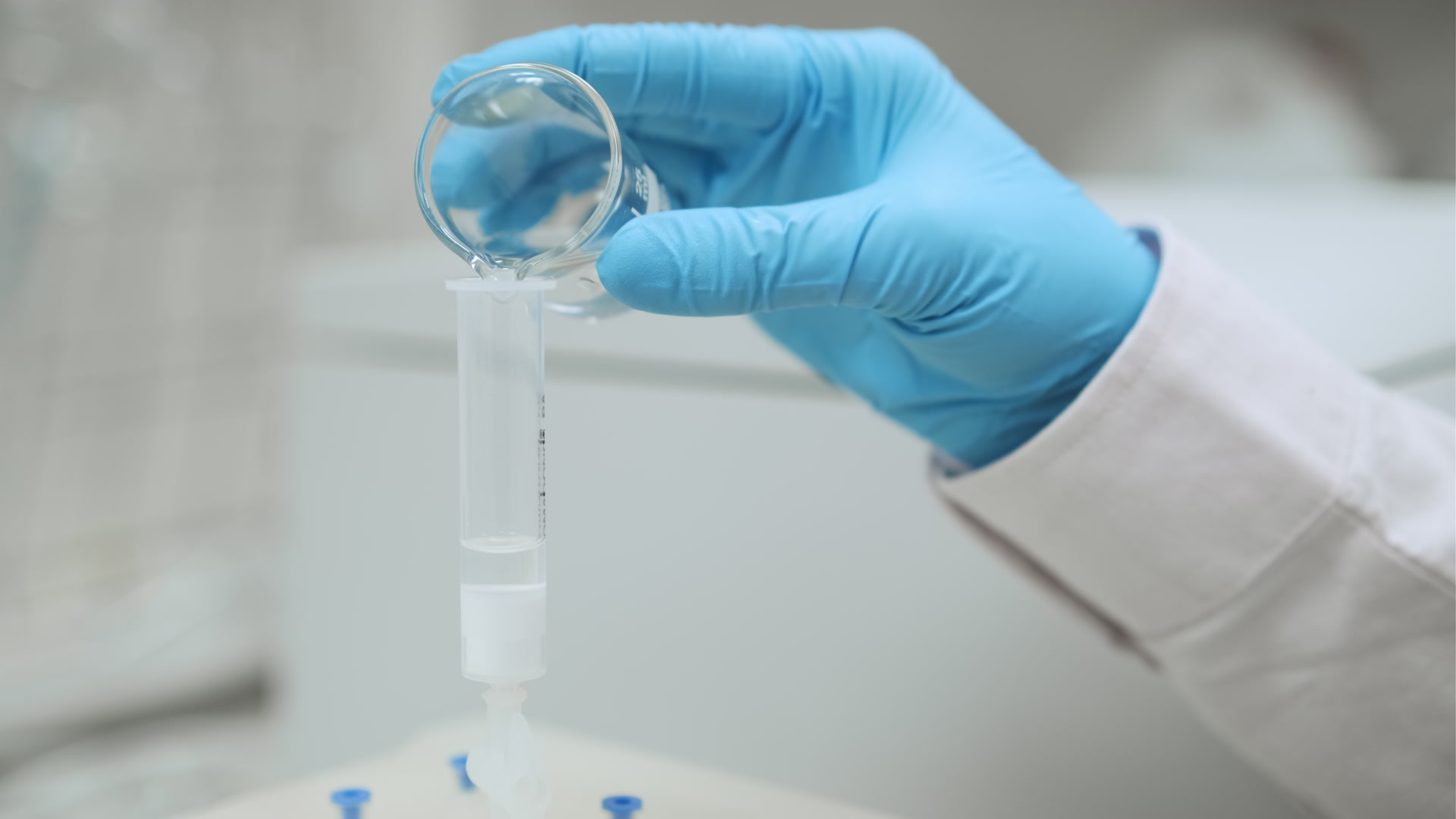
A signal that survives the question.
Define the marker, matrix and measurement that could change an ingredient or materials development decision.
Using methods that test the hypothesis
Use methods that test the hypothesis.
Pilolli et al. (2023; issue 2024) and Monaci et al. (2020) illustrate incurred-matrix analytical designs. Çanak-Ipek et al. (2025) provide an interface-recognition example, while Xie et al. (2024) investigate epitope-dependent response. The proposed collaboration would select a method because it resolves a stated uncertainty, not because it is available in the partner’s instrument inventory. External results remain attributed. A lab with the appropriate instrument still needs to establish preparation suitability, reference access and analytical expertise for the submitted material. The brief should preserve those prerequisites before claiming the hypothesis is ready for execution.
(Pilolli et al, 2023) | (Monaci et al, 2020) | (Çanak-Ipek et al, 2025) | (Xie et al, 2024)
Agree the experimental units
Agree the experimental units.
The scope should define independent material lots, preparations, sensor units or exposure runs as appropriate, then specify how readings relate to them. A small study can be valuable if its question is narrow and its limitations are clear. Many repeated readings do not create evidence of manufacturing reproducibility. The statistical analysis should be compatible with the affordable design and preserve negative observations. A proposed partner would need to confirm the actual method and sample requirements. The public page should not disclose enabling unpublished methods or imply that a complete original protocol has already been agreed with an institution.
Separate contributions and rights
Separate contributions and rights.
Materials provision, experimental delivery, analysis, writing and commercial use are different contributions. A prospective scope should identify responsibilities and resolve data, background IP, resulting IP and publication expectations through appropriate agreements before commitments. Authorship should follow actual scholarly contribution rather than payment or an anticipated headline. This page establishes no legal transfer or partner endorsement. A university’s name would not become public support merely because a discussion occurs. The collaboration proposition is a bounded research opportunity whose science, resources and rights need independent confirmation before the work can be represented as an active programme or a commercial asset.
The funded gate that earns the next step
The funded gate that earns the next step.
A first study might produce a preparation compatibility result, a controlled recognition comparison or an uncertainty estimate sufficient to size a later experiment. Its acceptance criterion should describe the evidence deliverable, not require a positive scientific outcome. A reproducible negative result can justify stopping a branch or changing the marker. Further funding should follow an identified gap and a new resource plan. This approach makes the collaboration credible to a scientific lead and a commercial sponsor because it treats uncertainty as part of delivery rather than promises a breakthrough, publication or patent before the experiment is performed.
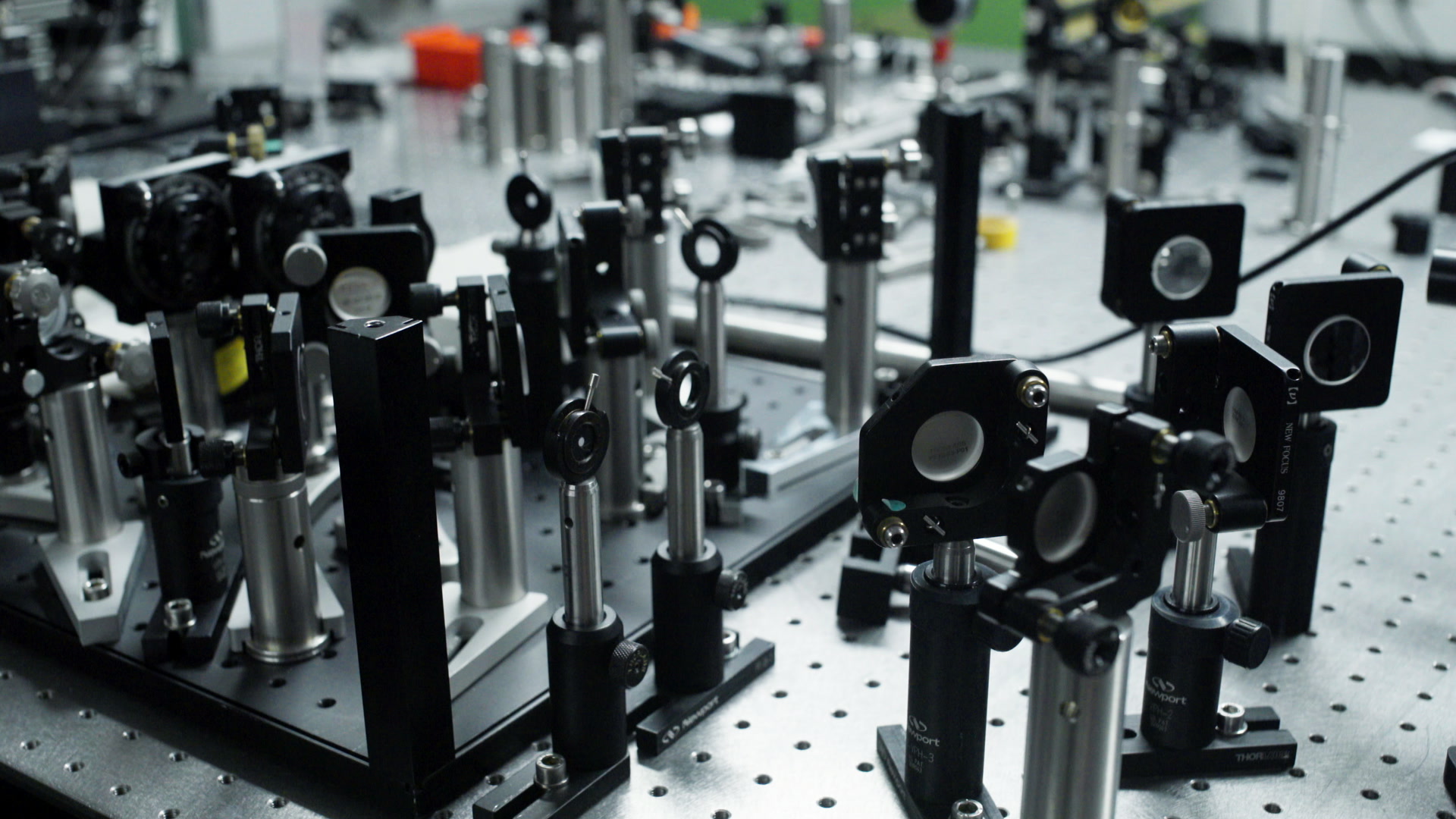
The next proposed comparison.
A partner-ready analytical scope
A partner-ready analytical scope
A partner-ready analytical scope.
The proposed output would be a source-backed question, materials and comparator requirements, experimental-unit plan, resource quotation basis, contribution map and decision gate. A qualified prospective partner could use it to judge fit and propose revisions. A sponsor could assess whether the experiment deserves funding without being asked to underwrite a whole platform. Any original data or partnership announcement would require the actual study record and permission. The next conversation should concern one answerable analytical question and a separately resourced delivery route; no current university collaboration, award or completed Bio study is claimed.
Analytical detection · Proposed development discussion
A development path
for this research.
Could a qualified research partner deliver a bounded analytical experiment without diverting the flagship programme?
The people this could serve.Qualified university analytical groups and separately funded research sponsors.
The decision behind the project.
Your intended application, present alternative and the constraint behind “A separately funded university method scope”. A useful starting point is the change that would justify another development step.
A proposed scope centred on a partner-ready analytical scope.
Agree the comparison, acceptance basis and responsible expertise before discussing a paid package.
Specialist methods and a defined contribution.
Bring relevant analytical or experimental expertise, a comparator suggestion, and the conditions under which your method could resolve this question.
A jointly scoped proposal could connect your contribution with a partner-ready analytical scope.
Define contributions, required access, independent preparations and permitted outputs before work or protected information is shared.
The commercial purpose of the next milestone.
Bring the application or asset thesis, the buyer you expect to value it, and the scientific or commercial uncertainty that must be resolved before another commitment.
The proposed decision record would connect the buyer question with a partner-ready analytical scope. It would identify what a subsequent comparison needs to demonstrate.
Demand, development cost, resources, rights and a decision-changing milestone would need examination. No financing terms or investment outcome are represented here.
What a useful comparison
would record.
- Record total quoted bounded scope (£) with the preparation, method and conditions needed to interpret it.
- Define the measurand, matrix and preparation before interpreting the signal.
- Record blanks, calibration range, extraction recovery and the relevant analytical controls.
What the proposed
brief could leave behind.
- A partner-ready analytical scope
- A preparation, comparator and endpoint record tied to this question.
- A source-linked account of the evidence gaps, study assumptions and next review point.
The proposed discussion brief
A brief you
can take away.
Use non-confidential notes to connect this topic with your own decision. Entries stay in this browser tab; saving creates a text file on your device. Nothing is submitted.
Potential separately funded collaborative method study with agreed lead, resources, outputs and rights
Notes are optional. The brief includes this page’s proposed question and public source links.
Proposed scope; resources, methods, rights and delivery terms would be agreed before work. Begin with non-confidential information.
Sources and reading notes.
External work is identified below. Access notes describe the material inspected for this page; company research questions and proposed work are not presented as findings from these sources.
Pilolli et al, 2023Pilolli et al. (2023; issue 2024). In-house validation of an LC–MS method for the multiplexed quantitative determination of total allergenic food in chocolate
Chocolate preparation, marker conversion, matrix-matched calibration, independent preparation versus instrumental replicates.
Scope and limitations: External research in the authors’ stated preparations and conditions. No VARUNÉ Bio results, rights, laboratory capacity or analytical validation established. No figure or dataset is reproduced here.
Open original sourceMonaci et al, 2020Monaci et al. (2020). Validation of a MS Based Proteomics Method for Milk and Egg Quantification in Cookies at the Lowest VITAL Levels
Processing-dependent marker recovery and incurred versus post-extraction standards. Clinical/label-management conclusions are not adopted.
Scope and limitations: External research in the authors’ stated preparations and conditions. No VARUNÉ Bio results, rights, laboratory capacity or analytical validation established. No figure or dataset is reproduced here.
Open original sourceÇanak-Ipek et al, 2025Çanak-Ipek et al. (2025). Development of a QCM-D-Based Aptasensor for the Real-Time Detection of β-Lactoglobulin
Supported lipid interface, aptamer selection and QCM-D recognition; not chocolate feasibility.
Scope and limitations: External research in the authors’ stated preparations and conditions. No VARUNÉ Bio results, rights, laboratory capacity or analytical validation established. No figure or dataset is reproduced here.
Open original sourceXie et al, 2024Xie et al. (2024). Development of an Indirect Competitive ELISA Based on a Stable Epitope of β-Lactoglobulin for Its Detection in Hydrolyzed Formula Milk Powder
Epitope-dependent response, competitive assay, processed proteins, analytical comparator limitations.
Scope and limitations: External research in the authors’ stated preparations and conditions. No VARUNÉ Bio results, rights, laboratory capacity or analytical validation established. No figure or dataset is reproduced here.
Open original source