
 Film credits
Electrical change needs a molecular explanation.
Can an electrode response distinguish marker recognition from matrix-driven changes in charge transfer?
Proposed research direction. External studies are attributed; no original VARUNÉ Bio analytical results or validated assay are claimed.
The electrode measures a consequence
The electrode measures a consequence.
An electrochemical readout reports a physical consequence of the exposed interface. Depending on the method, that may involve current, impedance or capacitance rather than direct molecular identity. The proposed question is whether the chosen response can distinguish marker recognition from matrix-driven changes in the electrode environment. An assay buyer considering a portable format needs that distinction before investing in fabrication, amplification or a device enclosure. A compact instrument is valuable only if its response remains interpretable under the actual preparation conditions and resolves a defined development decision rather than merely producing a changing number.
Examine the development decision
Electrical change needs a molecular explanation.
Open the sequence to examine what a development decision needs.
Identify the exact preparation, its source, and the properties a second laboratory must be able to reproduce.
Explanatory geometry · no simulated or measured performance
Different electrochemical mechanisms
Different electrochemical mechanisms.
Eissa and Zourob (2017) describe aptamer/graphene-mediated recognition with a redox readout. Qiu et al. (2021) present a target-induced amplification approach in formula milk, while Wang et al. (2021) examine a molecularly imprinted interface. Subramani et al. (2021) report capacitive measurements with a different surface design. These are separate external methods, not interchangeable components of a Bio product. The candidate scope would choose one practical mechanism and identify the controls needed for it. Detailed published architectures and isolated detection limits would not be repackaged as proprietary capability or transferred to a new matrix.
(Eissa and Zourob, 2017) | (Qiu et al, 2021) | (Wang et al, 2021) | (Subramani et al, 2021)
Using matched response differences
Use matched response differences.
A paired difference between a target challenge and a control is a useful descriptive quantity when conditions are matched. It should be retained alongside the raw measurement and uncertainty. A change in current or capacitance can be caused by recognition, ionic composition, adsorption or a changed accessible area. The proposed analysis would not fit concentration until the mechanism and calibration are adequately supported. If the blank alters the interface substantially, subtracting it may not restore a valid model because the target-plus-matrix response need not be additive. That possible interaction is itself an experimental question.
A measured difference must be interpreted against repeat variability and mechanism-specific controls.
- Paired analytical response differenceresponse units
- Test response at defined conditionsresponse units
- Matched reference responseresponse units
Model conditions. Equal exposure, instrument settings and sample basis. Difference alone does not establish molecular identity or clinical specificity.
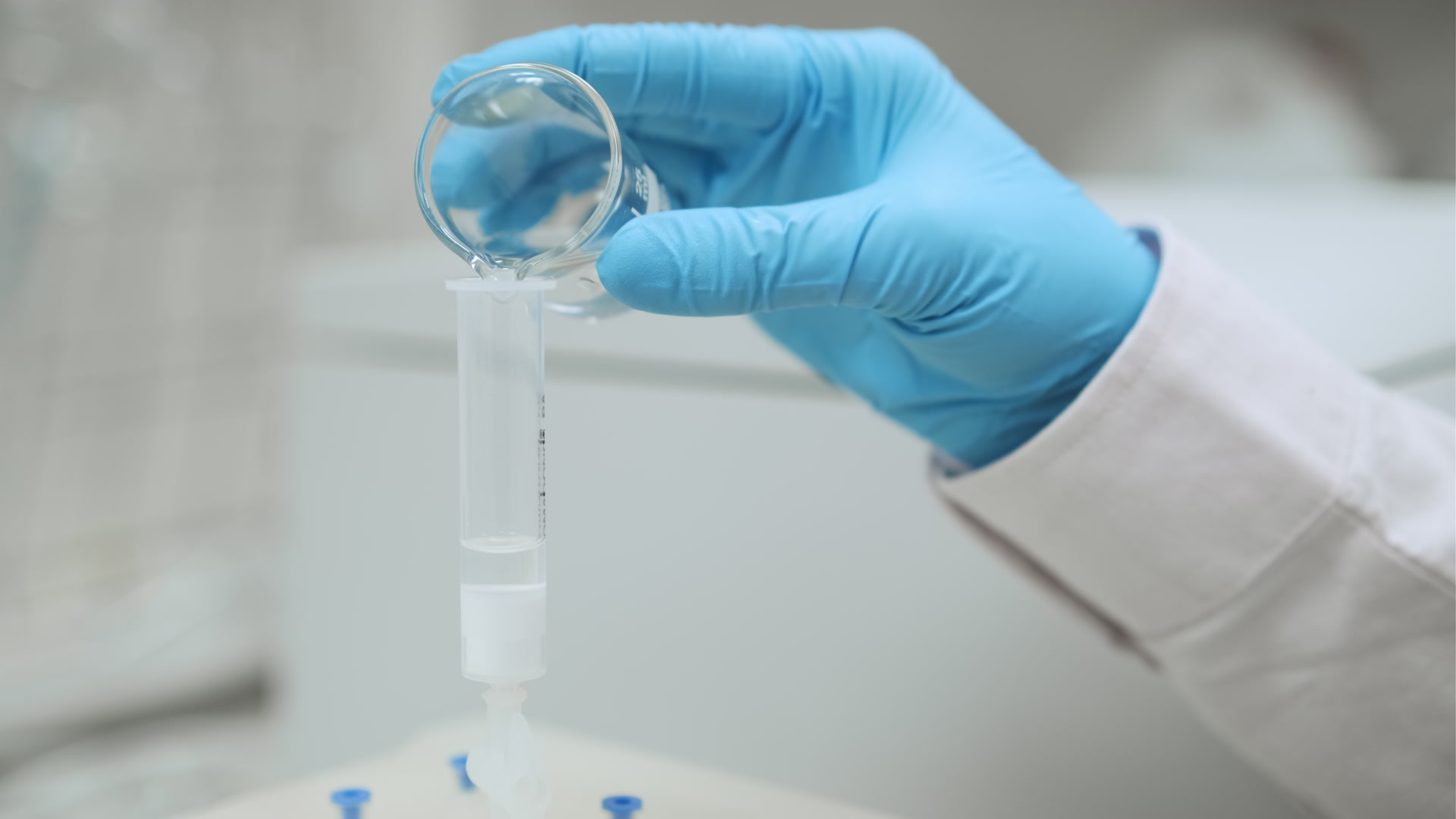
A signal that survives the question.
Define the marker, matrix and measurement that could change an ingredient or materials development decision.
Electrolyte compatibility matters
Electrolyte compatibility matters.
An extraction method can leave salts, surfactants, solvents or particulates that alter electrode behaviour. A preparation suitable for another detector may therefore be unsuitable for electrochemical analysis. The study would document pH, ionic composition class, dilution and any clean-up that changes target recovery. Those factors must be balanced against the readout’s operating requirements. A response restored by dilution does not establish complete marker recovery from the original material. The useful operating window is where controls are interpretable and the measurement still resolves the intended question, not simply where the instrument produces its largest signal.
Amplification also amplifies uncertainty
Amplification also amplifies uncertainty.
A nucleic-acid amplification or catalytic reporting step can increase response while introducing additional reagent, timing and background dependencies. The proposed decision is whether such complexity is warranted after baseline recognition and preparation have been checked. Qiu et al. (2021) provide a published amplification example; the inspected abstract supports its mechanism and matrix context, not a complete Bio development protocol. An amplified curve cannot compensate for uncertain target identity. The first experiment should therefore ask whether a simpler comparison answers the buyer’s question before adding a cascade that makes failures harder to locate.
Fabrication and exposure are separate units
Fabrication and exposure are separate units.
Independent electrodes can vary in geometry, surface treatment and active area. Repeated measurements on one electrode may also change it through fouling or previous exposures. The candidate design would identify which observations are independent fabrication units, which are repeated exposures and which are repeated readings. A sequence of target concentrations on one surface should not be treated as fresh independent samples without justification. For a commercial developer, this distinction matters because a reproducible laboratory trace does not automatically indicate reproducible manufactured devices. Fabrication robustness requires an appropriately resourced comparison of actual independently prepared units.
Comparator first, enclosure later
Comparator first, enclosure later.
A proposed feasibility scope would pair the chosen electrical mechanism with a suitable independent marker comparison and matrix controls. If the molecular interpretation fails, industrial design or a portable enclosure should wait. If recognition is supported but fabrication varies, the next investment could focus on the interface rather than electronics. The gate should name resources, standards, sample ownership and acceptable uncertainty. No ready-to-use Bio device, available manufacturing line or validated analytical service is implied. The purpose is to make the next funded experiment concrete enough for an assay or materials-development team to evaluate.
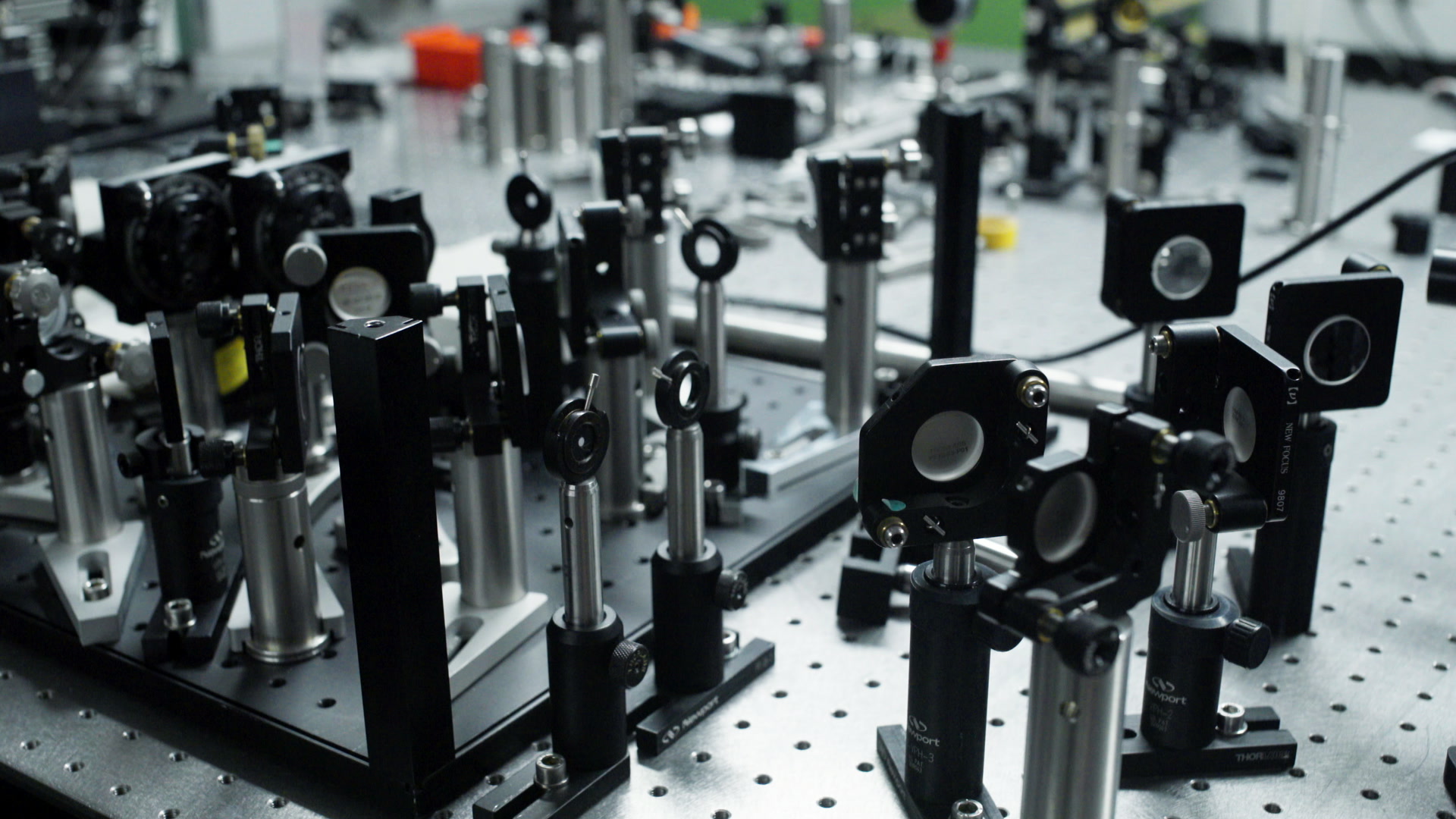
The next proposed comparison.
An electrical-to-molecular evidence chain
An electrical-to-molecular evidence chain
An electrical-to-molecular evidence chain.
The proposed output would connect electrode preparation, exposure conditions, raw electrical response, controls, comparator evidence and calibrated interpretation. It would retain unexplained responses and state the conditions under which a limited marker comparison might be defensible. A potential customer could then judge whether further electrochemical development is worthwhile or whether another method is more suitable. Future interactive presentation should show the causal chain and uncertainty rather than decorate the page with unsupported performance curves. All external sensor results remain attributed to their authors, and any original Bio measurements would require separate provenance and authorised release.
Analytical detection · Proposed development discussion
A development path
for this research.
Can an electrode response distinguish marker recognition from matrix-driven changes in charge transfer?
The people this could serve.Research and analytical development teams.
The decision behind the project.
Your intended application, present alternative and the constraint behind “Electrochemical readout in complex extracts”. A useful starting point is the change that would justify another development step.
A proposed scope centred on an electrical-to-molecular evidence chain.
Agree the comparison, acceptance basis and responsible expertise before discussing a paid package.
Specialist methods and a defined contribution.
Bring relevant analytical or experimental expertise, a comparator suggestion, and the conditions under which your method could resolve this question.
A jointly scoped proposal could connect your contribution with an electrical-to-molecular evidence chain.
Define contributions, required access, independent preparations and permitted outputs before work or protected information is shared.
The commercial purpose of the next milestone.
Bring the application or asset thesis, the buyer you expect to value it, and the scientific or commercial uncertainty that must be resolved before another commitment.
The proposed decision record would connect the buyer question with an electrical-to-molecular evidence chain. It would identify what a subsequent comparison needs to demonstrate.
Demand, development cost, resources, rights and a decision-changing milestone would need examination. No financing terms or investment outcome are represented here.
What a useful comparison
would record.
- Record paired analytical response difference (response units) with the preparation, method and conditions needed to interpret it.
- Record test response at defined conditions (response units) with the preparation, method and conditions needed to interpret it.
- Record matched reference response (response units) with the preparation, method and conditions needed to interpret it.
What the proposed
brief could leave behind.
- An electrical-to-molecular evidence chain
- A preparation, comparator and endpoint record tied to this question.
- A source-linked account of the evidence gaps, study assumptions and next review point.
The proposed discussion brief
A brief you
can take away.
Use non-confidential notes to connect this topic with your own decision. Entries stay in this browser tab; saving creates a text file on your device. Nothing is submitted.
Potential scoped analytical feasibility or method-comparison discussion
Notes are optional. The brief includes this page’s proposed question and public source links.
Proposed scope; resources, methods, rights and delivery terms would be agreed before work. Begin with non-confidential information.
Sources and reading notes.
External work is identified below. Access notes describe the material inspected for this page; company research questions and proposed work are not presented as findings from these sources.
Eissa and Zourob, 2017Eissa and Zourob (2017). In vitro selection of DNA aptamers targeting β-lactoglobulin and their integration in graphene-based biosensor
A/B variant selection, affinity characterisation and graphene-mediated electrochemical recognition; spiked extracts only within inspected scope.
Scope and limitations: External research in the authors’ stated preparations and conditions. No VARUNÉ Bio results, rights, laboratory capacity or analytical validation established. Only the inspected abstract/record is used; full protocol was not reviewed.
Open original sourceQiu et al, 2021Qiu et al. (2021). Electrochemical aptasensor for β-lactoglobulin based on a target-induced nicking site reconstruction strategy
Amplification/transduction example in hypoallergenic formula; no architecture or performance copied.
Scope and limitations: External research in the authors’ stated preparations and conditions. No VARUNÉ Bio results, rights, laboratory capacity or analytical validation established. Only the inspected abstract/record is used; full protocol was not reviewed.
Open original sourceWang et al, 2021Wang et al. (2021). An Electrochemical Molecularly Imprinted Polymer Sensor for Rapid β-Lactoglobulin Detection
Imprinted/non-imprinted interfaces, template removal, electrochemical method comparison; published low LOD not adopted.
Scope and limitations: External research in the authors’ stated preparations and conditions. No VARUNÉ Bio results, rights, laboratory capacity or analytical validation established. No figure or dataset is reproduced here.
Open original sourceSubramani et al, 2021Subramani et al. (2021). Carbonyldiimidazole-copper nanoflower enhanced laser scribed graphene microgap capacitive aptasensor for milk allergen detection
Matrix dilution, biofouling, device variation and capacitive response. Extraordinary low detection claims are not adopted.
Scope and limitations: External research in the authors’ stated preparations and conditions. No VARUNÉ Bio results, rights, laboratory capacity or analytical validation established. No figure or dataset is reproduced here.
Open original source