
 Film credits
A method moved is a method to check.
What evidence is needed when a marker method, matrix or instrument condition changes?
Proposed research direction. External studies are attributed; no original VARUNÉ Bio analytical results or validated assay are claimed.
Transfer changes the analytical system
Transfer changes the analytical system.
Moving a method to a different laboratory, instrument or matrix can change preparation, response and interpretation. The proposed question is what evidence is needed to decide whether a transferred or modified method still answers the same research question. A customer may want to compare studies over time or evaluate a new preparation without losing comparability. The first task is to define the change and the intended claim. Calling a method established does not establish suitability in the new system, and an unchanged procedure title cannot guarantee that its measurand, calibration or uncertainty remains equivalent.
Examine the development decision
A method moved is a method to check.
Open the sequence to examine what a development decision needs.
Identify the exact preparation, its source, and the properties a second laboratory must be able to reproduce.
Explanatory geometry · no simulated or measured performance
Inventory the actual differences
Inventory the actual differences.
Instrument response, reagent lot, preparation equipment, operator practice and matrix composition can each matter. Pilolli et al. (2023; issue 2024) and Monaci et al. (2020) document particular preparation and analytical chains. Svigelj et al. (2022) demonstrate a different sensor-and-reporting system with its own conditions. The proposed transfer record would identify which elements are retained and which differ, rather than assume that using the same target name creates equivalence. A changed extraction may warrant a different check from a changed detector, because it can alter molecular accessibility before the calibrated response is produced.
(Pilolli et al, 2023) | (Monaci et al, 2020) | (Svigelj et al, 2022)
Repeat precision is only one check
Repeat precision is only one check.
The coefficient of variation can describe repeat dispersion within a named unit hierarchy. A transferred method may be precise and systematically different from the earlier method. The scope should therefore examine appropriate reference or paired material alongside calibration and recovery evidence. Near blank, absolute uncertainty may be more useful than a relative statistic. A qualified analysis plan would distinguish changed precision from changed bias and state what comparison is possible with available samples. No universal acceptance percentage is prescribed here; the useful criterion depends on the buyer’s decision and the comparator uncertainty.
Repeat dispersion is separate from bias and must name the independent experimental unit.
- Coefficient of variation%
- Sample standard deviationresponse units
- Positive sample mean on a ratio scaleresponse units
Model conditions. Mean is nonzero and sufficiently positive; use absolute uncertainty near blank. Repetitions come from the reported hierarchy, not pooled pseudo-independent readings.

A signal that survives the question.
Define the marker, matrix and measurement that could change an ingredient or materials development decision.
Preserve the measurand through change
Preserve the measurand through change.
A preparation modification can change whether the method measures intact recognition sites, extracted markers or digestion-derived peptides. That may be scientifically useful but it creates a new interpretation rather than a simple optimisation. The proposed scope should revisit the measurand statement whenever the chain changes. Converting both outputs to the same printed unit does not establish equivalence if their molecular basis differs. A customer evaluating a formulation lot needs to know whether an apparent difference comes from the material or the measurement system. The comparison record should make that distinction visible before any specification or public claim is considered.
Challenge matrix compatibility again
Challenge matrix compatibility again.
A new matrix may alter extraction, reporter chemistry, optical transmission or ionisation. Matuszewski, Constanzer and Chavez-Eng (2003) provide original methodological context for matrix-effect assessment in another analyte setting. The principle supports checking interference, while the actual mechanism needs matrix-specific evidence. A proposed transfer study should include representative blank and positive preparations and preserve the distinction between post-extraction spikes and incurred material. An instrument calibration passing in buffer does not establish full-chain suitability in a new formulation or food extract, nor does a published method automatically validate a customer’s sample.
Version the method and the data
Version the method and the data.
A result should retain the procedure version, calibration version, material identifiers and interpretation rules in force when it was produced. If a change is adopted, previous data must not silently inherit the new method’s capability statement. A versioned record allows later comparison and preserves negative or ambiguous findings. It also distinguishes a planned improvement from evidence that the improvement worked. For a buyer considering an evidence service, this traceability can be more valuable than a larger collection of disconnected results because it supports reasoned decisions about which historical measurements remain comparable and which need re-examination.
A proportionate comparison gate
A proportionate comparison gate.
The first funded scope would match the size of the proposed change. A small reagent-lot difference may need a focused comparator check; a new matrix or preparation may require a broader suitability study. The team should identify the cheapest observation that could invalidate equivalence before committing to full transfer. Resource access, rights and current quotations remain prerequisites. The proposal does not imply analytical accreditation, a routine release-testing function or a qualified Bio operating laboratory. Its purpose is to create a defensible research comparison and a clear stop or revision condition if equivalence is unsupported.
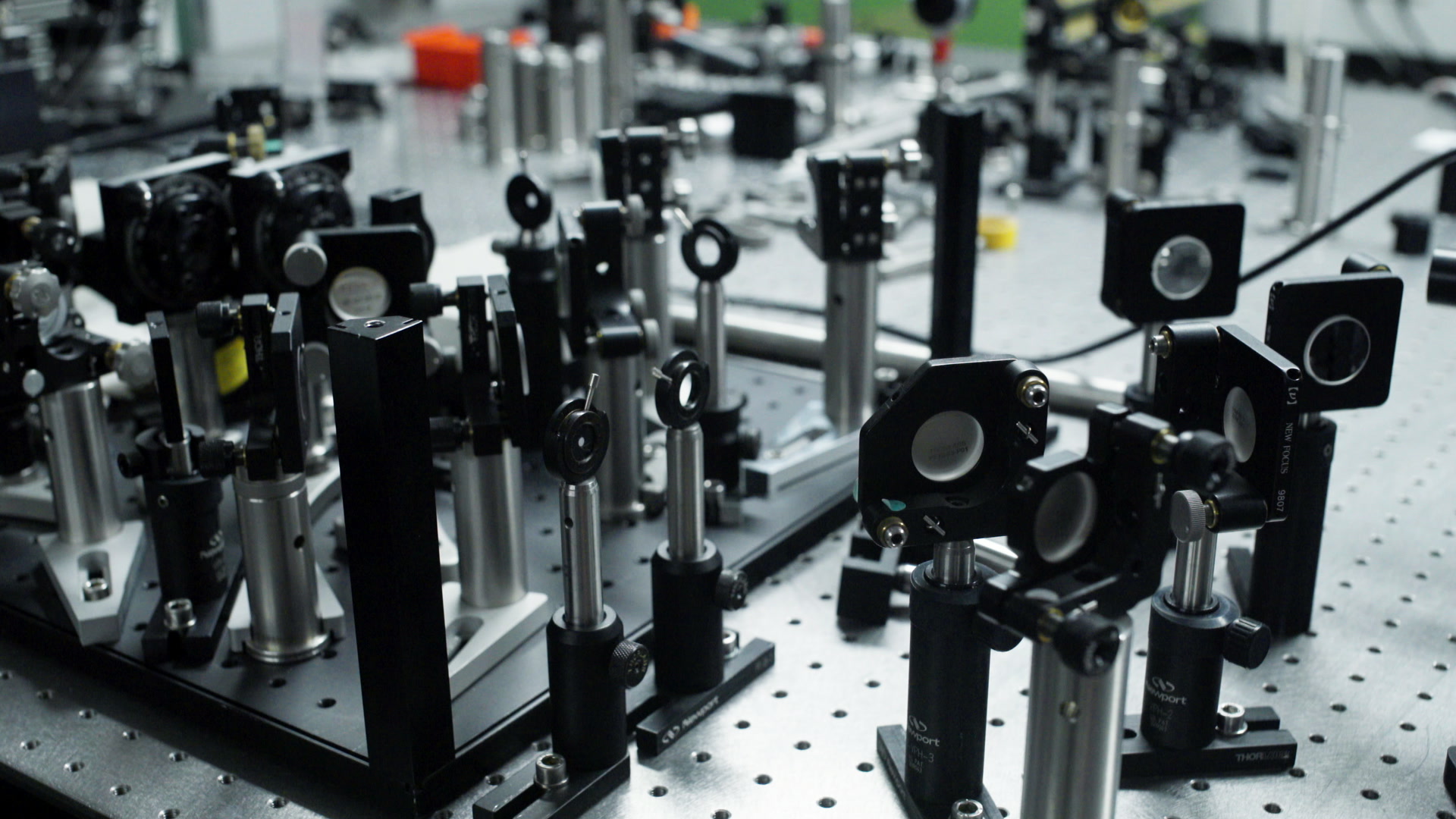
The next proposed comparison.
A transfer decision record
A transfer decision record
A transfer decision record.
The proposed output would list the change, retained assumptions, comparator design, calibration and recovery checks, independent units and unresolved limitations. It would state whether continued comparison is justified, whether results require a different interpretation or whether the change needs more evidence. An assay customer could use that record to fund a focused transfer study; an ingredient business could use it to protect comparability across development work. External papers remain methodological context rather than proof of the new system’s performance. Any original transfer result or commercial delivery claim would need its own evidence and authorised release.
Analytical detection · Proposed development discussion
A development path
for this research.
What evidence is needed when a marker method, matrix or instrument condition changes?
The people this could serve.Research and analytical development teams.
The decision behind the project.
Your intended application, present alternative and the constraint behind “Method transfer and analytical change”. A useful starting point is the change that would justify another development step.
A proposed scope centred on a transfer decision record.
Agree the comparison, acceptance basis and responsible expertise before discussing a paid package.
Specialist methods and a defined contribution.
Bring relevant analytical or experimental expertise, a comparator suggestion, and the conditions under which your method could resolve this question.
A jointly scoped proposal could connect your contribution with a transfer decision record.
Define contributions, required access, independent preparations and permitted outputs before work or protected information is shared.
The commercial purpose of the next milestone.
Bring the application or asset thesis, the buyer you expect to value it, and the scientific or commercial uncertainty that must be resolved before another commitment.
The proposed decision record would connect the buyer question with a transfer decision record. It would identify what a subsequent comparison needs to demonstrate.
Demand, development cost, resources, rights and a decision-changing milestone would need examination. No financing terms or investment outcome are represented here.
What a useful comparison
would record.
- Record coefficient of variation (%) with the preparation, method and conditions needed to interpret it.
- Record sample standard deviation (response units) with the preparation, method and conditions needed to interpret it.
- Record positive sample mean on a ratio scale (response units) with the preparation, method and conditions needed to interpret it.
What the proposed
brief could leave behind.
- A transfer decision record
- A preparation, comparator and endpoint record tied to this question.
- A source-linked account of the evidence gaps, study assumptions and next review point.
The proposed discussion brief
A brief you
can take away.
Use non-confidential notes to connect this topic with your own decision. Entries stay in this browser tab; saving creates a text file on your device. Nothing is submitted.
Potential scoped analytical feasibility or method-comparison discussion
Notes are optional. The brief includes this page’s proposed question and public source links.
Proposed scope; resources, methods, rights and delivery terms would be agreed before work. Begin with non-confidential information.
Sources and reading notes.
External work is identified below. Access notes describe the material inspected for this page; company research questions and proposed work are not presented as findings from these sources.
Pilolli et al, 2023Pilolli et al. (2023; issue 2024). In-house validation of an LC–MS method for the multiplexed quantitative determination of total allergenic food in chocolate
Chocolate preparation, marker conversion, matrix-matched calibration, independent preparation versus instrumental replicates.
Scope and limitations: External research in the authors’ stated preparations and conditions. No VARUNÉ Bio results, rights, laboratory capacity or analytical validation established. No figure or dataset is reproduced here.
Open original sourceMonaci et al, 2020Monaci et al. (2020). Validation of a MS Based Proteomics Method for Milk and Egg Quantification in Cookies at the Lowest VITAL Levels
Processing-dependent marker recovery and incurred versus post-extraction standards. Clinical/label-management conclusions are not adopted.
Scope and limitations: External research in the authors’ stated preparations and conditions. No VARUNÉ Bio results, rights, laboratory capacity or analytical validation established. No figure or dataset is reproduced here.
Open original sourceSvigelj et al, 2022Svigelj et al. (2022). A portable electrochemiluminescence aptasensor for β-lactoglobulin detection
Aptamer immobilisation, blocking, ECL transduction and matrix-specific sample handling.
Scope and limitations: External research in the authors’ stated preparations and conditions. No VARUNÉ Bio results, rights, laboratory capacity or analytical validation established. No figure or dataset is reproduced here.
Open original sourceMatuszewski, Constanzer and Chavez-Eng, 2003Matuszewski, Constanzer and Chavez-Eng (2003). Strategies for assessment of matrix effect in quantitative HPLC-MS/MS
Distinguishing matrix interference from extraction recovery; original drug/plasma case, not protein/chocolate equivalence.
Scope and limitations: External research in the authors’ stated preparations and conditions. No VARUNÉ Bio results, rights, laboratory capacity or analytical validation established. Only the inspected abstract/record is used; full protocol was not reviewed.
Open original source