
 Film credits
A research vision for UCL.
Materials that earn their place. Research that makes the next decision clearer. Our vision for a prospective conversation across interfaces, bioprocessing and optical evidence.
Collaboration vision · Subject to institutional discussion and agreement.
A difficult material question is a useful beginning.
An application question can connect original science with a useful material decision, provided the contribution is defined before the method.
We want to build a research proposition that a serious investigator can challenge. For VARUNÉ Bio, the attraction of a new biological material is the work it might do inside a formulation: hold a useful state, survive preparation, control a measurable transition or make a decision easier to explain. Our research vision for UCL starts with those functions and the experiments that could separate them from a compelling origin story. It is an independent proposal for discussion. No UCL–VARUNÉ Bio partnership, joint research project or doctoral position is announced here. The ambition is to identify a question worth agreeing, then assemble the people, resources and permissions that would let it be answered.
Examine the development decision
A research vision for UCL.
Open the sequence to examine what a development decision needs.
Identify the exact preparation, its source, and the properties a second laboratory must be able to reproduce.
Explanatory geometry · no simulated or measured performance
Three research traditions. One application boundary.
Interfaces, monitored processes and light–matter research offer different ways to investigate the same preparation, each with its own scientific boundary.
UCL’s published research provides distinct points of scientific relevance. ThAMeS describes droplet microfluidics and interfacial phenomena; Biochemical Engineering describes monitored small-scale bioprocesses; the Photonics Innovation Lab describes light–matter and optical-surface research (UCL, n.d.a; n.d.b; n.d.c). These are UCL’s independent activities. We see a possible conversation where a candidate material moves through production, preparation and use without losing the identity of the question at each stage. The proposed application could be a formulation layer, an ingredient-processing route or an inert optical comparison. We would want disciplinary depth at the point of uncertainty, rather than combine three fields merely to make a proposal sound broad.
What would we ask a prospective partner to investigate?
Three prospective tracks ask what changes during preparation, what function remains and which observation can support the next development choice.
The first track asks whether preparation history changes the interface behaviour a developer actually needs. A second asks whether a selected protein ingredient retains its intended function through formulation and whether the assay can distinguish matrix interference from real change. A third asks whether an optical or image-based endpoint can distinguish a useful change from a measurement artefact. Each could become an independent question; none requires a student to solve an entire commercial platform. We would define the incumbent preparation, intended environment and reason for comparison before choosing a technique. Where a chemical mixture has several plausible contributors, the proposed study would seek a discriminating control. A smaller but answerable project is more valuable than an expansive theme with no decisive observation.
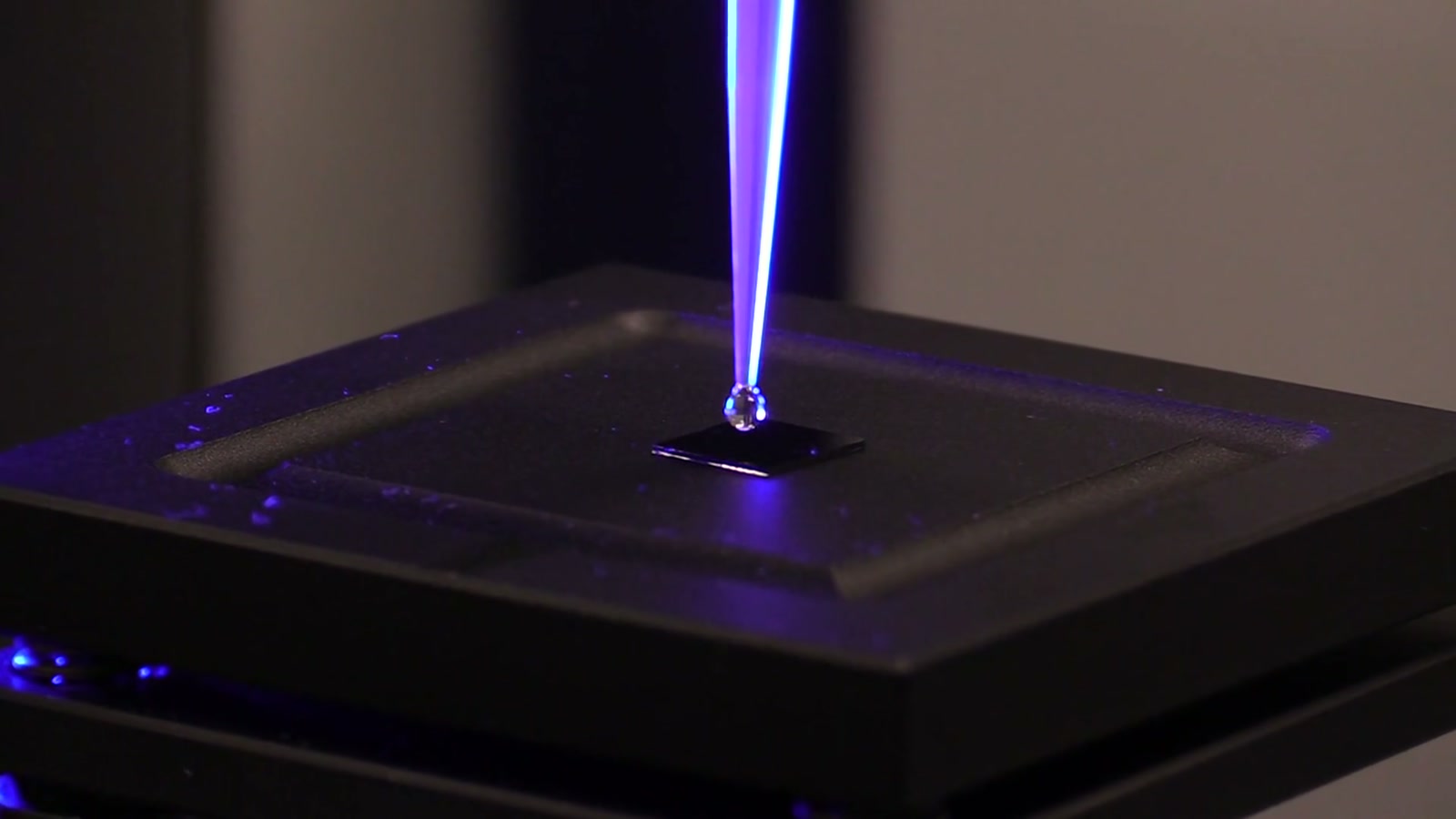
Keep the function. Understand the formulation.
Protein activity, interfaces and the smaller experiments that explain a larger formulation question.
A result needs something meaningful beside it.
A meaningful incumbent and a declared endpoint let a researcher test an explanation while a sponsor evaluates its practical consequence.
We would want the primary contrast written before the study begins. The displayed difference is proposed comparison arithmetic, not a claim of material advantage: it places a candidate and an incumbent on the same declared endpoint. Independent preparations, suitable blocking and an uncertainty estimate would determine what that contrast can support. An equal mass comparison may answer one application question; an equal useful-function comparison may answer another. The choice should be visible. The investigation should also name what would weaken the preferred hypothesis. If a response is reproduced by a simple viscosity change or a cheaper established ingredient, that finding can redirect development before a more ambitious formulation study absorbs time and material.
Make the intended comparison explicit; the scientific design must establish whether it resolves the question.
- difference between preparation meansunit of Y
- mean candidate application endpoint across declared experimental unitsdeclared common unit
- mean incumbent application endpoint across declared experimental unitssame unit
Model conditions. Same defined endpoint, appropriate independent experimental units and application conditions; uncertainty and paired/blocked design retained. Proposed arithmetic, not significance, efficacy or commercial benefit.
A student should own an intellectual contribution.
A worthwhile academic contribution should remain original and inspectable even when the proposed material direction produces a negative result.
For a prospective doctoral researcher, we would want the opportunity to develop an explanation, a measurement approach or a reproducible comparison that stands beyond a branded material. The learning could join mechanistic thinking with experimental design, data stewardship and the constraints of an application buyer. A negative or mixed result must remain a legitimate outcome. Our preferred contribution would be something another researcher can inspect: a method boundary, a comparison dataset, a validated analysis step or a falsifiable account of why a preparation behaved differently. Any academic project would need a suitable institution-approved supervisory structure and research scope. These pages offer scientific questions to discuss, rather than employment, enrolment or a promise of a thesis topic.
Enter the experiment · an interactive scientific lens
Present is not the same as active.
Inspect a deposited enzyme structure. Then ask how much of a measured signal survives the formulation background.
The data, equations and controls remain available below if 3D cannot load.
Calculated comparison · illustrative inputs
Move a control to compare the selected condition with the defined reference curve.
Separate a formulation effect from a measurement artefact before selecting a candidate.
The defined comparison
Illustrative linear-rate assay inputs with fixed blank-corrected reference 1 AU s⁻¹. Matched loading, dilution, substrate, path length and assay conditions are assumed. A negative corrected signal flags background domination; values above 100% require investigation, not automatic claims of improvement. The static reference is recombinant HRPC1A, PDB 1ATJ chain A: 306 C-alpha positions and 43 haem atoms, 2.15 Å X-ray structure. It is not a selected Bio ingredient, the assay preparation in a cited study, or a molecular-dynamics simulation.
Inspect the calculated values
Calculation grid, not measured observations. The source observation for the rheology reconstruction is stated above.
| Matched matrix blank / AU s⁻¹ | Blank-corrected ratio | Uncorrected ratio |
|---|
Building a package that survives the next conversation.
The proposed output joins scientific reasoning with a development recommendation, giving each reader the evidence needed for their next discussion.
A potential first output is an agreed investigation brief: a working hypothesis, source appraisal, preparation provenance, comparator logic, primary endpoint, analysis plan and resource estimate. A separately agreed study could add raw observations, quality checks and a recommendation about the next experiment. For a formulation sponsor, that package could explain which candidate deserves another round of work and which enabling information remains missing. For an academic team, it could create a clear route to an original methodological or mechanistic contribution. We would distinguish those audiences in the reporting. A scientific poster could communicate the question and supported finding; confidential compositions and commercially sensitive constraints would follow the agreed disclosure boundary.
Placing the practical agreement beside the scientific idea.
Materials, expertise, data and rights need an agreed route so an ambitious research question can become a feasible investigation.
The vision needs more than access to a university name. Material provenance, laboratory capacity, qualified supervision, analytical recovery, safety assessment and time must be established for the actual question. We would ask who supplies each material, who retains raw data, which background methods are brought in and what review is needed before publication. UCL’s IP and data policies provide institutional context for those discussions (UCL, 2019; n.d.g). They do not assign rights to Bio or settle the terms of a future project. Our preference is to agree publication and confidentiality arrangements early enough that a student can pursue an academically worthwhile contribution while an application sponsor can protect legitimately sensitive information.
Explore the official route on its own terms.
Official UCL guidance governs prospective study; this independent vision supplies questions to explore rather than an admissions or funding promise.
Prospective candidates should use UCL’s official course and application pages, and discuss fit with the relevant department. UCL’s general guidance asks applicants to explore suitable supervision before applying, and its current Doctoral Code of Practice sets expectations for supervision and agreed research questions (UCL, n.d.d; n.d.e; n.d.f; 2026). A conversation with Bio would be separate from admissions and funding decisions. We would support a clear scientific discussion where appropriate, without presenting this vision as an advertised studentship or a university-approved application route.
A comparison worth making.
Define the preparation, the measurable difference and the decision the evidence could change.
The question you would like to make answerable.
A well-defined application, comparator and unresolved observation give a prospective conversation something concrete to challenge and develop together.
The most useful first discussion identifies a material class or non-confidential preparation, an application environment, the current comparator and the observation that would change the next decision. A researcher may bring a method that could expose a hidden variable. A prospective student may bring a well-argued question and the skills they want to develop. An ingredient or formulation sponsor may bring an unresolved product-development constraint. We want the first milestone to be agreement that the question is scientifically worthwhile and practically resourced. A formal collaboration, sponsor commitment, supervisory arrangement or confidential exchange would follow its own approval process. That is how this vision could become a disciplined research programme with value for everyone involved.
A prospective study worth shaping
A material question with a development consequence.
An interesting biological ingredient still needs an explanation of the work it does inside a formulation. The proposed starting point is a defined function, a credible comparator and an endpoint that another team could inspect.
Connect ingredient history, a controlled formulation change and an orthogonal measurement. A prospective academic contribution could expose the mechanism; a development sponsor could supply a real benchmark or a well-characterised sample set.
What a first scope
could produce.
- A preparation-to-function hypothesis
- A comparator and method-control plan
- A sample-history and evidence record
- An independently reviewable next-experiment brief
Bring a real question.
Bring the current benchmark, the unanswered scientific question, sample or data access, and the result that would change your next development decision. An analytical partner can contribute method expertise; a researcher can challenge the mechanism; a sponsor can define the application constraint.
A possible first commission would be a bounded feasibility, protocol-design or evidence-analysis package, followed by a separately resourced experiment where warranted. Scope, costs, delivery capacity, rights and institutional participation would be agreed before work began. These are proposed opportunities, not an assertion that a laboratory service or joint programme is already available.
Shape a non-confidential research scopeIndependent VARUNÉ Bio proposal. University participation, resources, rights and deliverables remain subject to discussion and agreement. Confidential material can follow an appropriate agreement once the parties and purpose are defined.
Your contribution to the question
What could you
bring to the study?
Choose a scientific direction and the perspective closest to your work. Build a useful starting brief around the question, the measurement and the contribution that could move it forward.
The question
How does the age and history of a forming interface change a droplet’s response under defined flow conditions?
A formation-window study brief connecting adsorption history, preparation and the measurable droplet response.
Read the scientific directionYour possible contribution
Develop a mechanism, distinguish competing explanations and define an interpretable measurement.
What makes the brief useful
Phase composition, flow conditions, forming-interface age and the sampling point used to characterise the preparation.
The relevant method, an accessible preparation or dataset, and the comparison your expertise could make more informative.
The next conversation
Shape a non-confidential scientific scope, then agree resources, responsibilities and permitted outputs with the appropriate parties.
Prepared in your browser. Saving a brief sends no enquiry and creates no application. These are prospective research visions; an agreed project would require institutional assessment, resources and appropriate arrangements.
Inside the UCL research vision
Follow the
scientific question.
Explore another scientific context.
Sources and reading notes.
External work is identified below. Access notes describe the material inspected for this page; company research questions and proposed work are not presented as findings from these sources.
UCL, n.d.aUCL (n.d.a) ThAMeS: Research Themes.
Independent UCL droplet microfluidics, interfacial phenomena and complex-fluid research themes.
Scope and limitations: Institutional context only; no access, endorsement, agreement or capacity secured for Bio.
Open original sourceUCL, n.d.bUCL (n.d.b) Microfluidics: Biochemical Engineering.
Independent bioprocess microfluidic research with monitoring and scale-translation questions.
Scope and limitations: Institutional context only; no access, endorsement, agreement or capacity secured for Bio.
Open original sourceUCL, n.d.cUCL (n.d.c) Photonics Innovation Lab.
Independent nanostructure, optical-surface and light–matter research themes.
Scope and limitations: Institutional context only; no access, endorsement, agreement or capacity secured for Bio.
Open original sourceKalli et al., 2022Kalli, M., Chagot, L. and Angeli, P. (2022) Comparison of surfactant mass transfer with drop formation times from dynamic interfacial tension measurements in microchannels. Journal of Colloid and Interface Science, 605, pp. 204–213. doi:10.1016/j.jcis.2021.06.178.
Dynamic interfacial tension and adsorption/formation times in a specific silicone-oil/glycerol-water system.
Scope and limitations: External surfactants/preparation, not Bio material or a cosmetic recipe. CC BY notice inspected; no figures, fitted thresholds or raw data reused.
Open original sourceUCL, n.d.dUCL (n.d.d) Chemical Engineering MPhil/PhD: current course record.
Official course and admission route; current live page displays2027/28 and application deadlines to be confirmed.
Scope and limitations: Live page differs from older cached2026/27 rolling-application excerpts. No Bio studentship, admission or funding commitment. Dates and fees may change; no fee figures republished.
Open original sourceUCL, n.d.eUCL (n.d.e) Biochemical Engineering MPhil/PhD: current course record.
Official doctoral research route; current live page displays2027/28 and application deadlines to be confirmed.
Scope and limitations: No Bio studentship, admission or funding commitment. Avoid older cached2026/27 application assertions; verify with UCL for intended entry.
Open original sourceUCL, n.d.fUCL (n.d.f) Applying for Graduate Research Study at UCL.
Official prospective-supervisor and application preparation guidance.
Scope and limitations: Institutional context only; no access, endorsement, agreement or capacity secured for Bio.
Open original sourceUCL, 2026UCL (2026) Doctoral Code of Practice, academic year 2026/27.
Supervision, agreed research question and doctoral working arrangements; updated1October2026.
Scope and limitations: Official doctoral practice, not an agreed Bio project or a named supervisor commitment.
Open original sourceUCL, n.d.gUCL (n.d.g) Data policies and expectations.
Institutional data stewardship, attribution, preservation and bounded openness.
Scope and limitations: Actual project/funder/data-owner duties require a project-specific plan; no raw data acquired or automatically cleared for reuse.
Open original sourceUCL, 2019UCL (2019) Intellectual Property Policy.
Institutional ownership/use framework and project-agreement dependencies.
Scope and limitations: Policy page reviewed, not a legal opinion, assignment, licence or assurance of Bio ownership.
Open original source
