
 Film credits
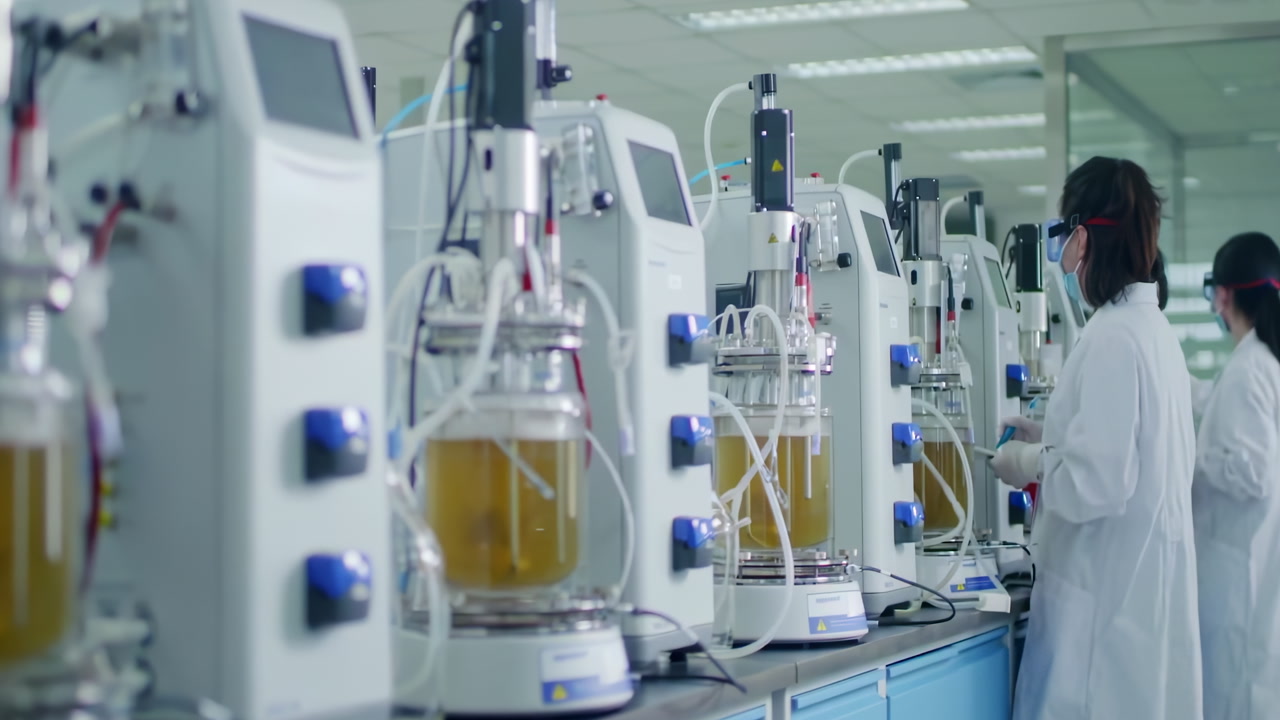
Giving the discovery a route to manufacture.
A VARUNÉ Bio research vision connecting a defined biological material, formulation behaviour and the process evidence needed for a credible development proposal.
Collaboration vision · Subject to institutional discussion and agreement.
The material has to survive the next operation
Tracing one operation from preparation to function can reveal whether a promising biological material has a credible route towards useful formulation development.
A promising fraction or biochemical preparation becomes more useful when it has a credible route through mixing, isolation, formulation and qualification. That is the purpose of this Strathclyde research vision. It asks how a defined Bio candidate could retain the behaviour that gives it value while passing through a reproducible process. The first question is deliberately narrower than building a manufacturing platform: which operation changes the material, and what measurement would explain that change?
A formulation team gains a concrete development problem; a supplier gains a route-selection question; an academic gains a potentially original preparation–process comparison. The vision centres on a research contribution that can be tested: a material change linked to a defined operation and a useful output.
(University of Strathclyde, 2026a) | (University of Strathclyde, 2026b) | (University of Strathclyde, 2026c) | (Doerr, 2020)
Examine the development decision
Giving the discovery a route to manufacture.
Open the sequence to examine what a development decision needs.
Identify the exact preparation, its source, and the properties a second laboratory must be able to reproduce.
Explanatory geometry · no simulated or measured performance
A relevant institutional research landscape
Strathclyde’s published formulation, manufacturing and analytical themes provide a defensible context for investigating a candidate’s preparation and process response.
Strathclyde’s public Pharmacy and Biomedical Sciences description includes formulation and delivery, materials and manufacture, and industrial biotechnology (University of Strathclyde, 2026a). Its chemistry-centre descriptions identify CMAC and process analytics/control research through CPACT (University of Strathclyde, 2026b). These are relevant contexts for investigating the link between material preparation and process response.
The proposed research contribution would connect a defined candidate, useful comparator and unresolved mechanism through a reproducible experimental design. Pharmaceutical research can inform a material-development method without converting a Bio ingredient proposal into a validated medicine or transferring another organisation’s capability, funding or achievements.
(University of Strathclyde, 2026a) | (University of Strathclyde, 2026b) | (University of Strathclyde, 2026c) | (Doerr, 2020)
A biological input with a preparation record
A source-authenticated biological input gives the proposed study a tangible material and keeps the experimental question attached to what is actually processed.
The university’s industrial-biotechnology research description includes microbial biology and specialised-metabolite work (University of Strathclyde, 2026c). That offers a defensible context for a vision involving a biological fraction or biochemical preparation, rather than a claim that any strain or production method is available to Bio. An actual candidate would need authenticated source and preparation identity before testing.
The first dossier could describe a recovered polymer, enzyme-containing preparation or aromatic precursor route, with analytical markers and intended function. It would state which measurements exist and which remain hypotheses. Source permissions and delivery resources would be investigated before a study is commissioned. This keeps the scientific opportunity tangible without presenting public institutional expertise as an owned production platform.
(University of Strathclyde, 2026a) | (University of Strathclyde, 2026b) | (University of Strathclyde, 2026c) | (Doerr, 2020)
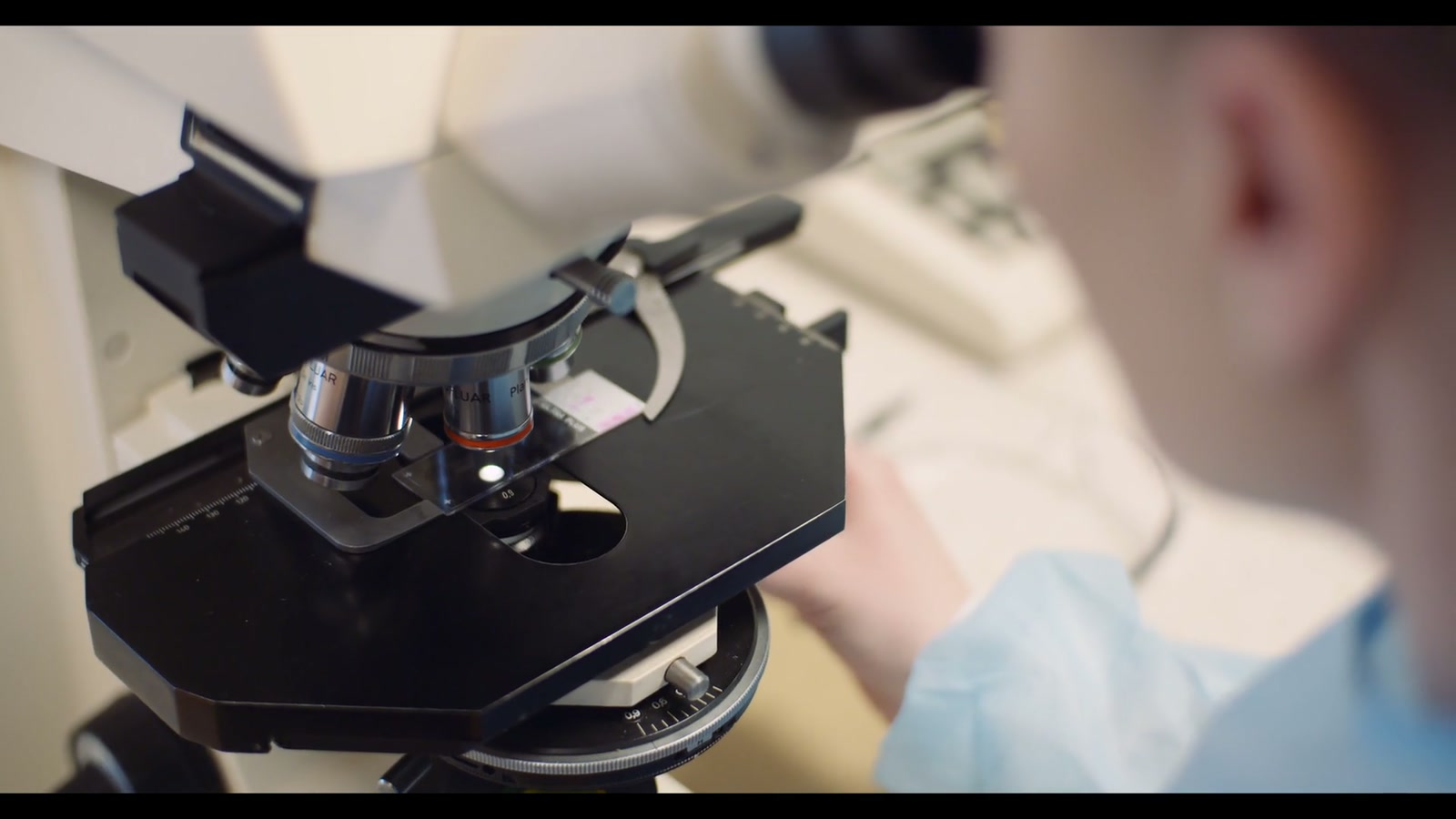
The process as part of the science.
Preparation, manufacture and analytical interpretation connect a promising material with a transferable development question.
Structure and processing need a bridge
Comparing material before and after a defined operation can reveal the structural or compositional change that explains a practical formulation difference.
An isolated material can change during drying, shear, temperature exposure or contact with a formulation matrix. The useful research question is how that change relates to a measured property and an application task. Doerr’s repository abstract describes particle structure, morphology and process-characterisation questions in pharmaceutical manufacture (Doerr, 2020). That is an independent research reference; the full thesis has not been reviewed for this vision.
A proposed Bio study could identify one operation and compare prepared material before and after it. The design should distinguish selective loss, chemical change and a measurement artefact. This can produce an original argument that helps a customer choose a route, rather than a collection of process measurements without a decision at the end.
(University of Strathclyde, 2026a) | (University of Strathclyde, 2026b) | (University of Strathclyde, 2026c) | (Doerr, 2020)
A process model needs an explicit boundary
An explicit stream and inventory boundary makes the process model useful for sampling, interpretation and the next decision about the candidate.
A simple dynamic mass balance makes the process boundary visible. The material inside a step changes through inflow, outflow and net generation or consumption of the defined component. The displayed relationship is an accounting framework with no fitted Bio parameters. It can help design sampling and identify what must be measured before a process conclusion is made.
A steady-state simplification would need evidence rather than assumption. The component could also appear in several phases, so an analytical balance may be more informative than total wet mass. A customer can then see whether an apparent improvement represents useful retained material, changed composition or an unaccounted stream. The model supports a proposed experiment; it does not prove manufacturing performance.
Dynamic accounting for the selected component within a defined operation; no steady state or Bio rate is assumed.
- Inventory of selected component inside boundarykg
- Times
- Selected-component inflow ratekg s^{-1}
- Selected-component outflow ratekg s^{-1}
- Net generation or consumption rate within boundarykg s^{-1}
Model conditions. Component and phases defined; inventory and sampling accounted for; steady state requires evidence; no product-performance inference.
(University of Strathclyde, 2026a)(University of Strathclyde, 2026b)(University of Strathclyde, 2026c)(Doerr, 2020)
Enter the experiment · an interactive scientific lens
Purity has a recovery cost.
Follow the target and impurity through an ideal wash. Reveal the trade-off before committing valuable material.
The data, equations and controls remain available below if 3D cannot load.
Calculated comparison · illustrative inputs
Move a control to compare the selected condition with the defined reference curve.
Agree a recovery–purity–function gate before choosing a purification route.
The defined comparison
An ideal perfectly mixed, constant-volume diafiltration balance. Initial target 1 g and impurity 4 g, impurity sieving coefficient 1, constant target sieving as selected. No binding, fouling, volume change or concentration-dependent transmission. The 3D compartments distinguish retained and removed mass schematically; their geometry does not set membrane area or flux. The plot is the quantitative mass balance. Functional activity and process feasibility need separate evidence.
Inspect the calculated values
Calculation grid, not measured observations. The source observation for the rheology reconstruction is stated above.
| Wash volume / diavolumes | Target recovery | Target mass fraction |
|---|
Measure the signal that changes the decision
A process signal earns its place when a reference measurement can connect it with the material change that the customer needs to understand.
A process signal becomes valuable when it relates to a defined material or quality question. It might follow a marker, particle property, moisture state or another justified observable. The proposed study would ask whether the signal is interpretable in the actual matrix and whether its response can distinguish the relevant change. A sophisticated sensor does not automatically answer that question.
The first brief would identify reference measurements, calibration needs, interference and sampling. A qualified partner would assess practical instrumentation and method capability. If a signal cannot support the intended decision, the route should use another method rather than dress a convenient trend as control. This makes analytics part of the development argument instead of a decorative dashboard.
The customer gives the process a purpose
A customer requirement gives qualification and processing evidence a commercial purpose, identifying what improvement would justify trialling the candidate against an alternative.
A recovered ingredient may need consistent rheology, colour or composition before a formulator will trial it. A biochemical preparation may need a defined output after a processing step. Those tasks can justify a scoped process comparison and an application-specific specification. The buyer should identify the current alternative and acceptable difference before the experiment begins.
The proposed commercial output is a preparation–operation–function decision package, potentially followed by a separately resourced qualified study. A result might support a different process step, a revised specification or a stop. A stronger output would identify the material property that must be controlled and the next experiment needed to connect it with practical processing. Any later evaluation, co-development or licence requires genuine evidence, capacity and rights for the actual preparation.
A research journey the reader can enter
A journey through material, operation and missing measurements can make a serious development proposal more understandable and more interesting to explore.
The page could move through section-wide material footage into an educational process scene showing named streams and the selected operation. A reader would follow the candidate’s preparation, choose an explicit model assumption and reveal which measurements are missing. A mass-balance view and a property comparison would remain distinct, because more retained mass does not necessarily mean more useful function.
The experience should connect each visual transition with a development question. No stock reactor or laboratory would be labelled a Bio or Strathclyde facility. The purpose is to make a serious proposal understandable and intriguing: what could be measured, why would it matter and which result would justify the next stage? That is more valuable than an unrelated cinematic process loop.
(University of Strathclyde, 2026a) | (University of Strathclyde, 2026b) | (University of Strathclyde, 2026c) | (Doerr, 2020)
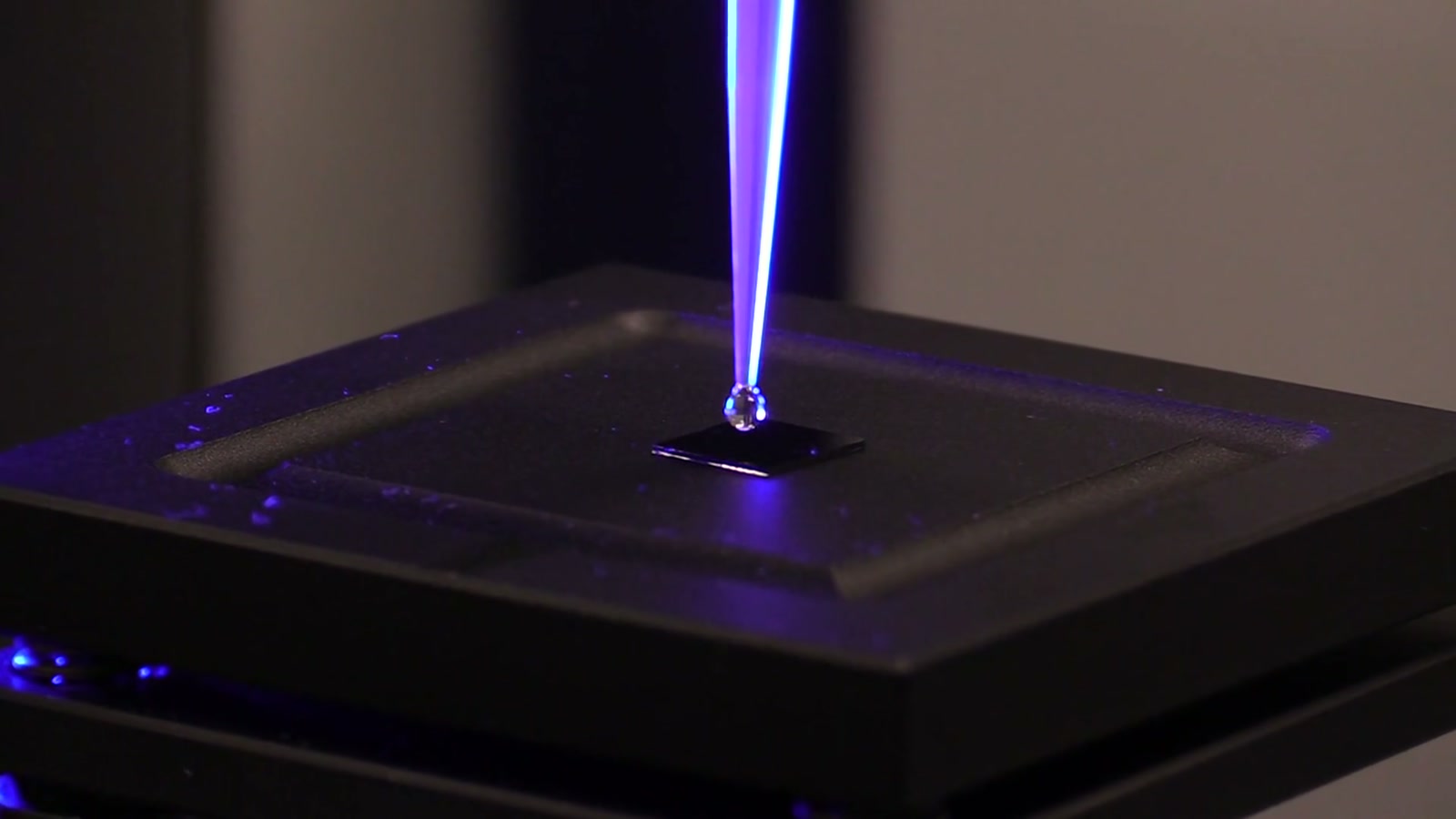
A comparison worth making.
Define the preparation, the measurable difference and the decision the evidence could change.
A proposal that can earn an agreement
A research agreement becomes worth pursuing when a concrete experiment can link a biological preparation with reproducible behaviour and a real buyer decision.
A future academic proposal would require a research contribution, qualified delivery route, material access, analytical plan and separately agreed rights, budget and publication arrangements. The study brief would make its original question and customer output reviewable before resources are committed. Public university research helps establish the scientific fit; the project contribution would come from its own material identity, controlled comparison and interpretable evidence. The next commitment should follow the smallest experiment that can resolve the proposed preparation–process link.
An informative enquiry names the candidate, intended task, problematic operation and comparator. Those inputs can turn the vision into a defensible experiment and a commercial discussion. The ambition is a reproducible original result linking biological material with useful processing behaviour. It remains an outcome to earn, with the smallest informative check protecting resources while the evidence develops.
A prospective study worth shaping
Make the next batch a better-informed experiment.
A formulation becomes a process question when mixing, separation, residence time or preparation order changes the material. A larger batch can magnify uncertainty as readily as output.
Define one preparation–process–function comparison with a recoverable material balance and a meaningful endpoint. A prospective process or analytical collaborator could help identify the variable to measure before discussing scale.
What a first scope
could produce.
- A unit-operation and identity boundary
- A controlled process-variable comparison
- A mass, function and analytical evidence plan
- A resourced next-stage study scope
Bring a real question.
Bring the current benchmark, the unanswered scientific question, sample or data access, and the result that would change your next development decision. An analytical partner can contribute method expertise; a researcher can challenge the mechanism; a sponsor can define the application constraint.
A possible first commission would be a bounded feasibility, protocol-design or evidence-analysis package, followed by a separately resourced experiment where warranted. Scope, costs, delivery capacity, rights and institutional participation would be agreed before work began. These are proposed opportunities, not an assertion that a laboratory service or joint programme is already available.
Shape a non-confidential research scopeIndependent VARUNÉ Bio proposal. University participation, resources, rights and deliverables remain subject to discussion and agreement. Confidential material can follow an appropriate agreement once the parties and purpose are defined.
Your contribution to the question
What could you
bring to the study?
Choose a scientific direction and the perspective closest to your work. Build a useful starting brief around the question, the measurement and the contribution that could move it forward.
The question
Which preparation or process variable changes the material function that a formulation needs?
A preparation–process–function experiment with a measurable endpoint and a transfer question.
Read the scientific directionYour possible contribution
Develop a mechanism, distinguish competing explanations and define an interpretable measurement.
What makes the brief useful
Material identity, unit-operation conditions, comparator, analytical method and the intended application requirement.
The relevant method, an accessible preparation or dataset, and the comparison your expertise could make more informative.
The next conversation
Shape a non-confidential scientific scope, then agree resources, responsibilities and permitted outputs with the appropriate parties.
Prepared in your browser. Saving a brief sends no enquiry and creates no application. These are prospective research visions; an agreed project would require institutional assessment, resources and appropriate arrangements.
Inside the Strathclyde research vision
Follow the
scientific question.
Explore another scientific context.
Sources and reading notes.
External work is identified below. Access notes describe the material inspected for this page; company research questions and proposed work are not presented as findings from these sources.
University of Strathclyde, 2026aUniversity of Strathclyde (2026a). Pharmacy & Biomedical Sciences research.
Current institution-described formulation/delivery, materials/manufacture and industrial-biotechnology research themes.
Scope and limitations: Independent published institutional work or institutional description. No Bio affiliation, endorsement, access or agreement is implied. No institutional logos or source photographs copied.
Open original sourceUniversity of Strathclyde, 2026bUniversity of Strathclyde (2026b). Department of Pure & Applied Chemistry research centres.
Official CMAC and CPACT descriptions; process analytics and control, formulation-related manufacturing context.
Scope and limitations: Independent published institutional work or institutional description. No Bio affiliation, endorsement, access or agreement is implied. No institutional logos or source photographs copied.
Open original sourceUniversity of Strathclyde, 2026cUniversity of Strathclyde (2026c). Microbiology and industrial biotechnology.
Current institutional description of microbial biology and specialised-metabolite research; no Bio strain access, named academic participation or project agreement.
Scope and limitations: Independent published institutional work or institutional description. No Bio affiliation, endorsement, access or agreement is implied. No institutional logos or source photographs copied.
Open original sourceDoerr, 2020Doerr, F.J.S. (2020). Measurement, optimisation and control of particle properties in pharmaceutical manufacturing processes. PhD thesis, University of Strathclyde.
Official repository abstract describing structure/morphology, characterisation and process-design questions. Full thesis not downloaded or independently assessed.
Scope and limitations: Independent published institutional work or institutional description. No Bio affiliation, endorsement, access or agreement is implied. No institutional logos or source photographs copied.
Open original source