
 Film credits
Recover the material. Preserve the question.
A prospective engineering study connecting separation, preparation quality and the application function a buyer actually needs.
Collaboration vision · Subject to institutional discussion and agreement.
A larger recovered mass can answer the wrong question.
Judge a recovery route by the material it delivers, with the molecular and application properties that made the target worth pursuing.
A separation process can recover more material while changing the distribution, residual components or structure that matters to the application. A buyer developing an ingredient needs accepted output, not simply the largest dry mass. The prospective research question is how a recovery boundary alters the preparation and whether the useful function survives.
Bio’s vision is a comparison that connects engineering observations with the material requirement. An extracellular polymer or biological fraction could be considered only once its identity and source access are credible. The incumbent route would remain a practical comparator, with the application function defined before an appealing recovery improvement becomes the centre of the story.
Examine the development decision
Recover the material. Preserve the question.
Open the sequence to examine what a development decision needs.
Identify the exact preparation, its source, and the properties a second laboratory must be able to reproduce.
Explanatory geometry · no simulated or measured performance
Locate the independent Oxford engineering context.
Connect a feed and material requirement with specialist separation questions about fouling, selectivity and an interpretable engineering comparison.
Oxford’s Membrane Science & Technology pages include bioseparation research and identify fouling and selectivity as important process questions. Its public academic listing supplies the current institutional context, without establishing availability or willingness to participate in a Bio proposal (University of Oxford, n.d.).
That context is relevant because a recovery route can be constrained by the membrane, the feed and their interactions. A prospective discussion would need to determine whether the material and research question fit an academic team’s interests and methods. The intended opening contribution is a source-linked feed, separation and function question that an engineering team can examine for scientific fit and feasibility.
(University of Oxford, n.d.) | (University of Oxford, n.d.) | (University of Oxford, n.d.)
Using a primary fouling study without moving its result.
Learn from a condition-specific fouling study why a stronger driving force may not resolve the process constraint that matters.
Peters et al. (2022) examined fouling and limiting flux in a specified osmotically assisted reverse-osmosis system. Its water/brine context is different from recovering a biological polymer, but it provides a useful methodological warning: increasing a driving condition does not automatically improve a fouling-limited process.
The prospective Bio study would need its own feed, membrane and operating record. It would not import the paper’s limiting flux or assume the same cleaning response. An original contribution could instead investigate which part of the feed or preparation creates the observed limitation, and how that mechanism relates to target recovery and the intended material properties.
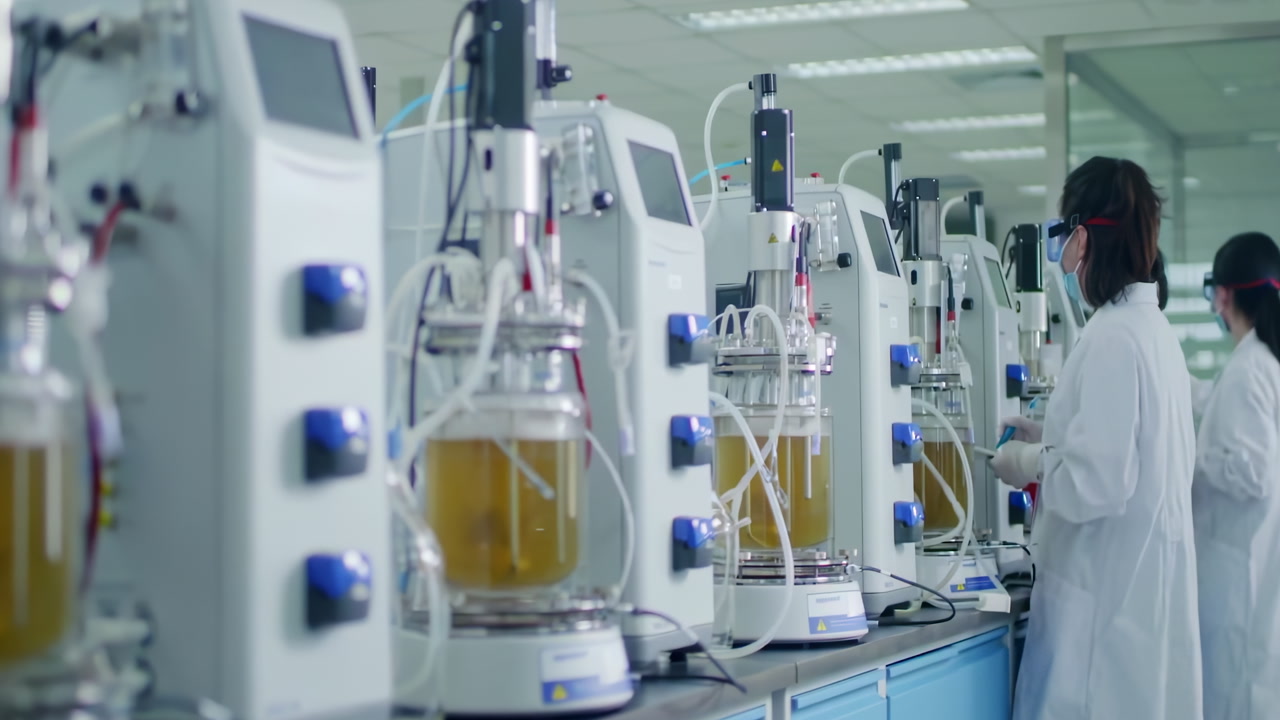
Look closer at what makes a material work.
Electrolytes, carrier identity and separation connect the interface with the preparation a formulator can use.
Distinguish throughput from target recovery.
Keep liquid throughput and target recovery separate, with the measured streams and denominators visible in the same comparison.
Volumetric permeate flux describes collected liquid per membrane area and time. Target recovery describes the fraction of the defined target retained in the chosen product stream. The two are different measurements: a route can move liquid efficiently while losing the component or distribution the buyer needs.
The displayed accounting relations make those denominators visible. A prospective researcher would retain stream volumes, target assays, sampling and hold-up before interpreting either value. Membrane area, pressure and a nominal cutoff do not establish selectivity or accepted material quality. The model chapter would organise measured inputs or explicit scenarios, with no Oxford coefficients or Bio process performance invented.
Volumetric throughput over a specified interval, not target recovery or product quality.
- volumetric permeate fluxL m⁻² h⁻¹
- collected permeate volumeL
- effective membrane aream²
- collection intervalh
Model conditions. Positive area and interval; actual collected volume; process conditions recorded. Not a constant flux or transferable performance coefficient.
Target-mass accounting on matched assays and identified streams.
- operational target recovery1
- target concentration in selected output streamg L⁻¹
- selected output volumeL
- target concentration in input streamg L⁻¹
- input volumeL
Model conditions. Positive measured input target mass; consistent assay basis. Sampling, hold-up and target transformations accounted for; recovery not purity.
Keeping the feed history inside the experiment.
Trace conditioning, dilution and lot history into separation behaviour before attributing a preparation difference to the membrane alone.
Conditioning, dilution, pH and prior clarification can change both separation behaviour and material identity. A fair comparison should specify which variables are controlled and which are deliberately investigated. If two routes start with different lots or feed states, the difference cannot be assigned to the membrane alone without an appropriate design.
A useful project could connect feed characterisation to a repeated separation response, then test whether the resulting preparation meets a defined application requirement. Molecular distribution, residual components and a relevant functional observation may need separate methods. The aim is not an oversized assay panel, but a causal or otherwise interpretable comparison that resolves the sponsor’s next choice.
Enter the experiment · an interactive scientific lens
Purity has a recovery cost.
Follow the target and impurity through an ideal wash. Reveal the trade-off before committing valuable material.
The data, equations and controls remain available below if 3D cannot load.
Calculated comparison · illustrative inputs
Move a control to compare the selected condition with the defined reference curve.
Agree a recovery–purity–function gate before choosing a purification route.
The defined comparison
An ideal perfectly mixed, constant-volume diafiltration balance. Initial target 1 g and impurity 4 g, impurity sieving coefficient 1, constant target sieving as selected. No binding, fouling, volume change or concentration-dependent transmission. The 3D compartments distinguish retained and removed mass schematically; their geometry does not set membrane area or flux. The plot is the quantitative mass balance. Functional activity and process feasibility need separate evidence.
Inspect the calculated values
Calculation grid, not measured observations. The source observation for the rheology reconstruction is stated above.
| Wash volume / diavolumes | Target recovery | Target mass fraction |
|---|
Creating a doctoral contribution that survives scale claims.
Test a mechanism and its model against a defined material requirement, creating a contribution stronger than a favourable bench result.
A significant engineering contribution could combine a mechanism-led separation experiment with a model whose assumptions are tested against the relevant observations. It might reveal a trade-off between flux, selectivity and preparation function, or establish a way to distinguish feed-driven change from membrane behaviour. A favourable bench result alone would not establish transfer to production.
Oxford’s DPhil in Engineering Science provides the independent course route to inspect for this research audience (University of Oxford, 2026). Admission, funding and supervision remain university decisions. The research brief should show how a separation mechanism, a testable model and a material requirement fit into an original project. That is the contribution Bio would want to explore with a suitable academic team.
Resource the smallest meaningful comparison.
Close the target assay and access gaps first, so a limited separation run can produce knowledge rather than more ambiguity.
The proposed feasibility stage needs a permissioned preparation, an accessible incumbent, appropriate separation equipment and a target assay capable of closing the relevant balance. Material-function testing would require its own qualified method. Trained engineering and analytical capacity should be identified before a full recovery campaign is considered.
The cheapest check might establish whether the target can be recovered and assayed consistently from the actual feed and product matrices. If that fails, a larger filtration run would produce more ambiguity rather than more knowledge. A staged scope protects research time and development resources while identifying the specific observation needed to justify an expanded academic or commercial commitment.
Agree the contribution and route to useful output.
Agree how existing methods, customer material and new observations could support publication and a separately negotiated development step.
A future collaboration would need a clear starting-material record, existing method rights and an agreement about new data, preparation outputs and potential application use. A customer’s confidential feed information should not become a public research asset by default. Publication and commercial evaluation would need a process that preserves the academic contribution and the parties’ authorised uses.
Oxford’s collaboration route and Oxford University Innovation’s licensing information describe institutional mechanisms for discussing such arrangements (University of Oxford, n.d.; Oxford University Innovation, n.d.). They do not give Bio ownership of membrane technology or a current commercial partner. The proposed value is an interpretable recovery/function comparison that could support a later, separately negotiated development step.
(University of Oxford, n.d.) | (Oxford University Innovation, n.d.)
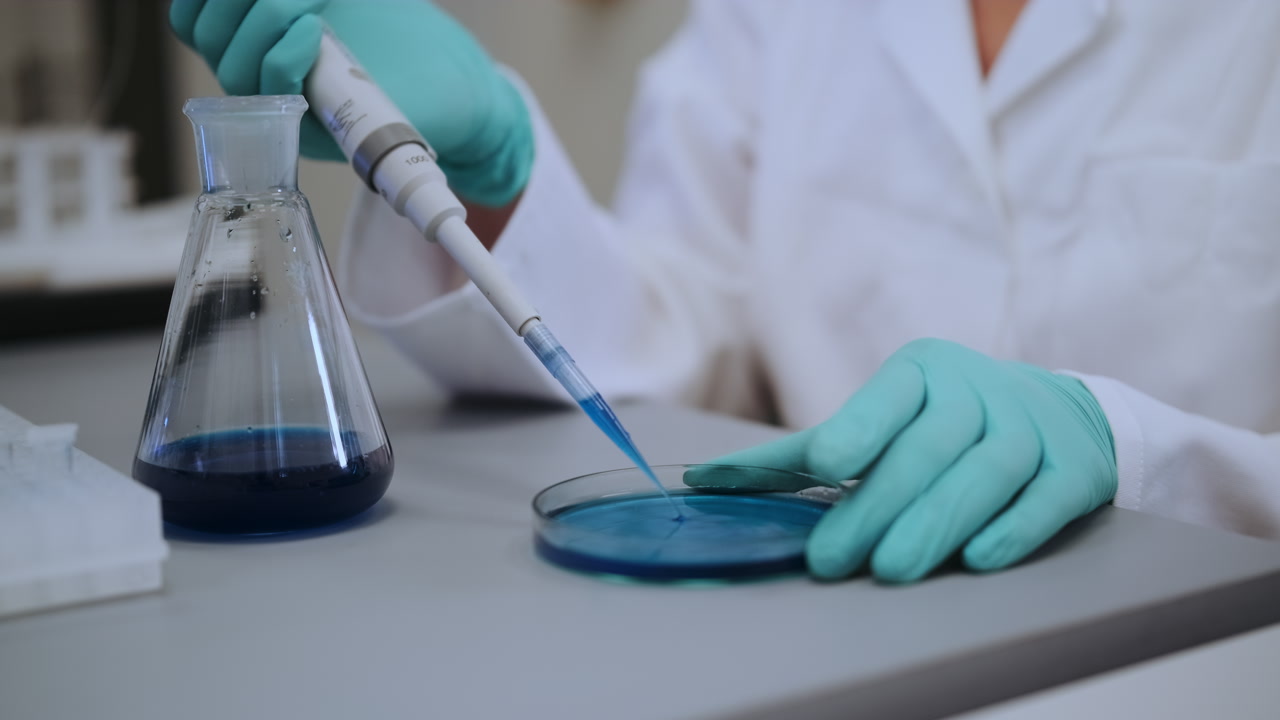
A comparison worth making.
Define the preparation, the measurable difference and the decision the evidence could change.
Let accepted output decide whether to continue.
Let a reproducible preparation and its application requirement determine whether to refine the process, expand the study or stop.
A formulator or ingredient sponsor should identify the preparation requirement, current route and the point at which recovery becomes commercially problematic. The first output could be a source-linked flow and measurement brief, followed by a limited comparison if the method and access are suitable. A negative result should identify whether the target, process or application needs revision.
A meaningful milestone would connect reproducible separation behaviour with a preparation another qualified team can evaluate. A larger process transfer would require additional evidence rather than inherit the bench conclusion. Bring the material, comparator and unresolved decision to explore whether this prospective Oxford-facing question deserves an institutional discussion and the resources needed to make it real.
A prospective study worth shaping
Recover what makes the ingredient useful.
Purity can increase while valuable target is lost or function changes. A process choice needs target identity, a material balance and an application-relevant property measured after recovery.
Compare a small number of justified separation conditions with feed, retained and removed material accounted for. Pair mass recovery with qualified identity and function readouts.
What a first scope
could produce.
- A feed and fraction identity record
- A recovery and selectivity balance
- A retained-function comparison
- A next-scale and resource-use question
Bring a real question.
Bring the current benchmark, the unanswered scientific question, sample or data access, and the result that would change your next development decision. An analytical partner can contribute method expertise; a researcher can challenge the mechanism; a sponsor can define the application constraint.
A possible first commission would be a bounded feasibility, protocol-design or evidence-analysis package, followed by a separately resourced experiment where warranted. Scope, costs, delivery capacity, rights and institutional participation would be agreed before work began. These are proposed opportunities, not an assertion that a laboratory service or joint programme is already available.
Shape a non-confidential research scopeIndependent VARUNÉ Bio proposal. University participation, resources, rights and deliverables remain subject to discussion and agreement. Confidential material can follow an appropriate agreement once the parties and purpose are defined.
Inside the Oxford research vision
Follow the
scientific question.
Return to the Oxford visionExplore another scientific context.
Sources and reading notes.
External work is identified below. Access notes describe the material inspected for this page; company research questions and proposed work are not presented as findings from these sources.
University of Oxford, n.d.University of Oxford (n.d.) Membrane Science & Technology
Current independent engineering research areas.
Scope and limitations: Independent university information; no Bio affiliation, capacity reservation, supervisor agreement or endorsement inferred.
Open original sourceUniversity of Oxford, n.d.University of Oxford (n.d.) Bioseparations Using Membrane Technology
Independent bioseparation themes including fouling/selectivity.
Scope and limitations: Independent university information; no Bio affiliation, capacity reservation, supervisor agreement or endorsement inferred.
Open original sourceUniversity of Oxford, n.d.University of Oxford (n.d.) Membrane Science & Technology: People
Current group academic listing; not willingness to supervise or collaborate.
Scope and limitations: Independent university information; no Bio affiliation, capacity reservation, supervisor agreement or endorsement inferred.
Open original sourcePeters et al, 2022Peters et al. (2022) Exploring the limitations of osmotically assisted reverse osmosis: Membrane fouling and the limiting flux
Original OARO fouling study; operating pressure alone does not establish productive flux.
Scope and limitations: Water/brine membrane study, not polymer or protein recovery proof. No article figure, dataset, empirical coefficient or quantitative improvement reused.
Open original sourceUniversity of Oxford, 2026University of Oxford (2026) DPhil in Engineering Science
Current 2027–28 research-degree route and interdisciplinary engineering themes.
Scope and limitations: Independent university information; no Bio affiliation, capacity reservation, supervisor agreement or endorsement inferred.
Open original sourceUniversity of Oxford, n.d.University of Oxford (n.d.) Collaborate on a research project
Institutional route for research-project discussion and agreement-specific arrangements.
Scope and limitations: Independent university information; no Bio affiliation, capacity reservation, supervisor agreement or endorsement inferred.
Open original sourceOxford University Innovation, n.d.Oxford University Innovation (n.d.) Licensing
Licensing and research/consultancy are distinct possible routes requiring agreement.
Scope and limitations: No Bio licence, assignment, university commitment or automatic result ownership established.
Open original source