
 Film credits
A shared diameter. A different preparation.
A prospective research question about whether particle-resolved chemical evidence can distinguish preparation changes that ensemble measurements conceal.
Collaboration vision · Subject to institutional discussion and agreement.
Size does not contain the complete identity.
Identify the chemical differences an ensemble size measurement can conceal, then decide which additional observation would make the comparison meaningful.
Two dispersions can report a similar mean hydrodynamic diameter while differing in lipid composition, interface organisation or associated material. An ensemble size estimate cannot establish that the same chemical preparation has been made. The prospective question is which additional evidence can discriminate a meaningful change without adding measurements that do not inform the decision.
For Bio, a useful output could strengthen a carrier or formulation comparison: identify what changed, determine whether the assay can resolve it and connect the difference to a defined next experiment. The academic contribution would need a specific measurement or mechanism question, with chemical identity kept separate from a claim of improved delivery, safety or biological efficacy.
Examine the development decision
A shared diameter. A different preparation.
Open the sequence to examine what a development decision needs.
Identify the exact preparation, its source, and the properties a second laboratory must be able to reproduce.
Explanatory geometry · no simulated or measured performance
Explore the independent Oxford-linked measurement context.
Frame a particle-identity question around the measurement expertise it needs, drawing on an independently attributed bionanoscience research context.
Oxford’s current profile for Professor Dame Molly Stevens describes interdisciplinary bionanoscience and work at the biomaterial interface. That provides a relevant intellectual context for a prospective discussion about materials and analytical interpretation (University of Oxford, n.d.). It does not establish that Bio has access to the group or its equipment.
A named research context should help explain the expertise sought, not imply an agreed supervisor or collaboration. The project would first need a tractable preparation and an original question that fits a prospective academic team. The preparation, measurement challenge and proposed contribution should be sufficiently clear for a potential team to assess fit, feasibility and the scope worth developing.
Keeping the original study in its multi-institution setting.
Examine how a preparation-specific study connects particle fingerprints with complementary observations, while preserving its original biological and institutional context.
Lu et al. (2026) examined specified PEG-lipid anchors using particle-resolved Raman observations and complementary corona and functional measurements in LNP systems. Stevens is one co-author within a multi-institution team, as identified in the primary publication records. The study demonstrates the importance of preparation chemistry within its own experimental context.
Its therapeutic particles, biological fluids and downstream models do not establish a Bio cosmetic function. The proposed vision would borrow the question of identity, not the pharmacological outcome. A researcher would inspect which measurement principles fit an accessible preparation and which require different methods or rights. No original spectra, quantitative results or patented apparatus are presented as Bio assets.
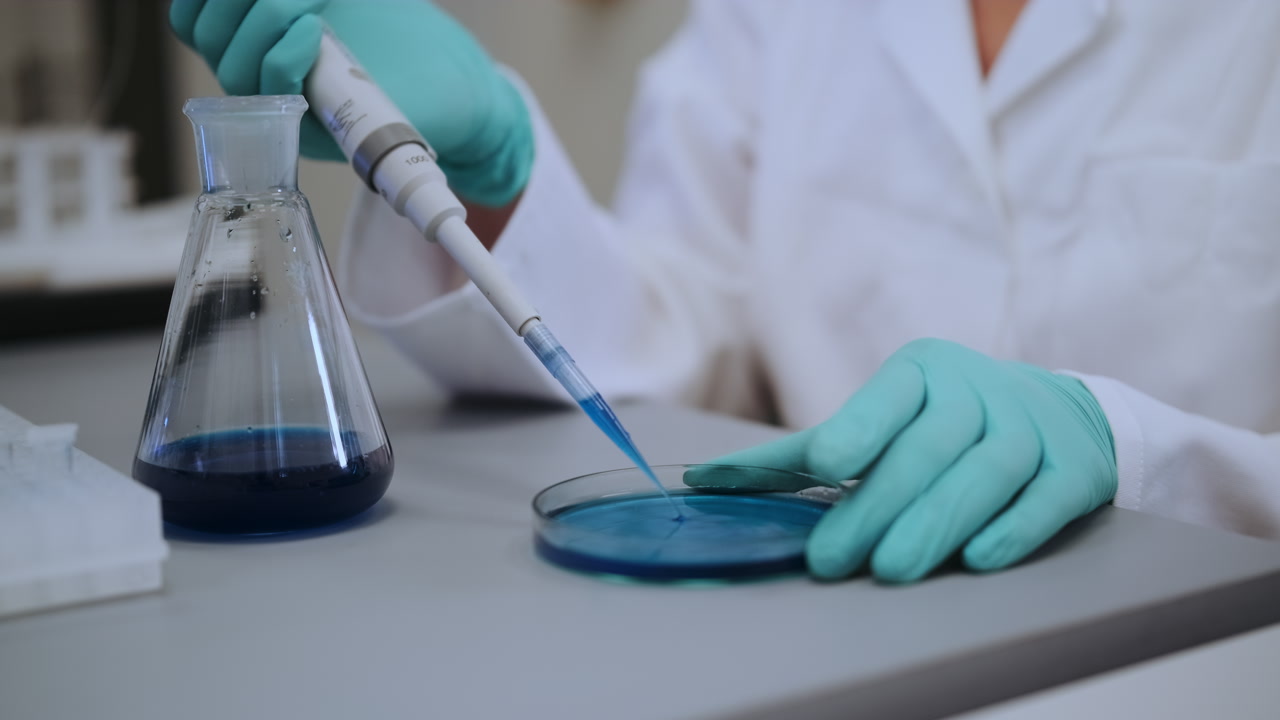
Look closer at what makes a material work.
Electrolytes, carrier identity and separation connect the interface with the preparation a formulator can use.
Making a fingerprint comparison mathematically explicit.
Expose preprocessing, reference choice and signal limitations before a spectral resemblance becomes a statement about preparation identity.
A spectral-shape similarity can be expressed through a normalised vector inner product after a documented preprocessing operation. The displayed relation compares shape on matched channels and units; it does not identify composition uniquely or quantify an ingredient’s loading. Nonzero signal vectors and compatible acquisition are required.
A reader experience could expose baseline correction, normalisation and excluded channels before showing a comparison. It should retain raw-versus-processed distinctions and avoid an unsupported similarity threshold. A high similarity may conceal important low-abundance features, while a low similarity may come from acquisition or matrix differences. Those alternatives belong in the research design before a fingerprint becomes a preparation-identity claim.
Normalised shape comparison after stated processing; not unique composition or efficacy.
- spectral-shape cosine similarity1
- processed sample response vector on matched channelsAU per channel
- processed reference response vector on matched channelsAU per channel
Model conditions. Nonzero vectors; compatible acquisition, channels, units and preprocessing. No unqualified identity threshold or composition inference. No source spectra or Bio observations supplied.
Distinguish a real difference from a method difference.
Separate a controlled material change from acquisition, matrix and handling differences with the smallest set of useful controls.
The prospective experiment could compare a controlled formulation variable with an independently prepared reference, using matched acquisition and recovery. Blank matrices, free components and relevant mixture controls may help reveal whether the signal belongs to the intended particles. Sample handling should remain part of the preparation record.
Orthogonal measurements would be selected only where they resolve an ambiguity. Size, composition assay, morphology and recovery can answer different questions, so agreement between them should not be assumed. A researcher would need to show that the method detects the change of interest within an appropriate range and that the comparison survives a plausible matrix or handling transition.
Enter the experiment · an interactive scientific lens
A few particles can dominate the signal.
Compare number fraction with a Rayleigh-limit intensity contribution. Ask what the instrument is weighting.
The data, equations and controls remain available below if 3D cannot load.
Calculated comparison · illustrative inputs
Move a control to compare the selected condition with the defined reference curve.
Specify the complementary characterisation needed before comparing carrier preparations.
The defined comparison
Ideal independent spheres with the same optical contrast, both much smaller than the illumination wavelength. Radius ratio a, number fraction fN. This is relative Rayleigh scattering, not a full DLS model, a measured size distribution or a chemical-identity test. In the schematic sample, radius ratio is geometric; the sparse visible markers do not represent the selected number percentage. The quantitative plot carries that percentage exactly.
Inspect the calculated values
Calculation grid, not measured observations. The source observation for the rheology reconstruction is stated above.
| Larger population / number % | Relative intensity contribution | Number fraction |
|---|
Building an original academic contribution around identifiability.
Investigate what a chemical fingerprint can identify, what remains confounded and how that uncertainty changes the next formulation experiment.
A substantial project could ask which preparation features are analytically identifiable, which remain confounded and how uncertainty propagates into a carrier comparison. It might develop a validated comparison workflow or reveal that a widely used summary descriptor fails for a particular material class. Either outcome could contribute knowledge if the question and evidence are rigorous.
Oxford’s DPhil in Engineering Science offers an independent research-degree context that includes biomedical and materials-related engineering themes (University of Oxford, 2026). A candidate should use the official course information for application requirements. The prospective proposal should connect analytical identifiability with an original research contribution, rather than treat an application assay as an entire thesis. That connection gives a potential supervisor a concrete question to evaluate.
Specify the preparation and analytical access.
Test whether simpler assays resolve the preparation question before an advanced particle measurement earns its place in the project.
The project needs permissioned materials, consistent lot records and a feasible method for obtaining the relevant chemical signal. Advanced particle-resolved measurements may require specialist apparatus, training and complementary expertise. A publication describing a method does not reserve access, grant a device licence or prove that the buyer’s preparation can be measured with it.
The minimum feasibility scope should identify active and carrier identity, available references, expected interference and the observation that would justify more work. The cheapest first check may be whether a simple chemical assay already resolves the key difference. A more elaborate measurement earns its place when it answers an unresolved question rather than merely producing an impressive scientific image.
Connecting publication, data and application rights.
Distinguish research methods, samples, data and a future comparison workflow so each contribution has an explicit route to authorised use.
A future academic discussion would need to distinguish external research methods, candidate preparations, measurement outputs and any original comparison workflow. Data sharing, publication and commercial evaluation would depend on the agreed project and institutional process. The current paper’s access licence does not resolve patents, apparatus permissions or rights in future customer material.
Oxford’s institutional collaboration and licensing routes provide a way to discuss these matters (University of Oxford, n.d.; Oxford University Innovation, n.d.). The prospective output could be a reproducible identity record and an application-specific interpretation, with commercial use considered separately. No Oxford technology licence or Bio ownership is implied by describing the idea on a public research page.
(University of Oxford, n.d.) | (Oxford University Innovation, n.d.)

A comparison worth making.
Define the preparation, the measurable difference and the decision the evidence could change.
Let the fingerprint change a development choice.
Use the analytical result to decide whether preparations are comparable, a process needs revision or another control is required.
A formulation sponsor may need to decide whether two preparations are genuinely comparable, whether a process change alters the intended material or whether an apparent functional difference requires another control. Those are specific decisions that can make an analytical research project commercially useful without predetermining its result.
An opening enquiry should identify the preparation variable, incumbent, existing observations and the next commitment. A first deliverable could be a source-linked identity question and method-feasibility brief. If a suitable academic team later agrees the scientific fit, funding, access and rights, that question could develop into an original study. Until then, it remains a prospective Oxford-facing research vision grounded in independently attributed work.
A prospective study worth shaping
Look beyond one particle average.
A sparse larger-particle population can carry disproportionate optical weight. Even matched ensemble diameters do not establish the same chemical or interfacial identity.
Align preparation history with a complementary identity or structural measurement and an appropriate particle-characterisation method. State sampling, dilution and weighting before comparing averages.
What a first scope
could produce.
- A preparation and sampling record
- An ensemble-weighting interpretation
- Complementary identity or structural evidence
- A functional follow-up with a defined comparator
Bring a real question.
Bring the current benchmark, the unanswered scientific question, sample or data access, and the result that would change your next development decision. An analytical partner can contribute method expertise; a researcher can challenge the mechanism; a sponsor can define the application constraint.
A possible first commission would be a bounded feasibility, protocol-design or evidence-analysis package, followed by a separately resourced experiment where warranted. Scope, costs, delivery capacity, rights and institutional participation would be agreed before work began. These are proposed opportunities, not an assertion that a laboratory service or joint programme is already available.
Shape a non-confidential research scopeIndependent VARUNÉ Bio proposal. University participation, resources, rights and deliverables remain subject to discussion and agreement. Confidential material can follow an appropriate agreement once the parties and purpose are defined.
Inside the Oxford research vision
Follow the
scientific question.
Return to the Oxford visionExplore another scientific context.
Sources and reading notes.
External work is identified below. Access notes describe the material inspected for this page; company research questions and proposed work are not presented as findings from these sources.
University of Oxford, n.d.University of Oxford (n.d.) Molly Stevens, Department of Engineering Science
Current John Black Professor of Bionanoscience, independent biomaterial/measurement themes.
Scope and limitations: Independent university information; no Bio affiliation, capacity reservation, supervisor agreement or endorsement inferred.
Open original sourceLu et al, 2026Lu et al. (2026) The Impact of Polyethylene Glycol Lipid Anchors on the Physicochemical Properties, Protein Corona, Function, and Biodistribution of Lipid Nanoparticles
Original multi-institution study linking preparation-specific PEG-lipid chemistry, Raman observations and corona analysis.
Scope and limitations: Crossref lists CC BY 4.0 for version of record from 22 June 2026; third-party/patent rights separate. No numeric dataset or figure extracted. Therapeutic LNP/serum/cell/mouse context; not Bio skincare, clinical efficacy or available technology.
Open original sourceUniversity of Oxford, 2026University of Oxford (2026) Primary publication record for Lu et al. lipid-anchor study
Author list and external study context; Stevens is a co-author within a multi-institution team.
Scope and limitations: Independent university information; no Bio affiliation, capacity reservation, supervisor agreement or endorsement inferred.
Open original sourceUniversity of Oxford, 2026University of Oxford (2026) DPhil in Engineering Science
Current 2027–28 research-degree route and interdisciplinary engineering themes.
Scope and limitations: Independent university information; no Bio affiliation, capacity reservation, supervisor agreement or endorsement inferred.
Open original sourceUniversity of Oxford, n.d.University of Oxford (n.d.) Collaborate on a research project
Institutional route for research-project discussion and agreement-specific arrangements.
Scope and limitations: Independent university information; no Bio affiliation, capacity reservation, supervisor agreement or endorsement inferred.
Open original sourceOxford University Innovation, n.d.Oxford University Innovation (n.d.) Licensing
Licensing and research/consultancy are distinct possible routes requiring agreement.
Scope and limitations: No Bio licence, assignment, university commitment or automatic result ownership established.
Open original source