
 Film credits
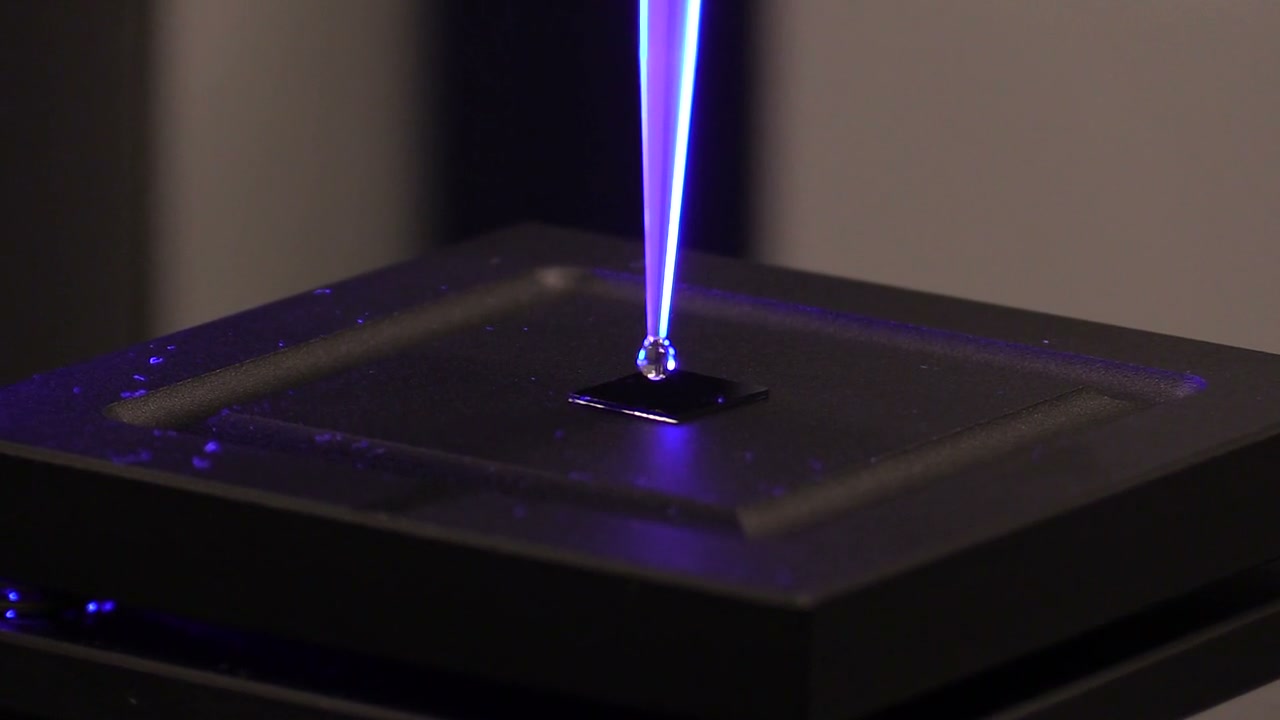
The liquid changes. The interface responds.
A prospective physical-chemistry question about how formulation-relevant molecular and ionic conditions change soft-interface interactions.
Collaboration vision · Subject to institutional discussion and agreement.
What the surrounding liquid is doing?
Discover which ionic or molecular change alters the interface, and whether the response can be separated from bulk viscosity or handling.
A material can behave differently when moved from a simple measurement liquid into a formulation. Ionic ingredients, molecular additives and confinement may change the interactions that determine whether surfaces approach, slide or remain separated. The prospective research question is which part of that environment produces the observed change and whether the mechanism can be distinguished experimentally.
For Bio, the potential value is an explanation that travels with the preparation. A formulator could use it to understand why a candidate loses or gains a function after incorporation. The academic contribution would need an interpretable interaction mechanism, not a generic compatibility label or an unsupported claim that a novel biological origin creates better performance.
Examine the development decision
The liquid changes. The interface responds.
Open the sequence to examine what a development decision needs.
Identify the exact preparation, its source, and the properties a second laboratory must be able to reproduce.
Explanatory geometry · no simulated or measured performance
Using Oxford’s independent work as an intellectual context.
Use a specialist surface-force research context to frame the expertise and experiment a material question actually needs.
The Perkin group’s official research pages describe experimental work on liquids, surface forces, osmolytes and confined interfaces. That is relevant expertise for asking how a molecular environment affects interactions (University of Oxford, n.d.). It is independent Oxford research, not a description of work commissioned or undertaken with Bio.
A prospective discussion would need to establish whether the actual material question fits the team’s scientific interests and methods. The programme should not be built around a named supervisor’s presumed availability. Its starting point is a controlled preparation and a mechanism that deserves investigation. The brief should give a prospective team enough information to judge whether specialised force measurements can resolve that mechanism.
(University of Oxford, n.d.) | (Perkin group, University of Oxford, n.d.)
Let a primary experiment challenge the simple picture.
Let preparation-specific force measurements reveal where a simple electrolyte picture stops being useful for the proposed comparison.
Fung and Perkin (2023) reported preparation-specific force measurements across ethylammonium nitrate/water systems between mica surfaces, examining concentrated-electrolyte behaviour. The work highlights the limits of automatically extending a simple dilute-electrolyte picture into a different liquid regime. Its observations do not establish a response for a Bio film or cosmetic formula.
The proposed project would retain the precise surfaces, liquid composition and measurement conditions of every source. It would ask whether a candidate’s actual regime permits a useful simplification or requires a more complete description. The paper’s restricted reuse licence also means that scientific citation does not authorise embedding its figures or adapting a dataset into commercial artwork.

Look closer at what makes a material work.
Electrolytes, carrier identity and separation connect the interface with the preparation a formulator can use.
Fit a response without inventing a mechanism.
Make the fit window, geometry and unresolved force contributions visible before assigning a physical meaning to a decay length.
A selected long-range force component can be described by an exponential separation dependence over a stated fitting window. The displayed relation is a descriptive model, with force normalised by a defined curvature radius. Its effective decay length is conditional on the surfaces, liquid and analysis; it should not automatically be called a universal screening length.
Oscillatory structural forces, hydrodynamic drainage and changing surface conditions may require other terms or a different analysis. A prospective researcher would need to distinguish those contributions before interpreting a fitted parameter. The reader experience could expose the fit assumptions and missing measurements without presenting simulated values as a recovered Oxford experiment or a Bio result.
Descriptive selected-component fit, not a universal screening or product-performance model.
- selected measured normal force at gap hN
- defined surface curvature radiusm
- normalised force amplitudeN m⁻¹
- surface separationm
- conditional effective decay lengthm
Model conditions. Positive curvature and decay length; fixed surfaces and liquid. Fit window specified; structural oscillations and drainage distinguished. No Oxford empirical coefficients or Bio observations supplied.
Design a contrast that separates composition from handling.
Change one justified composition factor and preserve the preparation history that allows an observed response to be interpreted.
A plausible first study would vary one justified liquid-composition factor while preserving the substrate, material loading and preparation history. A bulk viscosity or optical measurement could help identify whether the proposed force difference is confounded with another property. The exact controls would follow a qualified review of the method and material.
Repeat approach histories and independent preparations may answer different uncertainty questions. A project should record those distinctions rather than pool every trace into a single average. A meaningful result could show that the interface response changes reversibly, depends on a conditioning step or cannot be resolved by the chosen apparatus. Each outcome would sharpen the formulation mechanism instead of merely ranking samples.
Enter the experiment · an interactive scientific lens
The dilute reference has a boundary.
Explore screening in a dilute electrolyte. Then identify where a concentrated liquid requires different evidence.
The data, equations and controls remain available below if 3D cannot load.
Calculated comparison · illustrative inputs
Move a control to compare the selected condition with the defined reference curve.
Use the reference to sharpen the experiment, not to extrapolate a concentrated-liquid claim.
The defined comparison
Dilute 1:1 electrolyte in water at 298.15 K, relative permittivity 78.4, linearised planar Debye–Hückel reference and low surface potential. Ionic strength I in mol L⁻¹. The geometry is schematic and the potential is normalised. This model is deliberately restricted to 0.1–10 mM. It does not predict concentrated ethylammonium nitrate, ion layering, underscreening or the Oxford study’s measured forces.
Inspect the calculated values
Calculation grid, not measured observations. The source observation for the rheology reconstruction is stated above.
| Distance / nm | Dilute planar reference |
|---|
Creating a doctoral contribution beyond one favourable curve.
Build a research contribution around mechanisms, competing explanations and model limits, with a programme that extends beyond one favourable trace.
A substantial research contribution could connect an observed interaction with a controlled material or liquid variable, test competing explanations and establish the limits of a model. A single sample difference would be a starting observation, not a complete doctoral project. The project would need suitable supervision, theoretical context and a reproducible experimental programme.
Oxford’s DPhil in Chemistry is the relevant independent course route to inspect for a prospective physical-chemistry audience (University of Oxford, 2026). A prospective proposal should state the original contribution, competing explanations and feasible measurement programme. That gives a potential academic team a stronger basis for assessing research fit and the resources needed to pursue it.
Specify what must be available.
Find out whether the material can form a controlled interface before committing specialised measurements to an unworkable sample.
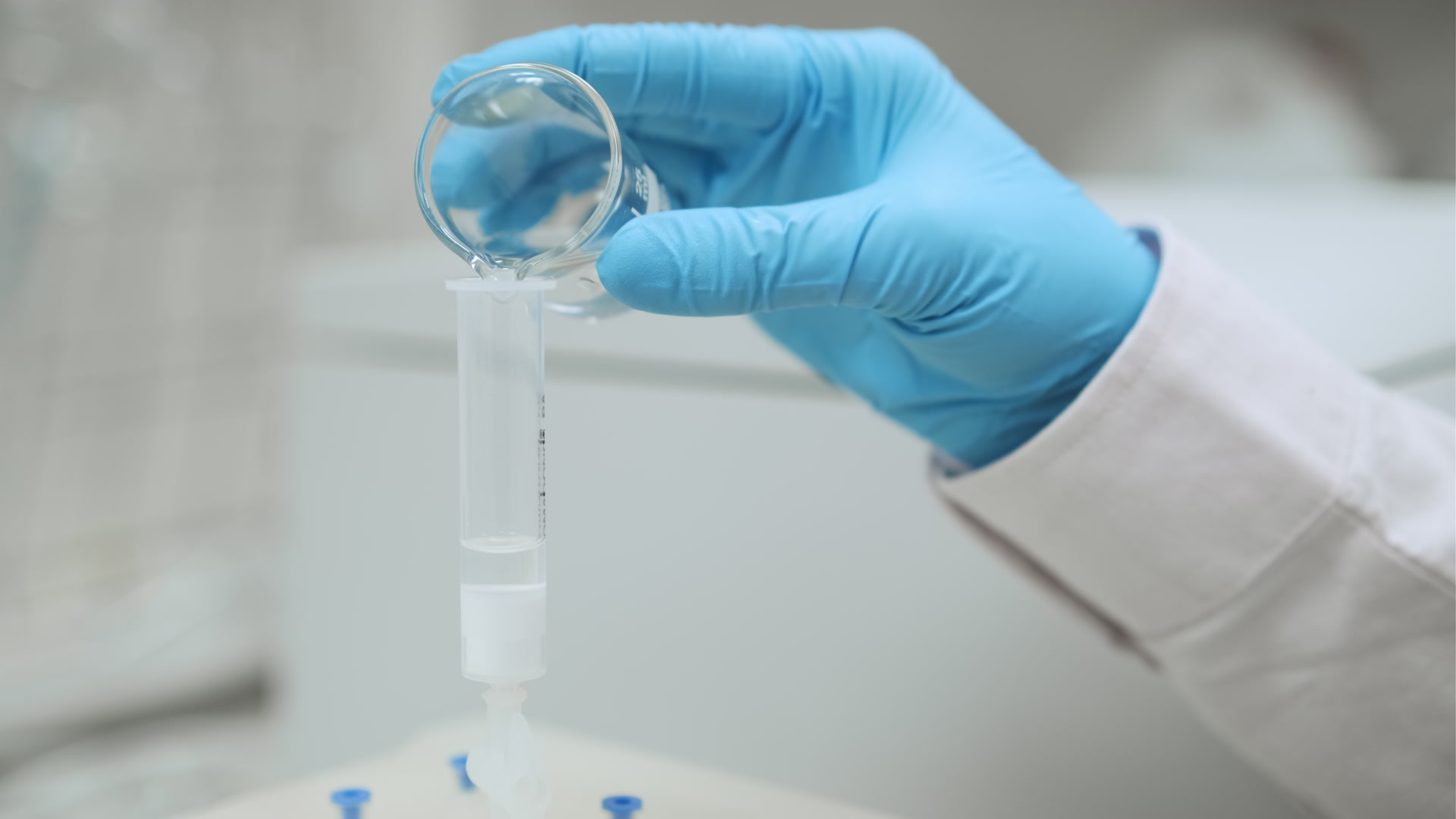
The preparation would need exact identity, relevant composition, consistent lots and a documented conditioning procedure. Specialised surface-force measurements require trained access and appropriate substrates; complementary bulk measurements require methods suitable for the same liquid. If the candidate contains complex biological material, source and analytical uncertainty may need resolving before a fine mechanistic comparison is possible.
A prospective resource record should separate essential measurements from desirable additions. The cheapest feasibility check might show whether the material can form the required controlled interface or whether its response is dominated by an unrelated preparation variable. That result can determine whether a larger academic programme is justified without promising immediate access to Oxford equipment or personnel.
Making the public contribution and rights discussable.
Create a shareable research question while identifying the preparation details, methods and future outputs that need agreed uses.
Bio could bring a non-confidential application constraint and a prospective comparator, with further preparation information shared only through an agreed process. A university team would need academic freedom to examine the mechanism and publish appropriately agreed research. Existing methods, future observations and any application-specific know-how should be identified separately.
Oxford’s official collaboration route provides an institutional starting point for discussing such arrangements (University of Oxford, n.d.). A later commercial use would need its own rights and evidence basis. The proposed value is a mechanistic comparison that informs a formulation choice; it is not a licence to the Perkin group’s methods or a declaration of company ownership over university research.
A comparison worth making.
Define the preparation, the measurable difference and the decision the evidence could change.
The observation that changes the next commitment.
Choose the interface observation that could change incorporation conditions, an application boundary or the decision to commission a comparison.
For an ingredient or beauty-development sponsor, the next decision may be whether to alter an incorporation environment, narrow an application or commission a deposited-interface comparison. The study should identify which response would make that choice clearer. A negative or unresolved result can be valuable if it reveals that the proposed mechanism is not the right route.
A useful opening enquiry would describe the formulation transition, material identity, incumbent and existing observations. The first deliverable could be a source-linked question and method-feasibility brief. If a suitable academic team later agrees the scope and resources, it could develop into an original research project. Until that point, it remains Bio’s prospective research vision for an Oxford discussion.
A prospective study worth shaping
When the dilute model stops helping.
Concentrated electrolytes require evidence beyond a dilute screening reference. A developer needs to know which liquid composition and surface conditions are relevant to the formulation.
Scope a limited composition series with defined surface chemistry and measurement geometry. A force, structural or other justified interface readout would test repeatability under conditions the application can tolerate.
What a first scope
could produce.
- A composition and surface-identity record
- A justified concentration window
- A geometry-specific interaction comparison
- A formulation-relevance and limitations brief
Bring a real question.
Bring the current benchmark, the unanswered scientific question, sample or data access, and the result that would change your next development decision. An analytical partner can contribute method expertise; a researcher can challenge the mechanism; a sponsor can define the application constraint.
A possible first commission would be a bounded feasibility, protocol-design or evidence-analysis package, followed by a separately resourced experiment where warranted. Scope, costs, delivery capacity, rights and institutional participation would be agreed before work began. These are proposed opportunities, not an assertion that a laboratory service or joint programme is already available.
Shape a non-confidential research scopeIndependent VARUNÉ Bio proposal. University participation, resources, rights and deliverables remain subject to discussion and agreement. Confidential material can follow an appropriate agreement once the parties and purpose are defined.
Inside the Oxford research vision
Follow the
scientific question.
Return to the Oxford visionExplore another scientific context.
Sources and reading notes.
External work is identified below. Access notes describe the material inspected for this page; company research questions and proposed work are not presented as findings from these sources.
University of Oxford, n.d.University of Oxford (n.d.) Susan Perkin, Department of Chemistry
Current physical-chemistry research identity and liquid/interface methods.
Scope and limitations: Independent university information; no Bio affiliation, capacity reservation, supervisor agreement or endorsement inferred.
Open original sourcePerkin group, University of Oxford, n.d.Perkin group, University of Oxford (n.d.) Electrolytes & Interfaces: Projects
Independent liquid-interface, osmolyte, confined-liquid and surface-force research themes.
Scope and limitations: Independent university information; no Bio affiliation, capacity reservation, supervisor agreement or endorsement inferred.
Open original sourceFung and Perkin, 2023Fung and Perkin (2023) Structure and anomalous underscreening in ethylammonium nitrate solutions confined between two mica surfaces
Original preparation-specific surface-force experiment and unresolved concentrated-electrolyte interpretation.
Scope and limitations: CC BY-NC 3.0 in source record. Brief scientific paraphrase only; no source figure, dataset or adapted commercial artwork. Source system is EAN/mica, not Bio formula or tissue.
Open original sourceUniversity of Oxford, 2026University of Oxford (2026) DPhil in Chemistry
Current 2027–28 course identity, research route and official application information.
Scope and limitations: Independent university information; no Bio affiliation, capacity reservation, supervisor agreement or endorsement inferred.
Open original sourceUniversity of Oxford, n.d.University of Oxford (n.d.) Collaborate on a research project
Institutional route for research-project discussion and agreement-specific arrangements.
Scope and limitations: Independent university information; no Bio affiliation, capacity reservation, supervisor agreement or endorsement inferred.
Open original source