
 Film credits
What survives the disturbance?
A proposed soft-material study connecting yielding, deformation history and recovery with a practical formulation task.
Collaboration vision · Subject to institutional discussion and agreement.
The behaviour after use can be the useful one
A material’s response after disturbance can determine whether a formulation remains useful through dispensing, handling and the interval that follows.
A formulation may need to hold shape at rest, flow during dispensing and recover an acceptable state afterwards. Those are linked but distinct behaviours. This research vision focuses on the transition between them and the role of preparation history. The buyer question is whether a candidate material can meet the required sequence, rather than whether it produces a large elastic modulus in one test.
The possible value is practical: a more robust dispensing formulation, a material that recovers within a useful interval or a clearer reason to reject a candidate. Those outcomes need application-relevant evidence. The proposed study would define that sequence clearly, then examine what structure or preparation choice gives the candidate a useful response.
Examine the development decision
What survives the disturbance?
Open the sequence to examine what a development decision needs.
Identify the exact preparation, its source, and the properties a second laboratory must be able to reproduce.
Explanatory geometry · no simulated or measured performance
A research context for the transition
Yielding and viscoelastic flow provide a scientific route to investigate how preparation changes the transition between holding structure and practical movement.
The university’s public soft-material research description includes yield and viscoelastic flow, and its modelling theme spans several relevant physical scales (University of Manchester, 2026a; 2026b). This makes the transition between solid-like response and flow a defensible academic subject to explore. Our question concerns the preparation and measurement bridge that could turn that physical context into an original candidate comparison.
The proposed contribution would be a reproducible preparation-to-response argument and a discriminating experiment. A project should identify whether a preparation changes a structural response, a measurement artefact or the practical recovery pathway. That distinction can offer original science and customer value together, while preventing an institutional name from carrying more meaning than the available evidence supports.
(University of Manchester, 2026a) | (University of Manchester, 2026b)
The open data shows why tests stay separate
Different measurement modes expose different material questions, helping readers identify the experiment needed to connect an oscillatory observation with recovery after use.
Woodbridge et al. (2025) deposited steady-flow, amplitude, frequency and parallel-superposition material. Our current secondary analysis covers the first three modes for two source specimens; the parallel-superposition files and slip workbook are not included. Readers can inspect an amplitude-dependent response without pretending that it has already answered every yielding or recovery question.
An oscillatory sweep and a post-dispensing recovery experiment impose different histories. One cannot be silently substituted for the other. The proposed study would use the public measurements to select meaningful questions and methods, then acquire the independent preparations and sequence-specific observations that the intended application requires. That is the bridge from an interesting dataset to an original comparison.
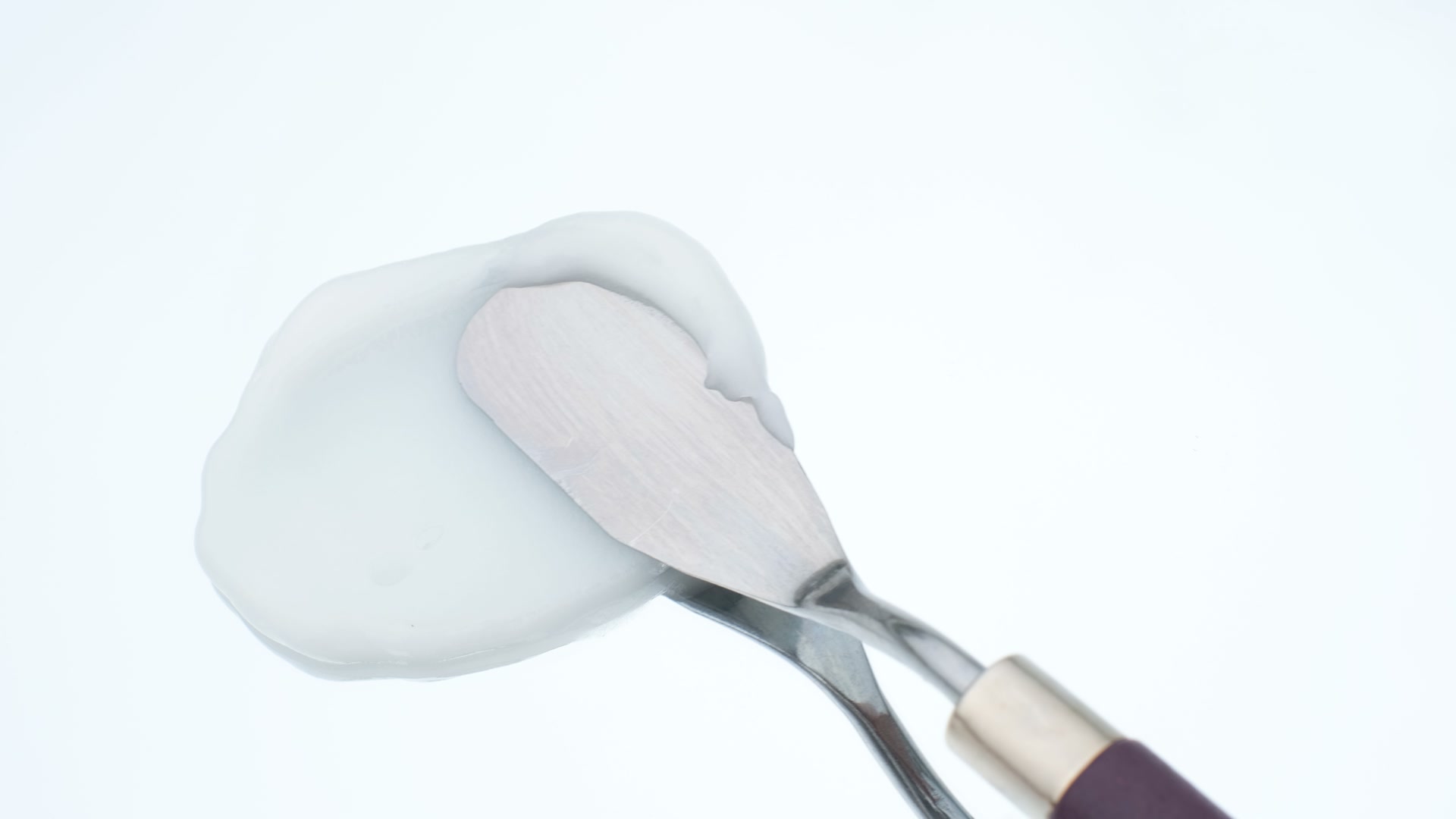
The conditions change the material story.
Measured flow, yielding and recovery connect a preparation with dispensing, spreading and rest.
Yielding needs an operational definition
A clearly defined loading and observation window turns an ambiguous yield label into a physical question a qualified experiment can test.
A material may be described as yield-stress based on a chosen experiment or model, but the practical threshold depends on how the question is asked. The proposal would define the loading, observation window and criterion before assigning a value. A model-derived parameter, an oscillatory transition and the onset of a practical flow are not automatically the same quantity.
Woodbridge’s thesis record discusses experiment–model comparison and slip-aware interpretation (Woodbridge, 2026). The current vision uses that context to ask for a method that can discriminate the candidate behaviour. It does not reproduce unreviewed thesis conclusions as a Bio result or claim that the deposited source curves supply an independently fitted yield stress.
Recovery is a time-specific comparison
A time-specific recovery ratio connects the post-disturbance response with its initial state and the process interval that matters to the customer.
A defined recovery ratio can compare a measured response after a disturbance with its initial value under the same readout condition. The equation makes the denominator and time explicit. It is a proposed measurement framework, not a validated performance score. The selected response might be a modulus or another justified endpoint; it should not be changed between samples to make a candidate appear better.
The time course matters. A material that recovers eventually may still be unsuitable for a short process interval. Conversely, complete recovery may not be required for the intended task. The customer would help define the relevant interval and acceptance criterion before a qualified experiment begins.
A proposed time-specific response ratio; report the actual preparation, disturbance and readout rather than a universal recovery score.
- Response-recovery ratio at time tdimensionless
- Response after stated disturbance at time tdeclared response unit
- Initial response under the same readout conditionsame response unit
- Elapsed post-disturbance times or declared unit
Model conditions. Same physical response and readout condition; non-zero initial value; history recorded; no unmeasured recovery curve presented as a result.
(University of Manchester, 2026a)(University of Manchester, 2026b)(Woodbridge et al., 2025)(Woodbridge, 2026)
Enter the experiment · an interactive scientific lens
Waiting time changes the answer.
A material can look recovered at one observation window and still be changing at another. Examine a defined recovery reference.
The data, equations and controls remain available below if 3D cannot load.
Calculated comparison · illustrative inputs
Move a control to compare the selected condition with the defined reference curve.
Define the disturbance, recovery window and acceptance criterion before commissioning a comparison.
The defined comparison
Illustrative Kelvin–Voigt material, modulus 200 Pa, imposed stress 10 Pa for 30 s, then complete unloading. The 3D slab deformation is magnified for visibility; it is not a molecular mechanism or measured specimen. This linear solid has no yield stress, permanent damage or plastic flow. Its exponential recovery cannot establish recovery in a yielding formulation. Use it to define the observation-window question, then measure the relevant material.
Inspect the calculated values
Calculation grid, not measured observations. The source observation for the rheology reconstruction is stated above.
| Time after unloading / s | Recovered fraction of release strain |
|---|
History can change the interpretation
Recording preparation and deformation history helps distinguish genuine material recovery from sequence effects, apparatus contributions and changes created by the test itself.
Pre-shear, rest, loading, temperature and the sequence of disturbances can alter the observed response. A proposed study would retain them as part of the preparation passport. Independent material batches and repeated measurements on one specimen would remain separate. The selected disturbance should have a reason related to dispensing, mixing or another actual application, rather than be chosen solely because it produces a dramatic graph.
Where the method changes the specimen irreversibly, later observations need that context. The study would compare candidate and benchmark using an interpretable sequence and avoid treating all points as independent results. This makes a recovery profile useful to a formulation team and reproducible enough for an academic contribution.
An experiment that can reject the preferred story
An experiment that can reject the preferred mechanism gives a sponsor a stronger decision than a demonstration designed only to look favourable.
The candidate might recover through a structural network, appear to recover because of an artefact, or meet the readout while failing the practical handling task. A useful design should be able to distinguish those possibilities. Controls, alternative geometry or a linked application observation may be needed. A qualified partner would determine the practical method and repeat structure.
The report would retain evidence against the proposed mechanism. If the candidate does not outperform a relevant comparator or requires impractical preparation, the route may stop or move to another use. That is a valuable outcome for a sponsor. It prevents the programme from spending further resources to protect a visually attractive but unsupported explanation.
Let the reader see the disturbance and the record
A controlled visual disturbance can make the missing experiment tangible, showing readers how a model would eventually be replaced by measured evidence.
A full-width educational material scene could show a controlled disturbance, then connect elapsed time with a clearly labelled recovery model. The observed data view would remain separate and would not animate unmeasured recovery as a result. Readers could inspect preparation history, choose the relevant readout and see how the acceptance question changes with the process interval.
The visual journey should make the missing experiment exciting and concrete: what would need to be measured to replace the model with evidence? That provides a purposeful conversation for a customer or academic partner. The experience is a research explanation, not a virtual proof that a Bio formulation possesses the desired network or recovery property.
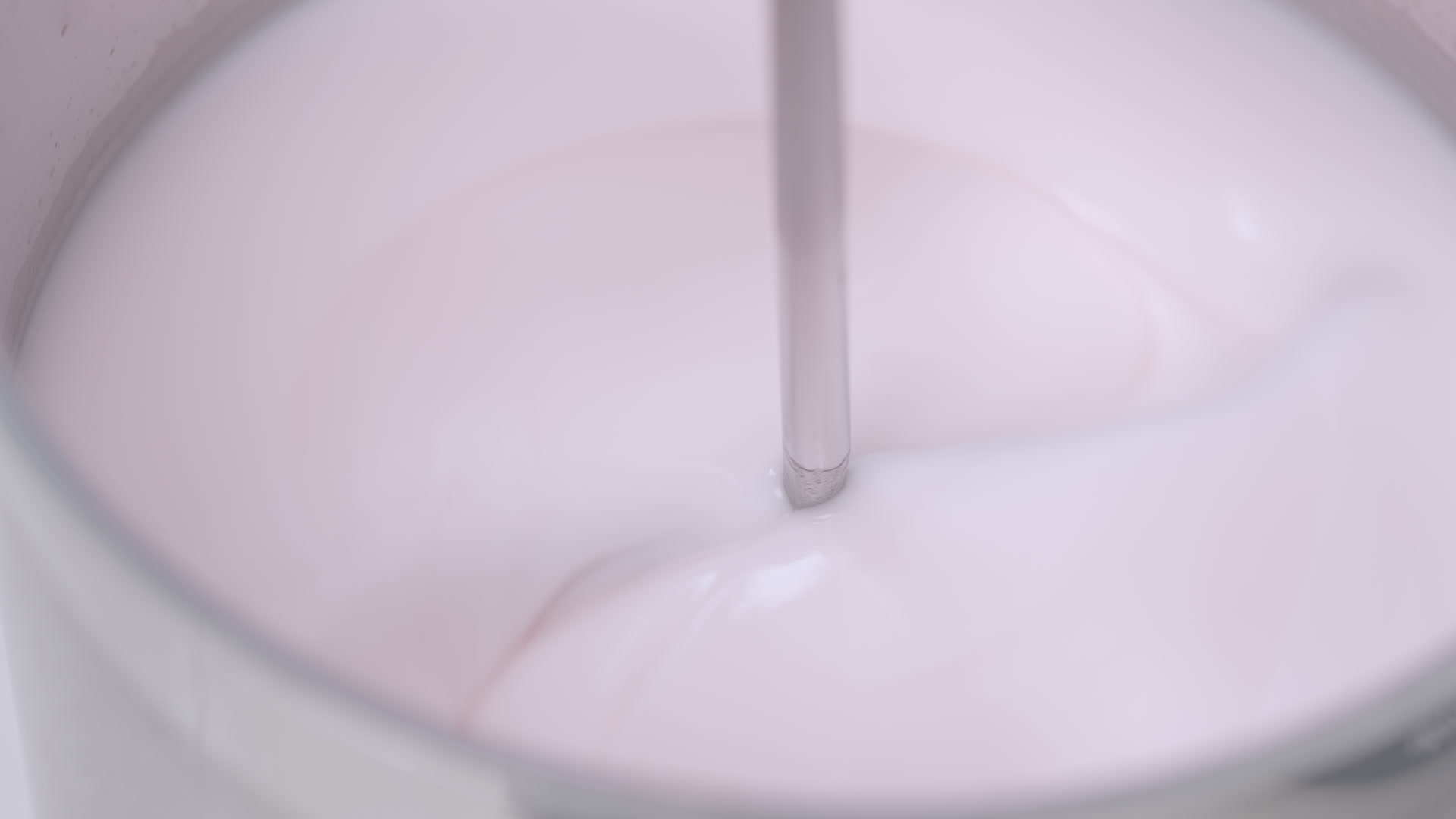
A comparison worth making.
Define the preparation, the measurable difference and the decision the evidence could change.
A next step worth discussing
A customer’s required post-disturbance state can anchor an original material study with a concrete deliverable and a scientifically justified next step.
An informative enquiry describes the intended disturbance, required post-disturbance state, current material and the time window that matters. We could then explore a scoped evidence brief and a qualified preparation–recovery study. The deliverable would be an interpretable comparison with an application decision, rather than a generic material profile. Any academic agreement, budget, access and rights would need to be established separately.
The ambition is a reproducible contribution that a formulation team can use and a researcher can challenge. It remains a goal to earn. The strongest proposal explains what the experiment could change and why that change would matter to a buyer. A useful result could improve material selection, reveal the required processing interval or expose a limit that directs development towards a better candidate.
A prospective study worth shaping
Test the material after the disturbance.
Recovery depends on disturbance, waiting time and the property used to judge it. Comparing percentages without these conditions can hide the behaviour a customer needs.
Define an application-relevant disturbance, observation window and recovered-response endpoint. Independent preparations and control histories would distinguish repeatable material behaviour from protocol artefacts.
What a first scope
could produce.
- A disturbance and waiting-time protocol
- A preparation and control-history record
- A recovered-response endpoint and repeat basis
- An application-relevance and next-experiment brief
Bring a real question.
Bring the current benchmark, the unanswered scientific question, sample or data access, and the result that would change your next development decision. An analytical partner can contribute method expertise; a researcher can challenge the mechanism; a sponsor can define the application constraint.
A possible first commission would be a bounded feasibility, protocol-design or evidence-analysis package, followed by a separately resourced experiment where warranted. Scope, costs, delivery capacity, rights and institutional participation would be agreed before work began. These are proposed opportunities, not an assertion that a laboratory service or joint programme is already available.
Shape a non-confidential research scopeIndependent VARUNÉ Bio proposal. University participation, resources, rights and deliverables remain subject to discussion and agreement. Confidential material can follow an appropriate agreement once the parties and purpose are defined.
Inside the Manchester research vision
Follow the
scientific question.
Return to the Manchester visionExplore another scientific context.
Sources and reading notes.
External work is identified below. Access notes describe the material inspected for this page; company research questions and proposed work are not presented as findings from these sources.
University of Manchester, 2026aUniversity of Manchester (2026a). Physics of fluids and soft matter.
Current institutional description of dynamics, nonlinear behaviour, yield/viscoelastic flows and quantitative experiment–modelling research.
Scope and limitations: Independent published institutional work or institutional description. No Bio affiliation, endorsement, access or agreement is implied. No institutional logos or source photographs copied.
Open original sourceUniversity of Manchester, 2026bUniversity of Manchester (2026b). Multiscale modelling.
Current research description spanning molecular, coarse-grained and continuum modelling with personal-care and process relevance.
Scope and limitations: Independent published institutional work or institutional description. No Bio affiliation, endorsement, access or agreement is implied. No institutional logos or source photographs copied.
Open original sourceWoodbridge et al., 2025Woodbridge, A., Juel, A. and Pereira Da Fonte, C. (2025). Rheological Characterisation of a Carbopol Microgel and a Commercial Body Lotion: Steady, Oscillatory, and Parallel Superposition Measurements. University of Manchester Figshare. DOI: 10.48420/29376416.v1.
Named external preparations, measurement types and deposited raw observations. Official API licence checked CC BY 4.0. Current Bio secondary analysis covers six steady/amplitude/frequency sweeps, 392 rows, not the parallel-superposition/slip files.
Scope and limitations: Independent published institutional work or institutional description. No Bio affiliation, endorsement, access or agreement is implied. No institutional logos or source photographs copied.
Open original sourceWoodbridge, 2026Woodbridge, A. (2026). Rheological and proto-rheological flows of yield-stress fluids. PhD thesis, University of Manchester.
Official thesis record and abstract; experiment–model and slip-aware interpretation of yield-stress systems. Full thesis was not acquired or reviewed.
Scope and limitations: Independent published institutional work or institutional description. No Bio affiliation, endorsement, access or agreement is implied. No institutional logos or source photographs copied.
Open original source