
 Film credits
One pack. Different sample locations.
A proposed spatial sampling brief for wipes, soaked substrates and heterogeneous cosmetic formats.
Proposed programme | Study scope, qualified delivery and funding to be agreed.
Making the represented location visible.
Location determines the represented composite sample.
A soaked substrate combines a material, liquid phase, packing geometry and storage history. A sample from one location may not represent every part of a pack. The buyer’s decision is whether the available observations address the proposed formulation or substrate revision. Bio’s candidate brief would identify the sampling unit and location before interpreting the result. It would distinguish the liquid preparation from the composite wipe and the pack-level question. The commercial output is a location-aware study rationale that a qualified laboratory can quote against, not a declaration of product conformity or a generic microbial claim for every nonwoven format.
Examine the development decision
One pack. Different sample locations.
Open the sequence to examine what a development decision needs.
Identify the exact preparation, its source, and the properties a second laboratory must be able to reproduce.
Explanatory geometry · no simulated or measured performance
Retain substrate and liquid identities separately.
Separate substrate and liquid reporting bases.
The record should identify the substrate grade, liquid composition class, loading basis and relevant processing sequence. A substrate revision can alter retained liquid or recovery without changing the bulk formula. A liquid revision can change how the composite sample is prepared for analysis. The proposed comparison would state which part is being investigated and which remains matched. If a sample is weighed as a composite, the reported basis should remain explicit. A value per wipe, per mass of composite and per mass of recovered liquid are different descriptions. Converting between them requires appropriate measurements rather than assumptions made for a cleaner chart.
Using the current official matrix context.
The current matrix method provides a starting context.
FDA BAM Chapter 23’s July 2024 edition includes wet-wipe preparation and attention to sample locations (Huang et al., 2024). The proposed brief would refer a qualified laboratory to the current method rather than reproduce a protocol or invent a universal plan. ISO 17516 provides a separately licensed microbiological-quality standard context (ISO, 2014). The sponsor would still need an appropriate product-specific assessment and method scope. Bio’s contribution would be the application question, sample hierarchy and missing information. That allows existing analytical practice to be connected to the buyer’s actual revision rather than treated as an automatic answer to every pack-level question.

The formula changes the observation.
Investigate the relationship between formulation, phase availability, sample recovery and interpretable microbial evidence.
Explain the loading basis.
Loading is a preparation descriptor.
The expression below defines liquid mass relative to a recorded dry substrate mass. It is a preparation descriptor, not a measure of free liquid, water activity or microbial burden. A suitable weighing and conditioning method is needed if the dry basis changes with moisture or extraction. The proposed frontend could show where mass is recorded and how different reporting bases relate. Actual values would require inspected data and methods. The scientific purpose is to identify whether a substrate or process revision changes a relevant preparation property before attributing a microbial result to the formula or claiming performance across the pack.
Separate substrate and liquid bases before making a location or formulation comparison.
- Defined liquid/substrate loadingg g⁻¹
- Recorded retained liquid mass under methodg
- Recorded dry substrate massg
Model conditions. Conditioning and weighing method recorded. Not all retained liquid is freely available. Preparation descriptor only, not microbial burden or protection. Dry substrate mass must be positive and retained-liquid mass non-negative.
Change the conditions · examine the reference
More readings—or more evidence?
Change the independent preparations and repeat readings. See which source of variation the next measurement can actually reduce.
The data, equations and controls remain available below if 3D cannot load.
Defined model · illustrative conditions
Points are discrete design calculations, joined for comparison. No experimental observations or confidence intervals are shown.
Fund the preparation or repeat that addresses the uncertainty relevant to the development decision.
The defined comparison
Balanced random-intercept scenario with between-preparation SD 10 response AU and within-preparation SD 6 response AU. Preparations are independent; residual readings are independent with common variance. The naive estimate treats all BR readings as independent and ignores clustering. The 3D groups depict a design count, not measured sample values. No confidence interval, power or precision guarantee is calculated. Drift, pairing, operators, serial correlation and unequal group sizes need additional structure.
Inspect the calculated values
Calculation grid, not measured observations. Inputs and assumptions are stated above.
| Independent preparations / count | Hierarchical design | All readings treated as independent |
|---|
A location comparison with an application reason.
Choose sampling locations for an explicit reason.
A proposed study might compare justified pack locations for the incumbent and revised composite preparation. It should state why those locations represent the development question and whether independent packs are included. Repeated subsamples from one pack do not create independent production lots. If compositing is used, the analysis should explain what spatial information is lost. A qualified team would decide the suitable sampling and recovery method. Bio could organise the comparison logic and the sponsor’s decision criteria. The first milestone might be a clearer sample plan or a physical-loading comparison before a larger microbial investigation is warranted.
Keeping interface analogies in their own domain.
Interface analogies need format-specific checks.
The 2016 topography study shows that a defined surface geometry can affect bacterial observations in its model setting. It does not establish behaviour on a particular wipe or grant Bio a substrate technology. Its useful role is to motivate careful description of the interface and preparation. A candidate study should preserve substrate architecture, liquid conditioning and sample-processing context. If a recovery difference appears, the programme should investigate whether the method or retained material explains it before assigning a biological effect to the substrate. That makes an advanced materials discussion relevant to a commercial format without overextending an external result.
Deliver a format-specific commissioning record.
Make the pack-level question quotation-ready.
The proposed output would contain the pack and sample hierarchy, substrate and liquid identities, loading basis, location rationale and qualified study request. A manufacturer could use it to compare analytical proposals for a specific revision. A substrate supplier could use it to identify what application evidence is missing. Commercial delivery and terms would be agreed only with appropriate expertise and resources. The record would preserve method limitations and location-specific findings. A later dataset could become a valuable evidence collection if its rights and preparation relationships are clear, but it would not automatically support every substrate grade or product category.
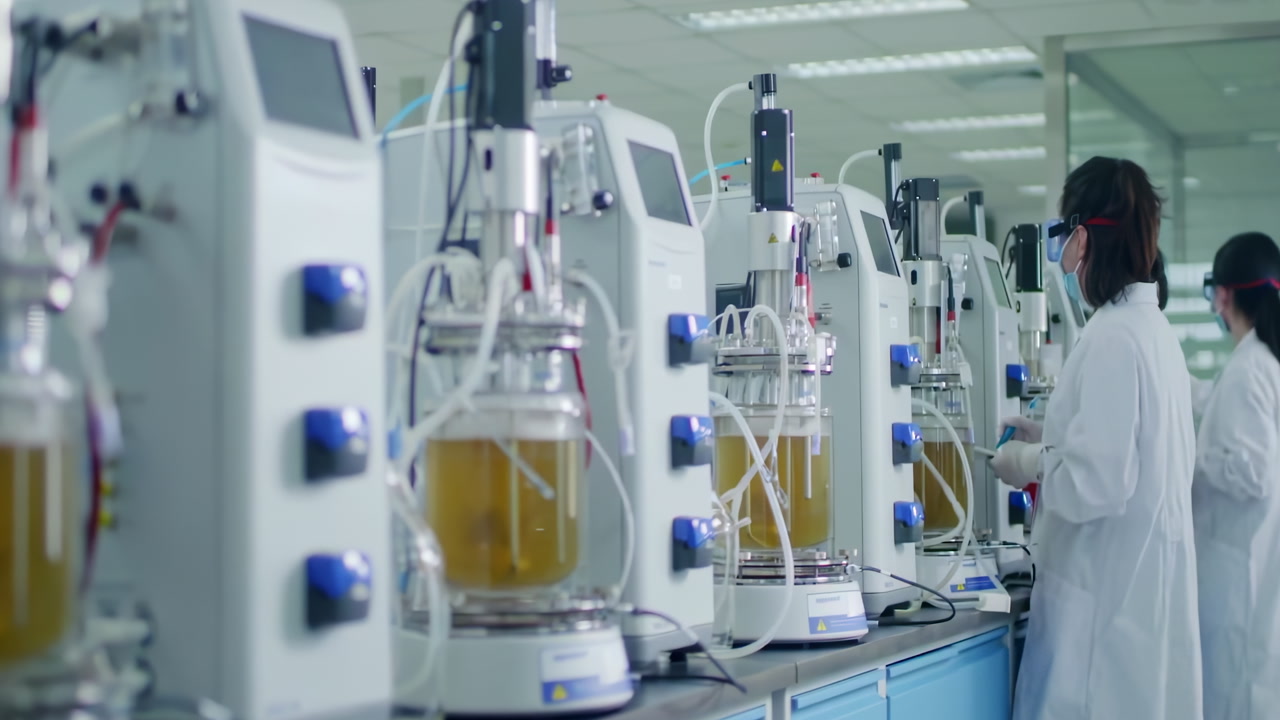
The next proposed comparison.
Substrate–liquid sampling map and qualified method-suitability brief
The pack decision and the sampling concern.
Keep the conclusion at the sampled level.
An enquiry should describe the format, revised component, available reports and location uncertainty. A non-confidential diagram can establish the first question before proprietary formula or production data are exchanged. The next milestone would be a qualified sampling and recovery rationale that aligns with the sponsor’s decision. If the current observations only describe one composite sample, the claim should remain at that level until additional evidence is obtained. A commercial stream in spatially heterogeneous formats is valuable when it makes sampling and interpretation more useful. The programme should therefore prioritise a real pack-level uncertainty rather than add complexity that does not change the next action.
Microbial material systems · Proposed development discussion
A development path
for this research.
Does the sample plan represent the preparation and location relevant to the decision?
The people this could serve.Wipe manufacturers, substrate suppliers and application microbiologists.
The decision behind the project.
Your intended application, present alternative and the constraint behind “One pack. Different sample locations.”. A useful starting point is the change that would justify another development step.
A proposed scope centred on substrate–liquid sampling map and qualified method-suitability brief.
Agree the comparison, acceptance basis and responsible expertise before discussing a paid package.
Specialist methods and a defined contribution.
Bring relevant analytical or experimental expertise, a comparator suggestion, and the conditions under which your method could resolve this question.
A jointly scoped proposal could connect your contribution with substrate–liquid sampling map and qualified method-suitability brief.
Define contributions, required access, independent preparations and permitted outputs before work or protected information is shared.
The commercial purpose of the next milestone.
Bring the application or asset thesis, the buyer you expect to value it, and the scientific or commercial uncertainty that must be resolved before another commitment.
The proposed decision record would connect the buyer question with substrate–liquid sampling map and qualified method-suitability brief. It would identify what a subsequent comparison needs to demonstrate.
Demand, development cost, resources, rights and a decision-changing milestone would need examination. No financing terms or investment outcome are represented here.
What a useful comparison
would record.
- Define the record needed for “Making the represented location visible” and identify what is currently missing.
- Check the evidence behind “Retain substrate and liquid identities separately” against the proposed buyer decision.
- Retain the applicable source links, versions, method limits and the exact evidence needed before another commitment.
What the proposed
brief could leave behind.
- Substrate–liquid sampling map and qualified method-suitability brief
- A preparation, comparator and endpoint record tied to this question.
- A source-linked account of the evidence gaps, study assumptions and next review point.
The proposed discussion brief
A brief you
can take away.
Use non-confidential notes to connect this topic with your own decision. Entries stay in this browser tab; saving creates a text file on your device. Nothing is submitted.
Scoped decision brief, qualified external study design or versioned evidence collection; commercial terms and delivery subject to agreement.
Notes are optional. The brief includes this page’s proposed question and public source links.
Proposed scope; resources, methods, rights and delivery terms would be agreed before work. Begin with non-confidential information.
Sources and reading notes.
External work is identified below. Access notes describe the material inspected for this page; company research questions and proposed work are not presented as findings from these sources.
FDA, n.d.Huang, J. et al. (2024) Bacteriological Analytical Manual, Chapter 23: Methods for Cosmetics. July edition. FDA
Matrix-specific sampling, enumeration, enrichment and identification framework.
Scope and limitations: Official analytical method; not a Bio result, service approval or substitute for jurisdiction-specific product safety assessment.
Open original sourceISO, 2014ISO (2014) ISO 17516: Microbiological limits
Published standard identity and microbiological-quality scope.
Scope and limitations: Catalogue abstract only; licensed full text not acquired. Official record indicates revision in progress. No numerical criteria reproduced.
Open original sourceGu, H. et al, 2016Gu, H. et al. (2016) How Escherichia coli lands and forms cell clusters on a surface: a new role of surface topography. Scientific Reports, 6, 29516
Defined PDMS surface geometry affects attachment and cluster behaviour under study conditions.
Scope and limitations: External species/surface model; no antimicrobial, safety or commercial coating claim.
Open original source