
 Film credits
Water content is a quantity. Water activity is a condition.
A proposed development comparison for distinguishing how much water is present from the microbial environment it can support.
Proposed programme | Study scope, qualified delivery and funding to be agreed.
Do not let an ingredient percentage answer the wrong question.
Choose the water property that answers the question.
A formulation can contain little added water while taking up moisture during processing or use. Another can contain substantial water whose physicochemical environment differs because of dissolved components. The question for the development team is which water-related property matters to the proposed microbial comparison. Total water content and equilibrium water activity should be recorded as different measurements. Bio’s candidate brief would connect those measurements to the actual preparation and intended handling. It would help a sponsor decide whether to commission moisture characterisation, a method-suitability study or a microbiological comparison, without using one number as a shortcut to a safety claim.
Examine the development decision
Water content is a quantity. Water activity is a condition.
Open the sequence to examine what a development decision needs.
Identify the exact preparation, its source, and the properties a second laboratory must be able to reproduce.
Explanatory geometry · no simulated or measured performance
Defining the sample’s water history.
Humidity and handling create different preparations.
The record should describe storage conditions, sample preparation, container opening, equilibration and measurement temperature. A powder exposed to humidity and an unopened bulk sample are not necessarily comparable. An oil-based product sampled after consumer wetting presents a different question again. The proposed analysis would separate the manufactured preparation from deliberately altered development samples. It would preserve the water-addition basis and the time between alteration and measurement. That makes any later observation useful for formulation decisions. Without a reproducible water history, a difference between lots or methods may be impossible to attribute to the material itself.
Using growth research without importing a threshold.
Growth mode and time prevent a universal shortcut.
Hamill et al. (2020) investigated different organisms and stresses, showing that lag and growth-rate responses cannot be collapsed into one universal measure. This supports a careful choice of observation, not a cosmetic safe-water threshold. The proposed brief would ask which organisms and growth modes the planned study actually represents. A fungal germination observation is different from a bacterial colony count, and a short observation window may miss later behaviour. The official ISO 17516 catalogue identifies microbiological-quality scope; it does not make an untested low-water formula low risk (ISO, 2014). Qualified product-specific assessment remains a separate decision.

The formula changes the observation.
Investigate the relationship between formulation, phase availability, sample recovery and interpretable microbial evidence.
Explain the equilibrium quantity.
Equilibrium activity needs a temperature basis.
The ratio below defines the conceptual vapour-pressure basis for water activity at the same temperature. It is dimensionless and should be measured with an appropriate calibrated method for the actual sample. It does not describe all local environments in a heterogeneous formula, nor does it directly predict survival or growth of every organism. A model experience could let a reader distinguish content, activity and observation time without inventing measured values. The useful development question is whether a changed humectant system or moisture history alters the measured water environment enough to justify a specific next comparison, not whether an attractive low value guarantees protection.
A formulation water-state comparison must preserve temperature and sample history; activity does not equal water mass fraction.
- Water activitydimensionless
- Equilibrium water vapour pressure over samplePa
- Vapour pressure over pure water at same temperaturePa
Model conditions. Equilibrium and identical temperature. Thermodynamic definition, not a microbial growth model. Heterogeneous local environments and kinetic moisture uptake require separate study. Pure-water reference vapour pressure must be positive at the recorded temperature.
The material comparison before the instrument.
Match the comparison to the actual revision.
A humectant revision could be compared with its incumbent under the same sample handling and measurement temperature. A powder format might need a controlled humidity-conditioning series and a stated equilibration basis. A wet-use balm might require a defined water-contact scenario rather than a dry unopened comparison. These are different experiments. The sponsor should decide which change would affect continued development and what uncertainty is acceptable. Bio could scope the comparison logic and evidence needs, while a qualified laboratory would select the method and reporting requirements. Any microbial evaluation would remain separately justified by the product and use context.
Retain sample recovery as its own question.
Physicochemical and microbial observations stay distinct.
Water-state measurements do not make microbial enumeration automatically suitable. The sample still has to be dispersed, transferred and interpreted in an appropriate method. FDA’s cosmetics analysis includes preparation context for different matrices (Huang et al., 2024). A proposed low-water study should record whether adding diluent changes the matrix substantially and whether recovery remains interpretable. That step matters when a material is difficult to wet, clumps or carries an active preservation system. The evidence record would keep physicochemical observations and microbial counts adjacent but distinct. Neither should silently become a surrogate for the other when the development team reviews the results.
Making the output useful to formulation and packaging colleagues.
Connect the measurement with formulation or packaging.
The proposed deliverable would map water content, equilibrium activity, humidity history and sampling context onto the selected formulation question. It could include a measurement request, an incumbent comparison and a table of missing conditions. A formulator could use it to prioritise a humectant revision; a packaging team could use it to clarify a moisture-ingress investigation. Numerical source data would be included only after rights and units are checked. The commercial proposition is a traceable decision brief, with separately agreed measurement work. It would not offer a universal low-water certificate or convert a literature example into a finished-product recommendation.
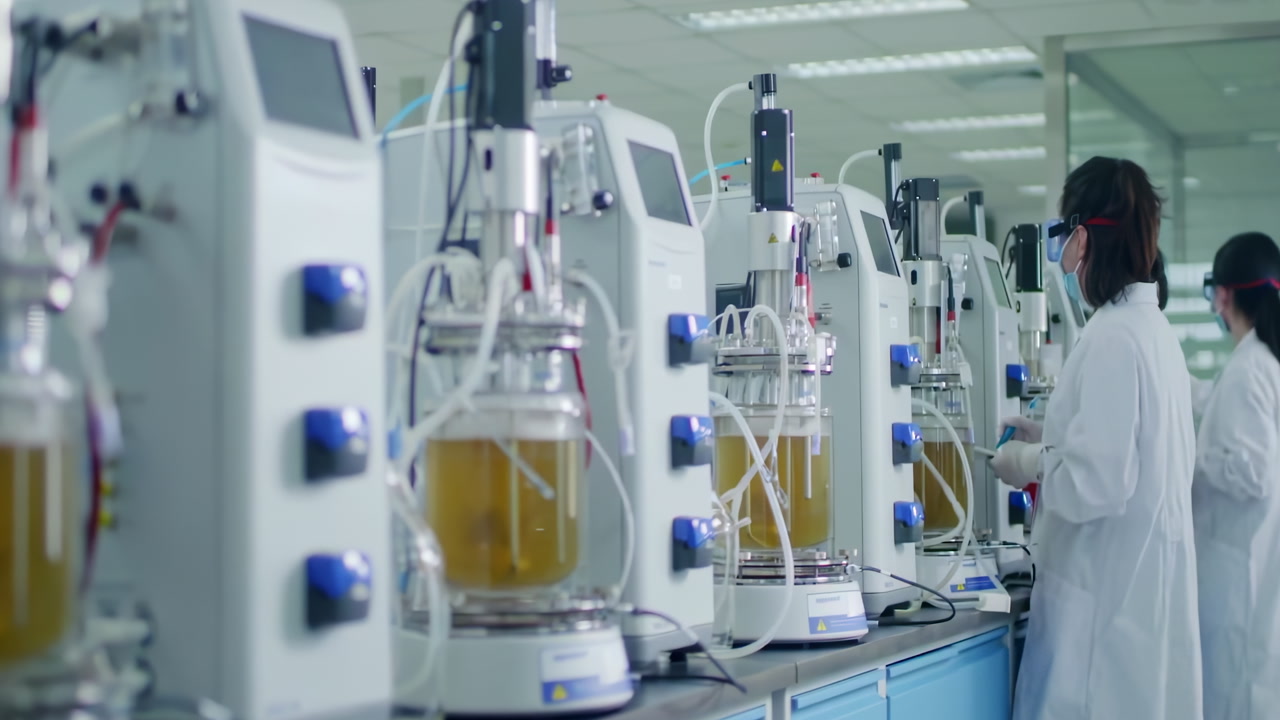
The next proposed comparison.
Water-state evidence map and qualified comparative measurement brief
What happens after the sample leaves the factory?
Define the relevant exposure after manufacture.
An enquiry should identify the format, expected humidity or wetting exposure, package and specific revision under consideration. The cheapest useful next step may be a measurement of the actual preparation under a realistic condition, rather than a broad search for low-water organisms. If the intended use introduces water, that scenario should be defined before a study is priced. Bio’s proposed milestone would be one preparation-specific comparison that changes the sponsor’s next decision. The wider programme could build a valuable condition-indexed evidence collection, but only by retaining the environments, methods and limitations that make each observation interpretable.
Microbial material systems · Proposed development discussion
A development path
for this research.
Which water-related measurement changes the development decision?
The people this could serve.Anhydrous, powder and low-water formulation developers.
The decision behind the project.
Your intended application, present alternative and the constraint behind “Water content is a quantity. Water activity is a condition.”. A useful starting point is the change that would justify another development step.
A proposed scope centred on water-state evidence map and qualified comparative measurement brief.
Agree the comparison, acceptance basis and responsible expertise before discussing a paid package.
Specialist methods and a defined contribution.
Bring relevant analytical or experimental expertise, a comparator suggestion, and the conditions under which your method could resolve this question.
A jointly scoped proposal could connect your contribution with water-state evidence map and qualified comparative measurement brief.
Define contributions, required access, independent preparations and permitted outputs before work or protected information is shared.
The commercial purpose of the next milestone.
Bring the application or asset thesis, the buyer you expect to value it, and the scientific or commercial uncertainty that must be resolved before another commitment.
The proposed decision record would connect the buyer question with water-state evidence map and qualified comparative measurement brief. It would identify what a subsequent comparison needs to demonstrate.
Demand, development cost, resources, rights and a decision-changing milestone would need examination. No financing terms or investment outcome are represented here.
What a useful comparison
would record.
- Distinguish water content, water activity and transport as separate quantities.
- Record temperature, boundary conditions, preparation geometry and the mass denominator.
- Compare the relevant time-dependent endpoint with a matched incumbent and conditioning history.
What the proposed
brief could leave behind.
- Water-state evidence map and qualified comparative measurement brief
- A preparation, comparator and endpoint record tied to this question.
- A source-linked account of the evidence gaps, study assumptions and next review point.
The proposed discussion brief
A brief you
can take away.
Use non-confidential notes to connect this topic with your own decision. Entries stay in this browser tab; saving creates a text file on your device. Nothing is submitted.
Scoped decision brief, qualified external study design or versioned evidence collection; commercial terms and delivery subject to agreement.
Notes are optional. The brief includes this page’s proposed question and public source links.
Proposed scope; resources, methods, rights and delivery terms would be agreed before work. Begin with non-confidential information.
Sources and reading notes.
External work is identified below. Access notes describe the material inspected for this page; company research questions and proposed work are not presented as findings from these sources.
FDA, n.d.Huang, J. et al. (2024) Bacteriological Analytical Manual, Chapter 23: Methods for Cosmetics. July edition. FDA
Matrix-specific sampling, enumeration, enrichment and identification framework.
Scope and limitations: Official analytical method; not a Bio result, service approval or substitute for jurisdiction-specific product safety assessment.
Open original sourceHamill, P.G. et al, 2020Hamill, P.G. et al. (2020) Microbial lag phase can be indicative of, or independent from, cellular stress. Scientific Reports, 10, 5948
Lag duration and growth rate do not consistently report the same response across tested stresses.
Scope and limitations: Organism- and medium-specific experiments. No cosmetic shelf life or safety threshold inferred.
Open original sourceISO, 2014ISO (2014) ISO 17516: Microbiological limits
Published standard identity and microbiological-quality scope.
Scope and limitations: Catalogue abstract only; licensed full text not acquired. Official record indicates revision in progress. No numerical criteria reproduced.
Open original source