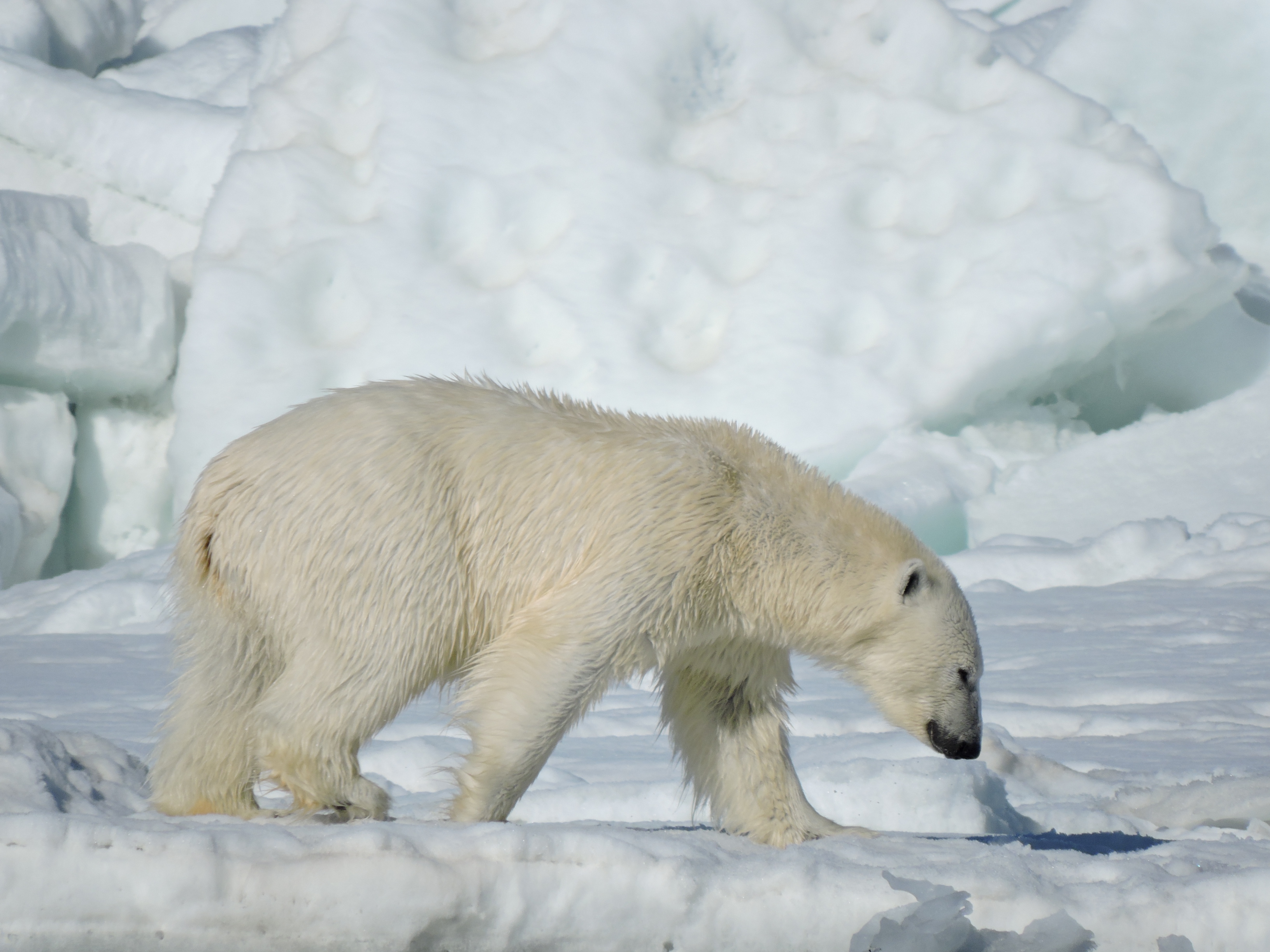
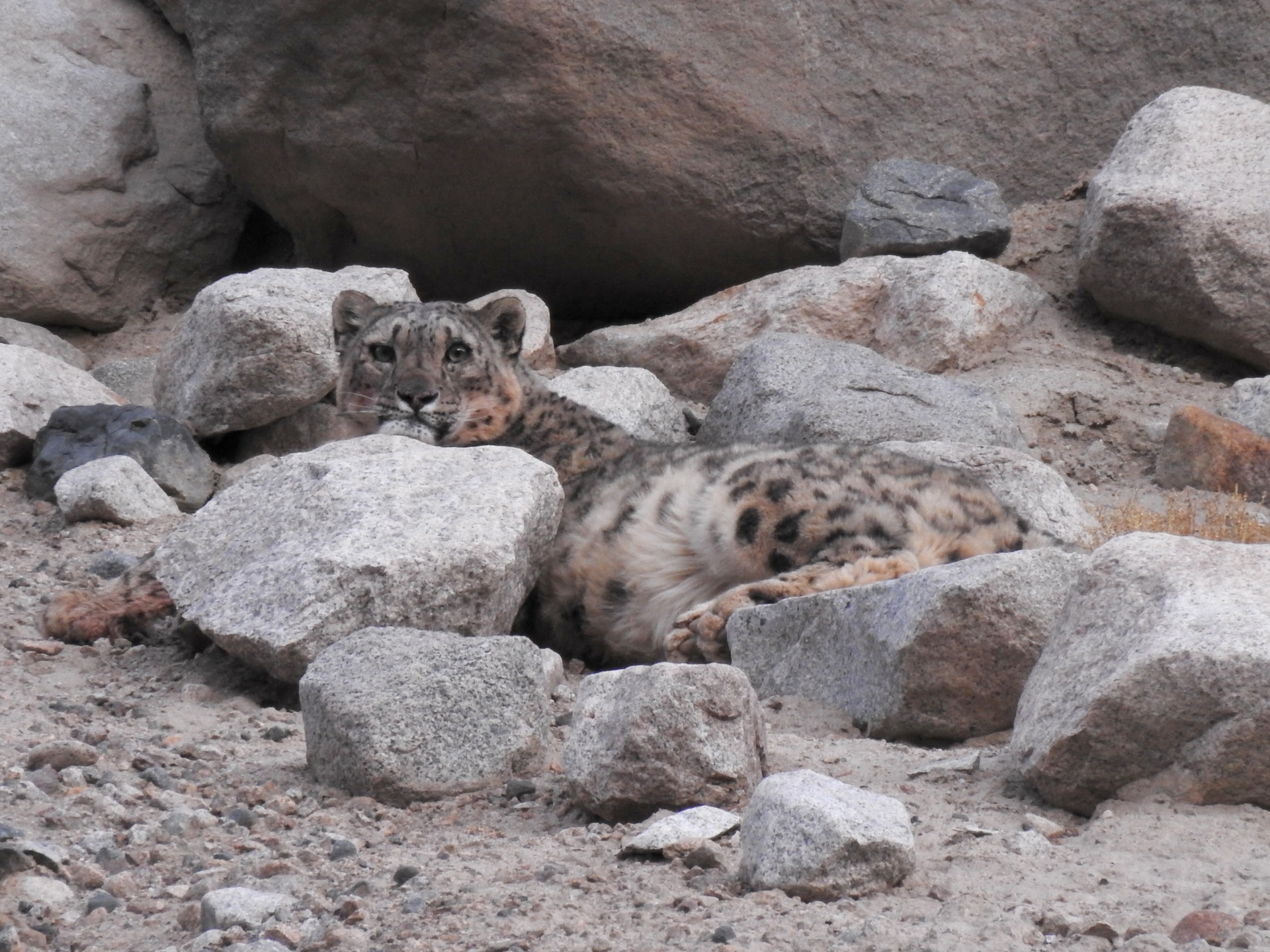
A resting place matters.
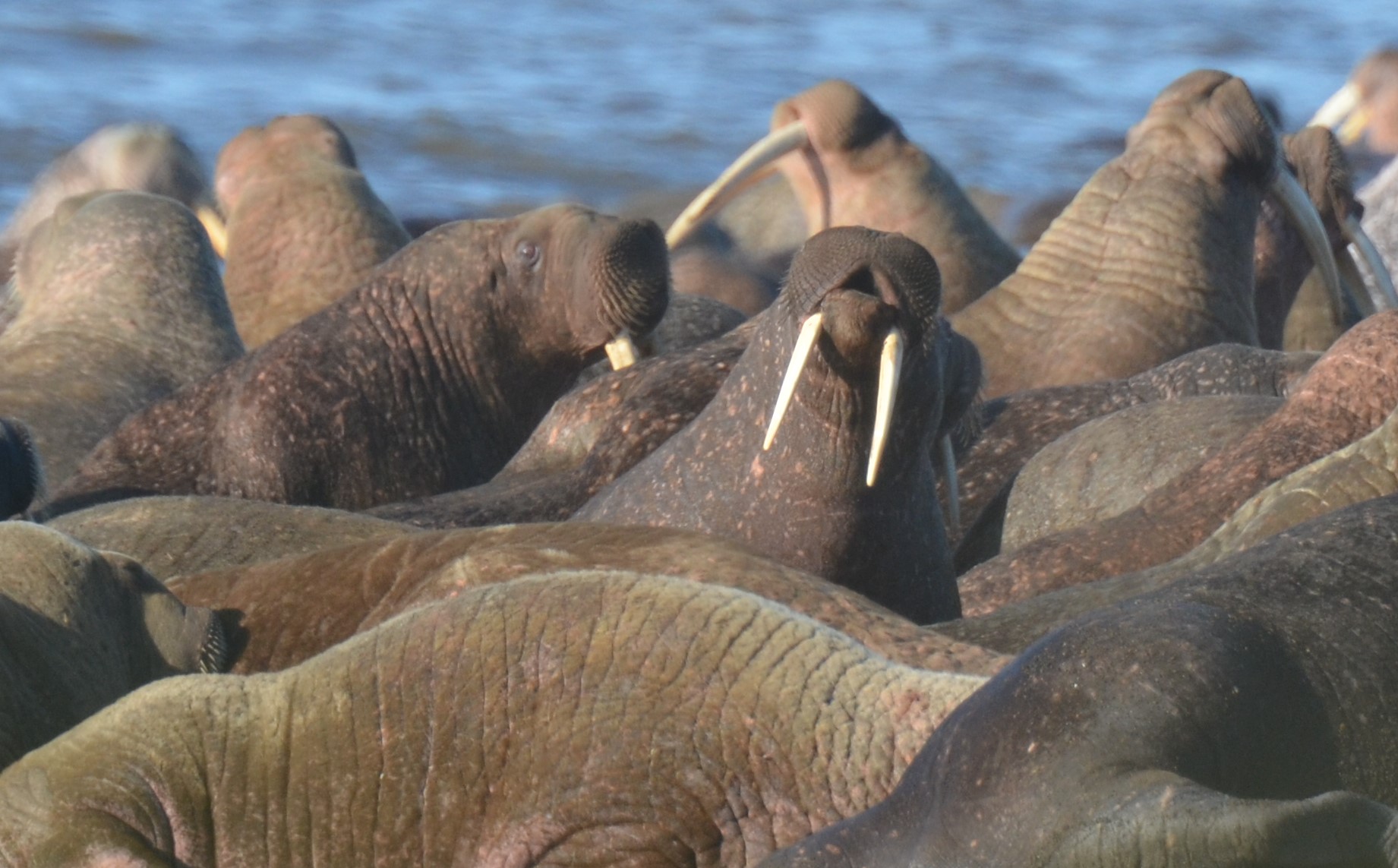
Pacific walruses need access to feeding grounds and places to rest. Dense coastal groups can be sensitive to disturbance.

Arctic Ocean | Ice, coasts and migration routes
Walruses resting on a coast. Seals raising pups beneath snow. Whales finding their way through sound. Arctic conservation reaches far beyond a single animal.
This chapter describes several species and habitats. It is not a single population assessment.
A life worth understanding
Arctic marine life follows different routes through the same waters. Pacific walruses feed on seabed animals and rest on ice or land. Ringed seals maintain breathing holes and shelter their pups in snow-covered lairs.
Bowhead whales filter zooplankton. Belugas use sound to communicate, navigate and find food. Protecting this variety means understanding each animal’s needs, rather than treating the Arctic as one uniform story.
Pacific walruses need access to feeding grounds and places to rest. Dense coastal groups can be sensitive to disturbance.
Ringed-seal lairs create protected space for pups. Ice and snow conditions help shape that nursery.
For belugas, listening is part of navigation, feeding and social life. Noise can interfere with essential information.
The facts | Their context
Conservation figures and assessments describe particular places, dates and methods. Their meaning matters as much as their size.
NSIDC’s September 2026 release places all 20 in the last 20 years of its nearly 48-year satellite record. The 2026 minimum remains preliminary in that release. Extent is not ice thickness or volume.
Read the evidenceAge estimates indicate that some individuals may live beyond two centuries. This is exceptional longevity, not the average lifespan of every bowhead.
Read the evidenceA 2023 pilot found microplastics in ice-associated Melosira algae sampled in Fram Strait. It raised food-web questions; it did not identify cosmetics as the source or measure wildlife population losses.
Read the evidenceHabitat | Pressure | Possibility
Explore the relationships that shape this animal’s future. Each pathway shows where protection can make a difference.
Algae and plankton
Food and energy pathways
Fish, seals, whales and seabed life
Primary production supports connected food webs, with differences between regions and seasons. Walruses, bowheads and seals use different parts of this system; a single straight food chain cannot explain them all.
Shipping and other activity
Underwater noise
Communication and navigation
Noise matters because sound matters. Migration routes, feeding areas and seasonal patterns should inform where and how marine activity is managed.
Understand important habitats
Plan for movement between them
Reduce disturbance and other pressures
Connected protection considers routes as well as individual places. Coastal haulouts are a natural part of walrus life; their presence alone is not evidence of a mortality event.
Illustrative relationships, not a geographic map or a prediction of conservation outcomes.
Why protection matters
An Arctic whale, seal or walrus is part of something larger than a conservation photograph. Feeding, movement and reproduction connect each animal to a seasonal web of life. Protecting those relationships preserves ecological variety and the living systems that northern communities know and depend on.
The longer story
Some bowheads alive today may span generations of human change. Historical commercial whaling and modern Indigenous subsistence management are distinct parts of that history.
Bowhead whale ↗NOAA’s Arctic assessment examined how marine algae and primary production respond to warming and sea ice decline. More production in one place does not mean every species benefits.
Arctic Ocean primary productivity ↗The satellite record provides an updated measure of sea ice extent. It is one part of the picture, alongside species research, local knowledge and habitat monitoring.
Arctic sea ice minimum extent for 2026 ↗The VARUNÉ Bio contribution
For an ingredient-research company, ocean responsibility also begins with the questions asked about provenance, use and environmental release.
Explain Arctic habitats and conservation evidence, and develop a short public note showing which environmental-fate questions an ingredient developer should ask.
Scope one candidate material’s provenance and evidence gaps, including persistence, degradation products and aquatic toxicity. Seek qualified specialist advice for questions that require new testing.
Set a budget, purpose, reporting basis and permissions with the organisation. A financial contribution and a formal partnership are separate decisions.
Separate literature, assumptions, planned tests and measured results. A natural origin or a biodegradability claim alone does not establish environmental safety.
The research connection. VARUNÉ Bio’s commercial work is ingredient research and cosmetic formulation science. Explore connects that work to biological questions and their environmental context. Wildlife conservation does not provide materials, permissions or evidence of cosmetic performance.
Explore the research questionsAction starts with understanding
Use the organisation’s own information to choose how to help. These links go directly to independent organisations.
Beluga Bits invites people to help classify imagery from the Churchill area. Tasks depend on the project’s current workflow and availability.
Explore Beluga BitsFollow local viewing rules and distances. Avoid approaching, chasing or disturbing animals, including with drones.
Marine wildlife viewing guidanceLearn how migration and connected habitats shape Arctic whale protection.
Explore Arctic Blue CorridorsOrganisations are included as independent resources. Inclusion does not indicate a partnership, endorsement or financial contribution by VARUNÉ Bio.
The source trail | Checked 20 October 2026
2026 minimum explicitly preliminary in this release
Official species authority
Official research programme
Research review; use for established ecology, not current population trend
Official species authority
Research programme / Indigenous local government
Official biological explanation
Scientific assessment; food-web background
Three Fram Strait sites; does not identify cosmetics as pollution source or demonstrate wildlife population mortality
Conservation programme
Conservation planning framework
Project context and the role of public image classification; current tasks can vary.