
 Film credits
Making the next study worth commissioning.
A proposed paid decision brief that turns a material-specific microbial uncertainty into a qualified, quotation-ready comparison.
Proposed programme | Study scope, qualified delivery and funding to be agreed.
Sell a decision that the buyer actually needs.
A commercial brief should resolve one buyer uncertainty.
A proposed commercial brief should begin with the uncertainty blocking a development choice. The buyer may need to know whether a new ingredient changes recovery, whether a package revision deserves a use-context comparison or which model can address a community hypothesis. Those decisions require different work. Bio’s proposed package would define one question and a deliverable the sponsor can inspect. It would not promise every microbiological answer or announce a laboratory service before capacity exists. The first value proposition is a preparation-specific evidence and commissioning record that makes the next investment in testing more coherent.
Examine the development decision
Making the next study worth commissioning.
Open the sequence to examine what a development decision needs.
Identify the exact preparation, its source, and the properties a second laboratory must be able to reproduce.
Explanatory geometry · no simulated or measured performance
Specify what the buyer receives.
Make the proposed output tangible and inspectable.
The proposed output would contain the material and preparation map, an inspected-source ledger, method-suitability questions, comparator rationale and a quotation-ready external study outline. It would state the decision each observation informs and the gaps that remain unresolved. The sponsor should be able to hand the record to a qualified laboratory and understand what is being requested. A report that merely lists interesting papers would not meet that purpose. The package would also identify what is outside scope, including product release decisions, clinical claims and legal advice. Commercial terms would be agreed against the actual question and available reviewer capacity.
Anchor methods in the appropriate evidence.
Match each method source to its role.
FDA BAM supplies a public cosmetics analysis context, while ISO 11930 provides a separately licensed preservation-evaluation standard identity (Huang et al., 2024; ISO, 2019). A model comparison such as Wang et al. (2025) or the original 2018 biofilm-readout work can inform a different question. The proposed brief would identify which source applies to which part of the study and where its relevance stops. It would distinguish a full inspected method from a public catalogue abstract. That gives a sponsor a more reliable commissioning record and makes any standard purchase or specialist review a visible dependency rather than an invented capability.
(FDA, n.d.) | (ISO (2019; amendment 2022) ISO 11930, 2019) | (Wang, P. et al, 2025) | (Haney, E.F. et al, 2018)

The formula changes the observation.
Investigate the relationship between formulation, phase availability, sample recovery and interpretable microbial evidence.
Defining the decision value without inventing savings.
Define value through a real commissioning decision.
The descriptive expression below relates the proposed fee to the bounded deliverable, not to an assumed financial return. It is a commercial framing identity rather than an experimental model. A sponsor should know which preparation, comparator, source scope and reviewer output it is purchasing. Claimed savings would need actual records and an agreed attribution basis. The briefing process could instead record whether the sponsor changes a sample set, rejects an irrelevant endpoint or requests a better laboratory quote. Those are inspectable decisions. The value hypothesis is that the record improves the next commitment; it must be tested with buyers before becoming a broad revenue claim.
The proposed commercial offer must connect an identified preparation to a deliverable and decision.
- Agreed elements of proposed briefdefined scope set
- Material state the work concernsidentified record
- Relevant incumbent or controlidentified record
- Sponsor choice informed by outputdefined decision
Model conditions. Descriptive scope identity; not a quantitative performance model. Fees, timeline and capacity require agreement. No savings, results or existing revenue assumed.
The cheapest check that changes the next action.
Rank dependencies before enlarging the study.
A complex community experiment may be premature if the ingredient identity is unresolved. A preservation comparison may be difficult to interpret if recovery has not been checked. A surface study may need a reproducible conditioning layer before biological exposure. The proposed brief would rank those dependencies according to the sponsor’s question and identify the first feasible check. This is not an invitation to keep expanding the project indefinitely. The deliverable should include a stopping point and the evidence that would justify a separate next phase. A qualified collaborator would assess practical execution, resources and containment before any laboratory scope is offered.
Agree expertise and responsibilities before offering delivery.
Confirm people, access and facilities before delivery.
Bio would need an accountable scientific reviewer, suitable source access and a defined checking process for a paid brief. External experimental work would require qualified facilities and a separate agreement. The sponsor would identify the decision owner and information it is entitled to share. Confidential material would follow agreed terms, with future data and contribution rights made explicit. A university discussion would need a real scientific and resource case, not an assumed partnership. This structure protects the commercial proposition by making the output deliverable and the dependencies visible. It also keeps proposed opportunities from consuming resources that the existing flagship programmes need.
Building towards original evidence and a repeatable offer.
Earn original evidence through accountable execution.
A successful first scope could establish a sponsor-reviewed question and a qualified experiment. An original formulation study would then require reproducible preparations, a relevant comparator, suitable methods and agreed data or publication rights. A funded collaboration or luxury-beauty research headline would be a milestone to earn through that work, not an achievement claimed in advance. Repeated buyer questions might justify a versioned evidence product, but only if the demand and reuse rights are demonstrated. The immediate commercial objective is one well-defined decision brief that the sponsor can use and evaluate, with outcomes recorded honestly even when the recommendation is to stop.
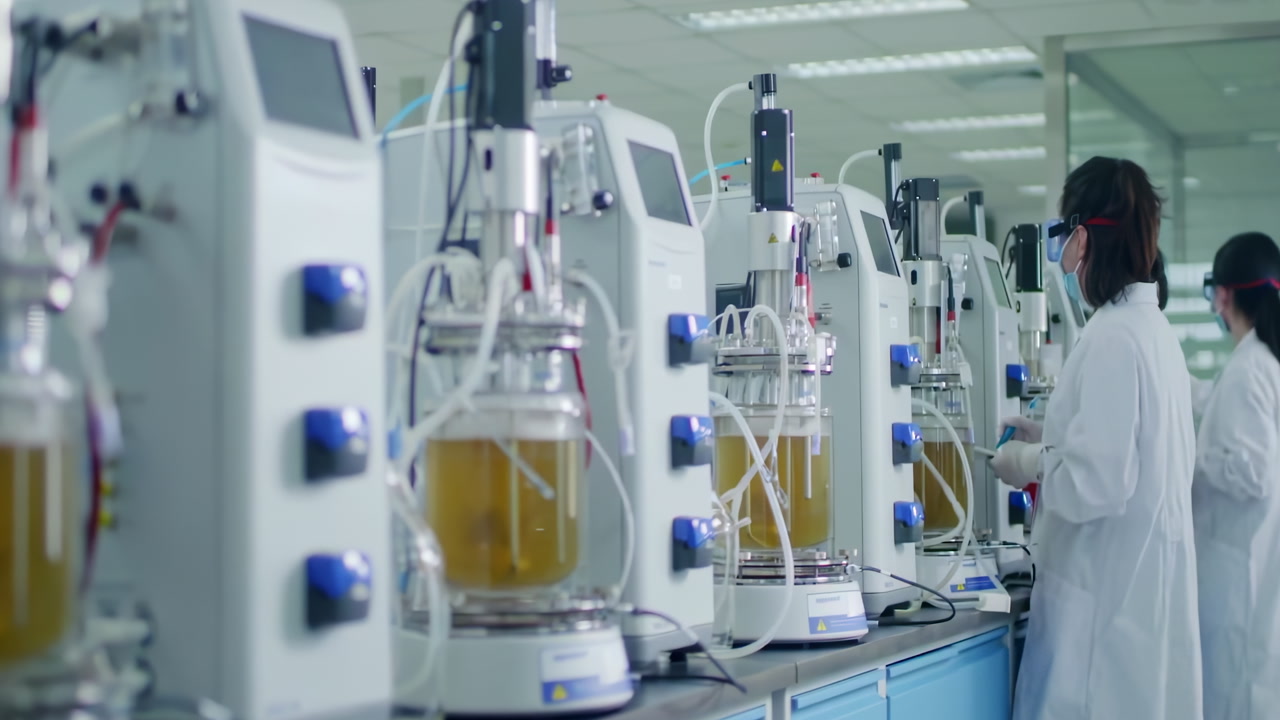
The next proposed comparison.
Preparation map, evidence ledger, comparator rationale and external study request
One uncertainty and an acceptable output.
Agree what useful completion looks like.
An opening enquiry can state the application, candidate material, incumbent and decision the team needs to make. The first scope can often be established without a complete proprietary composition. Bio could propose a bounded appraisal after qualified delivery capacity is confirmed. Fees, timing and any further testing would then be agreed explicitly. A useful acceptance question is whether the record gives the sponsor a clearer next experiment or a justified reason not to commission one. That is the standard the proposed offer must meet. An advanced website should lead to that concrete conversation, rather than imply that every scientific possibility is already a commercial service.
Microbial material systems · Proposed development discussion
A development path
for this research.
Which first comparison is feasible, interpretable and worth the sponsor’s commitment?
The people this could serve.Beauty innovation sponsors, ingredient suppliers and university partners.
The decision behind the project.
Your intended application, present alternative and the constraint behind “Making the next study worth commissioning.”. A useful starting point is the change that would justify another development step.
A proposed scope centred on preparation map, evidence ledger, comparator rationale and external study request.
Agree the comparison, acceptance basis and responsible expertise before discussing a paid package.
Specialist methods and a defined contribution.
Bring relevant analytical or experimental expertise, a comparator suggestion, and the conditions under which your method could resolve this question.
A jointly scoped proposal could connect your contribution with preparation map, evidence ledger, comparator rationale and external study request.
Define contributions, required access, independent preparations and permitted outputs before work or protected information is shared.
The commercial purpose of the next milestone.
Bring the application or asset thesis, the buyer you expect to value it, and the scientific or commercial uncertainty that must be resolved before another commitment.
The proposed decision record would connect the buyer question with preparation map, evidence ledger, comparator rationale and external study request. It would identify what a subsequent comparison needs to demonstrate.
Demand, development cost, resources, rights and a decision-changing milestone would need examination. No financing terms or investment outcome are represented here.
What a useful comparison
would record.
- Record agreed elements of proposed brief (defined scope set) with the preparation, method and conditions needed to interpret it.
- Record material state the work concerns (identified record) with the preparation, method and conditions needed to interpret it.
- Record relevant incumbent or control (identified record) with the preparation, method and conditions needed to interpret it.
What the proposed
brief could leave behind.
- Preparation map, evidence ledger, comparator rationale and external study request
- A preparation, comparator and endpoint record tied to this question.
- A source-linked account of the evidence gaps, study assumptions and next review point.
The proposed discussion brief
A brief you
can take away.
Use non-confidential notes to connect this topic with your own decision. Entries stay in this browser tab; saving creates a text file on your device. Nothing is submitted.
Scoped decision brief, qualified external study design or versioned evidence collection; commercial terms and delivery subject to agreement.
Notes are optional. The brief includes this page’s proposed question and public source links.
Proposed scope; resources, methods, rights and delivery terms would be agreed before work. Begin with non-confidential information.
Sources and reading notes.
External work is identified below. Access notes describe the material inspected for this page; company research questions and proposed work are not presented as findings from these sources.
FDA, n.d.Huang, J. et al. (2024) Bacteriological Analytical Manual, Chapter 23: Methods for Cosmetics. July edition. FDA
Matrix-specific sampling, enumeration, enrichment and identification framework.
Scope and limitations: Official analytical method; not a Bio result, service approval or substitute for jurisdiction-specific product safety assessment.
Open original sourceISO (2019; amendment 2022) ISO 11930, 2019ISO (2019; amendment 2022) ISO 11930: Evaluation of the antimicrobial protection of a cosmetic product
Published standard identity, scope and amendment status.
Scope and limitations: Catalogue abstract only; licensed full standard and amendment not acquired. No acceptance criteria reproduced. Revision is under development.
Open original sourceWang, P. et al, 2025Wang, P. et al. (2025) Microecology in vitro model replicates the human skin microbiome interactions. Nature Communications, 16, 3085
A defined hydrogel-based microecology model, model conditions and available source data.
Scope and limitations: External in vitro model; not a clinical study or Bio platform. Source XLSX identified but not numerically extracted in this authoring pass.
Open original sourceHaney, E.F. et al, 2018Haney, E.F. et al. (2018) Critical Assessment of Methods to Quantify Biofilm Growth and Evaluate Antibiofilm Activity of Host Defence Peptides. Biomolecules, 8(2), 29
Original comparison of biomass, metabolic and colony-based biofilm readouts.
Scope and limitations: Readouts measure different endpoints; peptide experiments do not become Bio antimicrobial results.
Open original source