
 Film credits
The interface changes the experiment.
A proposed surface-comparison route for separating attachment, accumulated biomass and viable recovery in a defined material system.
Proposed programme | Study scope, qualified delivery and funding to be agreed.
Which event the material may change?
Select the interface event that matters.
Initial attachment, growth at an interface, matrix accumulation and later dispersal are different events. A material can alter one without establishing a useful outcome across the whole sequence. Bio’s proposed interface brief would identify the event relevant to the buyer’s decision and choose a corresponding observation. A packaging developer might care about a particular residual-product surface; a material supplier might need a controlled chemistry comparison. Neither question is answered by a generic image labelled biofilm. The first scope would connect surface identity, conditioning history and the event to a defined experiment that a qualified partner can assess.
Examine the development decision
The interface changes the experiment.
Open the sequence to examine what a development decision needs.
Identify the exact preparation, its source, and the properties a second laboratory must be able to reproduce.
Explanatory geometry · no simulated or measured performance
Retain chemistry, geometry and preparation.
Preparation chemistry and geometry need separate records.
Hook et al. (2012) investigated polymer chemistry; the 2016 surface-topography study examined a defined geometry and bacterial setting. Their methodological relevance is that the surface must be described, not merely named. A proposed comparison would record polymer grade, fabrication, roughness or pattern description, conditioning and ageing where relevant. A changed fabrication process can introduce a different surface even when the bulk material label is unchanged. The briefing record would keep those preparation variables beside the biological model. That allows the sponsor to decide whether a chemistry claim, a geometry hypothesis or a process question is actually being tested.
Select a model organism for a reason.
An organism model requires an application rationale.
A single-species model may offer a tractable first comparison, but it cannot represent every organism or microbial community associated with product use. The strain, inoculum history, medium and exposure geometry should fit the stated question and available facilities. An interface experiment should also distinguish planktonic material from what remains associated with the surface. A qualified microbiologist would specify handling and appropriate containment. Bio’s proposed value is a rationale that makes the model’s relevance and limitations inspectable. It would not offer a pathogen experiment directly or claim that an attractive surface has broad antimicrobial behaviour from one unqualified assay.

The formula changes the observation.
Investigate the relationship between formulation, phase availability, sample recovery and interpretable microbial evidence.
Inside an original interface study
A surface changes
the encounter.
Examine the authors’ tracked cell motion on two patterned surfaces. The observations make the geometry and the readout part of the question.
On the top of the line.
20 μm-wide PDMS line · WT E. coli
Gu and colleagues describe regular rotation of the tracked cell atop the patterned line. The source contains the authors’ processed image and tracking overlays.
24.8 seconds of encoded playback · images collected over 198 seconds. Full 1200 × 900 frame, 124 frames at 5 fps, with author processing and annotations preserved.
Source: Gu et al. (2016), Scientific Reports 6, 29516, Supplementary Movie S1. CC BY 4.0. Adaptation: full-frame AVI-to-MP4 encoding and poster extraction; encoded timing retained.
At the edge of the line.
5 μm-wide PDMS line · WT E. coli
The authors describe irregular motion in this edge observation. Its preparation and location differ from the first film, so the pair is not a controlled width-only comparison.
5.2 seconds of encoded playback · images collected over 41 seconds. Full 1200 × 900 frame, 26 frames at 5 fps, with author processing and annotations preserved.
Source: Gu et al. (2016), Scientific Reports 6, 29516, Supplementary Movie S2. CC BY 4.0. Adaptation: full-frame AVI-to-MP4 encoding and poster extraction; encoded timing retained.
Which part of the interface
would your comparison change?
These are external, author-processed time-lapse exports. Both line width and top-versus-edge location differ. They illustrate why geometry, sample preparation and the operational readout belong in a comparison; they do not establish a Bio material result, antimicrobial function or cosmetic performance.
Explore the conditioning-layer questionRead an area measurement as an area measurement.
Image area has a defined observation basis.
The descriptive fraction below reports the image area classified as covered under a defined segmentation method. It is not a viable count, cell density or clinical endpoint. Illumination, magnification, thresholding and the field-selection rule all affect the observation. A model experience could reveal the underlying image and analysis mask together, rather than showing only a percentage. Before using actual images, licensing and experimental attribution would need to be checked. The comparison should report independent surface preparations and variation across relevant fields. Repeated images of the same specimen are useful technical observations but do not create independent biological replicates.
Report the geometry of the observation before interpreting it as a biological effect.
- Classified coverage fractiondimensionless
- Image area classified under recorded analysis ruleµm²
- Analysed field areaµm²
Model conditions. Consistent image acquisition and classification. Area coverage does not count viable cells. Fields nested within one specimen are not independent biological replicates. Field area must be positive, with classified coverage between zero and the field area.
Using complementary endpoints when they resolve ambiguity.
Complementary endpoints can distinguish competing explanations.
A biomass stain can report retained material differently from colony recovery or a metabolic readout. The original assay-comparison study documents that these readouts are not interchangeable (Haney et al., 2018). A proposed project should add an endpoint only when it answers a specific ambiguity, such as whether reduced staining reflects less attachment or a change in dye interaction. Matrix-only and surface-only controls may be needed to interpret the signal. The study brief would avoid calling every lower optical value antimicrobial. Its purpose is to explain the event that the material affects under the chosen conditions, with the method limitations retained.
The path through the time window that matters.
Timing changes the meaning of an endpoint.
The 2024 biofilm dynamics study shows why an endpoint can sit within attachment or dispersal behaviour rather than represent a permanent state. A proposed comparison would justify sampling times and avoid interpreting one lower value as a universally weaker biofilm (Andersen et al., 2024). Early attachment and later retained biomass may lead to different conclusions. The planned analysis should therefore retain time, preparation and endpoint together. An immersive timeline could help a buyer inspect those differences without invented numerical curves. Actual data would be plotted only after method, rights and sample relationships are confirmed, and interpretations would remain specific to the tested system.
Building a comparison with a commercial next step.
Tie the study to a material or component decision.
The proposed deliverable would name the material revision, incumbent surface, biological model, sampling schedule and complementary observations needed to distinguish explanations. A supplier could use it to decide whether further interface characterisation is justified. A packaging team could use it to prioritise a component comparison. Qualified facilities, sample rights and scientific reviewer capacity would be agreed before any study is offered. If a result later supports a useful surface behaviour, a licensing or evaluation discussion would still require an ownership and rights review. A public study brief cannot create patent rights or turn external discoveries into Bio technology.
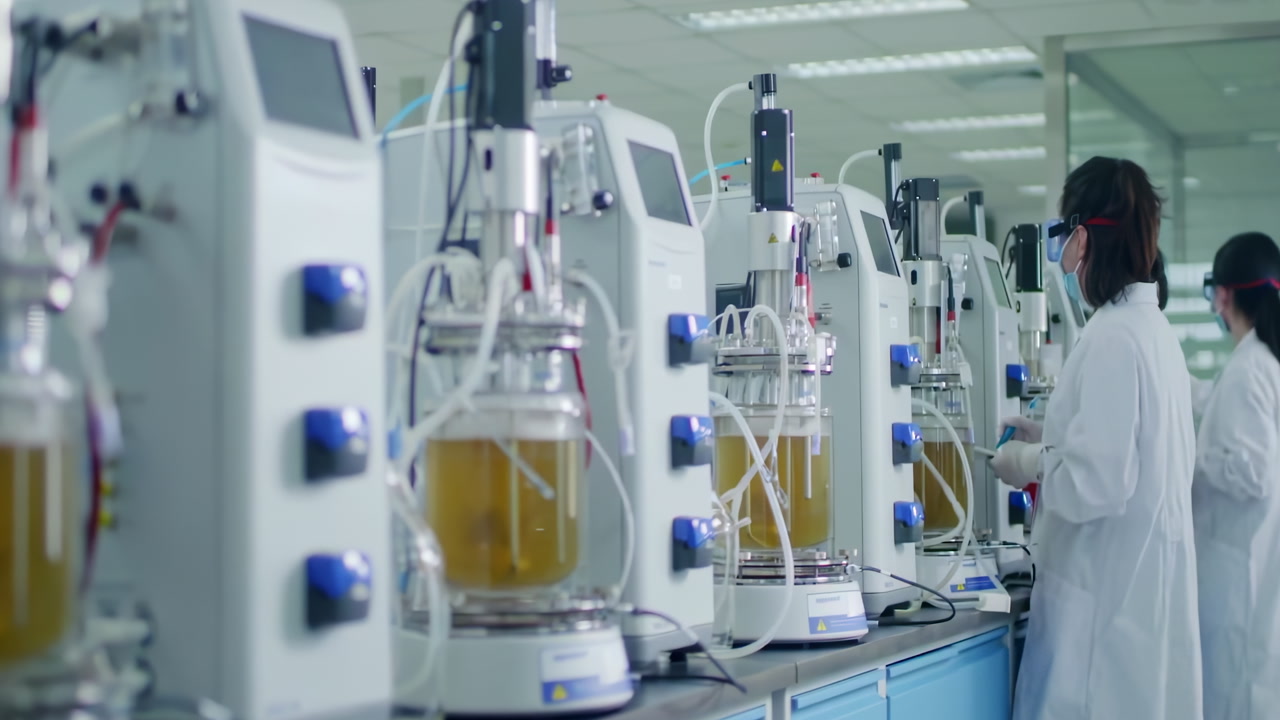
The next proposed comparison.
Surface identity and multi-endpoint comparison study brief
The surface and the practical constraint.
Identify the practical constraint at the interface.
The first discussion should specify what the component does, how it contacts product and which design choice is open. A non-confidential material description can establish whether the uncertainty concerns chemistry, geometry, conditioning or method. The next milestone could be a qualified, reproducible first comparison with a sponsor-approved endpoint. If the method mainly reads stain binding or surface loss, the programme should revise it before progressing. The value of an interface research stream is the ability to connect a material difference with an interpretable application decision. It should grow through well-defined experiments, not through broad promises of bacterial resistance or consumer protection.
Microbial material systems · Proposed development discussion
A development path
for this research.
Which interface comparison can explain an attachment difference?
The people this could serve.Materials researchers and cosmetic packaging development teams.
The decision behind the project.
Your intended application, present alternative and the constraint behind “The interface changes the experiment.”. A useful starting point is the change that would justify another development step.
A proposed scope centred on surface identity and multi-endpoint comparison study brief.
Agree the comparison, acceptance basis and responsible expertise before discussing a paid package.
Specialist methods and a defined contribution.
Bring relevant analytical or experimental expertise, a comparator suggestion, and the conditions under which your method could resolve this question.
A jointly scoped proposal could connect your contribution with surface identity and multi-endpoint comparison study brief.
Define contributions, required access, independent preparations and permitted outputs before work or protected information is shared.
The commercial purpose of the next milestone.
Bring the application or asset thesis, the buyer you expect to value it, and the scientific or commercial uncertainty that must be resolved before another commitment.
The proposed decision record would connect the buyer question with surface identity and multi-endpoint comparison study brief. It would identify what a subsequent comparison needs to demonstrate.
Demand, development cost, resources, rights and a decision-changing milestone would need examination. No financing terms or investment outcome are represented here.
What a useful comparison
would record.
- Record classified coverage fraction (dimensionless) with the preparation, method and conditions needed to interpret it.
- Record image area classified under recorded analysis rule (µm²) with the preparation, method and conditions needed to interpret it.
- Record analysed field area (µm²) with the preparation, method and conditions needed to interpret it.
What the proposed
brief could leave behind.
- Surface identity and multi-endpoint comparison study brief
- A preparation, comparator and endpoint record tied to this question.
- A source-linked account of the evidence gaps, study assumptions and next review point.
The proposed discussion brief
A brief you
can take away.
Use non-confidential notes to connect this topic with your own decision. Entries stay in this browser tab; saving creates a text file on your device. Nothing is submitted.
Scoped decision brief, qualified external study design or versioned evidence collection; commercial terms and delivery subject to agreement.
Notes are optional. The brief includes this page’s proposed question and public source links.
Proposed scope; resources, methods, rights and delivery terms would be agreed before work. Begin with non-confidential information.
Sources and reading notes.
External work is identified below. Access notes describe the material inspected for this page; company research questions and proposed work are not presented as findings from these sources.
Hook, A.L. et al, 2012Hook, A.L. et al. (2012) Combinatorial discovery of polymers resistant to bacterial attachment. Nature Biotechnology, 30, 868–875
Polymer chemistry screening of bacterial attachment with condition-specific follow-up.
Scope and limitations: External device-oriented study; not cosmetic packaging validation or Bio-owned coating. No numerical performance is transferred.
Open original sourceGu, H. et al, 2016Gu, H. et al. (2016) How Escherichia coli lands and forms cell clusters on a surface: a new role of surface topography. Scientific Reports, 6, 29516
Defined PDMS surface geometry affects attachment and cluster behaviour under study conditions.
Scope and limitations: External species/surface model; no antimicrobial, safety or commercial coating claim.
Open original sourceHaney, E.F. et al, 2018Haney, E.F. et al. (2018) Critical Assessment of Methods to Quantify Biofilm Growth and Evaluate Antibiofilm Activity of Host Defence Peptides. Biomolecules, 8(2), 29
Original comparison of biomass, metabolic and colony-based biofilm readouts.
Scope and limitations: Readouts measure different endpoints; peptide experiments do not become Bio antimicrobial results.
Open original sourceAndersen, J.B., Rybtke, M. and Tolker-Nielsen, T, 2024Andersen, J.B., Rybtke, M. and Tolker-Nielsen, T. (2024) The dynamics of biofilm development and dispersal should be taken into account when quantifying biofilm via the crystal violet microtiter plate assay. Biofilm, 8, 100207
Time-dependent biofilm attachment/dispersal complicates a single endpoint.
Scope and limitations: Specified P. aeruginosa strains and plate conditions; no universal growth curve or Bio data.
Open original source