
 Film credits
Transfer the environment. Not the number on the dial.
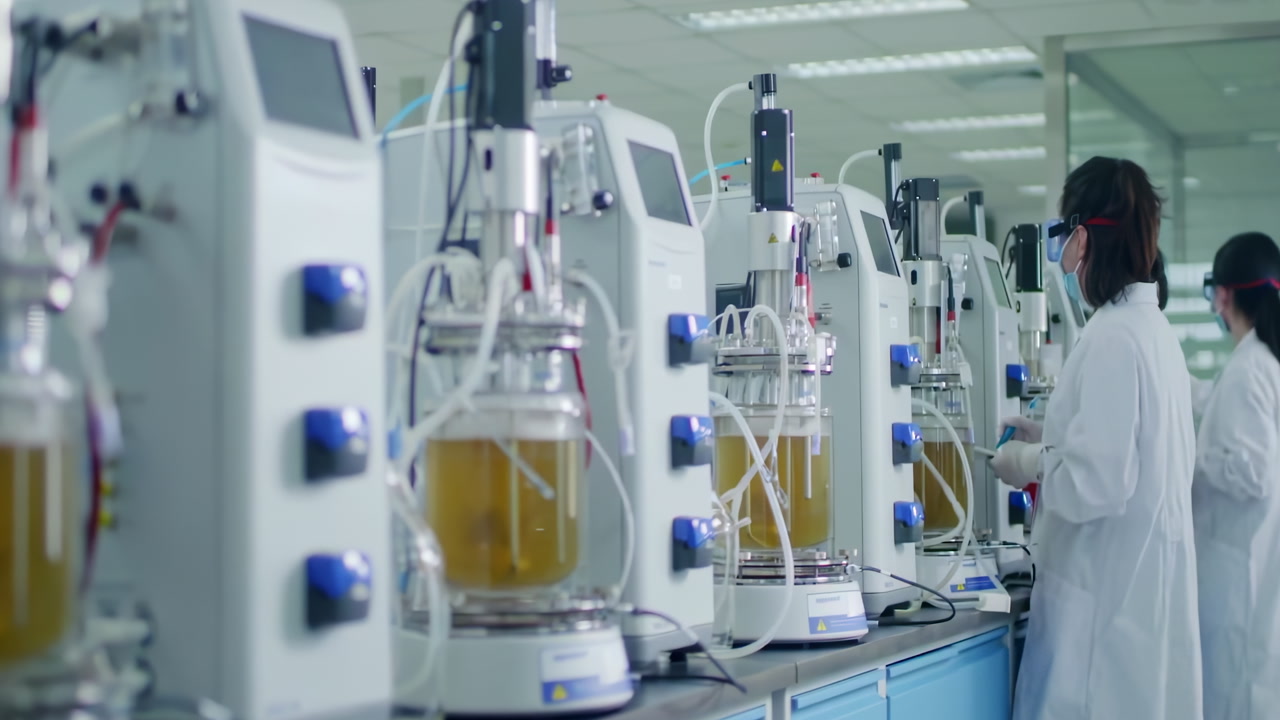
Build a scale argument around the conditions a production system needs, rather than one copied operating setting.
Candidate programme | Proposed scope, expertise and material access to be established.
Volume changes more than output.
A new vessel creates a new operating context.
A larger working volume can change mixing, gas distribution, heat removal and the location of process gradients. The proposed transfer question is which features of the original environment matter to the organism and material. A simple volume multiplier cannot establish that the new process will create the same preparation.
An ingredient sponsor should identify the required output quality as well as the desired scale. A fermentation team may need a specific production state, while the downstream team may face a different broth inventory. The scope should connect those requirements so scale does not become an objective detached from the buyer’s useful material.
Examine the development decision
Transfer the environment. Not the number on the dial.
Open the sequence to examine what a development decision needs.
Identify the exact preparation, its source, and the properties a second laboratory must be able to reproduce.
Explanatory geometry · no simulated or measured performance
Compare several constraints.
A single matching parameter can leave others unmatched.
Sartorius (2022) discusses interactions between scale parameters such as power per volume, mixing and oxygen transfer. That gives an appropriate conceptual basis for a multi-constraint brief. It does not validate a specific Bio model or establish a transferable operating window for the candidate material.
The proposed appraisal would identify which parameters can be estimated from geometry and which require characterisation. It would retain the uncertainty and conditions of each input. A sponsor could then examine whether the available vessel can support a meaningful comparison or whether a smaller challenge study should precede the transfer.
Using geometry with explicit units.
Tip speed is one descriptor, not a complete scale rule.
Impeller tip speed follows diameter and rotation frequency. It can help describe a physical operating condition, but matching it does not automatically match mixing, power density or gas transfer. The conversion between rotations per minute and per second must remain visible so the comparison does not combine incompatible units.
The proposed model has no default Bio operating speed. A qualified engineer would determine whether tip speed is relevant to the material and which other constraints need consideration. The aim is to make the geometry and assumption inspectable rather than turn a simple equation into an unsupported claim of scalable fermentation.
A geometric operating descriptor, not a universal scale-up criterion.
- Impeller tip speedm s⁻¹
- Impeller diameterm
- Rotation frequencys⁻¹
Model conditions. Use N in rotations per second; rpm must be divided by 60. Matching tip speed does not establish matching power, mixing or transfer. Descriptive identity or proposed planning relation; cited sources provide the relevant method/process context, not empirical Bio validation.
Count the output you can actually use.
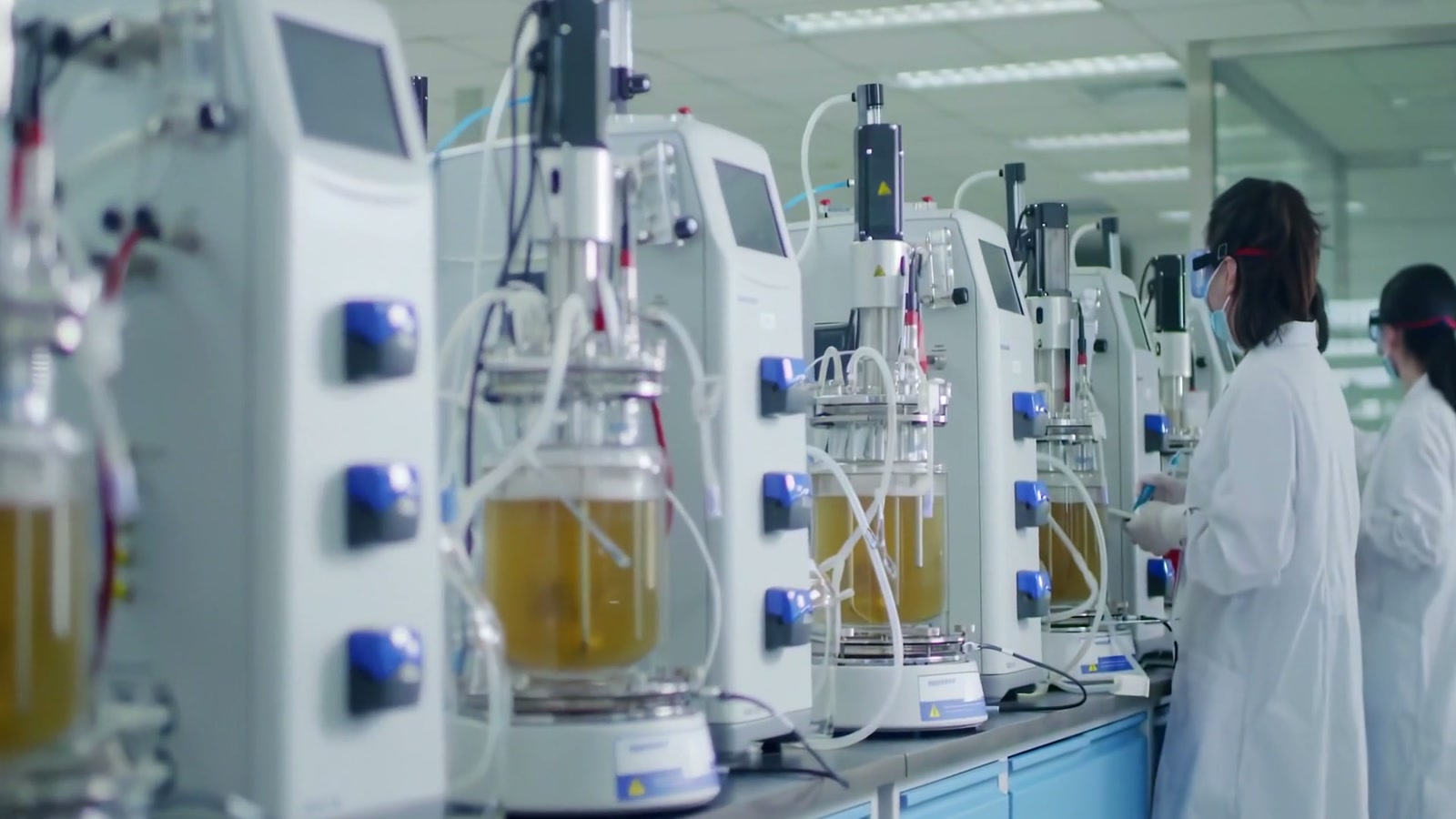
Connect biological production, recovery and analytical qualification before committing to the next process step.
Include the actual fluid.
A water model may not represent a polymer-rich broth.
Mohd Sauid et al. (2013) examined mass transfer in simulated viscous xanthan solutions. Their physical system is external context for considering fluid behaviour in a transfer argument. It does not establish that the same coefficient, additive or operating condition applies to a living candidate process.
The sponsor should identify the liquid states that occur during the campaign. A favourable characterisation at the start may not describe the material at harvest. An appropriate scope would examine the relevant range and explain whether a simulant can answer the present question or a real broth measurement is necessary.
Change the conditions · examine the reference
Supply has to meet demand.
Change transfer capacity and biomass. Identify which process assumption needs measurement before a scale-transfer discussion.
The data, equations and controls remain available below if 3D cannot load.
Defined model · illustrative conditions
Move a control to compare the selected condition with the defined reference curve.
Measure broth, medium, demand and transfer conditions before trusting a scale-transfer proposal.
The defined comparison
Illustrative steady comparison: C* = 0.20 mmol L⁻¹, bulk C = 0.05 mmol L⁻¹ and qO₂ = 2 mmol g⁻¹ h⁻¹. These are fixed scenario inputs, not measured values for a Bio organism, broth or vessel. Demand and transfer are reported in mmol L⁻¹ h⁻¹. Vessel geometry illustrates the boundary; no mass-transfer coefficient or aeration regime is predicted.
Inspect the calculated values
Calculation grid, not measured observations. Inputs and assumptions are stated above.
| Biomass / g L⁻¹ | Transfer capacity | Assumed demand |
|---|
Connecting upstream with the next operation.
A scale choice can shift the recovery burden.
A transfer brief should retain harvest volume, target mass, solids and material behaviour relevant to downstream handling. A new vessel may produce a broth that the original recovery setup cannot process within the required hold period. Scaling one operation while ignoring the rest can create a misleading picture of capacity.
The buyer’s decision may therefore involve the complete campaign rather than fermentation alone. The proposed scope would identify the first downstream constraint that could change the transfer choice. That can make a smaller or staged increase more useful than a large jump unsupported by the recovery and qualification plan.
Using appropriate external engineering capacity.
The method must fit the intended process.
CPI publishes process-design and scale-up capabilities (CPI, n.d.). That is an external example of an access route, not a Bio collaboration or an accepted transfer scope. A real provider would need the actual material, process record and output requirement before deciding which engineering work is appropriate.
The candidate programme would require qualified process expertise, compatible facility access and documentary permissions. A source-led appraisal can help prepare that discussion, but cannot replace physical characterisation or accountable execution. Costs should follow the study boundary and the data needed, rather than a general assumption about what a larger reactor costs.
Creating a transfer argument.
The deliverable should expose supported and unsupported regions.
The proposed package would compare geometry, operating descriptors, broth states and relevant output criteria. It would distinguish empirical observations from calculations and literature assumptions. A receiving team could inspect which conditions are matched, which differ and which difference needs a targeted experiment.
Acceptance should concern the material and process responses that matter to the customer, not merely reaching the target volume. The scope would retain deviations and unsuccessful transfer observations. The company does not claim a ready manufacturing process; it proposes a disciplined way to determine whether the next scale commitment is technically justified.
The next proposed comparison.
A multi-constraint transfer brief with a defined characterisation and acceptance plan.
The cheapest transferable check.
Characterise the limiting uncertainty first.
A go decision could support a bounded transfer when the critical environment is feasible and the accepted output remains credible. A redesign may narrow the target scale or change a unit operation. A no-go could follow an accessible vessel that cannot provide the relevant environment or a recovery train unable to handle the resulting stream.
The cheapest useful check might be a broth-dependent physical measurement or a scale-down challenge. It should be selected according to the constraint most likely to alter the decision. The commercial invitation is to bring the source process and target output, so the transfer argument has a clear reason to exist.
Bioprocess development · Proposed development discussion
A development path
for this research.
Choose which physical similarity and process constraints need evidence before moving a candidate route to another vessel.
The people this could serve.Process-transfer engineers and ingredient sponsors.
The decision behind the project.
Your intended application, present alternative and the constraint behind “Transfer the environment. Not the number on the dial.”. A useful starting point is the change that would justify another development step.
A proposed scope centred on a multi-constraint transfer brief with a defined characterisation and acceptance plan.
Agree the comparison, acceptance basis and responsible expertise before discussing a paid package.
Specialist methods and a defined contribution.
Bring relevant analytical or experimental expertise, a comparator suggestion, and the conditions under which your method could resolve this question.
A jointly scoped proposal could connect your contribution with a multi-constraint transfer brief with a defined characterisation and acceptance plan.
Define contributions, required access, independent preparations and permitted outputs before work or protected information is shared.
The commercial purpose of the next milestone.
Bring the application or asset thesis, the buyer you expect to value it, and the scientific or commercial uncertainty that must be resolved before another commitment.
The proposed decision record would connect the buyer question with a multi-constraint transfer brief with a defined characterisation and acceptance plan. It would identify what a subsequent comparison needs to demonstrate.
Demand, development cost, resources, rights and a decision-changing milestone would need examination. No financing terms or investment outcome are represented here.
What a useful comparison
would record.
- Record impeller tip speed (m s⁻¹) with the preparation, method and conditions needed to interpret it.
- Record impeller diameter (m) with the preparation, method and conditions needed to interpret it.
- Record rotation frequency (s⁻¹) with the preparation, method and conditions needed to interpret it.
What the proposed
brief could leave behind.
- A multi-constraint transfer brief with a defined characterisation and acceptance plan
- A preparation, comparator and endpoint record tied to this question.
- A source-linked account of the evidence gaps, study assumptions and next review point.
The proposed discussion brief
A brief you
can take away.
Use non-confidential notes to connect this topic with your own decision. Entries stay in this browser tab; saving creates a text file on your device. Nothing is submitted.
Proposed scale appraisal and qualified reactor-characterisation comparison.
Notes are optional. The brief includes this page’s proposed question and public source links.
Proposed scope; resources, methods, rights and delivery terms would be agreed before work. Begin with non-confidential information.
Sources and reading notes.
External work is identified below. Access notes describe the material inspected for this page; company research questions and proposed work are not presented as findings from these sources.
Sartorius, 2022Sartorius (2022) De-risking and simplifying the bioreactor scaling process
Narrow topic-specific context cited in the associated section.
Scope and limitations: Supplier technical discussion; broad principles not a validated model for a Bio process.
Open original sourceMohd Sauid et al, 2013Mohd Sauid et al. (2013) Enhancement of Oxygen Mass Transfer and Gas Holdup Using Palm Oil in Stirred Tank Bioreactors with Xanthan Solutions as Simulated Viscous Fermentation Broths
Topic-specific external research context and measurement definitions; proposed Bio comparisons remain independent plans.
Scope and limitations: No Bio reproduction, access to strains, commercial rights or validation follows. Raw data and supplements not independently analysed. Citation only; no source images or passages reproduced. Individual licence retained in private retrieval receipt.
Open original sourceCPI, n.d.CPI (n.d.) Process design and scale-up
Narrow topic-specific context cited in the associated section.
Scope and limitations: Official process engineering capabilities; neither a Bio validated model nor partner commitment.
Open original source