
 Film credits
An asset worth a serious evaluation.
Connect process evidence, permitted rights and delivery economics before treating a candidate bioprocess as a licensable opportunity.
Candidate programme | Proposed scope, expertise and material access to be established.
A route needs an asset and a buyer.
A production concept is not automatically a commercial package.
A candidate bioprocess may offer useful knowledge, a preparation or a method that another team could develop. The proposed commercial question is which of those contributions exists, who has authority to share it and what decision a buyer would make with it. A broad platform description cannot answer those questions by itself.
The sponsor should identify the application, incumbent and the specific gap the package might resolve. A manufacturer may value a process record, while an ingredient business may need a preparation with evidence of function. Those interests can lead to different evaluation scopes and different responsibilities before any licence is considered.
Examine the development decision
An asset worth a serious evaluation.
Open the sequence to examine what a development decision needs.
Identify the exact preparation, its source, and the properties a second laboratory must be able to reproduce.
Explanatory geometry · no simulated or measured performance
Using external industry as context.
Commercial existence does not prove a new company’s case.
Evonik’s 2024 biosurfactant-facility announcement provides an external example of fermentation-derived ingredients reaching industrial development (Evonik, 2024). It does not establish a Bio manufacturing route, a royalty benchmark or access to that company’s protected process. A candidate programme needs its own specific technical and commercial basis.
The useful comparison is how clearly the asset, application and delivery route can be described, not whether Bio can borrow the scale or confidence of an established producer. A first commercial brief should therefore identify what is already documented and which next result could strengthen the package enough for a relevant counterparty to evaluate it.
Count accepted output in the cost model.
Gross production is not saleable quantity.
A unit-cost planning identity divides the defined campaign cost by output meeting the stated requirement. It exposes the consequence of recovery, rejected material and incomplete qualification. No process cost or accepted-output value is supplied here; the model is a way to identify which assumptions could change the commercial decision.
The scope should separate a development campaign from a recurring manufacturing case. A first small run may include method creation and learning that would not repeat in the same form, while a scaled route may require additional controls and infrastructure. Those differences should be inspected rather than extrapolated away through a volume multiplier.
A descriptive unit-cost calculation tied to the required output.
- Cost on a defined accepted-output basisGBP kg⁻¹
- Cost inside the stated campaign boundaryGBP
- Output meeting the stated requirementkg
Model conditions. Positive accepted output; actual scope, quotations and criteria required. Development campaign cost is not automatically steady-state manufacturing cost. Descriptive identity or proposed planning relation; cited sources provide the relevant method/process context, not empirical Bio validation.
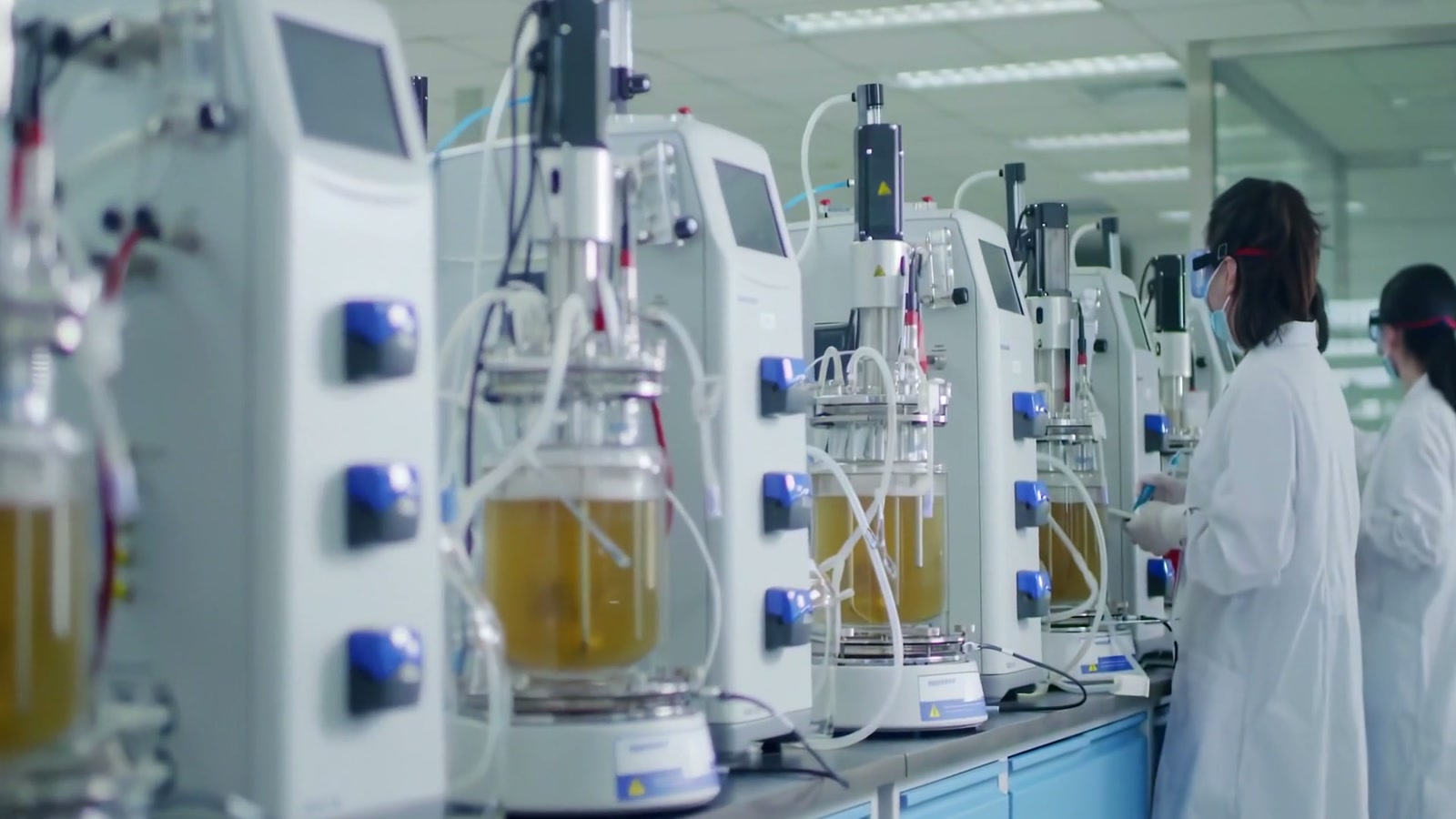
Count the output you can actually use.
Connect biological production, recovery and analytical qualification before committing to the next process step.
Match the commercial arrangement to the contribution.
A project, evaluation and licence buy different things.
A paid project could buy a defined comparison and its outputs. An evaluation arrangement could allow limited examination of an appropriately permissioned asset. A licence would need a useful rights package, field and obligations that the parties can actually agree. These are possible structures, not current Bio revenue streams or public offers.
The sponsor should avoid counting one prospective buyer across all routes as if every payment automatically accumulates. Customer-funded work may also affect what the company can retain or use elsewhere. The proposed brief would make that trade-off visible before the project is priced or a licensing narrative presented to investors.
The detail of the delivery dependency.
The asset’s economics depend on the route to use.
CPI publishes development and scale-up capabilities that illustrate one external access model (CPI, n.d.). That listing does not establish a Bio provider, a cost estimate or a completed technical transfer. A commercial evaluation would need a credible explanation of how the material or method could reach the required stage.
The buyer should identify whether it can execute the next work itself or would need another provider. A package that requires inaccessible equipment or unresolved starting material may be less useful than a narrower, feasible contribution. The proposed economics should follow those constraints rather than assume that a willing buyer eliminates every development burden.
Establish the rights boundary before enabling detail.
A commercial conversation should be scoped.
IPO guidance addresses permitted purpose and parties in confidential exchanges (Intellectual Property Office, 2015). A suitable reviewed arrangement can support an evaluation discussion. It does not establish Bio ownership, a patent portfolio or authority to license material merely because the company described the idea first.
The proposed record would distinguish background inputs, new outputs, third-party restrictions and the intended application. A useful public introduction can explain the problem and package without revealing unpublished enabling detail. A subsequent evaluation would share only the relevant material through an agreed process and preserve what was disclosed.
Creating a buyer decision pack.
The proposed output makes the next commitment assessable.
The pack would contain the asset description, source and contribution record, application requirement, technical evidence, remaining uncertainty and delivery assumptions. It could include a cost sensitivity with actual quoted inputs, clearly separated from a revenue forecast. A sponsor would be able to identify which variable most affects the usefulness of the proposed arrangement.
The immediate commercial test is a relevant evaluator and a defined next decision, not applause for the concept. A signed paid scope or documented evaluation commitment would be recorded separately from an introductory meeting. Qualified scientific and specialist rights review would be necessary before a wider commercial representation is made.

The next proposed comparison.
A bounded asset, economics and rights evaluation brief.
Earn a licence conversation through the package.
The next milestone is evidence someone can use.
A go decision could support a limited evaluation when the asset, rights and application fit are sufficiently clear. A redesign may narrow the field or commission one missing comparison. A no-go could follow an adequate incumbent, an unusable permission route or economics that do not justify the necessary development work.
The cheapest useful check is often a buyer-and-asset review paired with the specific evidence gap. That can prevent a large capital proposal around a contribution nobody can assess or use. The candidate programme’s ambition is a valuable material route earned through those decisions; no financing round, return or commercial outcome is promised.
Bioprocess development · Proposed development discussion
A development path
for this research.
Choose whether a defined technical package deserves a commercial evaluation or a further evidence investment.
The people this could serve.Ingredient commercial leaders and strategic investors.
The decision behind the project.
Your intended application, present alternative and the constraint behind “An asset worth a serious evaluation.”. A useful starting point is the change that would justify another development step.
A proposed scope centred on a bounded asset, economics and rights evaluation brief.
Agree the comparison, acceptance basis and responsible expertise before discussing a paid package.
Specialist methods and a defined contribution.
Bring relevant analytical or experimental expertise, a comparator suggestion, and the conditions under which your method could resolve this question.
A jointly scoped proposal could connect your contribution with a bounded asset, economics and rights evaluation brief.
Define contributions, required access, independent preparations and permitted outputs before work or protected information is shared.
The commercial purpose of the next milestone.
Bring the application or asset thesis, the buyer you expect to value it, and the scientific or commercial uncertainty that must be resolved before another commitment.
The proposed decision record would connect the buyer question with a bounded asset, economics and rights evaluation brief. It would identify what a subsequent comparison needs to demonstrate.
Demand, development cost, resources, rights and a decision-changing milestone would need examination. No financing terms or investment outcome are represented here.
What a useful comparison
would record.
- Define the record needed for “A route needs an asset and a buyer” and identify what is currently missing.
- Check the evidence behind “Using external industry as context” against the proposed buyer decision.
- Retain the applicable source links, versions, method limits and the exact evidence needed before another commitment.
What the proposed
brief could leave behind.
- A bounded asset, economics and rights evaluation brief
- A preparation, comparator and endpoint record tied to this question.
- A source-linked account of the evidence gaps, study assumptions and next review point.
The proposed discussion brief
A brief you
can take away.
Use non-confidential notes to connect this topic with your own decision. Entries stay in this browser tab; saving creates a text file on your device. Nothing is submitted.
Proposed paid evaluation brief, qualified project and potential later licence with verified authority.
Notes are optional. The brief includes this page’s proposed question and public source links.
Proposed scope; resources, methods, rights and delivery terms would be agreed before work. Begin with non-confidential information.
Sources and reading notes.
External work is identified below. Access notes describe the material inspected for this page; company research questions and proposed work are not presented as findings from these sources.
Evonik, 2024Evonik (2024) Inauguration of biosurfactant facility in Slovakia
Narrow topic-specific context cited in the associated section.
Scope and limitations: Corporate primary announcement; not independent outcome validation or Bio access to IP/manufacture.
Open original sourceCPI, n.d.CPI (n.d.) Bioprocess development and scale-up
Narrow topic-specific context cited in the associated section.
Scope and limitations: Official facility capability listing; no Bio partnership, booking, quoted cost or capacity commitment.
Open original sourceIntellectual Property Office, 2015Intellectual Property Office (2015) Non-disclosure agreements
Narrow topic-specific context cited in the associated section.
Scope and limitations: Official introductory guidance; no new NDA template or signed agreement.
Open original source