
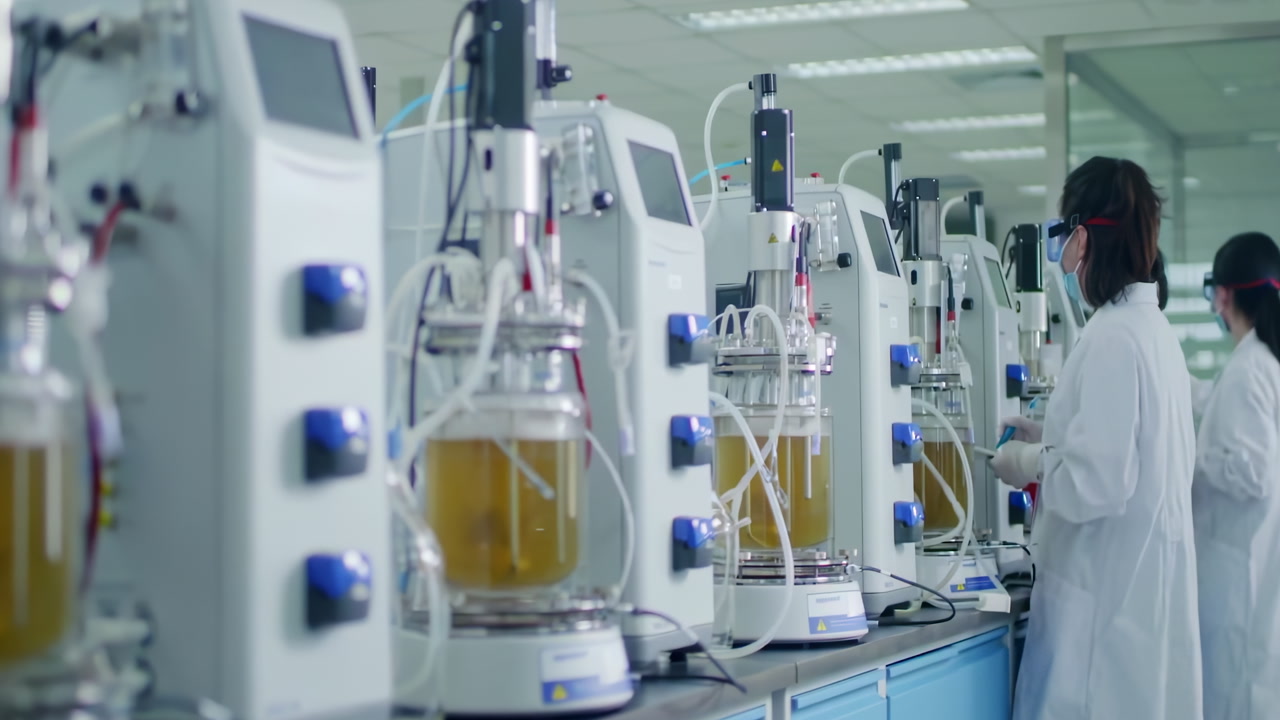
 Film credits
Harvest the material worth carrying forward.
Compare recovery-ready broth states and clarification choices without treating removal of cells as a neutral operation.
Candidate programme | Proposed scope, expertise and material access to be established.
The recovery begins before the separator.
Harvest timing defines what enters downstream work.
A fermentation may accumulate target material while also changing biomass, soluble components and broth structure. The proposed harvest question concerns the stream the recovery process receives, not simply the time at which a headline titre appears highest. A buyer needs to know whether the selected state can yield a useful preparation.
The sponsor should identify where the target resides: extracellular liquid, associated material or intracellular content. That changes what must be retained during clarification. A procedure that removes an unwanted cell fraction in one process may discard the intended product in another. The first review must make that location and basis explicit.
Examine the development decision
Harvest the material worth carrying forward.
Open the sequence to examine what a development decision needs.
Identify the exact preparation, its source, and the properties a second laboratory must be able to reproduce.
Explanatory geometry · no simulated or measured performance
Treat separation as a comparison.
A clear supernatant is not automatically a complete recovery.
Ma et al. (2022) investigated extraction of a high-viscosity exopolysaccharide under different pH conditions. That is a specific external example of processing conditions entering a recovery problem. It does not establish that a pH change is appropriate for every strain or ingredient.
The proposed brief would compare target-product inventory in the input, recovered liquid and discarded fraction. It would retain how the target is identified, not infer it from total solids alone. The visible clarity of a stream can help describe it, but it cannot substitute for an assay matched to the buyer’s material requirement.
Count target mass in each stream.
A simple recovery ratio needs the correct assay.
Clarification recovery is target mass in the selected output divided by target mass in the input on a consistent analytical basis. A concentration change must also account for volume. The ratio is useful for comparing routes only when the assay identifies the same target in both matrices.
The balance may include sample withdrawals, retained liquid and material associated with the separated solids. If those terms are missing, the result should be described as partial recovery. The proposed record would expose the uncertainty rather than force all losses into one unexplained number or attribute every missing gram to a failed separator.
Compare target mass retained, not concentration alone.
- Target concentration on matched assay basisg L⁻¹
- Actual stream volumeL
- Clarification recovery fraction1
Model conditions. Defined input/output streams, sampling and hold-up. Matrix effects and target identity must be reviewed. Descriptive identity or proposed planning relation; cited sources provide the relevant method/process context, not empirical Bio validation.
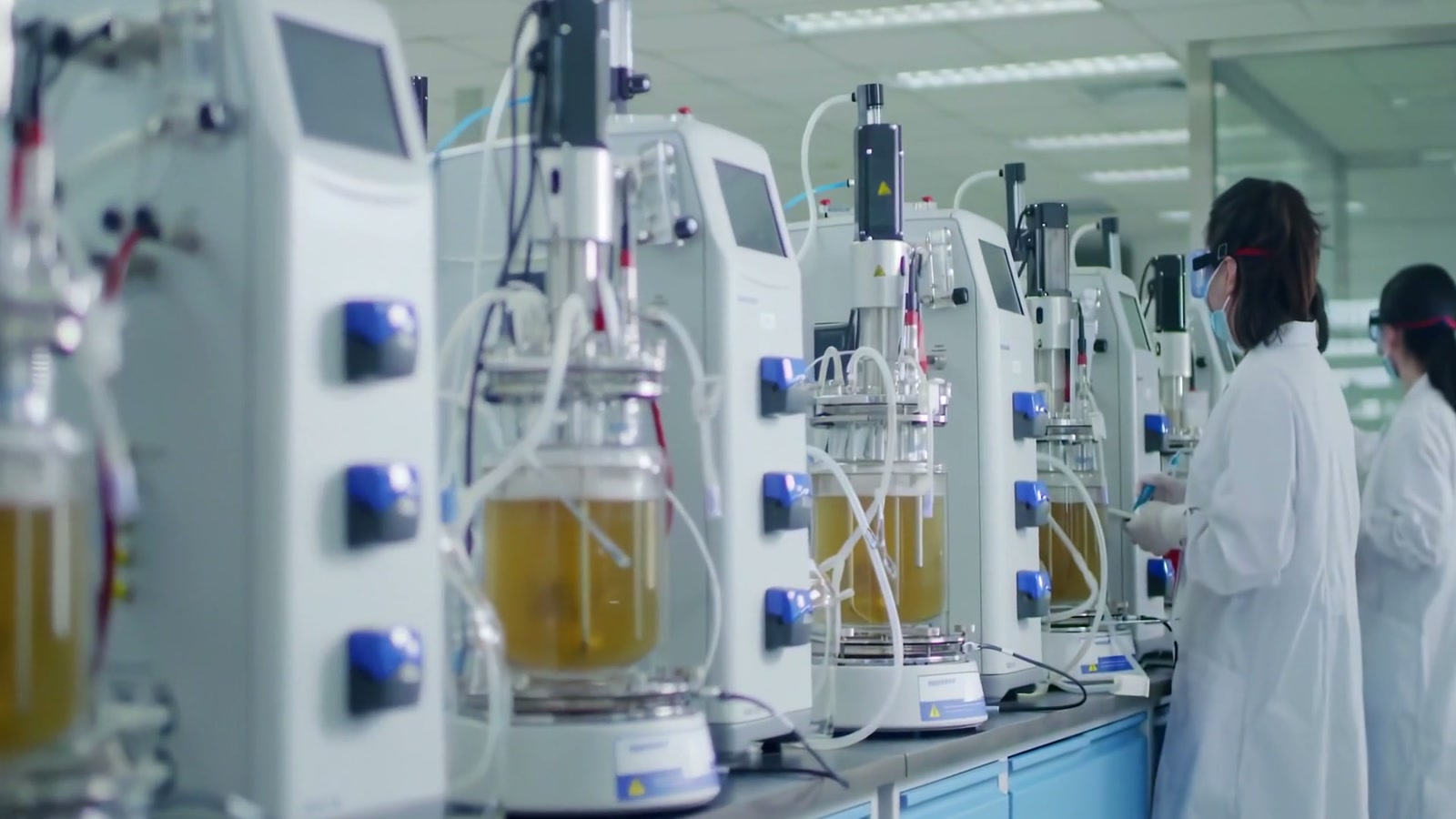
Count the output you can actually use.
Connect biological production, recovery and analytical qualification before committing to the next process step.
The detail of what preparation changes.
Clarification can be followed by other treatments.
Baptista et al. (2022) retained a defined extraction sequence in their membrane-recovery study. For a harvest appraisal, that supports keeping the actual stream history visible. An analytical result after dilution, heating or cell removal refers to that preparation, not automatically to the original broth.
The sponsor should identify whether treatments are intended to preserve product, remove an interfering component or enable another operation. Each needs a relevant comparison. A faster clarification route that changes the target’s molecular-size distribution or useful function could create a less attractive delivered material despite a favourable gross mass balance.
Change the conditions · examine the reference
Which kilogram are we discussing?
Follow target material from feed to accepted output. Change two retentions and see why recovered mass alone does not settle the proposition.
The data, equations and controls remain available below if 3D cannot load.
Defined model · illustrative conditions
Initial target 3 kg in 20 kg dry matter. Extraction, purification and qualification use different retained-mass boundaries.
Identify the recovery or qualification uncertainty that could change usable output before discussing process economics.
The defined comparison
Illustrative accounting: 100 kg wet feed, dry fraction 20%, target fraction in dry feed 15%, purification retention 80%; extraction and qualification retentions are selected. Qualification retention means the fraction of target mass meeting a stated criterion, not a probability of regulatory approval. Bar lengths use one common target-mass scale; losses are the differences between stages. Wet feed, dry feed and target mass are distinct denominators. No Bio yield, process price, environmental benefit or scale-up result is implied.
Inspect the calculated values
Calculation grid, not measured observations. Inputs and assumptions are stated above.
| Extraction retention / % | Extracted target | Accepted target |
|---|
Consider surface-active streams.
Foam and entrainment can alter the inventory.
Treinen et al. (2023) evaluated an external foam column in surfactin production. Their work offers a relevant reminder that a fermentation can distribute material through a foam-associated stream, not only through the liquid harvest. No fractionation performance is assumed for a candidate Bio process.
The proposed inventory would identify whether foam, wall hold-up or a recirculation stream materially affects the target basis. A process team should not compare runs with different recovery boundaries as if their measured harvests represent the same output. The cheapest correction may be recording an omitted stream before commissioning a new clarification experiment.
Match hardware to the stream.
Feasibility depends on the actual broth.
Centrifugation and filtration require different information about the feed and separation objective. A qualified engineer would inspect solids, material behaviour, handling and the intended output before selecting an experimental scope. A laboratory spin or small filter trial does not by itself establish a production capacity or scalable operation.
The buyer’s comparison might concern whether cells can be removed without excessive target loss, or whether an earlier harvest avoids a difficult recovery state. Those are distinct hypotheses. The programme should choose the one linked to the commercial bottleneck and retain the alternatives it rules out.
Deliver the stream record.
The next operator needs to know what it receives.
The proposed package would include harvest criteria, sample history, input and output volumes, target assays and a separation comparison. It would identify relevant hold conditions and the stream sent to the next operation. The buyer could use that record to request a downstream quotation that reflects the actual feed rather than a generic broth label.
Experimental work would require lawful material access, suitable handling and qualified separation capacity. The proposed Bio role is connecting the stream identity with the application and process decision. It does not imply that a manufacturing line, fermentation sample or centrifuge is presently available to customers.
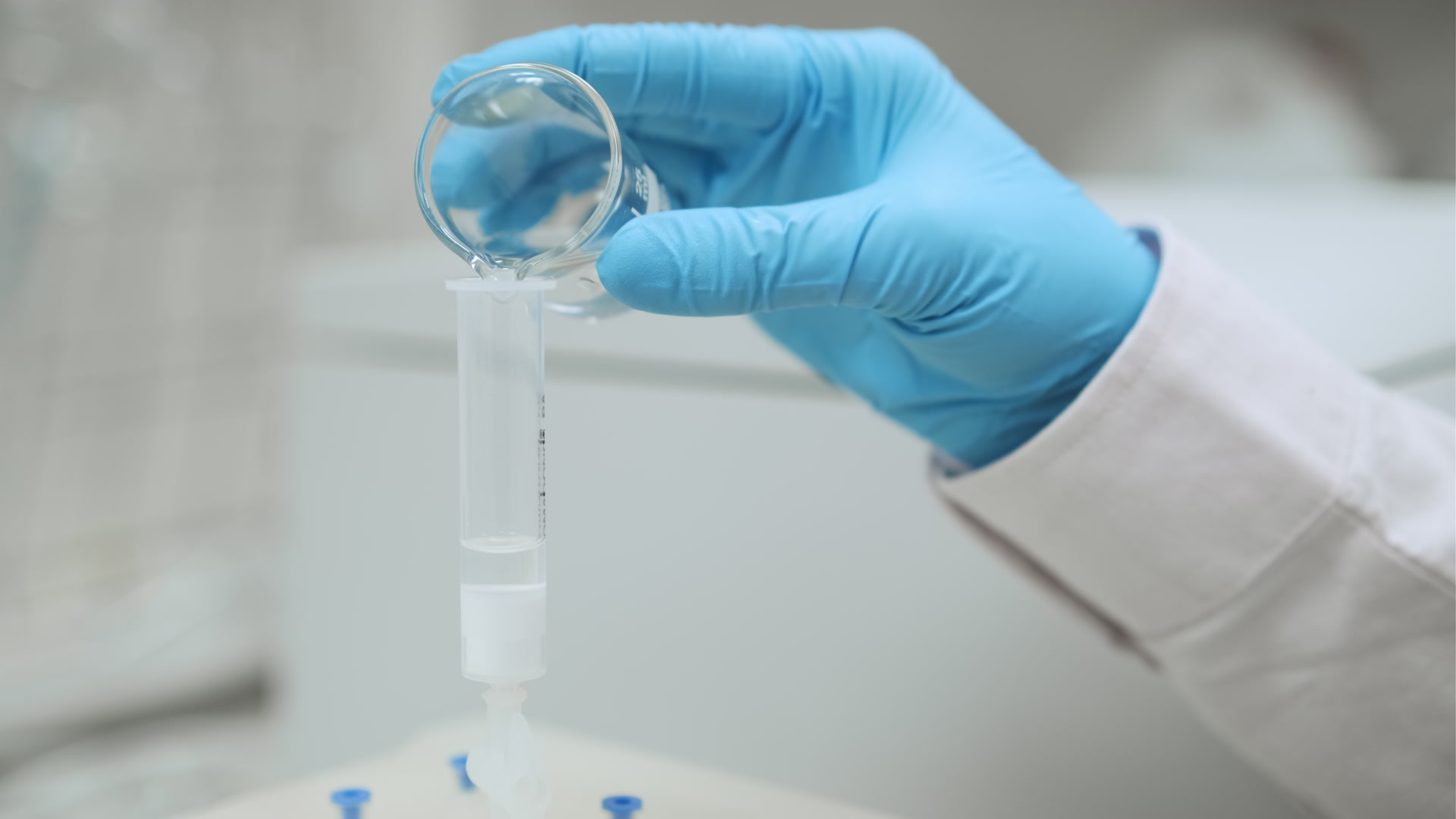
The next proposed comparison.
A matched stream inventory and clarification-feasibility scope.
A practical gate.
A useful clarification route preserves the buyer’s reason to proceed.
A go decision would require enough target retained and enough interfering material removed for the next defined operation. A redesign may examine harvest timing or sample conditioning. A no-go may follow a separation that retains mass but eliminates the useful preparation or creates an unmanageable downstream burden.
The cheapest useful check is often an input/output target assay with a volume inventory under one agreed condition. That can reveal whether the issue is genuine separation loss, analytical interference or a boundary error. The resulting decision is more valuable than a photograph of a clear liquid without the material record behind it.
Bioprocess development · Proposed development discussion
A development path
for this research.
Choose a harvest and clarification route that preserves the intended target while reducing recovery ambiguity.
The people this could serve.Downstream development and ingredient teams.
The decision behind the project.
Your intended application, present alternative and the constraint behind “Harvest the material worth carrying forward.”. A useful starting point is the change that would justify another development step.
A proposed scope centred on a matched stream inventory and clarification-feasibility scope.
Agree the comparison, acceptance basis and responsible expertise before discussing a paid package.
Specialist methods and a defined contribution.
Bring relevant analytical or experimental expertise, a comparator suggestion, and the conditions under which your method could resolve this question.
A jointly scoped proposal could connect your contribution with a matched stream inventory and clarification-feasibility scope.
Define contributions, required access, independent preparations and permitted outputs before work or protected information is shared.
The commercial purpose of the next milestone.
Bring the application or asset thesis, the buyer you expect to value it, and the scientific or commercial uncertainty that must be resolved before another commitment.
The proposed decision record would connect the buyer question with a matched stream inventory and clarification-feasibility scope. It would identify what a subsequent comparison needs to demonstrate.
Demand, development cost, resources, rights and a decision-changing milestone would need examination. No financing terms or investment outcome are represented here.
What a useful comparison
would record.
- Record target concentration on matched assay basis (g L⁻¹) with the preparation, method and conditions needed to interpret it.
- Record actual stream volume (L) with the preparation, method and conditions needed to interpret it.
- Record clarification recovery fraction (1) with the preparation, method and conditions needed to interpret it.
What the proposed
brief could leave behind.
- A matched stream inventory and clarification-feasibility scope
- A preparation, comparator and endpoint record tied to this question.
- A source-linked account of the evidence gaps, study assumptions and next review point.
The proposed discussion brief
A brief you
can take away.
Use non-confidential notes to connect this topic with your own decision. Entries stay in this browser tab; saving creates a text file on your device. Nothing is submitted.
Proposed harvest decision brief and qualified separation comparison.
Notes are optional. The brief includes this page’s proposed question and public source links.
Proposed scope; resources, methods, rights and delivery terms would be agreed before work. Begin with non-confidential information.
Sources and reading notes.
External work is identified below. Access notes describe the material inspected for this page; company research questions and proposed work are not presented as findings from these sources.
Ma et al, 2022Ma et al. (2022) High-Efficiency Extraction of Pantoea alhagi Exopolysaccharides Driven by pH-Related Changes in the Envelope Structure
Topic-specific external research context and measurement definitions; proposed Bio comparisons remain independent plans.
Scope and limitations: No Bio reproduction, access to strains, commercial rights or validation follows. Raw data and supplements not independently analysed. Citation only; no source images or passages reproduced. Individual licence retained in private retrieval receipt.
Open original sourceBaptista et al, 2022Baptista et al. (2022) Extraction of the Bacterial Extracellular Polysaccharide FucoPol by Membrane-Based Methods: Efficiency and Impact on Biopolymer Properties
Topic-specific external research context and measurement definitions; proposed Bio comparisons remain independent plans.
Scope and limitations: No Bio reproduction, access to strains, commercial rights or validation follows. Raw data and supplements not independently analysed. Citation only; no source images or passages reproduced. Individual licence retained in private retrieval receipt.
Open original sourceTreinen et al, 2023Treinen et al. (2023) Evaluation of an external foam column for in situ product removal in aerated surfactin production processes
Topic-specific external research context and measurement definitions; proposed Bio comparisons remain independent plans.
Scope and limitations: No Bio reproduction, access to strains, commercial rights or validation follows. Raw data and supplements not independently analysed. Citation only; no source images or passages reproduced. Individual licence retained in private retrieval receipt.
Open original source