
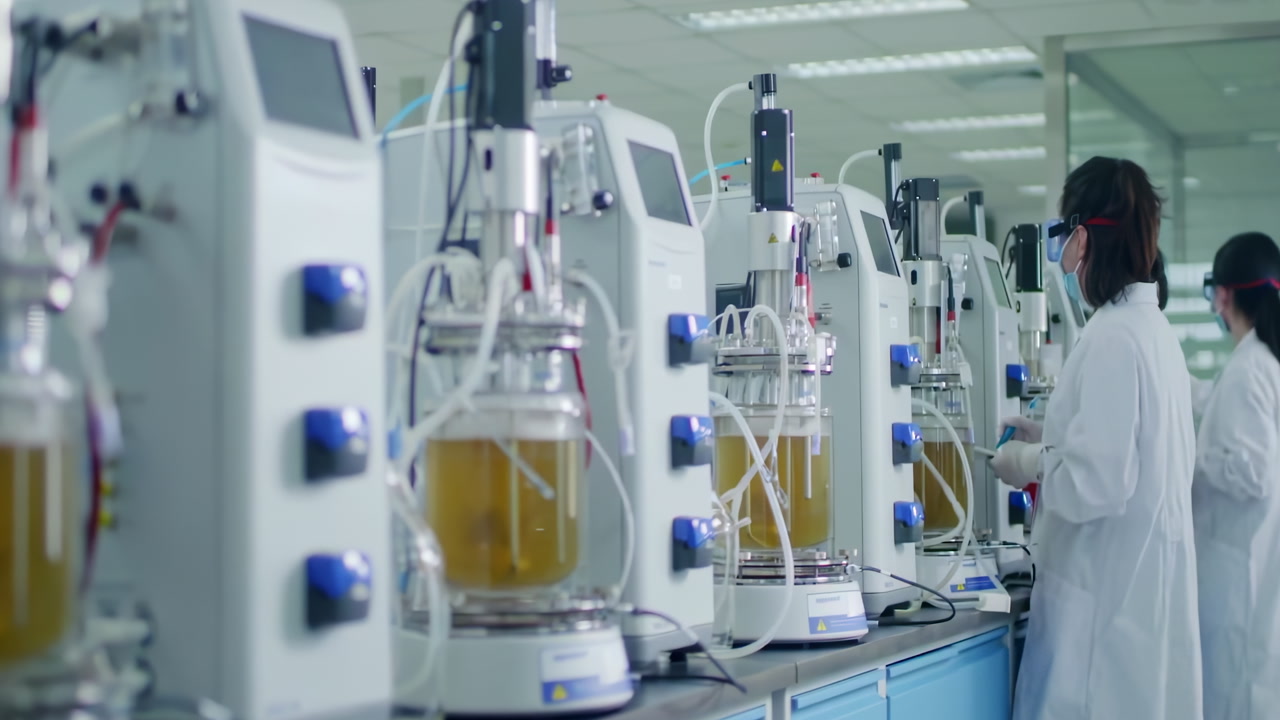
 Film credits
Grow a structure. Deliver a material.
A candidate bacterial-cellulose programme connecting cultivation, purification and finishing to a defined non-medical material use.
Candidate programme | Proposed scope, expertise and material access to be established.
The structure needs a job.
A wet network is not yet a delivered product.
Bacterial cellulose can prompt striking material ideas, but a buyer needs a defined use and preparation. The proposed programme begins with a non-medical material question such as a handling, film or formulation support function. It asks which structure and delivery form could matter before selecting production conditions.
A material developer may evaluate an intact network, while a formulation team may need a dispersed preparation. Those are different routes. A dramatic image of a membrane should not imply that it can be inserted into a formula, manufactured consistently or supplied by Bio. The first brief must identify what the evaluator would actually receive.
Examine the development decision
Grow a structure. Deliver a material.
Open the sequence to examine what a development decision needs.
Identify the exact preparation, its source, and the properties a second laboratory must be able to reproduce.
Explanatory geometry · no simulated or measured performance
Compare organisms and media as a defined study.
Production context belongs to the material record.
Vigentini et al. (2019) examined cellulose production across selected Komagataeibacter strains and growth conditions. The study offers external context for linking production to the preparation. Its strains, food application and findings remain the authors’ work; no Bio access or performance is inferred.
The candidate appraisal would retain exact strain identity, medium and cultivation context from each source. A material comparison should not treat one reported cellulose label as a guarantee of equivalent structure. The sponsor would identify the feasible, permissioned starting material and the property that a new study would need to inspect.
Using dry mass as one metric.
Wet weight can be dominated by retained liquid.
Dry cellulose mass divided by a defined production volume provides one titre basis. Wet pellicle weight measures a different inventory and should not be compared as if it were dry polymer output. The drying reference and purification history need to accompany the calculation. It is an accounting measure, not a complete material specification.
A process sponsor may additionally need area, thickness or network behaviour. The proposed model keeps those as separate responses instead of forcing them into a single production score. The useful denominator depends on whether the buyer needs bulk material, an intact structure or a dispersed ingredient preparation.
A defined dry-cellulose mass per production volume.
- Dry cellulose mass after stated purification and reference dryingg
- Defined culture volumeL
- Dry-basis titreg L⁻¹
Model conditions. Retain strain, growth duration, purification and drying reference. Not wet pellicle weight, production rate or application performance. Descriptive identity or proposed planning relation; cited sources provide the relevant method/process context, not empirical Bio validation.
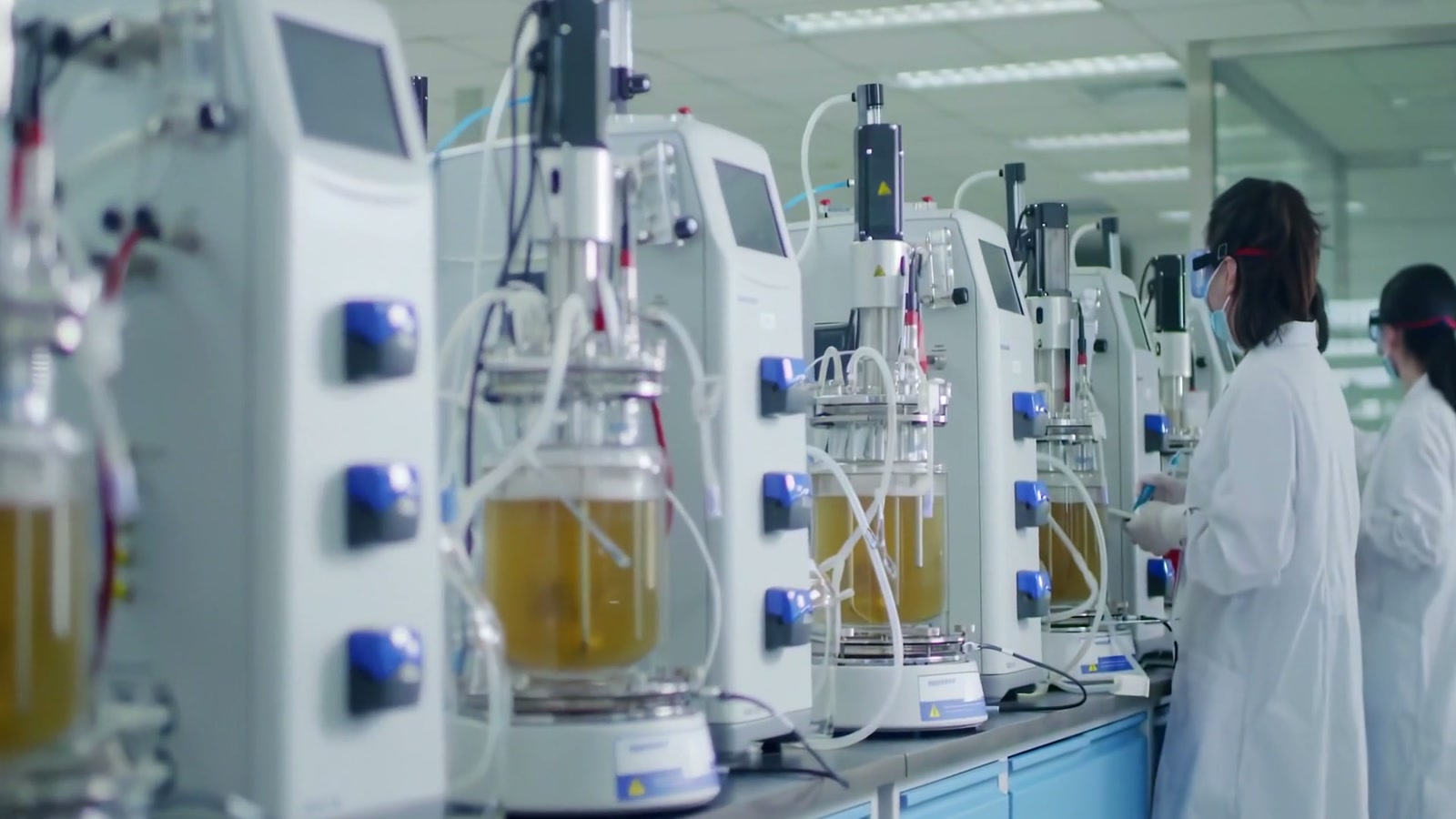
Count the output you can actually use.
Connect biological production, recovery and analytical qualification before committing to the next process step.
Consider the shape production creates.
Physical form can alter the next operation.
González-García et al. (2022) investigated culture-related changes in bacterial-cellulose structure. That provides a relevant external basis for asking how production history enters the material record. It does not establish a Bio growth intervention or permit its transfer into another strain and application.
The proposed comparison would inspect which structure is relevant to the intended use and whether it can be reproduced with an accessible route. An intact network may require different recovery and finishing from a dispersed material. The commercial scope should follow that distinction rather than present all forms as one platform.
The detail of finishing consequences.
The useful structure must survive delivery.
Bodea et al. (2021) compared moist and oven-dried cellulose preparations. The narrow implication for this candidate programme is to examine finishing alongside the application. A favourable wet-material response does not automatically establish that a dry product will behave similarly when rehydrated or dispersed.
The buyer should specify acceptable handling, storage and preparation. A qualified study could then compare matched starting material through selected finishing routes. It would retain any added components and examine the actual preparation used in the application, rather than choose a specialised treatment merely to create an impressive laboratory result.
Keeping purification inside the asset definition.
Residual material can affect interpretation.
The proposed material record would identify how cells and medium components are removed or retained. A change in handling may affect the apparent structure or measured response. The application team needs to know what is cellulose, what remains from the production sequence and which analytical uncertainties could alter the comparison.
This is also where scope matters: a research material does not establish suitability for food, cosmetics, medical devices or human use. The candidate programme remains a non-medical development question unless a separately resourced and appropriate qualification route is established. Public imagery and source citations do not supply that validation.
Creating the first comparison package.
A sponsor needs a feasible, inspectable next step.
The proposed output would include strain and preparation identity, the intended physical form, an incumbent material and the measurements necessary to assess the use. A small paired comparison could determine whether the application response justifies further production work. Qualified microbial, materials and analytical capacity would need to be secured before offering experiments.
A process quotation should follow the actual cultivation and recovery scope. The company does not imply an operating cellulose facility, an available strain or a licensed product. Its proposed role is to connect the customer’s material requirement with the biological and process questions that make the next commitment meaningful.

The next proposed comparison.
A structure-to-process brief and a matched preparation comparison scope.
The route by usable structure.
Do not scale the picture before the material.
A go decision would require an accountable preparation that contributes something useful compared with the incumbent. A redesign could change delivered form or purification. A no-go could follow a structure that cannot be handled or reproduced under the buyer’s constraints, despite an attractive appearance or favourable external paper.
The cheapest useful check is a defined structure and finishing comparison on permissioned material. It can clarify whether the programme deserves a production study or only further source analysis. The proposed commercial conversation starts with the use and evaluator, so the network has a reason to exist beyond a scientific photograph.
Bioprocess development · Proposed development discussion
A development path
for this research.
Choose a cultivation and finishing comparison for a cellulose structure with a specific handling or application requirement.
The people this could serve.Material developers and ingredient process sponsors.
The decision behind the project.
Your intended application, present alternative and the constraint behind “Grow a structure. Deliver a material.”. A useful starting point is the change that would justify another development step.
A proposed scope centred on a structure-to-process brief and a matched preparation comparison scope.
Agree the comparison, acceptance basis and responsible expertise before discussing a paid package.
Specialist methods and a defined contribution.
Bring relevant analytical or experimental expertise, a comparator suggestion, and the conditions under which your method could resolve this question.
A jointly scoped proposal could connect your contribution with a structure-to-process brief and a matched preparation comparison scope.
Define contributions, required access, independent preparations and permitted outputs before work or protected information is shared.
The commercial purpose of the next milestone.
Bring the application or asset thesis, the buyer you expect to value it, and the scientific or commercial uncertainty that must be resolved before another commitment.
The proposed decision record would connect the buyer question with a structure-to-process brief and a matched preparation comparison scope. It would identify what a subsequent comparison needs to demonstrate.
Demand, development cost, resources, rights and a decision-changing milestone would need examination. No financing terms or investment outcome are represented here.
What a useful comparison
would record.
- Record dry cellulose mass after stated purification and reference drying (g) with the preparation, method and conditions needed to interpret it.
- Record defined culture volume (L) with the preparation, method and conditions needed to interpret it.
- Record dry-basis titre (g L⁻¹) with the preparation, method and conditions needed to interpret it.
What the proposed
brief could leave behind.
- A structure-to-process brief and a matched preparation comparison scope
- A preparation, comparator and endpoint record tied to this question.
- A source-linked account of the evidence gaps, study assumptions and next review point.
The proposed discussion brief
A brief you
can take away.
Use non-confidential notes to connect this topic with your own decision. Entries stay in this browser tab; saving creates a text file on your device. Nothing is submitted.
Proposed material-development appraisal and qualified cellulose study.
Notes are optional. The brief includes this page’s proposed question and public source links.
Proposed scope; resources, methods, rights and delivery terms would be agreed before work. Begin with non-confidential information.
Sources and reading notes.
External work is identified below. Access notes describe the material inspected for this page; company research questions and proposed work are not presented as findings from these sources.
Vigentini et al, 2019Vigentini et al. (2019) Set-Up of Bacterial Cellulose Production From the Genus Komagataeibacter and Its Use in a Gluten-Free Bakery Product as a Case Study
Topic-specific external research context and measurement definitions; proposed Bio comparisons remain independent plans.
Scope and limitations: No Bio reproduction, access to strains, commercial rights or validation follows. Raw data and supplements not independently analysed. Citation only; no source images or passages reproduced. Individual licence retained in private retrieval receipt.
Open original sourceGonzález-García et al, 2022González-García et al. (2022) In Vivo Modification of Microporous Structure in Bacterial Cellulose by Exposing Komagataeibacter xylinus Culture to Physical and Chemical Stimuli
Topic-specific external research context and measurement definitions; proposed Bio comparisons remain independent plans.
Scope and limitations: No Bio reproduction, access to strains, commercial rights or validation follows. Raw data and supplements not independently analysed. Citation only; no source images or passages reproduced. Individual licence retained in private retrieval receipt.
Open original sourceBodea et al, 2021Bodea et al. (2021) Optimization of Moist and Oven-Dried Bacterial Cellulose Production for Functional Properties
Topic-specific external research context and measurement definitions; proposed Bio comparisons remain independent plans.
Scope and limitations: No Bio reproduction, access to strains, commercial rights or validation follows. Raw data and supplements not independently analysed. Citation only; no source images or passages reproduced. Individual licence retained in private retrieval receipt.
Open original source